



From Bispecific ADC to A+H: Baili Tianheng Aims to Turn Chinese Innovative Drugs into Global Assets
On August 6, Baili Tianheng submitted another application for H-share listing to the Hong Kong Stock Exchange. About nine months have passed since its global offering was delayed in November 2025 due to market conditions, and the company's assets have undergone significant changes, entering a new phase.
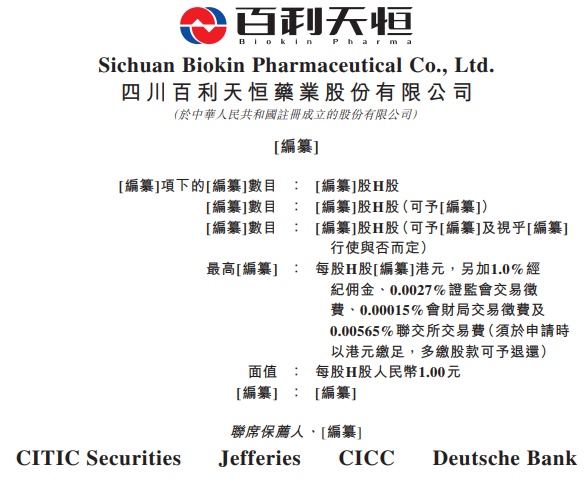
In June, the indication for nasopharyngeal cancer of iza-bren was approved; in July, the indication for esophageal squamous cell carcinoma was approved; and the application for the marketing authorization of triple-negative breast cancer has also been accepted by the CDE. Baili Tianheng, an innovative drug company that previously relied mainly on R&D data and License-out capabilities to prove its worth, is now facing continuous tests in commercialization, indication expansion, and global development efficiency. Meanwhile, the Hong Kong IPO market has clearly heated up. The HKEX disclosed that IPO fundraising in the first half of 2026 reached HK$210.2 billion, a year-on-year increase of 92.1%.
This resubmission by Baili Tianheng corresponds not only to an improvement in capital windows but also to changes in the company's operational stage. However, the more critical issue for Baili Tianheng remains the product itself: Can iza-bren grow from the protagonist of an $8.4 billion BD deal into a blockbuster? And can Baili Tianheng replicate this one-time success into sustained R&D output?
After the Hong Kong window heats up, A+H competition shifts from financing capability to global R&D organizational capability
The plan for Baili Tianheng's H-shares has been ongoing for a long time. It started with the first submission in July 2024, followed by a decision to delay the offering before listing in November 2025, and another submission in August 2026. During this period, the A+H hype continued to rise. According to KPMG statistics, 24 A+H listings were completed in Hong Kong in the first half of 2026, surpassing the 19 listings for the entire year of 2025. As of June 26, there were still 116 A+H projects among publicly submitted listing applications.
In the first quarter of 2026, Baili Tianheng achieved operating revenue of 94.5868 million yuan, invested 695 million yuan in R&D, and had a net cash flow from operating activities of -742 million yuan. By the end of March, monetary funds stood at 2.967 billion yuan, trading financial assets at 2.058 billion yuan, and other current assets at 4.486 billion yuan, the latter mainly coming from large-denomination certificates of deposit.
From a financial perspective, the company has a substantial cash buffer. However, the capital demand for innovative drugs is longer and heavier than that of general manufacturing. With 17 innovative drugs in clinical stages and over 100 clinical trials globally advancing to later phases, capital consumption and organizational complexity will continue to rise in tandem.
It takes a long cycle for a molecule to go from clinical validation to registration, production, market access, and volume ramp-up. The Hong Kong platform can supplement long-term capital and an international investor base, and it is easier to connect with global clinical operations, overseas collaborations, and cross-border governance.
Thus, A+H serves a more practical function: extending the financing horizon so that R&D plans rely less on single BD milestone payments and phased financing environments.
International pharmaceutical capital is accustomed to breaking down indication space, clinical success rates, patent cycles, equity structures, and subsequent R&D burdens. The potential total transaction value of $8.4 billion only proves that iza-bren passed the rigorous screening of multinational pharmaceutical companies; its long-term quality is still determined by product data, commercialization efficiency, and the subsequent pipeline. As the A+H trend continues, the comparative dimensions for Chinese innovative drug companies will gradually extend from listing capability to the delivery capability of global R&D and commercialization.
For an innovative drug company already undertaking multiple China-US registrational clinical trials, financing capability is beginning to become part of the R&D infrastructure. At this time, Baili Tianheng's trip to Hong Kong was not driven by desperate financial needs, but its R&D scale has entered a stage requiring continuous supplementation of long-term capital. If the H-share progress goes smoothly, what the company gains is not just a financing opportunity, but also a more stable source of international capital and a capital identity within the global pharmaceutical ecosystem.
The approval of two indications is just the starting point; the value of iza-bren depends on expansion into major tumor types and the realization of global rights
iza-bren has completed the most important external validation for Baili Tianheng.
At the end of 2023, its subsidiary SystImmune reached a global cooperation agreement with BMS, with an upfront payment of $800 million and a potential total consideration of up to $8.4 billion. Baili Tianheng's 2025 annual report further disclosed that the first milestone payment of $250 million had been received.
Its cooperation structure covers more sources of value: In the US market, both parties share some development costs and profits/losses; development and commercialization rights in mainland China are retained by the SystImmune system, with BMS receiving royalties on net sales; in regions outside the US and mainland China, SystImmune receives tiered royalties based on net sales. Thus, Baili Tianheng simultaneously enjoys milestone income, US profit sharing, Chinese commercialization revenue, and overseas sales royalties.
Data from Phase III trials presented at ASCO 2026 provided a more concrete basis for commercialization. For example, in the PANKU-Breast02 study for triple-negative breast cancer, the median progression-free survival (PFS) in the iza-bren group was 8.5 months compared to 3.1 months in the control group; the median overall survival (OS) was 15.9 months versus 12.5 months. In the PANKU-Esophagus01 study for esophageal squamous cell carcinoma, the median PFS was 4.2 months versus 2.0 months in the control group; the median OS was 9.8 months versus 7.2 months.
Additionally, indications for nasopharyngeal cancer and esophageal squamous cell carcinoma have been approved domestically in sequence, and the NDA for triple-negative breast cancer has also been accepted. Clinical data is entering the registration and sales phases.
Revenue potential still depends on major indications and overseas development. On July 24, it was announced that two Phase III studies of iza-bren for heavily pretreated HR+/HER2- advanced breast cancer and platinum-refractory biliary tract cancer had enrolled their first patients. In June, the company also launched a Phase III study for first-line extensive-stage small cell lung cancer.
As of July, iza-bren has conducted over 40 clinical trials in China and the US, including 20 Phase III and II/III studies. As indications expand to larger patient populations such as breast and lung cancer, there is greater opportunity to unlock global sales space.
There are differences between iza-bren and many other Chinese innovative drug License-out projects. Baili Tianheng retains Chinese commercialization capabilities while sharing economic benefits in the US market through BMS, and has sales royalties in other overseas regions. Once clinical success extends to more cancer types, the revenue the company can generate will gradually shift from one-time milestone payments to drug sales and long-term equity income. Moreover, the longer the product lifecycle, the higher the value of the cooperation terms.
In the Phase III study for esophageal squamous cell carcinoma disclosed by BMS, the incidence of Grade 3 or higher treatment-related adverse events in the iza-bren group was 85.1%, primarily involving hematological toxicity. Beyond efficacy, safety remains a variable that commercialization must address.
Current ADC competition has entered a stage where efficacy, tolerability, administration management, and production stability jointly influence clinical penetration. Baili Tianheng has proven it can create strong clinical assets; next, it needs to demonstrate that this drug can be used stably in a broader patient population and converted into sustained revenue.
Single-product success is hard to cover high-intensity R&D; whether the second tier can take the baton determines Baili Tianheng's long-term quality
iza-bren has pushed Baili Tianheng into the global pharmaceutical enterprise cooperation system, while also raising the bar for subsequent products.
As of the disclosure date of the 2025 annual report, the company had 17 innovative drugs in clinical stages, advancing over 100 clinical trials globally. Among major Phase III projects, besides iza-bren, products such as T-Bren, BL-M05D1, and SI-B001 have also entered Phase III. At the end of 2025, the company's R&D personnel reached 1,647, accounting for 51.50% of the total employees. This is already a considerable-scale innovative drug R&D organization.
The subsequent pipeline for 2026 is also accelerating: T-Bren enrolled its first patient in a Phase III study for first-line HER2-positive recurrent or metastatic breast cancer in May, and advanced to the first patient enrollment in a Phase III study for HER2-positive biliary tract cancer in July. BL-M05D1 initiated first patient enrollment in a Phase III study for Claudin18.2-positive advanced gastric or gastroesophageal junction adenocarcinoma in June.
It is evident that Baili Tianheng has begun directing more resources toward late-stage assets beyond iza-bren.
This portion of assets will determine whether Baili Tianheng can reduce its concentrated dependence on iza-bren.
A successful molecule may have an element of chance in scientific exploration; only when the second and third products continue to emerge can platform efficiency be validated. In drug R&D, pipeline tiers, CMC, regulatory communication, production scale-up, and global trial organizational capability are all preparatory work that must be done. Baili Tianheng has transformed front-end discovery capabilities into a large number of late-stage clinical projects; the subsequent test lies in project success rates and resource allocation efficiency.
In 2025, R&D investment for iza-bren alone reached 1.435 billion yuan, and 366 million yuan for T-Bren. Entering Q1 2026, the company's overall R&D investment reached 695 million yuan, while operating revenue during the same period was less than 100 million yuan. Advancing multiple late-stage projects together requires huge costs behind the scenes, and R&D expenditures may remain difficult to decrease significantly for a long time to come.
If overseas research, indication approvals, or sales ramp-up for iza-bren lag behind plans, the timeline for cash flow improvement will be correspondingly delayed. If subsequent assets like T-Bren fail to establish clear clinical advantages, product concentration will be hard to reduce quickly.
Conversely, as long as the major indications for iza-bren continue to materialize, and if the second tier produces one or two more assets capable of entering global registration or external cooperation, Baili Tianheng's revenue structure will have the opportunity to gradually break free from annual fluctuations caused by single BD deals, and R&D investment will receive more stable internal cash flow support.
The resubmission of H-shares by Baili Tianheng reflects changes in China's innovative drug industry. Currently, the financing capability of the Hong Kong capital market is strengthening, and multinational pharmaceutical companies continue to seek Chinese pipelines, all improving the external conditions for innovative drug companies. The next competition for Chinese innovative drugs is turning a one-time scientific breakthrough into a repeatable industrial capability.
For Baili Tianheng, $8.4 billion once answered "how much is a Chinese innovative drug worth"; the question it needs to answer next is harder—Can a Chinese Biotech continuously produce global-level drugs and ultimately grow into a true Biopharma with a closed loop of R&D, registration, production, and commercialization?
The H-share listing is just one piece of the capital puzzle in this process. What comes after iza-bren is the most important answer for Baili Tianheng in the coming years.
The copyright of this article belongs to the original author/organization.
The views expressed herein are solely those of the author and do not reflect the stance of the platform. The content is intended for investment reference purposes only and shall not be considered as investment advice. Please contact us if you have any questions or suggestions regarding the content services provided by the platform.
