


 SK Hynix Commentator
 RGTI Return Rate
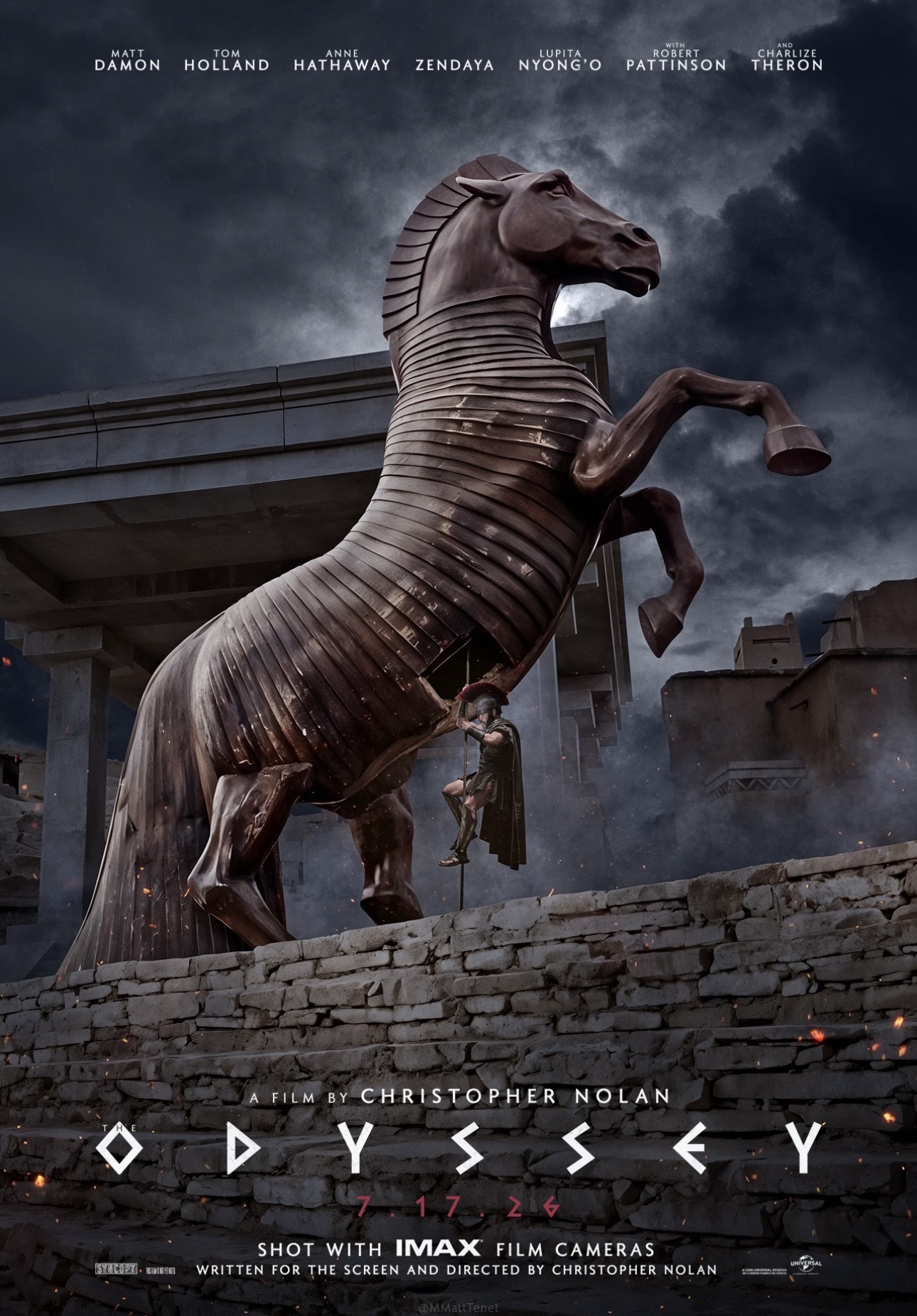
Nolan's 'Odyssey': $250 million to clear out 37% of film inventory
Christopher Nolan's new film, "Odyssey," did something nearly "crazy" in the digital age: it was shot entirely on IMAX 70mm film.
They purchased over 2.1 million feet (more than 640 kilometers) of film alone, a length exceeding the distance from Toronto to New York. This single item cost $45 million. With a total budget of $250 million for the entire film, just the processing and development burned through over $40 million. Only three factories worldwide can handle this type of film, and there are fewer than 50 cinemas globally capable of screening the original version in its entirety.
If digital is so convenient, why use film?
Nolan himself has said: "Film has very high clarity; even IMAX's ultra-high-definition pixels cannot rival the clarity of film."
The more fundamental difference lies in the imaging principle: digital is a "calculation" of pixel points, while film is a real chemical reaction triggered by light causing silver salts to react, leaving "imprints of light." Digital is a sawtooth wave, whereas film is a smooth curve. Film can capture brightness and darkness levels invisible to the human eye, avoiding overexposure in highlights while retaining rich details in shadows. This "breathing" quality and heaviness remain difficult for digital technology to achieve to date.
Soviet Union's "War and Peace": Another Kind of "Crazy"
But if we talk about truly "giving everything," the 1966 Soviet version of "War and Peace" is the masterpiece of cinema history.
The Soviet government decided to produce it themselves, not only to defeat Hollywood but also to commemorate the 150th anniversary of Russia defeating Napoleon's invasion. The Kremlin ordered the mobilization of all resources for filming; all necessary manpower, finances, materials, venues, and props had to be provided. They chose Sergei Bondarchuk, a middle-aged director with relatively little fame at the time.
Bondarchuk devoted his heart and soul to this project. During filming, he suffered two heart attacks requiring hospitalization. After escaping death, he continued working and even took on the role of Prince Andrei, one of the main characters. He didn't just use the resources of one film studio but drew upon all resources available across the entire Soviet Union.
The data is suffocating: 125,000 actors and 35,000 warhorses were mobilized. Each "soldier" had their own weapons and uniforms, effectively reenacting the Napoleonic Wars. Just the film stock used amounted to 1,540 kilometers. 20,900 costumes were produced, and artifacts from 58 museums were transported via 150 train carriages. 60 cannons from 1805 were recast, consuming 23 tons of gunpowder.
The most shocking aspect was the "Fire of Moscow": The crew spent two years building a 100,000-square-meter fake Moscow in the northeastern suburbs of Moscow, including a complete replica of the Kremlin. Then, they set it all ablaze. This wasn't special effects; they literally burned down a city.
In 1969, this film won the Academy Award for Best Foreign Language Film.
Filmmakers of Two Eras, One Obsession
Nolan's film represents artistic obsession, while the Soviet Union's film represents national will. One went against the current in the digital age, and the other spared no costs against the backdrop of the Cold War.
But their core essence is the same: True epics require media worthy of carrying them.
After Nolan finished shooting "Odyssey," 37% of IMAX film inventory was cleared. When asked if it was worth it, he replied: "I only ask myself if I missed any shots."
And Bondarchuk answered the same question using two heart attacks, a burned-down Moscow, and 1,540 kilometers of film.
Some works in film history are not made; they are exchanged for lives. Salute to these "crazy" filmmakers.
Cinema is Amber of Time—Written Between Digital and Film
Nolan cleared 37% of film inventory, and the Soviets burned down a city. These seemingly "uneconomical" investments serve as a reminder of one thing: Technological progress should not come at the cost of sacrificing the depth of texture.
Film's silver halide grains are physical imprints of light; digital pixels are results of mathematical calculations. The former has breath, warmth, and accidents; the latter is precise, efficient, and controllable. We certainly enjoy the convenience brought by digital—phones can shoot 4K, AI can interpolate frames, and VFX can create entire universes. But convenience and profundity have never been on the same dimension.
A better future is not about replacing old things with new ones, but letting each play its proper role. Digital handles popularization, film handles immortality; algorithms handle efficiency, craftsmanship handles the soul.
I hope Nolans continue to "waste" film, and I hope more traditional crafts, media, and skills survive. They may become luxuries for a few, but precisely these "inefficient" existences remind us: Some things cannot be rushed, calculated, or hurried. They can only wait, endure, and be exchanged for life itself.
Just like the Moscow burned by Bondarchuk, or the IMAX film camera guarded by Nolan—their existence itself is the greatest tribute to time. Technology may have generations, but good works have no substitutes.
The copyright of this article belongs to the original author/organization.
The views expressed herein are solely those of the author and do not reflect the stance of the platform. The content is intended for investment reference purposes only and shall not be considered as investment advice. Please contact us if you have any questions or suggestions regarding the content services provided by the platform.
