


From the Surge in Innovent Biologics' Product Revenue, We Can See the Fierce Battle Behind Weight-Loss Drugs
On August 5, Innovent Biologics released its H1 2026 revenue data: product revenue exceeded RMB 8.2 billion, a year-on-year increase of over 55%. The second quarter saw single-quarter revenue exceeding RMB 4.3 billion, with growth of approximately 60%.
To put this in perspective, Innovent's total annual product revenue for all of 2024 was only RMB 8.2 billion, and RMB 11.9 billion in 2025. Yet in just the first half of 2026, it has already matched the full-year level of 2024. Among all sources of growth, the most unique variable is likely Mazdutide, which also ranks first among products in Innovent's announcements.
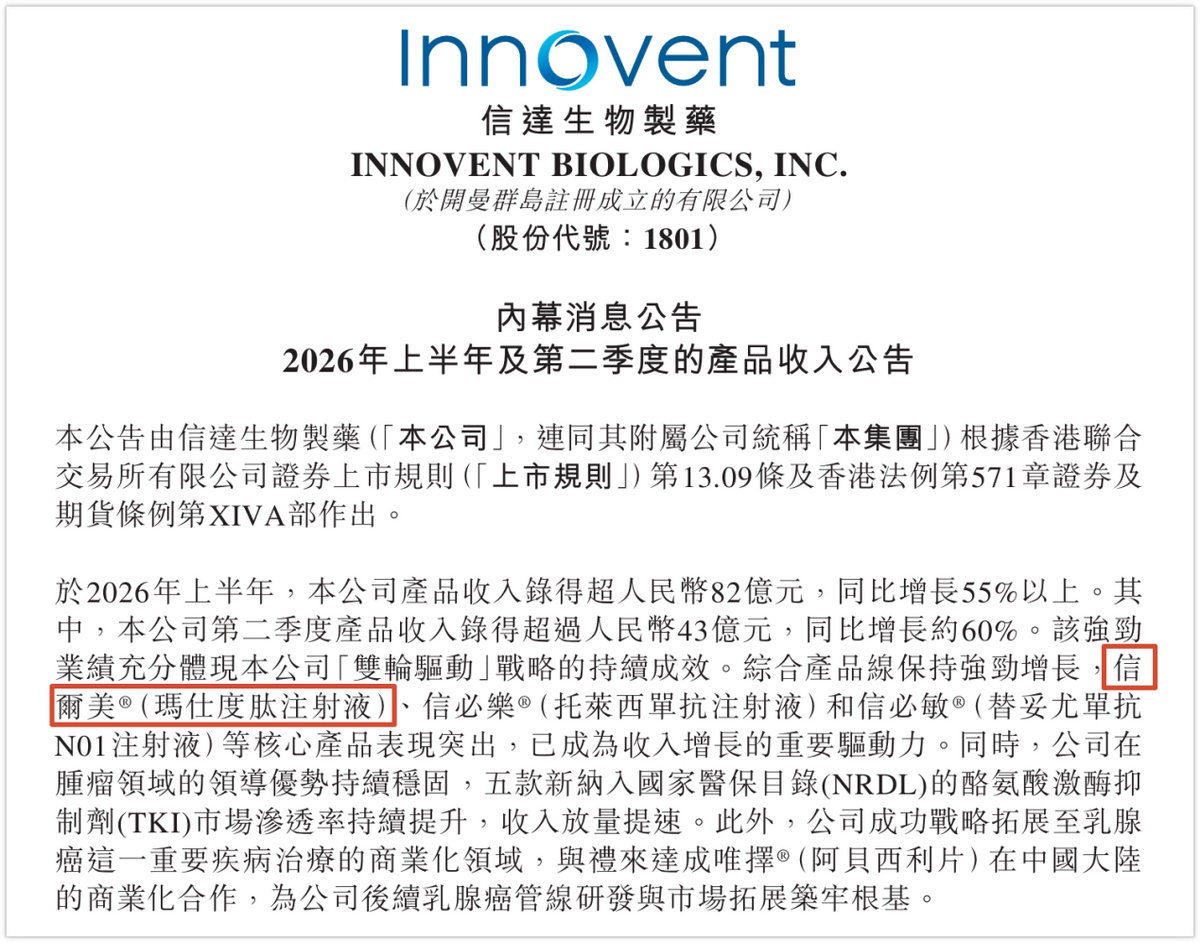
What is Mazdutide? It is a rising star in the current weight-loss drug craze and the world's first approved natural dual-target GCG/GLP-1 weight-loss and blood-sugar-lowering drug. Since its approval and launch in June 2025, its commercial performance has consistently exceeded expectations. Institutions predict that full-year 2026 revenue could reach RMB 1.8 billion, potentially reaching RMB 4 to 5 billion by 2027.
Its academic recognition is also very high—the GLORY-2 study was published in the *Journal of the American Medical Association* (JAMA). Combined with previous publications in the main journals of *Nature* and the *New England Journal of Medicine*, Mazdutide has become the only GLP-1 class drug globally to appear in all three top-tier journals: Nature, NEJM, and JAMA.
How did a Chinese innovative pharmaceutical company, founded on PD-1 tumor immunotherapy, not only develop a product but also achieve differentiation in the world's most fiercely competitive weight-loss drug track? This question cannot be answered solely by looking at Innovent's own product pipeline; it must be viewed within the changing competitive landscape of the global weight-loss drug market.
I. The Competitive Dimensions of the Weight-Loss Drug Market Are Shifting, and Followers' Time Windows Are Closing
Recently, global pharmaceutical companies have been releasing earnings reports intensively. For example, almost simultaneously with Innovent, Novo Nordisk and Eli Lilly released their latest financial results, and Pfizer recently disclosed its latest weight-loss drug development updates.
Data shows that in H1 2026, Novo Nordisk's GLP-1 related product revenue was approximately $17.346 billion, accounting for 64% of the company's total revenue; Eli Lilly's GLP-1 related product revenue was approximately $27.693 billion, accounting for about 65% of total revenue. Together, these two companies extracted over $45 billion from the GLP-1 category alone in just six months.
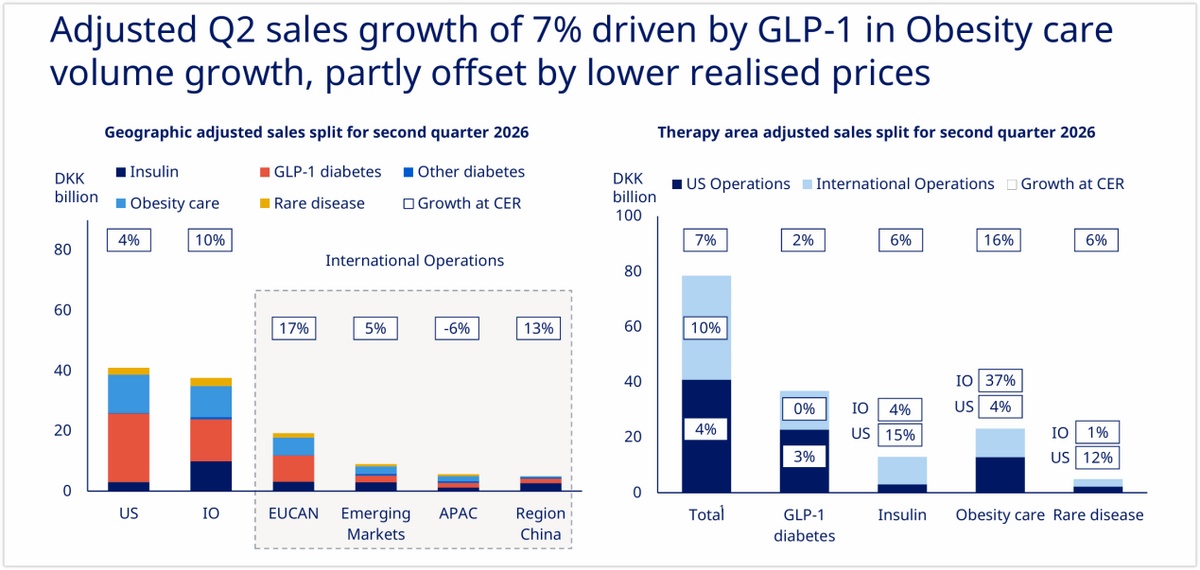
This figure has almost no precedent in the history of human pharmaceutical commerce. It means that the core of the weight-loss drug market is not an incremental gain brought by a segment of the population, but a massive conversion market that is rapidly replacing traditional metabolic disease treatment plans.
The so-called conversion market has positive aspects: it absorbs the existing stock of many disease markets, including diabetes, while gaining share in large-volume markets such as cardiovascular diseases and weight loss. However, it should also be noted that one characteristic of a conversion market is that once the first-mover advantage is locked in, the window for latecomers closes at an extremely fast speed.
Pfizer's experience is a prime example. As the former "King of Drugs" owner and one of the earliest large pharmaceutical companies to 布局 oral GLP-1 globally, Pfizer successively terminated five pipelines—danuglipron, lotiglipron, PF-06954522, MET-224o, and PF-07976016—starting in 2023. The reasons varied—liver toxicity, tolerability, Phase II data falling short of expectations, and market landscape assessment—but the result was consistent: total annihilation.
As of 2026, Pfizer has only one remaining asset in the oral GLP-1 field: YP05002, introduced from Fufeng Pharmaceutical. As for how to proceed with development and subsequent work, there is currently no conclusion.
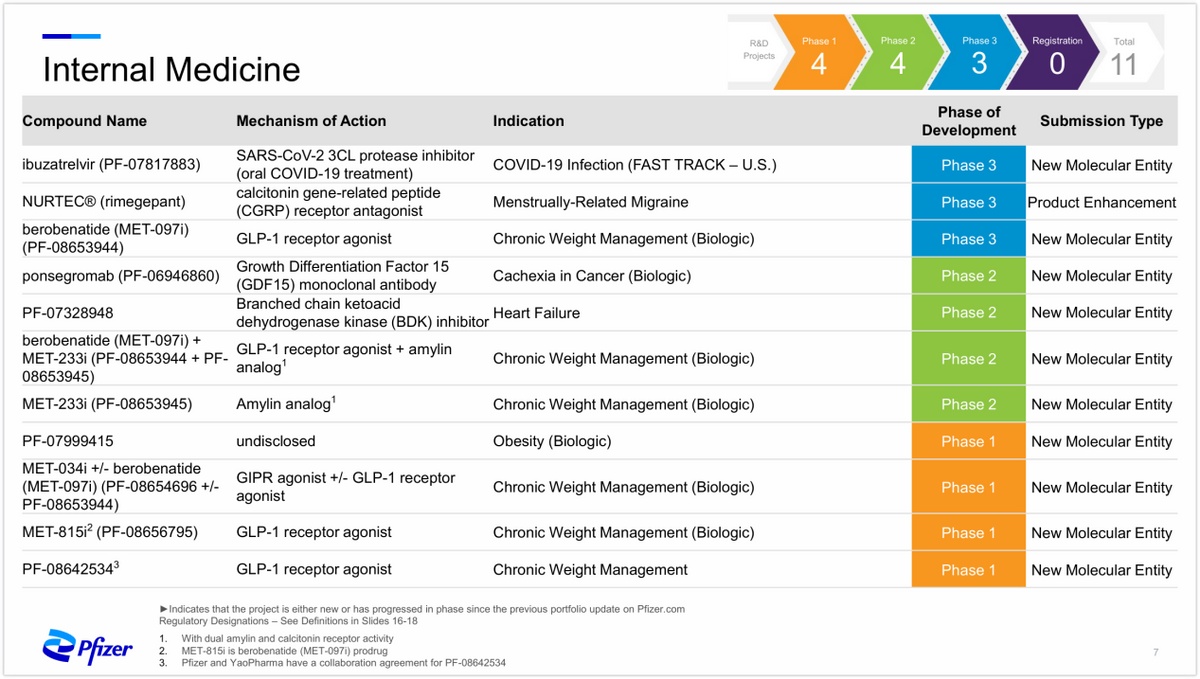
Pfizer's defeat cannot be simply attributed to insufficient technical capability. The competitive iteration speed in the GLP-1 track is far beyond that of conventional drugs, which is a factor worth noting.
From semaglutide's single-target injectable to tirzepatide's dual-target injectable, and now to Eli Lilly's Retatrutide triple-target injectable achieving 22.6% weight loss over 80 weeks, the weight loss magnitude of injectables has completed a three-stage leap from 10% to 15% to over 20% in just three or four years.
In the oral track, Novo Nordisk's Wegovy pill has been on the market for half a year with sales of $846 million, and Eli Lilly's Orforglipron has submitted an application for marketing approval.
At this time, the dilemma faced by followers is that even if the technical route is feasible, by the time clinical trials are completed and marketing approval is obtained, product iterations may have already eliminated latecomers. This is a special period in the entire pharmaceutical track: one development route is iterating as rapidly as consumer goods, and consumers (many users can no longer be called "patients," as they are not using the drugs to treat their own diseases) are also waiting for the latest results like 对待 consumer goods, to decide exactly how to arrange their weight-loss endeavors.
This means that the competitive logic of the weight-loss drug market is completely different from that of traditional metabolic drug tracks. New drug R&D usually follows a cycle of more than ten years, with a relatively leisurely competitive pace; whereas the GLP-1 track is experiencing involution at a speed never seen in the PD-1 era, and the risks of follower-style development are being sharply amplified.
For Chinese innovative pharmaceutical companies, this is both a warning and an opportunity—the warning lies in the fact that the old path of "fast follow" can no longer be taken, and the opportunity lies in the fact that differentiated mechanisms may become the only path to bypass the blockade of giants.
II. Mazdutide's Differentiation Is Not Just a Story Concept, But a Structural Advantage at the Mechanism Level
Compared to existing star weight-loss drugs, the path chosen by Innovent Biologics with Mazdutide is completely different from the generic drug logic of following semaglutide or tirzepatide.
Mazdutide is the world's first natural dual-target GCG/GLP-1 agonist, opening up a differentiated competitive dimension.
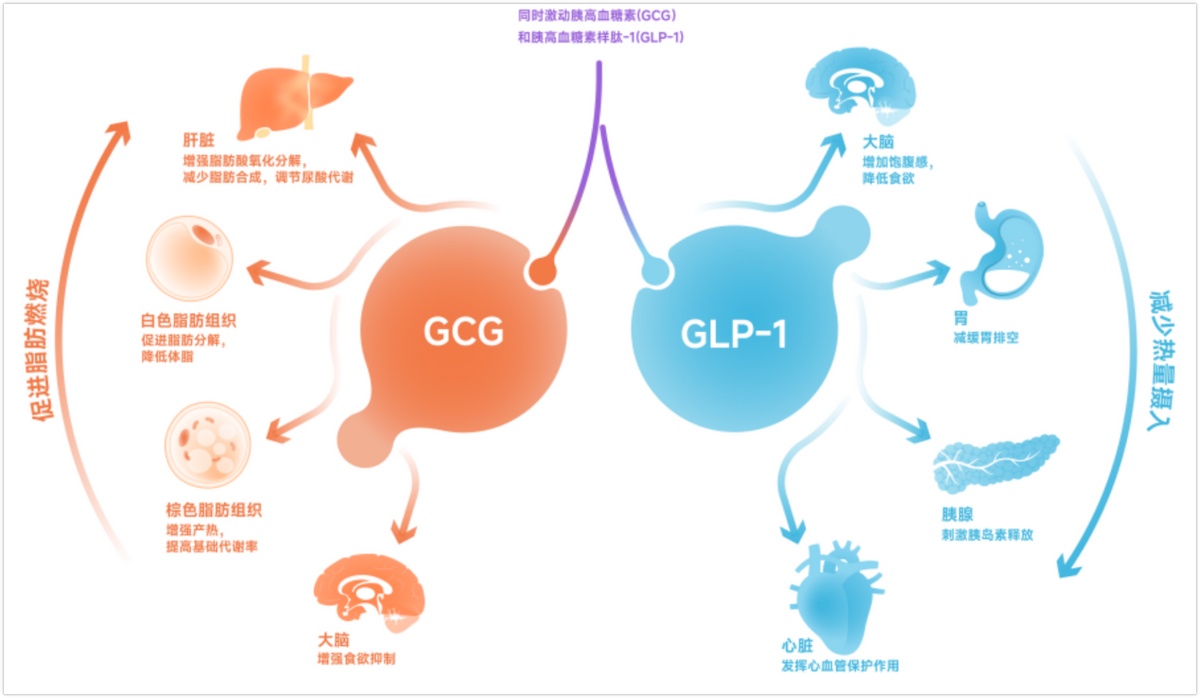
From the perspective of mechanism of action, after GLP-1 receptor activation, appetite is suppressed, reducing caloric intake; after GCG receptor activation, fat tissue decomposition and energy consumption are promoted. These two pathways act on the "intake end" and the "consumption end" respectively in metabolic regulation, and the synergistic effect makes the weight-loss mechanism more complete.
In contrast, single-target GLP-1 drugs such as semaglutide mainly rely on suppressing appetite, and while tirzepatide's dual-target (GLP-1/GIP) also adds the mechanism of delaying gastric emptying at the intake end, it still does not directly activate the energy consumption pathway. Mazdutide's dual-target design forms a unique ecological niche in terms of the completeness of metabolic benefits.
The clinical value of this niche was directly verified head-to-head in the DREAMS-3 study. This global first head-to-head randomized controlled trial comparing the GCG/GLP-1 dual-target agonist Mazdutide with the GLP-1 single-target agonist semaglutide showed: after 32 weeks of treatment, the dual achievement rate of HbA1c below 7% and weight loss exceeding 10% in the Mazdutide group was 48.0%, while that in the semaglutide group was 21.0%. The gap is more than double.
More importantly, Mazdutide improved multiple metabolic indicators such as waist circumference, fasting blood glucose, blood pressure, and blood lipids simultaneously. This means that the clinical value proposition of Mazdutide is not "losing more weight than semaglutide," but rather "achieving more comprehensive metabolic management while losing weight."
And in the GLORY-2 study data disclosed in the first half of the year, among Chinese subjects with BMI not less than 30, Mazdutide 9mg treatment for 60 weeks resulted in an average weight loss of 18.55%, and 44% of subjects achieved a weight loss of over 20%. At the same time, key metabolic indicators such as systolic blood pressure, triglycerides, low-density lipoprotein cholesterol, and serum uric acid were significantly better than placebo.
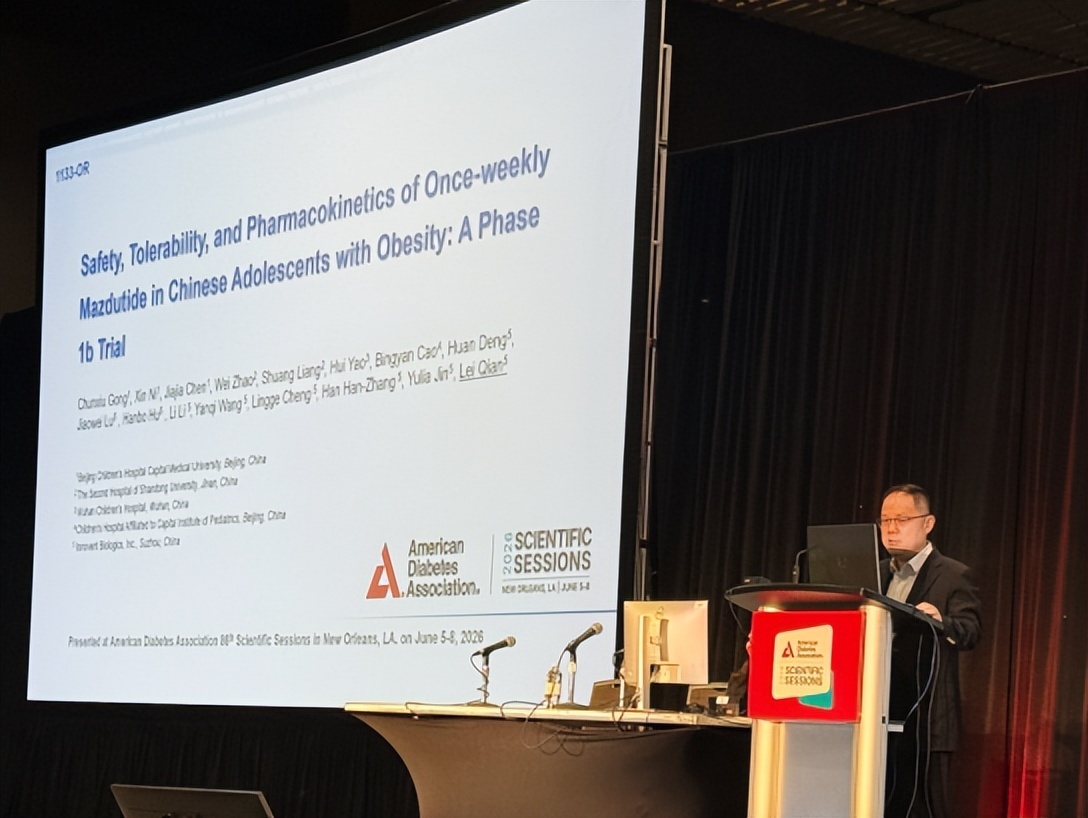
It is worth noting that no significant weight-loss plateau appeared during the entire 60-week treatment process—this means that the pharmacodynamic potential of the drug has not yet been fully explored under the current dosage, and subsequent dosage optimization and long-term data may bring further surprises.
This clinical positioning of "comprehensive metabolic benefits" happens to fit the transformation occurring in the weight-loss drug market, and indeed the entire metabolic health management market.
From the perspective of consumer awareness, the core demand for weight management in the past was body shape and appearance, with consumers pursuing rapid short-term weight loss. However, with the deepening public understanding of the disease attributes of obesity, scientific weight loss is replacing the simple pursuit of dropping scale numbers. Whether indicators such as blood sugar, blood lipids, and blood pressure improve synchronously, whether weight loss effects can be maintained long-term, and whether liver fat content decreases, these dimensions are becoming new standards for measuring the quality of weight management.
From a social trend perspective, since the National Health Commission proposed the concept of a three-year "Weight Management Year" in 2024, weight management has become an important part of national health management strategy, establishing a new foothold for health consumption. Supported by this major trend, Mazdutide's clinical data is supported by evidence across multiple dimensions, making its value assessment framework naturally more complete than products that simply compete on weight loss magnitude.
III. Innovent's Platform Capability Defines Long-Term Value Better Than the Success of a Single Product
Mazdutide is an important window to observe Innovent Biologics' innovation strength.
Regarding how it evolved from an early molecule from Eli Lilly to today's potential star drug, and how much early preparation Innovent made for it, we will not elaborate here. But judging from the results, Innovent indeed completed the entire process from early clinical trials to global Phase III, from process development to commercialization landing, and from a single molecule to topping international top journals in six years. This process verifies not only the druggability of a molecule, but also the systematic platform capability of a Chinese innovative pharmaceutical company.
Based on rigorous preliminary development and strict clinical trials, from drug development to the approval of the weight-loss indication in June 2025 and the diabetes indication in September 2025, the entire cycle was less than seven years, ranking at the top level in the clinical development efficiency of Chinese innovative drugs. After Mazdutide went on the market, it quickly built a multi-channel network centered on public hospitals, with e-commerce platforms and retail pharmacies working in synergy.
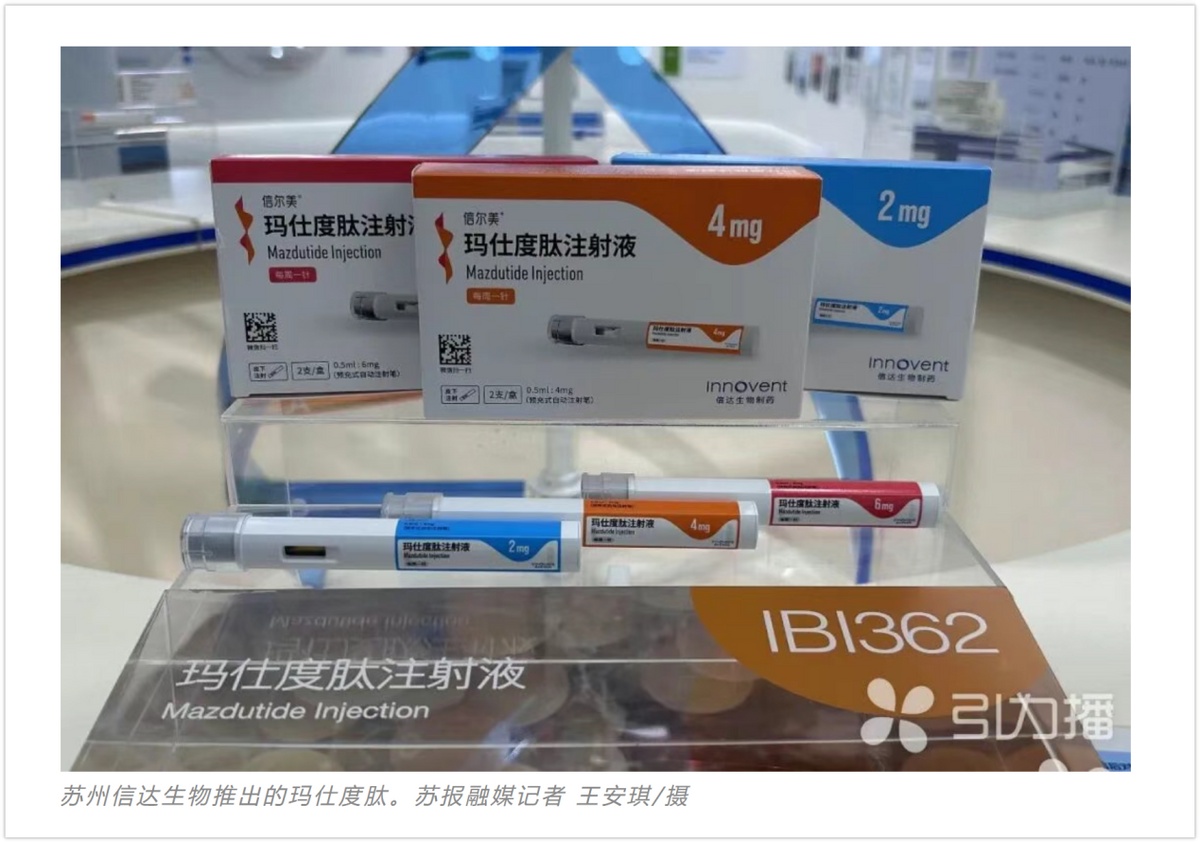
Currently, Innovent is not betting on just one product, Mazdutide. In the field of weight loss and blood sugar reduction, the company has already laid out next-generation pipelines such as ultra-long-acting formulations, oral small molecule GLP-1 (IBI3032), novel amylin analogs (IBI3040), and weekly oral GLP-1 (IBI3042).
In the complete picture of metabolic disease management, Mazdutide forms synergy with the approved Tolresimab (PCSK9 inhibitor, used for lipid management)—obese patients are often accompanied by dyslipidemia, and the two products cover different risk factors of the same patient group. This product matrix covering multiple risk factors is a classic approach of multinational large pharmaceutical companies in the metabolic field.
Additionally, in Innovent Biologics' "old trade" oncology sector, Sintilimab and five newly included TKI drugs in the medical insurance provide stable cash flow; in the metabolic sector, the volume expansion of Mazdutide has just begun. The company's goal of RMB 20 billion in product revenue in 2027 is currently widely accepted by the market.
In the weight loss field, the global race continues.
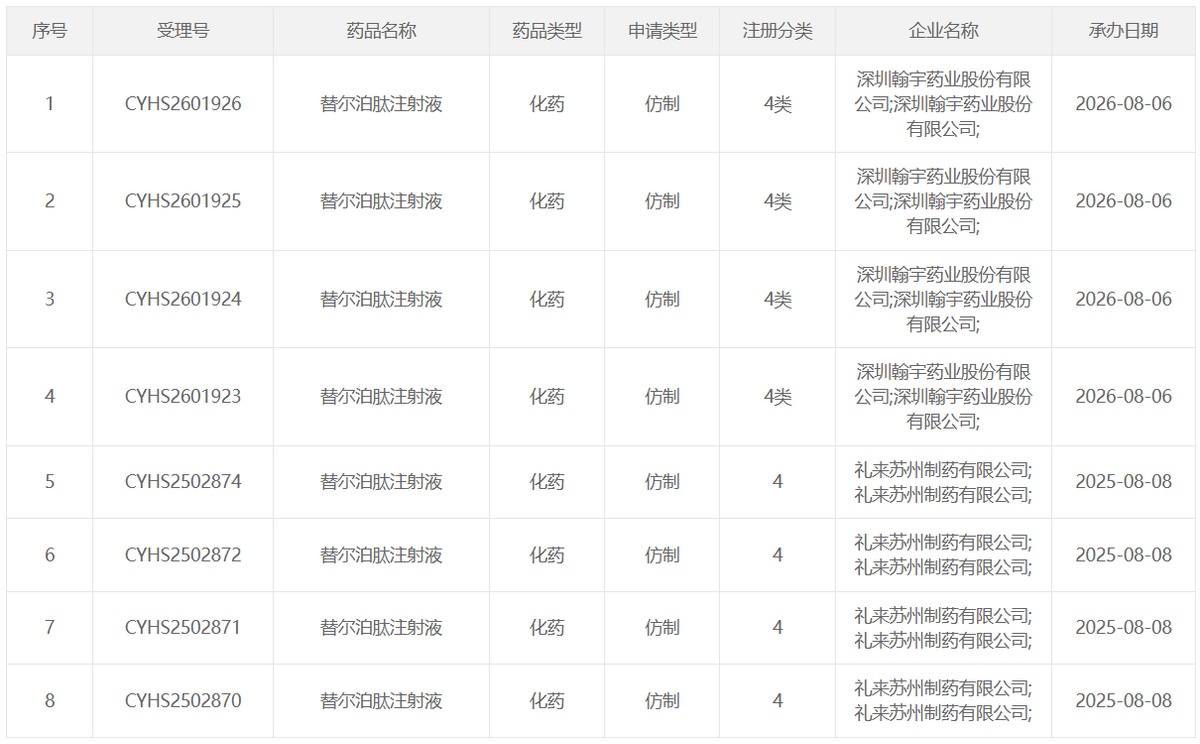
In July, Eli Lilly's Retatrutide triple-target Phase III was successful, achieving 22.6% weight loss over 80 weeks, with plans to submit a marketing application in Q1 2027; the competition for oral GLP-1 is unfolding between Novo Nordisk and Eli Lilly; and the tirzepatide generic drug from Hanway Pharmaceutical has submitted a marketing application domestically.
In such a rapidly evolving market, the success of a single product merely reflects a fact—that continuous iteration of platform capability is the foundation of survival. Innovent Biologics has proven that differentiated mechanisms and systematic platform capabilities can expand their own ecological niche. Next, there are still many stories waiting to be continued.
Source: Pine Finance
The copyright of this article belongs to the original author/organization.
The views expressed herein are solely those of the author and do not reflect the stance of the platform. The content is intended for investment reference purposes only and shall not be considered as investment advice. Please contact us if you have any questions or suggestions regarding the content services provided by the platform.
