



The AI god-making process is also backfiring on the god-makers.
Introduction: Amid the shock of a 12 trillion yuan evaporation in A-share market capitalization in July, public mutual funds are also going through painful adjustments.
In the first half of this year, A-shares welcomed a frenzy belonging to the AI industry chain.
The allocation ratio for the electronics sector by public mutual funds reached 43.31%, and the communication sector reached 16.93%. Combined, these two sectors account for over 60%, setting a historical record. Computing power, optical modules, PCBs, and the AI hardware industry chain have become the most crowded directions in the market.
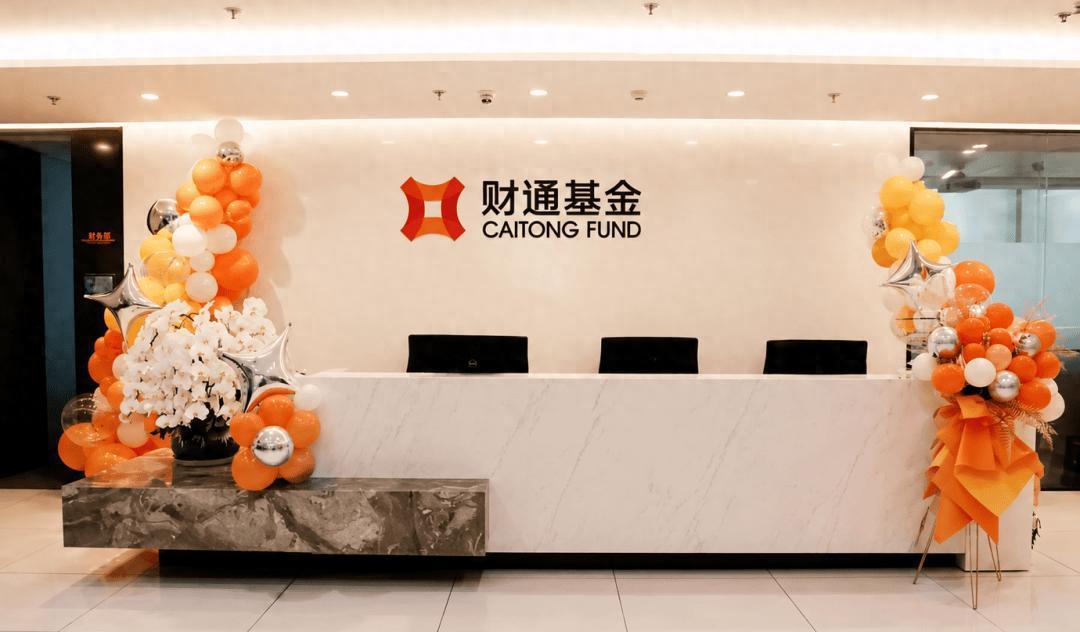
Caitong Fund is undoubtedly one of the brightest winners in this rally.
Jin Zicai, the company's Deputy General Manager and Director of Equity Investment, swept the championships in three categories—hybrid flexible, equity, and equity-biased hybrid—in the first half of the year. Fund investors have nicknamed him the "God of Wealth."
But the market is always like that.
When the tide rises, the strongest stand at the highest point; when the tide recedes, those exposed first are also the ones standing at the highest point.
The sharp drop in tech stocks in July subjected Jin Zicai and Caitong Fund to a dramatic reversal.
The AI rally that once propelled him to the top has also become the biggest factor dragging down the rapid shrinkage of his fund size.
According to insiders, as of the end of July, Jin Zicai's personal managed scale had shrunk to only 30-40 billion yuan, a reduction of 10 billion yuan from 56.5 billion yuan at the end of June.
01 The Peak Moment
Jin Zicai's first half of 2026 was almost a condensed history of the AI investment rally.
According to Wind data, at the end of the first quarter, Jin Zicai's managed scale was only 8.909 billion yuan, but within just three months, this figure rapidly expanded to 56.548 billion yuan,
simultaneously driving explosive growth in Caitong Fund's active equity scale.
At the end of Q1, the company's active equity fund scale was 17.267 billion yuan, reaching 82.775 billion yuan by the end of Q2, an increase of 379.38%, making it one of the fastest-growing public funds in terms of scale across the industry.
The reasons behind this surge in scale are not complex: part comes from net value appreciation, and part from capital chasing performance.
Taking Caitong Growth Optimus, with a scale exceeding 20 billion yuan at the time, as an example, its Class C shares grew from 457 million units at the end of Q1 to 2.552 billion units by the end of Q2.
Another fund, Caitong Value Momentum, with a scale exceeding 10 billion yuan, saw its Class C shares grow from 183 million units at the end of Q1 to 855 million units by the end of Q2.
The helmsman behind these two funds is none other than Jin Zicai.
According to statistics from China Galaxy Securities, as of June 30 this year, the past-year, three-year, five-year, seven-year, and ten-year performance rankings of both Caitong Growth Optimus and Caitong Value Momentum were first among their peers.
Wind data shows that as of August 4, since Jin Zicai took over management of Caitong Value Momentum in 2014, its return over the nearly 12-year period has reached 1261.16%, with an annualized return of 24.96%.
Behind these results is his consistent focus on AI as a main theme in recent years.
As early as 2023, Jin Zicai judged that AI had moved from thematic investment to fundamental realization, gradually buying into overseas computing chains such as Zhongji Innolight, Eoptolink, WUS Printed Circuit, and TFC Optical Communication, and choosing to hold firmly when the market showed divergence on computing prospects.
In the first quarter this year, he positioned himself ahead of the "light" trend, investing in fiber optic chips; in the second quarter, he timely took profits in the optical sector and further focused on scarce links such as MLCC and upstream materials for PCBs.
At the same time, he began to adjust his investment direction.
Jin Zicai explained this in the Q2 report: "Building on our continued optimism for the AI industry trend, we see more and more links in the supply chain becoming tight."
In his view, the AI industry chain has spread from pure computing demand to more upstream manufacturing links, and investment opportunities are changing.
02 The Giant Ship's Dilemma
However, simply understanding Jin Zicai as a fund manager chasing the AI rally is inaccurate.
In fact, even at the peak of market 狂热 (frenzy), he had already begun to actively cool things down.
Wind data shows that the overall average position ratio of funds managed by Jin Zicai dropped from 91.87% at the end of Q1 to 84.13% at the end of Q2, and the concentration of the top ten heavy holdings also decreased from 85.27% to 70.78%.
Meanwhile, starting in May, the funds managed by Jin Zicai experienced a concentrated wave of purchase limits, with the strictest measures capping daily subscriptions for multiple funds at only 100-500 yuan.
To some extent, this approached "closing the door to guests."
He even reminded investors in the quarterly report that although the long-term trend of the AI industry is positive, the price elasticity of scarce upstream links is cyclical, and increased volatility in the sector is inevitable.
The problem lies in that judging a trend does not equate to being able to exit easily.
For a fund manager with a scale nearing 60 billion yuan, adjusting positions is no longer like turning a small boat, but more like adjusting the course of a giant ship.
The direction can be judged, but the speed may not keep up, especially since the subsequent adjustment in tech stocks exceeded many people's expectations.
Wind data shows that as of July 31, the monthly declines of the ChiNext Index, STAR 50, and STAR 100 all exceeded 20%, and active equity funds suffered collective significant drawdowns, with an average decline of -10.69%.
Products managed by Jin Zicai were no exception, with drawdowns in July all exceeding 30%.
03 Profit and Loss Share the Same Origin
The drastic rise and fall in Jin Zicai's scale is not just an issue for an individual fund manager.
The deeper reason is that the investment style formed by Caitong Fund in recent years exhibited a clear "double-edged sword effect" under extreme market conditions.
Wind data shows that as of the end of Q2, the total market value of the top 10 heavy holdings of active equity funds under Caitong Fund was approximately 43.304 billion yuan, accounting for half of the company's active equity fund scale.
Among them, the single-stock holding value of Eoptolink reached 7.092 billion yuan, Yuanjie Technology reached 6.607 billion yuan, and Sanhuan Group reached 4.938 billion yuan.
High concentration in the tech growth track means strong return elasticity during market rallies; however, it also bears greater drawdown pressure when market styles reverse.
This is also the most typical rule of growth stock investing: concentrated holdings mean faster gains when rising, and fiercer adjustments when falling.
The "black" July market scenario 演绎 (enacted) exactly this logic.
More noteworthy is that some products under Caitong Fund also exposed similar problems to varying degrees. For instance, Yuan Zeqiang, who had served as fund manager for less than two months, encountered a "sky-crashing" start.
On June 11, he took over Caitong Technology Innovation Mixed and Caitong Sci-Tech Theme Flexible Mixed. By the end of July, the net values of these two funds had fallen by 33.59% and 30.98%, respectively.
The reason lies in the high concentration of holdings in tech and electronics tracks prior to this, which faced concentrated market downturn shocks simultaneously in July.
One investor joked: "Right at the beginning of my career, I encountered the hardest lesson."
But from a broader perspective, this is not the problem of any single fund manager.
It reflects the common challenges faced by a medium-to-small public fund after rapid scale expansion: how to deal with concentrated investment styles, amplified star effects, and expanded management radius.
04 From "King of Private Placements" to "Light Chaser"
For Caitong Fund, Jin Zicai's importance is beyond doubt.
As of the end of Q2, the active equity fund scale under Caitong Fund was 82.775 billion yuan, while Jin Zicai's personal managed scale reached 56.548 billion yuan.
However, believing that Caitong Fund is solely supported by Jin Zicai actually underestimates the accumulation of this institution over the past decade.
Because the story of Caitong Fund did not start with AI.
Established in 2011, Caitong Fund relies on Caitong Securities and is rooted in Zhejiang, a region active in private economy.
Unlike large fund companies pursuing "large and comprehensive," Caitong Fund chose a more differentiated route early on: private placements.
In 2014, A-shares ushered in a period of rapid development in the private placement market.
Relying on industrial research capabilities and project screening abilities, Caitong Fund participated extensively in listed company private placements, thereby establishing the market label of "King of Private Placements."
According to Wind data, throughout 2025, Caitong Fund ranked first in the public fund private placement market with an allocated amount of 12.396 billion yuan.
In the first half of 2026, the company again ranked first in the industry with 75 allocations and a cumulative investment of 10.967 billion yuan.
Over the past decade, the company has cumulatively participated in over 1,800 private placement projects, with participation amounts exceeding 330 billion yuan.
The core of private placement investment is essentially industrial research, requiring judgment of industry trends, understanding of corporate growth logic, and deep research, which is actually consistent with the industrial investment framework emphasized by Jin Zicai today.
In a sense, Caitong Fund honed its own investment and research capabilities in the private placement market and then migrated this capability to the active equity field.
But the problem lies here too.
Since the beginning of this year, Caitong Fund's most successful direction happens to be the market's most crowded direction.
As of the end of Q2, the allocation ratio for electronics and communication sectors by public mutual funds had exceeded 60%; the allocation ratio for the Main Board dropped to 43.55%, a new low since 2012.
The entire market is betting on AI.
But the most dangerous time in the investment market is often not when there are no opportunities, but when everyone believes opportunities exist only in one direction.
When future years' profit expectations are priced in ahead of time, any changes along the industry chain could trigger a stampede of capital.
Jin Zicai has actually realized this; he lowered positions, reduced concentration, and sought new industry chain opportunities.
But the problem brought by scale growth is that when the managed scale exceeds 50 billion yuan, any adjustment becomes difficult.
For a scale of tens of billions, rebalancing is an action; for a scale of hundreds of billions, rebalancing is an engineering project.
This is also a problem all star fund managers face.
05 Epilogue
From 8.9 billion yuan, to 56.5 billion yuan, back to 30-40 billion yuan.
In just four months, Jin Zicai experienced a complete cycle of "surge – drawdown."
This is not just the rise and fall of a fund manager, but also a stress test for China's medium-to-small public funds on the path to stardom.
Caitong Fund is not without advantages; it boasts a long-term performance record of 935% over ten years and holds a leading position in the public fund private placement sector.
But the issues left by July cannot be ignored either: when a company's scale growth heavily relies on a single star fund manager, how can personal ability truly 沉淀 (precipitate/settle) into organizational capability?
After the "one person fighting the world" model reaches its extreme, how can the transition from star-driven to platform-driven be completed?
Jin Zicai wrote at the end of the Q2 report: "We will continue to adhere to industrial research as the foundation, optimize mid-sector allocation rotation, and pursue the foresight, traceability, and replicability of investment."
One sentence among them appears particularly thought-provoking after July: "Strive to manage larger swings well, enhancing investors' experience and sense of gain."
For Jin Zicai and Caitong Fund, the real challenge may not be catching the next AI wave, but proving themselves not just as winners in a specific market rally before the next cycle arrives.
The copyright of this article belongs to the original author/organization.
The views expressed herein are solely those of the author and do not reflect the stance of the platform. The content is intended for investment reference purposes only and shall not be considered as investment advice. Please contact us if you have any questions or suggestions regarding the content services provided by the platform.
