


Temasek, Tencent and other top-tier cornerstone investors provide support; AI optical module leader Zhongji Innolight launches Hong Kong IPO, at a 23% discount to its A-share listing
On July 22, InnoLight (03308.HK) launched its IPO:
Sponsors: Goldman Sachs, CICC, Morgan Stanley, GF Securities
Cornerstone Investors: Temasek, Hillhouse, BlackRock, Morgan Asset Management, Mubadala Investment Company, Alibaba, Tencent, Yunfeng Capital, Bain Capital, CPE Source Peak, Boyu Capital, and 33 other cornerstone investors, accounting for a total subscription ratio of 49.12%
IPO Price: Not exceeding HKD 1,010.00 (same below)
Funds Raised: HKD 55.045 billion
Total Market Cap: HKD 1.18 trillion
Circulating Market Cap: HKD 55.045 billion
Lot Size: 50 shares
Minimum Subscription Fee: HKD 51,009.29
IPO Period: Deadline on July 27
Listed Date: July 30
Total Lots: 1.09 million lots
Public Allocation Lots: 109,000 lots
Sub-Unit B: HKD 4.0807 million
Unit A Head: HKD 5.1009 million
Clawback Mechanism: Option B, no mandatory clawback
Greenshoe: Yes
Over-allotment Option: No
Issuance Ratio: 4.66%
The predecessor of InnoLight's main entity was Longkou Zhongji Electrical Machinery Co., Ltd., founded by Wang Weixiu in June 2005 in Longkou, Shandong. After undergoing shareholding reform, it became Zhongji Equipment. The company was officially listed on the ChiNext Board of the Shenzhen Stock Exchange in April 2012, with stock code 300308. In 2017, the company completed the full acquisition of Suzhou 旭创 (Suzhou 旭创), founded by returned overseas doctoral student Liu Sheng in 2008, subsequently renaming itself to InnoLight and fully transitioning to high-end optical module business, while remaining listed on the ChiNext Board of the Shenzhen Stock Exchange.
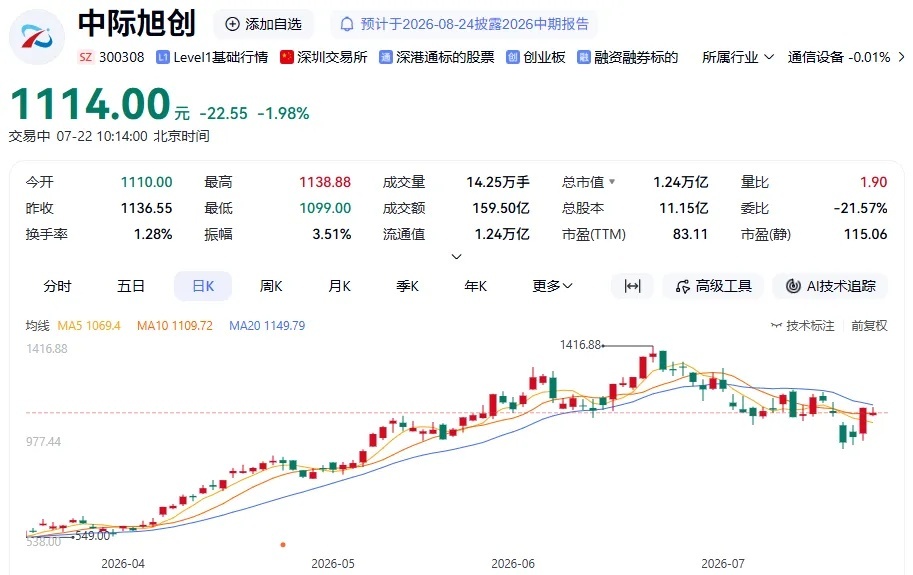
Over the past year, InnoLight's stock price surged from around RMB 125 to a high of over RMB 1,416, accumulating a gain of more than 10 times, becoming one of the biggest winners in this round of AI rally in the A-share market. As of the time of writing, InnoLight (300308.SZ) fell 1.98%, reporting at RMB 1,114.00, with a total market cap of RMB 1.24 trillion.
Source: Baidu Stock Market ▲
Main Business
IPO FOCUS
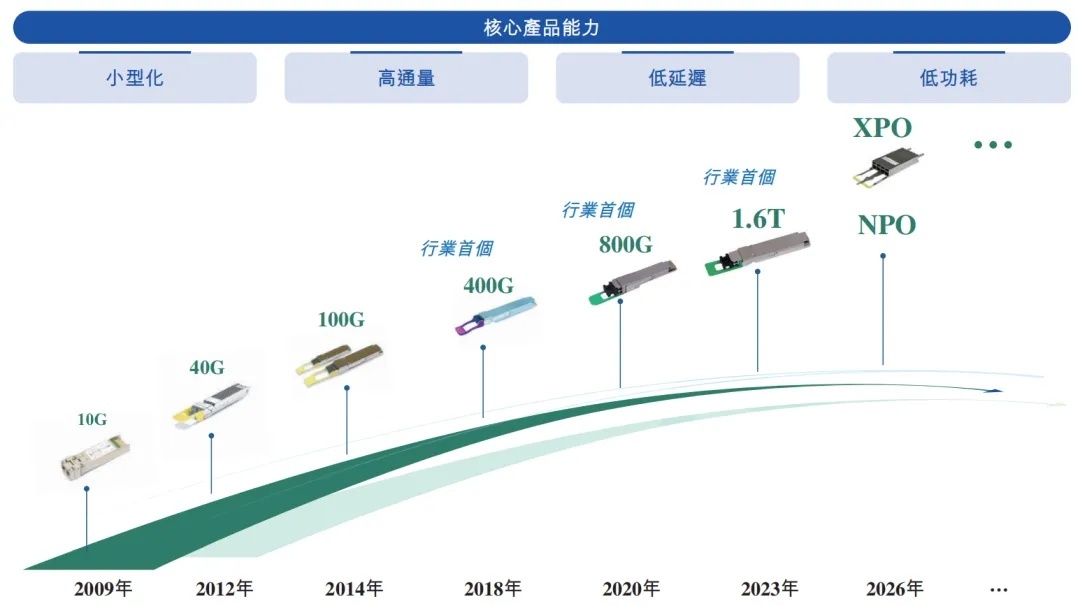
InnoLight is a globally leading provider of optical interconnection solutions. Its products cover the full rate range from 10G to 1.6T optical modules, mainly adopting packaging formats such as OSFP and QSFP-DD, serving both datacom and telecom sectors, and widely used in high-speed connection scenarios within and between data centers.
Source: Prospectus ▲
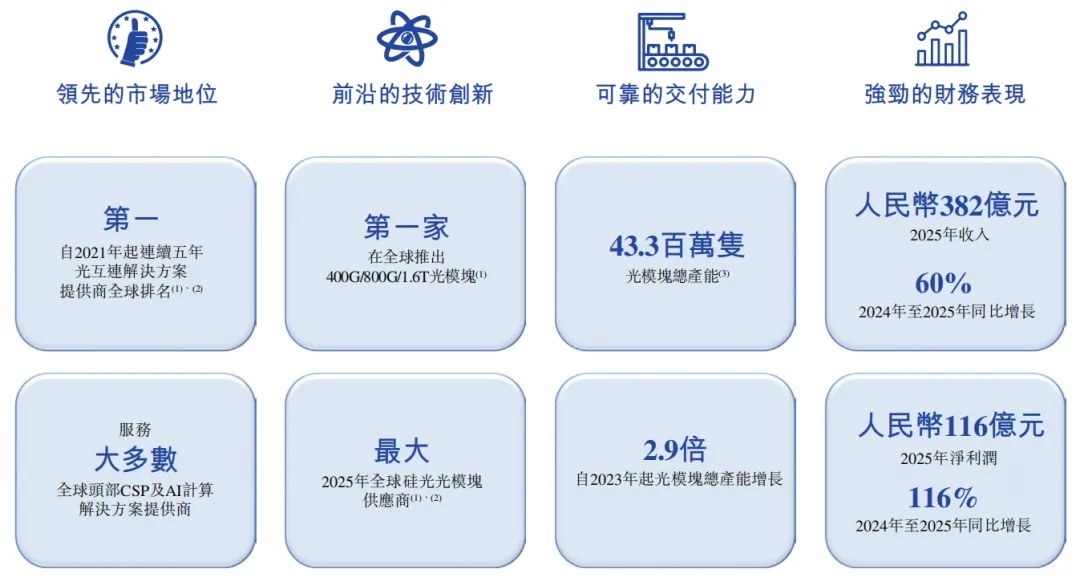
According to Frost & Sullivan, the company has been the global optical interconnection solution provider with the largest revenue for five consecutive years since 2021. In 2025, its overall market share was 21.2%, and its share in the high-speed datacom segment of 400G and above further increased to 28.1%, firmly ranking first in the industry.
Source: Prospectus ▲
From a technological perspective, the company achieved mass production of three generations of high-speed optical modules: 400G (2018), 800G (2020), and 1.6T (2023). According to Frost & Sullivan, the mass production timing for all three was approximately half a year ahead of the closest competitor. The company pioneered non-hermetic packaging solutions in 2012 and achieved silicon photonics optical module mass production starting in 2017. By 2025, it had become the world's largest silicon photonics optical module supplier by revenue, with silicon photonics technology products accounting for approximately 70% of high-speed product revenue. The company began laying out coherent technology in 2018, pioneering Coherent Lite technology, and successively showcased the industry's first 800G Coherent Lite optical module, 12.8T XPO optical module assembly, and 6.4T NPO module at the OFC 2025 and 2026 exhibitions. As of March 31, 2026, the company held 506 authorized patents.
Regarding customers, according to public statements by Liu Sheng and multiple reports, Google was the company's earliest certified top-tier customer. Cooperation began in 2011, with early 40G optical modules being custom-developed for Google. Google Ventures also invested in Suzhou 旭创, which aligns with the cooperation start year of the largest customer mentioned in the prospectus. According to public reports, Microsoft, Amazon AWS, Meta, and NVIDIA are also core customers of the company: holding approximately 30% to 40% share in Amazon AWS's 800G procurement, about 50% share in Microsoft's direct procurement system, and becoming one of the main suppliers of NVIDIA's 800G optical modules starting in 2025. In the domestic market, it is an important supplier to Huawei and Alibaba.
In terms of sales volume, the company's optical module delivery volume increased from 7.5 million units in 2023 to 14.6 million units in 2024, and further to 21.1 million units in 2025, reaching 9 million units in the first quarter of 2026 alone. The growth in high-speed optical module sales was particularly significant, increasing from 2.504 million units in 2023 to 14.612 million units in 2025.
Regarding average selling prices, the average selling price of high-speed optical modules (excluding taxes) decreased from RMB 2,838 in 2023 to RMB 2,212 in 2024, primarily reflecting the natural downward price trend due to the product life cycle. It then rebounded to RMB 2,333 in 2025 due to product mix upgrades, and further rose to RMB 2,458 in the first quarter of 2026. The average price of medium-to-low-speed optical modules gradually declined from RMB 621 in 2023 to RMB 520 in 2025.
In terms of capacity and global layout, as of March 31, 2026, the company's annualized capacity reached 43.3 million units, representing a 2.9-fold increase compared to 2023. The company operates five major production bases and four R&D centers globally, with offices in Singapore and the United States, and production facilities in Thailand. For the three months ended March 31, 2026, overseas market revenue accounted for over 90% of total revenue.
Regarding R&D investment, as of March 31, 2026, the company employed 2,292 full-time R&D personnel, including over 1,700 R&D professionals with an average of nine years of industry experience; all core technologies were independently developed. The company is also actively laying out emerging technology directions such as NPO, CPO co-packaging technologies, and XPO ultra-high-density pluggable optical modules, showcasing multiple industry-first products at the OFC 2026 exhibition.
Industry Outlook
IPO FOCUS
According to Frost & Sullivan data, the total global AI capital expenditure amounted to approximately USD 0.9 trillion from 2021 to 2025, and is expected to further increase to USD 6.1 trillion from 2026 to 2030, more than five times that of the previous five years. As a key technological path to unleash the performance of AI computing clusters, optical interconnection is expected to account for about 5% of global AI capital expenditure in 2025, with long-term potential to rise to about 10%.
According to LightCounting and Frost & Sullivan data, the global optical interconnection market size will grow from USD 24.8 billion in 2025 to USD 111 billion in 2030, with a compound annual growth rate (CAGR) of 31.6% from 2026 to 2030. The datacom sector is the main driver of market expansion, with its size expected to expand from USD 19.4 billion in 2025 to USD 98.6 billion in 2030, achieving a CAGR of 33.8%, significantly faster than the telecom sector.
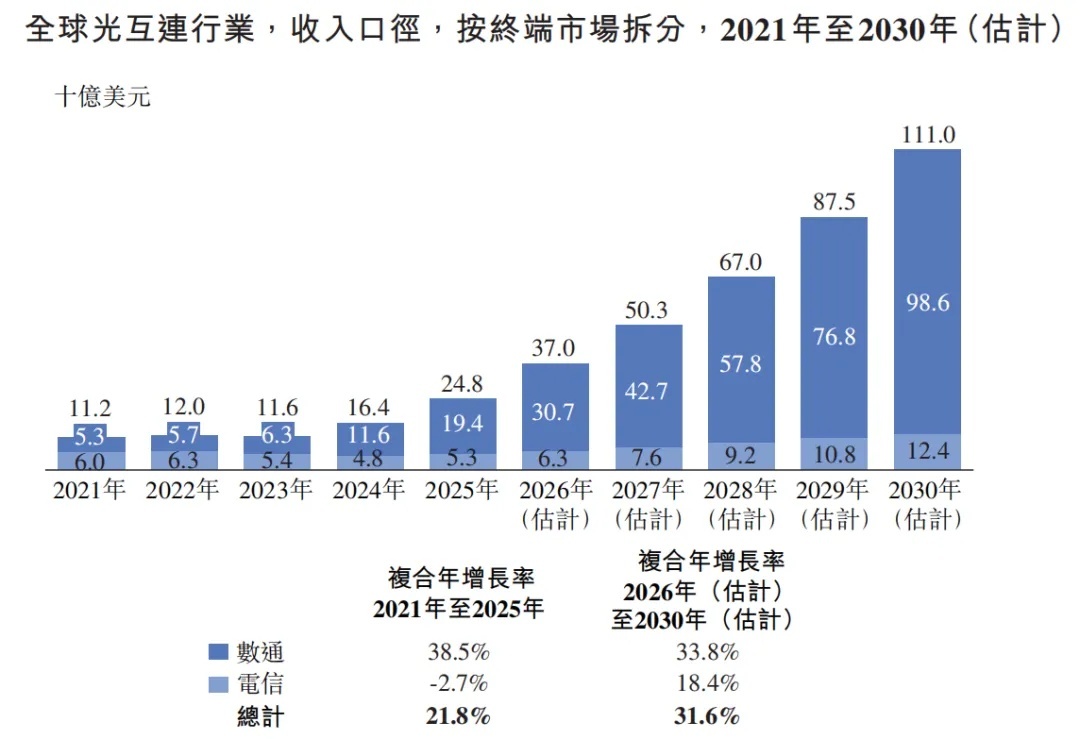
Source: Prospectus ▲
From the perspective of product rate structure, 800G products have fully entered the large-scale deployment phase in 2025, and 1.6T products have simultaneously transitioned to mass production. The CAGR from 2026 to 2030 is expected to reach 57.6%, making it the mainstream deployment solution for the next five years. Commercial validation of 3.2T products is also accelerating. In contrast, the proportion of 400G and below products is expected to continue to shrink.
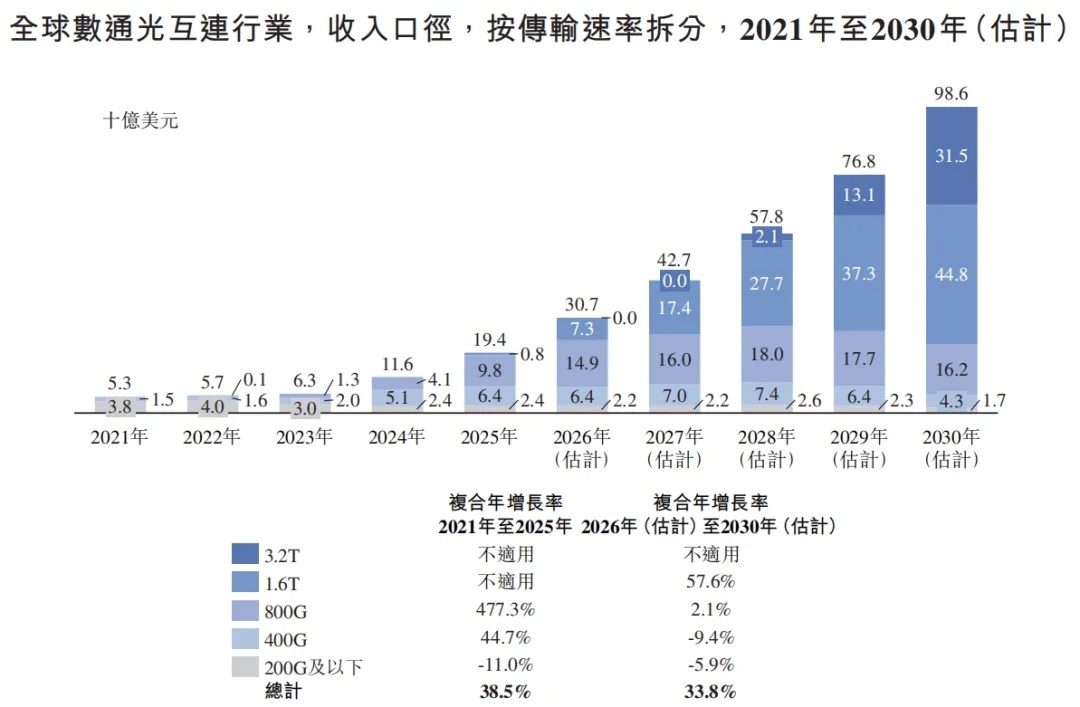
Source: Prospectus ▲
There are several potential upward drivers in the industry: First, the shipment of xPUs in AI computing clusters is expected to increase from approximately 14 million units in 2025 to approximately 60 million units in 2030, with a CAGR of about 34%. Second, the optical interconnection port ratio in scale-out networks is expected to continue to increase as cluster scales expand. Third, in scale-up networks previously dominated by copper connections, optical penetration is expected to rise to the 20%-30% range in the coming years, opening up incremental space.
Shareholding Structure
IPO FOCUS
Prior to the offering, the company's single largest shareholder group consisted of Mr. Wang Weixiu, Longkou Zhongji Zhiyuan, and Mr. Wang Xiaodong (son of Mr. Wang Weixiu), forming a concert party relationship. The three parties collectively held 17.34% of shares, of which Zhongji Holdings held 10.89% (with equity interests held by Mr. Wang Weixiu, Longkou Zhongji Zhiyuan, and Mr. Wang Xiaodong at 52.06%, 28.66%, and 19.28% respectively). Mr. Wang Weixiu additionally held 6.25% directly, and Mr. Wang Xiaodong held 0.19% directly.
Dr. Liu Sheng, Chairman and President of the company, and his concert party entities (Suzhou Yixingfu, Suzhou Yunchangjin, Suzhou Youhuiran, ITC, Suzhou Zhouyuran, Suzhou Furuihui, and Suzhou Ruilinan) collectively held 8.56%.
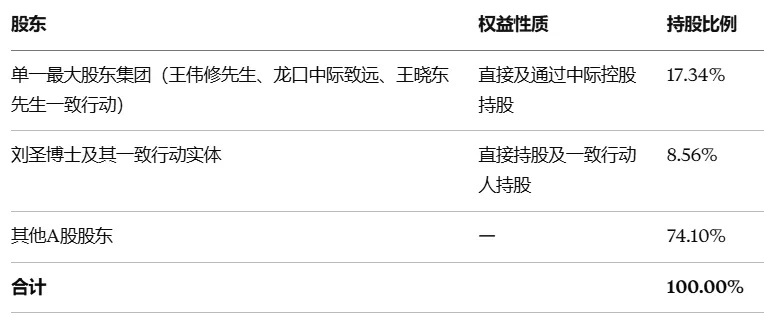
Chart: IPO Focus ▲
Financial Data
IPO FOCUS
Regarding Revenue, the company's revenue increased from RMB 10.72 billion in 2023 to RMB 23.86 billion in 2024, and further to RMB 38.24 billion in 2025, with a CAGR of approximately 88.9% from 2023 to 2025. Revenue in the first quarter of 2026 was RMB 19.50 billion, representing a year-on-year increase of 192.1%. Revenue growth was primarily driven by the surge in sales of high-speed optical modules, whose revenue share increased from 66.3% in 2023 to 89.2% in 2025, and further to 94.6% in the first quarter of 2026.
Regarding Gross Profit, the company's gross profit increased from RMB 3.38 billion in 2023 to RMB 15.88 billion in 2025, with a CAGR of approximately 116.6%. The overall gross margin increased from 31.6% to 41.5% during the same period, and further to 45.5% in the first quarter of 2026, primarily benefiting from the continuous increase in the revenue share of high-margin high-speed optical modules.
Regarding Net Profit, the company's net profit increased from RMB 2.21 billion in 2023 to RMB 5.37 billion in 2024, and further to RMB 11.58 billion in 2025, with a CAGR of approximately 129.0%. The net profit margin increased from 20.6% to 30.3% during the same period, with net profit reaching RMB 6.32 billion in the first quarter of 2026.
Regarding R&D expenses, the company's R&D costs increased from RMB 740 million in 2023 to RMB 1.62 billion in 2025, with a CAGR of approximately 47.8%. The proportion of R&D expenses to operating expenses increased from 54.9% to 61.8%, maintaining a high level of around 56.8% in the first quarter of 2026, reflecting the company's continuous investment in maintaining its technological leadership.
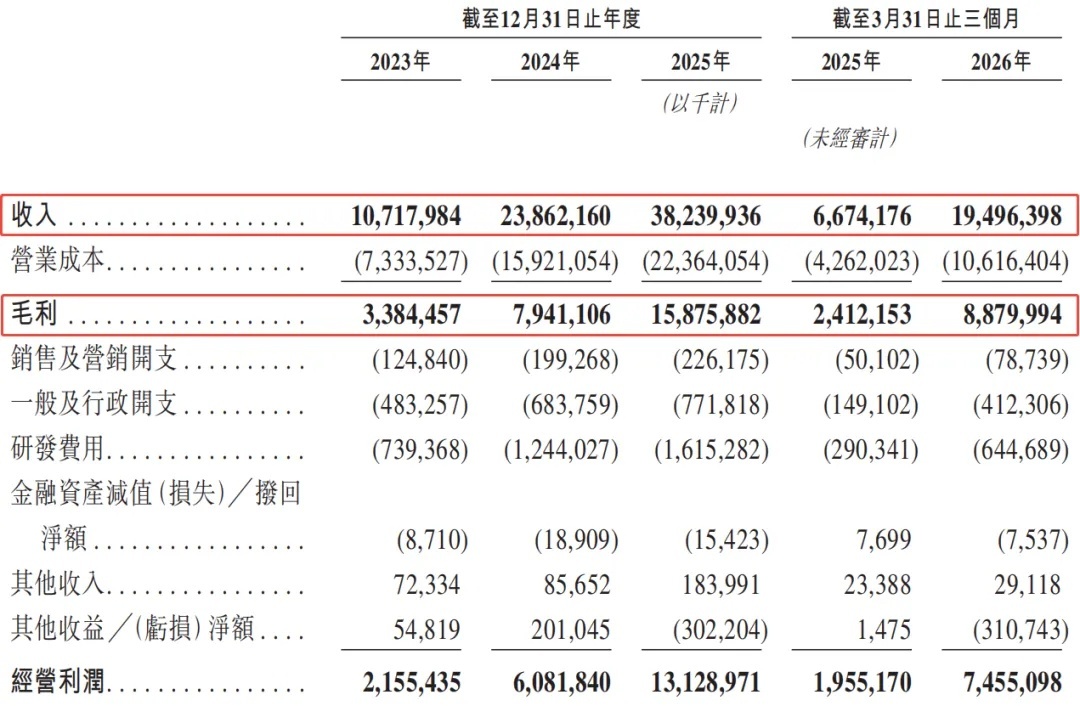
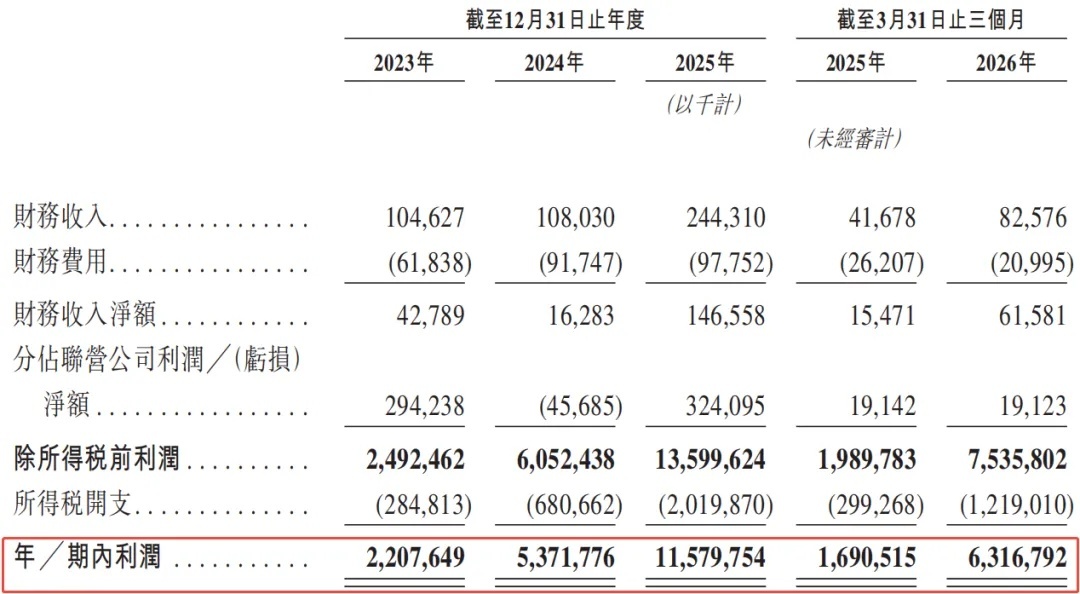
Source: Prospectus ▲
Regarding Adjusted Net Profit, after excluding the impact of non-cash items such as share-based payment expenses, the company's adjusted net profit increased from RMB 2.36 billion in 2023 to RMB 5.59 billion in 2024, and further to RMB 11.85 billion in 2025. The adjusted net profit margin increased from 22.1% to 31.0% during the same period. In the first quarter of 2026, the company's adjusted net profit was RMB 6.62 billion, a significant increase from RMB 1.74 billion in the same period of 2025, with the adjusted net profit margin rising from 26.0% to 33.9%.
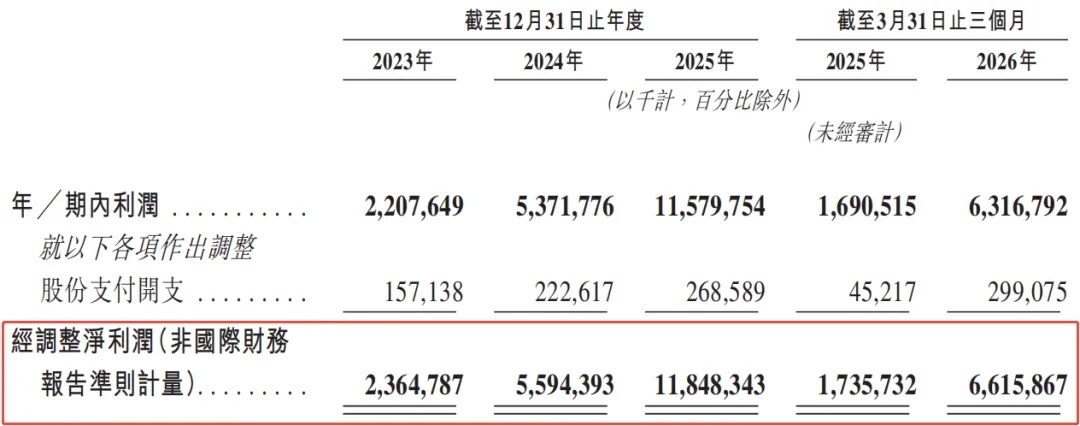
Source: Prospectus ▲
In terms of revenue structure, by region, the United States is the company's largest source of revenue, contributing RMB 21.90 billion in 2025, accounting for 57.3%. The revenue share from mainland China decreased from 15.3% in 2023 to 9.4% in 2025, while the revenue share from other overseas regions (mainly Singapore, Netherlands, UK, and Hong Kong, China) increased from 8.8% to 33.3%, reflecting the deepening globalization of the company's customer and capacity layout.
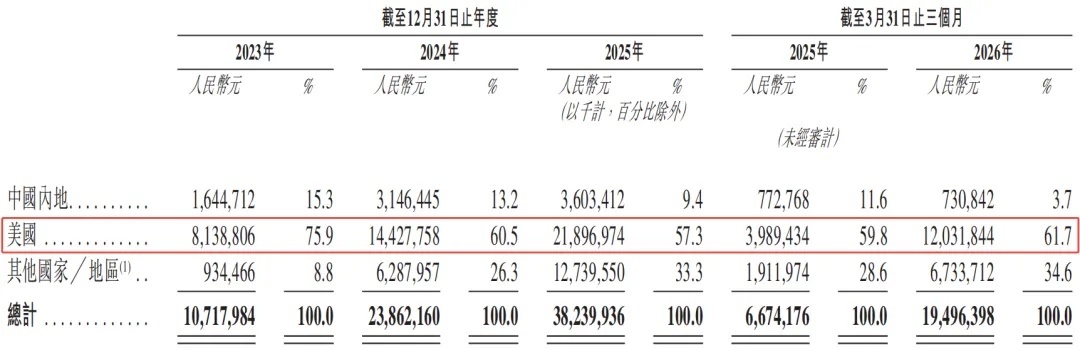
Source: Prospectus ▲
By product, the majority of the company's revenue comes from high-speed optical modules, which contributed 89.2% of revenue for the full year of 2025.
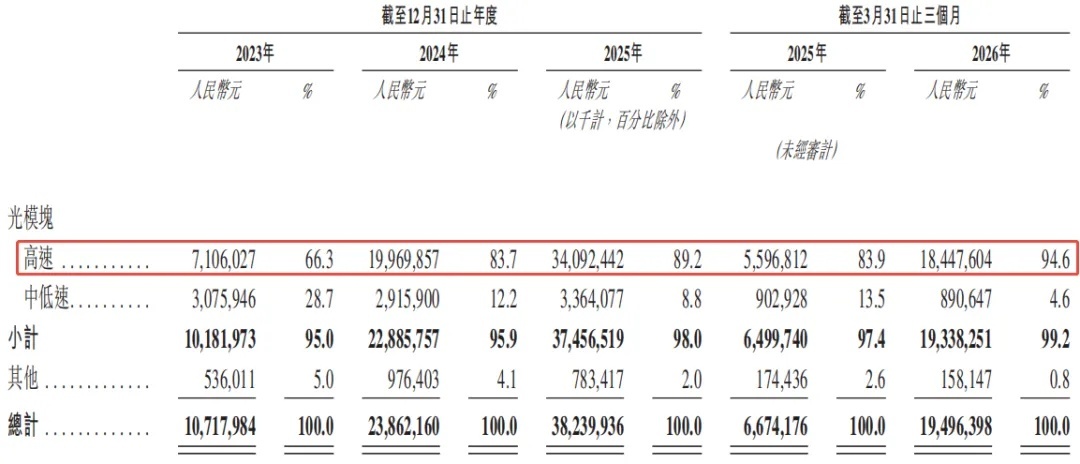
Source: Prospectus ▲
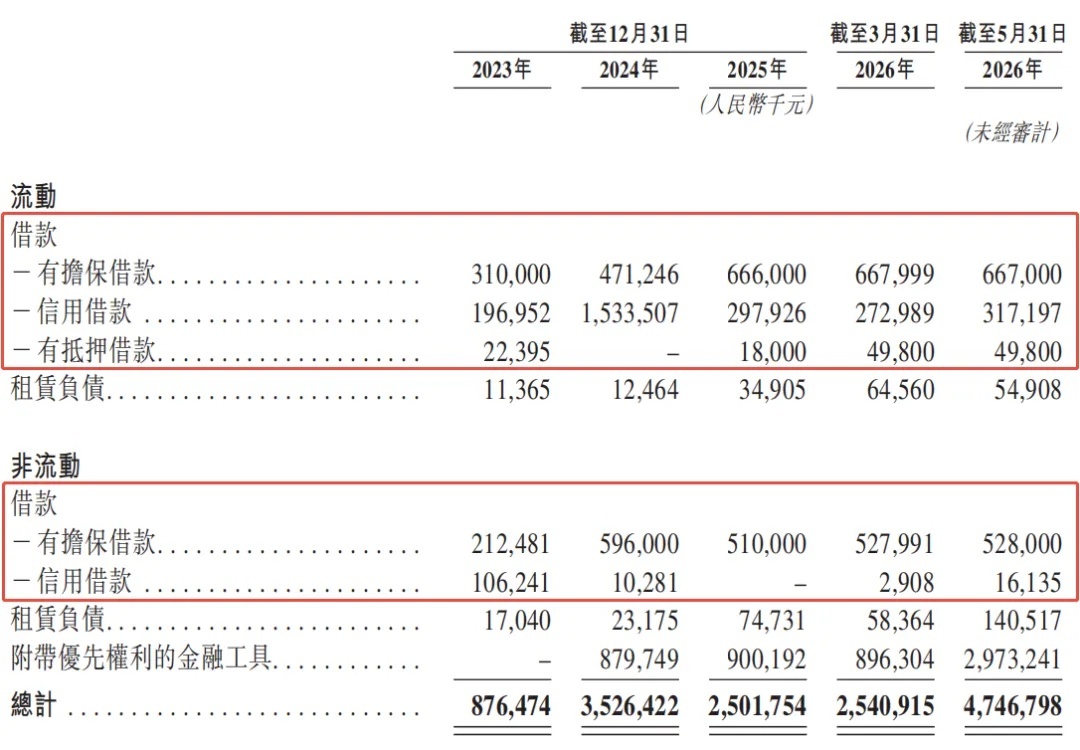
Regarding liabilities, the company's borrowings scale increased from RMB 850 million in 2023 to RMB 2.61 billion in 2024, primarily due to funding needs brought by business expansion. It decreased to RMB 1.49 billion in 2025, mainly due to loan repayments, and rebounded to RMB 1.52 billion at the end of the first quarter of 2026. During the same period, the asset-liability ratio remained in a relatively low range of 26% to 33%, indicating robust overall financial leverage for the company.
Source: Prospectus ▲
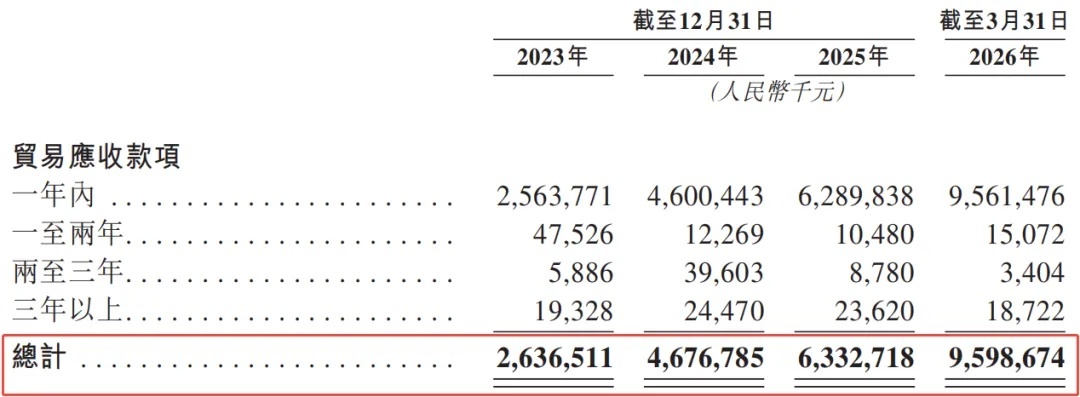
Regarding accounts receivable, the company's trade receivables increased from RMB 2.64 billion at the end of 2023 to RMB 6.33 billion at the end of 2025, and further to RMB 9.60 billion at the end of March 2026, primarily due to the expansion of revenue scale. However, the trade receivables turnover days continuously shortened from 71 days to 56 days, 53 days, and 37 days during the same period, indicating continuous improvement in collection efficiency. As of May 31, 2026, 80.1% (approximately RMB 7.69 billion) of the trade receivables at the end of the first quarter of 2026 had been settled post-period, indicating that the overall collection risk is controllable.
Source: Prospectus ▲
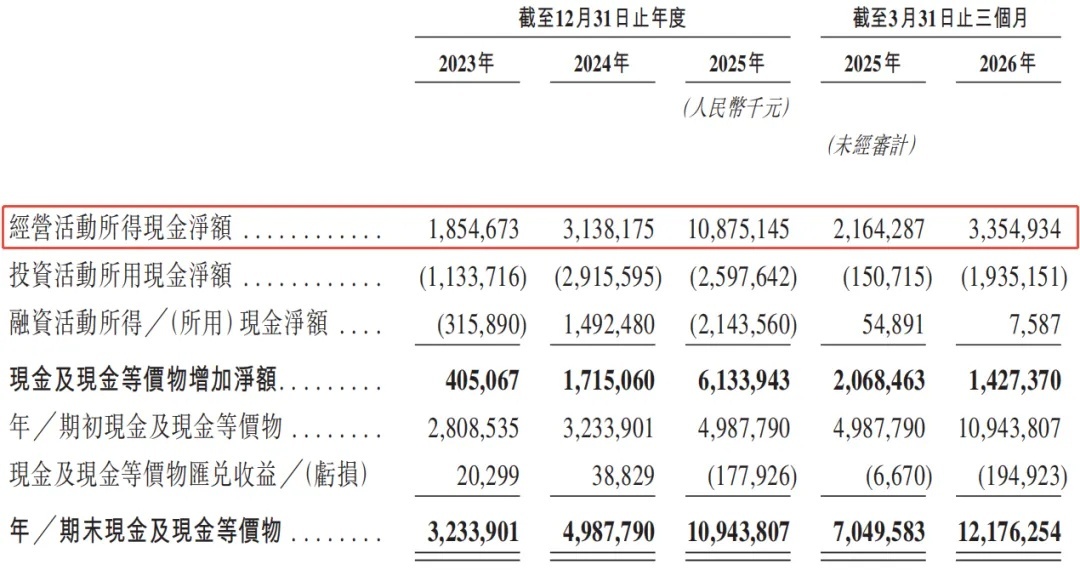
Regarding cash flow, the company's net cash generated from operating activities increased from RMB 1.85 billion in 2023 to RMB 3.14 billion in 2024, and significantly to RMB 10.88 billion in 2025, reaching RMB 3.36 billion in the first quarter of 2026.
It is worth noting that the alignment between operating cash flow and net profit narrowed once between 2023 and 2024—operating cash flow accounted for 84.0% of current net profit in 2023, dropping to 58.4% in 2024. This was primarily because the rapid business expansion led to inventory and trade receivables growing faster than trade payables, occupying more working capital. This gap significantly converged in 2025, with operating cash flow recovering to 93.9% of net profit, mainly benefiting from a RMB 430 million increase in trade payables that year and the continuous improvement in accounts receivable turnover days. Operating cash flow in the first quarter of 2026 was approximately 53.1% of the current net profit, mainly related to the temporary occupation of working capital caused by the 192.1% year-on-year surge in revenue that quarter. However, considering the post-period collection ratio has already exceeded 80%, the company's overall collection quality remains healthy.
Source: Prospectus ▲
The copyright of this article belongs to the original author/organization.
The views expressed herein are solely those of the author and do not reflect the stance of the platform. The content is intended for investment reference purposes only and shall not be considered as investment advice. Please contact us if you have any questions or suggestions regarding the content services provided by the platform.
