



Third Submission: Why Is Xinmai Semiconductor's Growth Still Pressuring Gross Margins?
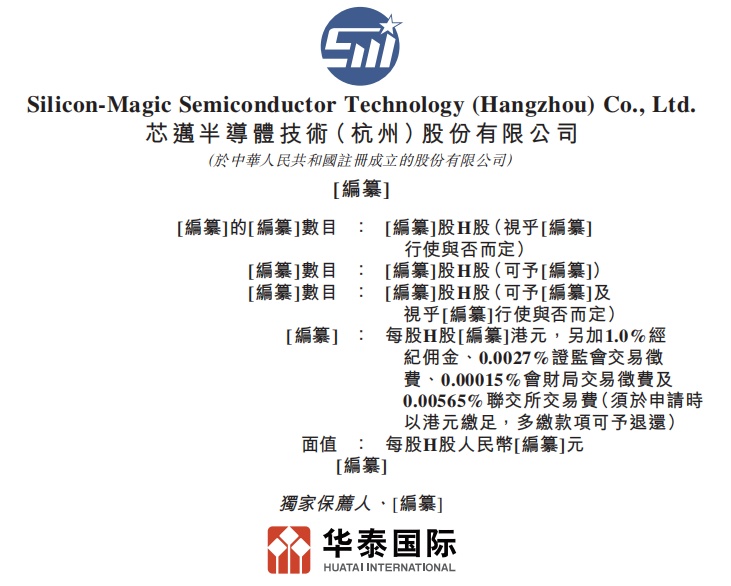
On July 20, Xinmai Semiconductor submitted its third application for listing on the Main Board of the Hong Kong Stock Exchange, with Huatai International serving as the sole sponsor. The latest prospectus updates the financial period to April 30, 2026: revenue in the first four months reached 837 million yuan, a year-on-year increase of 46.5%, with net profit at 28.478 million yuan; meanwhile, the gross margin dropped from 31.0% to 26.2%, and operating cash flow saw a net outflow of 97.552 million yuan. Revenue, profit, and cash flow present three divergent directions.
Industrial applications and power devices are beginning to scale up, but this increased volume has not yet synchronously improved profit quality. Whether the third filing can change external perceptions depends on whether the business transition can convert shipment volumes into stable gross margins and customer expansion into sustainable cash flows.
Smartphones remain the core business, while industry growth is shifting toward automotive, industrial, and high-density power supply
The value per analog chip may not be high, but its lifecycle, certification cycle, and customer stickiness are sufficiently long.
Based on 2025 revenue, Xinmai ranked third globally in the smartphone PMIC market with a 2.9% share, and fifth in the global display PMIC market with an 8.5% share. When expanded to the entire PMIC and MOSFET markets, the company's shares were only 0.4% and 0.1%, respectively. These niche rankings prove that Xinmai has entered the supply chains of leading smartphone and display manufacturers, while the lower overall market share indicates that the company still has a distance to cover before becoming a cross-terminal power semiconductor platform.
Industry growth is changing the direction of expansion.
The global PMIC market size is expected to grow from 382.5 billion yuan in 2025 to 561.4 billion yuan in 2030, with a CAGR of 8.0%; automotive PMICs are projected to grow by 10.9% during the same period, reaching 129.8 billion yuan in 2030. The expected CAGR for smartphone PMICs between 2025 and 2030 is only 1.0%. The global MOSFET market reached 110.2 billion yuan in 2025, with automotive electrification, industrial automation, and high-density power supply demands in AI data centers becoming the main sources of product upgrades.
While industry volume continues to grow, revenue distribution is shifting. Smartphone PMICs rely more on increasing value per unit, while demand from automotive, industrial, and computing infrastructure covers more voltage levels, power densities, and thermal scenarios. For Xinmai, relying solely on consumer electronics recovery is unlikely to support long-term expansion; product boundaries must extend to motor drives, battery management, server power supplies, and automotive electronics.
Xinmai's revenue structure has already adjusted proactively. The proportion of consumer electronics revenue dropped from 96.1% in 2023 to 61.4% in the first four months of 2026, industrial applications rose from 1.4% to 32.9%, and automotive electronics rose to 4.1%. Smartphone PMICs continue to provide a customer base, while industrial power supplies, motor drives, BMS, communication equipment, and server power supplies begin to drive incremental growth.
Xinmai has established advantages in consumer electronics, and industrial revenue is growing rapidly, while automotive and AI servers are still in the product introduction and customer validation stages. Whether new scenarios can replicate the design-win capabilities of the mobile phone and display businesses will determine future revenue space.
Power devices support growth speed, but also pull the overall gross margin to a lower level
In 2025, Xinmai's revenue was 1.953 billion yuan, a year-on-year increase of about 24%, with net losses narrowing to 278 million yuan; in the first four months of 2026, revenue grew 46.5% year-on-year, and net profit turned positive.
Improvements mainly came from increased shipments and higher contributions from power devices. Profit during the period was also supported by fair value gains from investments in non-listed companies and exchange rate gains. While turning a profit is noteworthy, the composition of profits still needs to be dissected.
Power device revenue increased from 38.77 million yuan in 2023 to 494 million yuan in 2025, reaching 302 million yuan in the first four months of 2026, accounting for 36.1% of total revenue; meanwhile, PMIC revenue share dropped to 63.9%. In the first four months of 2026, the PMIC gross margin was 35.4%, with the display business reaching 43.4%, while the power device gross margin was 10.0%.
Power devices have moved from negative to positive gross margins, though there is still a significant gap compared to PMICs. The company's overall gross margin dropped from 33.4% in 2023 to 27.2% in 2025, and further to 26.2% in the first four months of 2026. The more revenue growth relies on power devices, the more pronounced the dilution effect of the product mix on overall profitability becomes.
This is also the part of Xinmai's transformation that needs most dissection. The volume increase in power device revenue represents the company entering the industrial and power equipment supply chain, while the 10% gross margin indicates that related products are still in the capacity ramp-up, product iteration, and customer expansion phases. Scale growth has appeared, but improvements in pricing power, yield rates, and unit costs are not yet complete.
The regional structure presents the same contradiction.
In the first four months of 2026, the revenue share from mainland China rose to 37.3%, while overseas revenue share dropped to 51.5%; the gross margin for mainland China business was 10.3%, and for overseas business, it was 32.2%. The prospectus explains that geographic revenue is counted by delivery destination, and some overseas data reflects customers' global production and logistics arrangements. Even considering 口径 differences, domestic expansion highly overlaps with the volume release of low-margin power devices, which still explains the pressure on overall gross margins.
This set of differences also presents a more realistic side to domestic substitution. Domestic customers can provide larger shipment scales and richer application scenarios, often accompanied by price competition, validation costs, and insufficient capacity utilization in the early stages of product introduction. Overseas consumer electronics business retains higher gross margins and customer endorsement. Xinmai needs to maintain two sets of businesses simultaneously: overseas business supports profits, while domestic business expands product coverage, ultimately narrowing the gross margin gap through scale and process iterations.
Customer concentration is decreasing. The revenue share of the largest customer dropped from 65.7% in 2023 to 42.9% in the first four months of 2026, and the top five customers' share dropped from 84.6% to 62.1%. More than 40% of revenue is still contributed by one large Korean consumer electronics group.
Deep customization brings higher switching costs and amplifies the impact of purchasing rhythms and bargaining power of top customers. Only after industrial, automotive, and server power customers continue to increase will revenue diversification further translate into operational stability.
Virtual IDM enhances process control, but also increases supply chain and fund management difficulties
Xinmai adopts a virtual IDM model, retaining chip design and proprietary process intellectual property, participating in manufacturing through investment in wafer fabrication partners, and extending to high-power module manufacturing, packaging, and testing.
The company holds approximately 16.76% equity in Fuxin Semiconductor, with paid-in capital of 1.5 billion yuan. Compared to a pure Fabless model, this structure facilitates joint process development, capacity coordination, and customization; compared to traditional IDM, the company does not need to bear the construction of a complete wafer fab alone. Flexibility and capital investment coexist.
In the competition for analog chips and power devices, design capability is only part of the picture. Product performance is closely linked to wafer processes, device structures, packaging, and testing. By holding stakes in wafer fabs, Xinmai gains deeper process participation capabilities but also needs to continuously bear costs for funds, capacity planning, and supplier collaboration. Whether virtual IDM can improve operational efficiency ultimately depends on product gross margins and capital turnover, rather than the model name.
The global architecture further increases complexity. Greater China business connects to the local Chinese supply chain, while overseas business primarily uses the Korean supply chain. A dual supply system can meet customers' requirements for production geography, but also implies multiple sets of process coordination, certification, inventory, and delivery arrangements. After the 叠加 of customer concentration, manufacturing partner concentration, and cross-regional operations, supply security extends to R&D and capital allocation issues.
Xinmai's R&D investment in 2025 was 417 million yuan, equivalent to 21.4% of that year's revenue; in the first four months of 2026, R&D investment was 135 million yuan, accounting for 16.1% of revenue. At the end of the same period, cash and cash equivalents were 791 million yuan, operating cash flow had a net outflow of 97.552 million yuan, and payments for fixed assets, intangible assets, and other non-current assets amounted to 59.733 million yuan.
Accounting profits have turned positive, but working capital and continuous investment are still consuming cash. Howard Marks wrote: "It cannot be predicted, but it can be prepared." Xinmai needs to prepare for more diversified customers, more mature power device processes, more stable cash turnover, and a supply system covering multi-region deliveries.
However, whether power device gross margins can continue to rise, whether industrial revenue can reduce dependence on low-price volume releases, whether automotive and AI server products can form identifiable revenue, and whether operating cash flow can keep up with profit improvement. Only if several indicators improve synchronously can it be proven that virtual IDM is forming operational efficiency.
Xinmai has already proven that products can move from consumer electronics to industrial applications; the next step is to prove that industrial scale can lead to higher gross margins and let automotive and server power businesses take over short-term volume releases.
The third filing sold is a transformation progress report. If power device gross margins continue to rise, customer structure continues to diversify, and operating cash flow recovers, Xinmai will be closer to a comprehensive power semiconductor platform; if revenue growth long-term relies on low-margin products and continuous capital investment, IPO financing will mainly serve to supplement transformation costs.
The industry direction is clear, but the company's operational quality still needs to be answered by the next set of data.
The copyright of this article belongs to the original author/organization.
The views expressed herein are solely those of the author and do not reflect the stance of the platform. The content is intended for investment reference purposes only and shall not be considered as investment advice. Please contact us if you have any questions or suggestions regarding the content services provided by the platform.
