


Absen | Unilumin | Leyard | Ledman | Aoto Optoelectronics | Liantronics Based on each company's 2025 annual report and public announcements LED large
Absen | Unilumin | Leyard | Ledman | Autron | Liantronics
Based on the 2025 annual reports and public announcements of each company
As LED large screens become increasingly similar, why are the companies becoming more different?
To ordinary customers, these six companies all sell LED large screens. The product parameters are similar, and the usage scenarios are also quite comparable. However, for investors, they have already become six very different companies.
Where lies the difference? Whether orders are profitable, whether profits can be collected in cash, and whether the company can continuously use cash to pay dividends and reward shareholders after obtaining funds from the capital market.
This article compares six A-share companies: Absen, Unilumin, Leyard, Ledman, Autron, and Liantronics, with data uniformly drawn from their 2025 annual reports. We do not wish to simply rank them, but rather answer a question: After the LED industry enters its maturity stage, what kind of enterprises possess greater long-term value?
I. The First Watershed: Is Revenue Expanding or Contracting?
In 2025, the revenue trends of the six companies varied significantly. Absen's revenue was 4.158 billion yuan, representing a year-on-year growth of 13.53%, making it the only company to achieve double-digit growth. Unilumin and Autron grew by 4.11% and 4.58%, respectively. Leyard saw a slight decline of 1.20%, Ledman decreased by 15.08%, and Liantronics dropped by 23.09%.
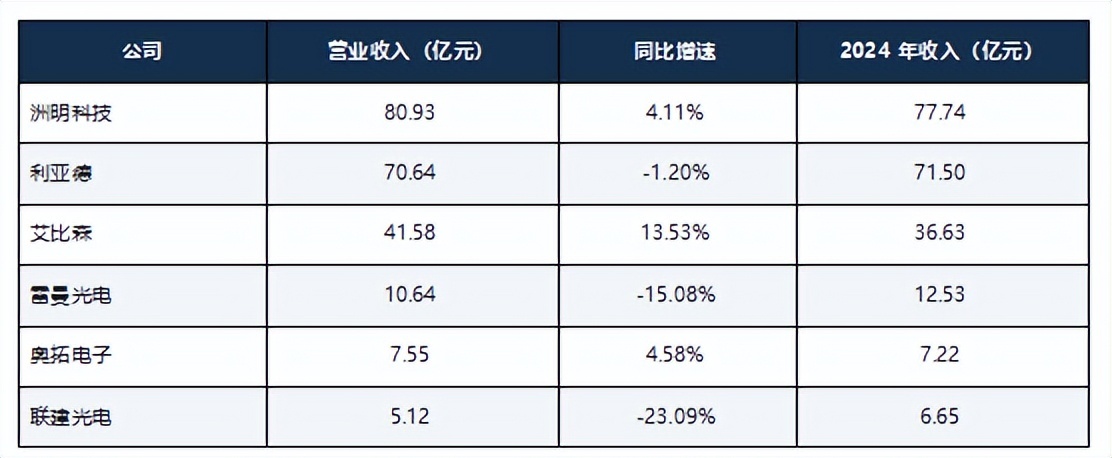
Table 1 | Scope: Consolidated financial statements; amounts rounded. Source: 2025 Annual Reports of the six companies.
Revenue growth does not necessarily equate to value growth, but it reflects the enterprise's market status for the year. Absen grew by 13.53%, with the fastest business expansion speed; Unilumin has the largest scale, maintaining a 4.11% growth rate, indicating a relatively stable foundation despite its large size; Autron's 4.58% growth appears more like a recovery from a low base. Leyard's revenue declined slightly by 1.20%; while overall still relatively stable, it needs to find new drivers for growth. Ledman and Liantronics saw revenue declines of 15.08% and 23.09%, respectively, implying that orders, product structure, or market competition may be under greater pressure, necessitating closer attention to whether revenues can stabilize.
II. The Second Watershed: How Much Profit Remains from Every Yuan of Revenue?
When evaluating manufacturing enterprises, one cannot merely look at how much was sold, but also how much was ultimately earned. After deducting product costs, sales expenses, management fees, and other expenditures from revenue, the profit that truly remains better illustrates the quality of the business.
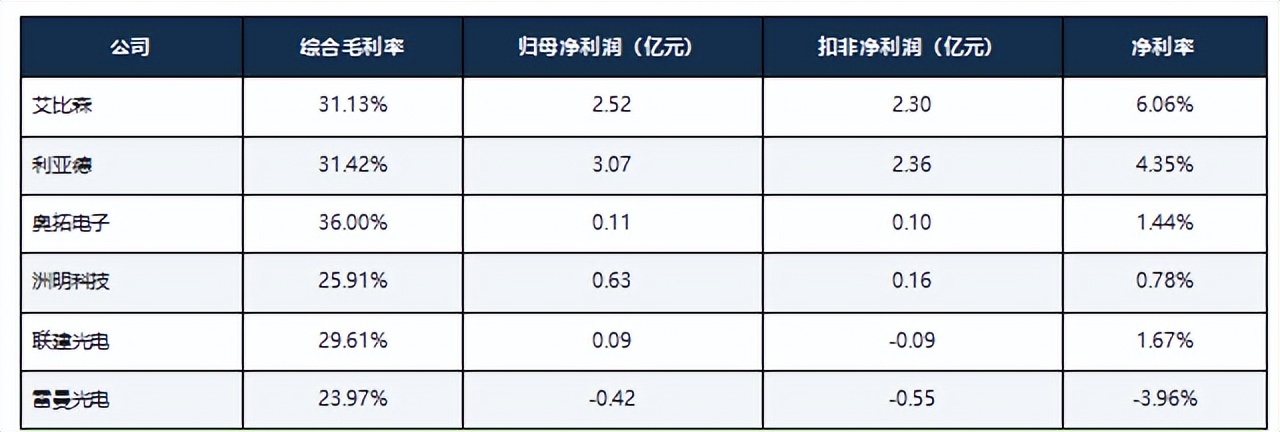
Table 2 | Comprehensive gross margin calculated as (Operating Revenue - Operating Cost) / Operating Revenue; Net profit margin calculated as Net Profit Attributable to Parent Company / Operating Revenue. Source: 2025 Annual Reports of the six companies.
Leyard reported a net profit attributable to the parent company of 307 million yuan and a non-GAAP net profit of 236 million yuan, with both metrics being the highest among the six companies, indicating that its profit scale still holds an advantage; however, its net profit margin was 4.35%, lower than Absen's, reflecting that a larger scale does not necessarily imply stronger profitability per unit of revenue.
Absen's net profit margin was 6.06%, the highest among the six companies, with its non-GAAP net profit closely matching its net profit attributable to the parent company, indicating clear contributions from core operations. Absen's non-GAAP net profit was 230 million yuan, not significantly different from its 252 million yuan net profit attributable to the parent company. This suggests that its profits primarily stem from daily operations rather than one-time gains such as asset sales or government subsidies.
Autron had the highest gross margin at 36.00% among the six companies, but its net profit margin was only 1.44%. This indicates that higher product gross margins did not fully translate into final profits, with selling, administrative, and other period expenses, as well as business scale, likely influencing the outcome.
Although Liantronics' net profit attributable to the parent company was positive, it remained loss-making after deducting one-time gains, suggesting that its profit foundation still requires consolidation.
Unilumin's revenue reached 8.093 billion yuan, the largest among the six companies, but its non-GAAP net profit was only 16 million yuan, with a net profit margin of 0.78%, indicating that the more critical task at present is to improve order profitability and expense efficiency.
Ledman's net profit attributable to the parent company and non-GAAP net profit were both negative, indicating that the company has not yet emerged from its loss-making state, and the contraction in revenue further increases the difficulty of improving profitability.
Thus, gross margin, profit scale, and net profit margin should be viewed together: some companies have large scales but lower profit margins, others have high gross margins but thin final profits, and some are still in a loss-making phase. For every yuan of revenue, the profit that can ultimately be retained may vary significantly.
III. The Third Watershed: Has Profit Turned into Cash?
The income statement tells us "how much was earned on paper," while the cash flow statement tells us "whether the money has actually been collected." Cash flow is a key indicator for assessing the quality of corporate orders.
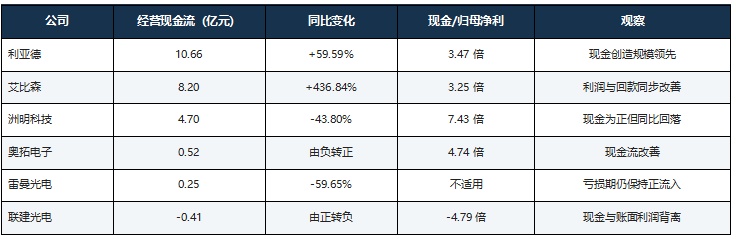
Table 3 | "Cash/Net Profit Attributable to Parent" refers to the net operating cash flow divided by net profit attributable to the parent company, used solely for observing cash content; not applicable to loss-making enterprises. Source: 2025 Annual Reports of the six companies.
Leyard's operating cash flow was 1.066 billion yuan, the highest among the six companies, with a year-on-year increase of 59.59%, indicating strong collection capabilities and cash generation ability. Absen's operating cash flow was 820 million yuan, surging 436.84% year-on-year. Not only is this significantly higher than its 252 million yuan net profit attributable to the parent company, but it also demonstrates that the 2025 performance growth was supported by cash.
Unilumin's operating cash flow was 470 million yuan, maintaining a net inflow, but declining 43.80% year-on-year. Although the company's book profits are still supported by cash, the speed of collection and capital occupation are concerning.
Autron's operating cash flow turned from negative to positive at 52 million yuan, showing a clear direction for improvement, although the absolute scale remains small.
Although Ledman is in a loss-making state, its operating cash flow remained positive, indicating no net outflow of operating cash for the year; however, cash flow decreased by 59.65% year-on-year, and the sustainability of improvement needs observation.
Liantronics' operating cash flow turned from positive to negative at -41 million yuan, diverging from its positive net profit attributable to the parent company, warranting further attention to accounts receivable, inventory, and the quality of collections.
IV. Capital Return: How Much Was Financed, and How Much Was Returned?
To see if a company values shareholders, one cannot merely look at whether it pays dividends in a single year. A fairer approach is to compare how much money the company has taken from the capital market since its listing with how much it has returned to shareholders through dividends.
The cumulative financing here includes IPOs, cash private placements, and issued convertible bonds, all calculated based on the actual amount received after deducting issuance expenses. Bank loans, regular corporate bonds, and unimplemented financing plans are not included. Cumulative dividends only include implemented pre-tax cash dividends, excluding share buybacks.
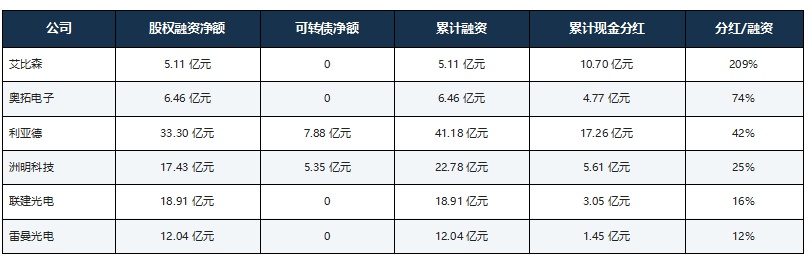
Table 4 | As of July 18, 2026; only items implemented and actually received are counted. Convertible bonds are included based on the net fundraising amount after deducting issuance expenses; subsequent conversions or repayments are not calculated repeatedly. Dividends are pre-tax cash dividends, excluding buybacks. Amounts are rounded.
Among the six companies, Absen has the lowest cumulative financing amount since listing, approximately 511 million yuan, of which the net amount raised from the initial public offering was approximately 260 million yuan, with the rest mainly coming from a private placement subscribed to by the actual controller, Ding Yanhui. As of the statistical date, the company's cumulative cash dividends amounted to approximately 1.07 billion yuan, equivalent to about 2.1 times the cumulative financing amount. Absen is the only one among the six companies whose cumulative cash dividends exceed its cumulative financing amount, and its dividend-to-financing ratio ranks first.
However, the dividend/financing ratio cannot be used to simply judge who is the best, as expanding enterprises may require more financing. But this indicator is more suitable for answering: After obtaining funds from the capital market, how much cash has the company returned to shareholders over the long term?
V. Placing the Four Indicators Together to Profile Enterprises
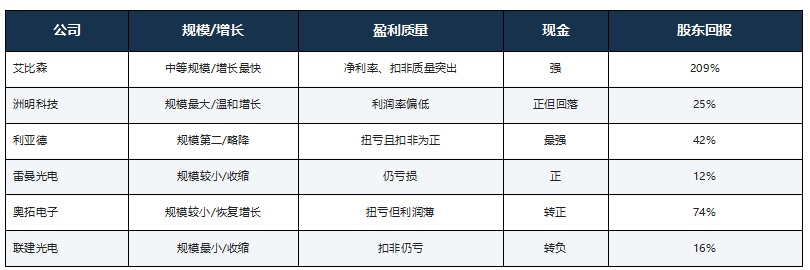
Table 5 | Summarized based on the aforementioned financial and announcement data; does not constitute a rating or investment advice.
No single company ranks first across all indicators. Unilumin has the largest revenue scale, but its profit margin and cash flow changes deserve attention; Leyard leads in the absolute scale of profit and operating cash flow, while its revenue growth is relatively stable; Autron has a higher gross margin and turning operating cash flow positive, but its final profit remains thin; Ledman and Liantronics face pressures from revenue contraction or profitability and cash flow issues, making operational repair the focus.
Conclusion: What Kind of Enterprise Has More Value?
In simple terms, a more valuable enterprise is not necessarily the one with the largest revenue scale, but one that can maintain growth, earn reasonable profits, convert profits into cash, and effectively utilize capital to return value to shareholders over the long term. Scale determines how big an enterprise is, while operational quality determines how far it can go.
Data Scope, Limitations, and Risk Disclosure
The financial data in this article uniformly adopts the consolidated scope of each company's 2025 annual report; figures in hundreds of millions of yuan are converted from raw data and rounded.
Comprehensive gross margin, net profit margin, cash/net profit attributable to parent, etc., are observational indicators calculated based on annual report data and are not equivalent to the company-disclosed gross margins by product or free cash flow.
Cumulative financing and cumulative cash dividends are both counted based on implemented matters since listing: financing includes the net fundraising amounts from IPOs, cash private placements, and issued convertible bonds; dividends refer to implemented pre-tax cash dividends, excluding buybacks and unimplemented plans.
This article does not cite global market rankings that cannot be independently verified and does not constitute securities research ratings, investment advice, or yield commitments.
Main Public Materials
1. Absen 2025 Annual Report
2. Unilumin 2025 Annual Report
3. Leyard 2025 Annual Report
4. Ledman 2025 Annual Report
5. Autron 2025 Annual Report
6. Liantronics 2025 Annual Report
7. Absen Board Resolution Announcement Related to Private Placement
The copyright of this article belongs to the original author/organization.
The views expressed herein are solely those of the author and do not reflect the stance of the platform. The content is intended for investment reference purposes only and shall not be considered as investment advice. Please contact us if you have any questions or suggestions regarding the content services provided by the platform.
