


Dobot on ChiNext: 250 Million RMB Invested in Embodied AI, Can the Second Growth Curve Be Unlocked?
Summary: No. 1 Global Shipments of Robotic Arms
Source: Chaoyang Capital Theory
Author: Xiao Nan
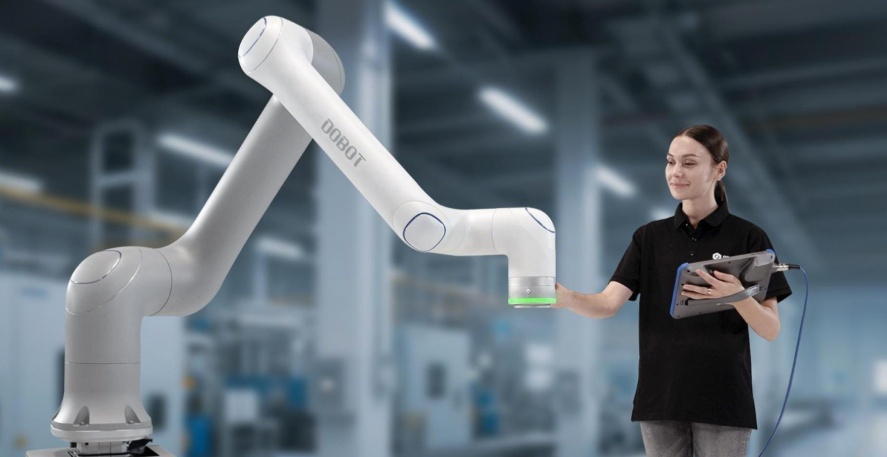
On July 22, Dobot, listed on the Hong Kong Stock Exchange, is set to appear before the ChiNext board for an IPO review.
As the global leader in collaborative robots by shipment volume, Dobot stands on the eve of being the first company from the Greater Bay Area to list its H-shares and return to the A-share market.
Who is Dobot? It has been operating in Shenzhen for eleven years, surviving by selling robotic arms. Starting from a single office in Nanshan District, Shenzhen, it has gradually achieved a global market share of 13.2%, with cumulative installations exceeding 100,000 units, and its products covering more than 100 countries and regions.
BYD, Mercedes-Benz, CATL, Samsung, and over 80 Fortune 500 companies are its clients.
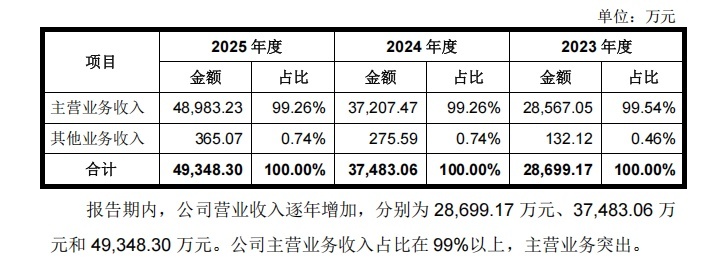
The prospectus shows that Dobot's revenue in 2025 was 492 million yuan, a year-on-year increase of 31.7%.
A voluntary performance forecast indicates that the company expects to achieve operating income of 300 million to 330 million yuan in the first half of 2026, representing a year-on-year growth of 94.65% to 114.12%.
The performance is improving, and the story is also upgrading.
Source: Prospectus
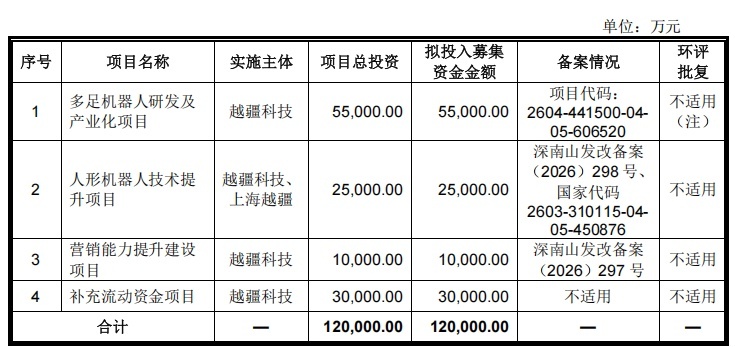
This time, returning to the A-share market, Dobot plans to raise 1.2 billion yuan.
Of this, 550 million yuan will be invested in multi-legged robots, and 250 million yuan will be used for building embodied intelligence capabilities.
Using the money earned from robotic arms to bet on the future of a "robotic brain."
Transforming into an embodied intelligence enterprise to achieve higher valuations and broader market prospects is a good "vision" for every traditional robotics company.
Global Leader in Collaborative Robots, Ready to Compete with Unitree?
From its establishment in 2015 to becoming the global leader in shipments by 2025, Dobot took ten years.
In its early days, the company mainly developed desktop robotic arm products and entered the collaborative robot track from this starting point. Collaborative robots refer to industrial robots capable of close-range interaction with humans in shared workspaces.
By the end of 2024 when it listed on the Hong Kong Stock Exchange, Dobot's collaborative robots were already applicable in manufacturing, retail, healthcare, STEAM education, scientific research, and other fields.
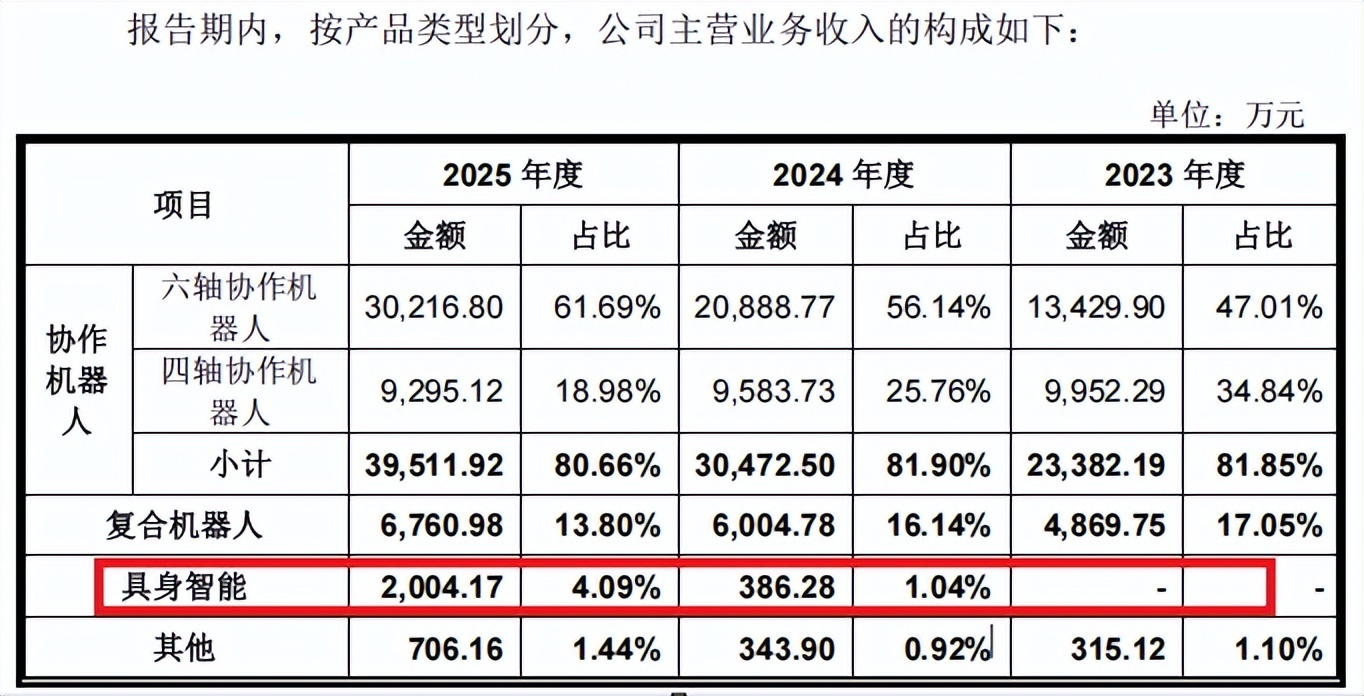
In 2025, the company's revenue was 492 million yuan. Among them, revenue from six-axis and four-axis collaborative robots was nearly 400 million yuan, accounting for about 80% of total revenue, while revenue from embodied intelligent robots was 20 million yuan, accounting for 4.1%.
Source: Prospectus
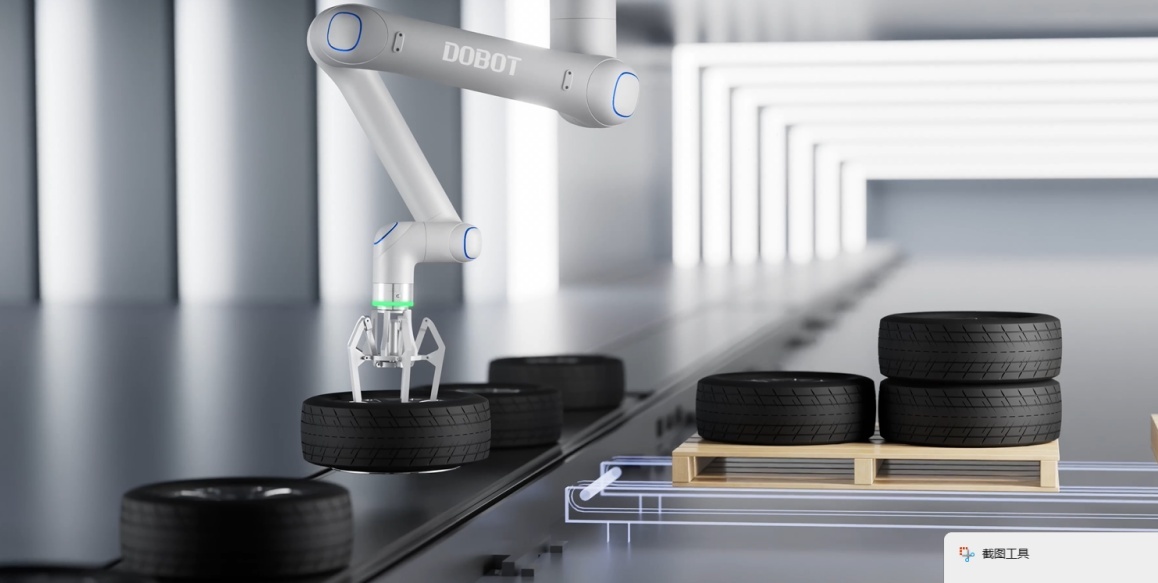
From the product matrix perspective, Dobot's collaborative robots have 10 series and over 30 models, with load capacities ranging from 0.25kg to 30kg, fully adaptable to diverse scenarios such as industrial manufacturing, commercial services, scientific research and education, and medical surgery.
In terms of clients, Dobot has built a service network covering more than 100 countries and regions globally, serving over 80 Fortune 500 enterprises.
Core performance indicators of collaborative robots include repeatability positioning accuracy, force control accuracy, effective payload-to-weight ratio, and non-contact detection distance.
In these dimensions, Dobot's products are in the same tier as international leading companies like Denmark's UR and Japan's FANUC, with some indicators, such as force control accuracy (0.05N), even surpassing competitors.
The company's independently developed SafeSkin non-contact collision prevention technology, based on self-capacitance detection principles, achieves instantaneous perception at a distance of 15 centimeters, increasing the human-robot collaboration safety speed from the industry standard of 0.25 meters/second to 1 meter/second, which has been appraised by the China Machinery Industry Federation as reaching an internationally advanced level.
Source: Company Website
This technological accumulation did not happen overnight.
As of December 31, 2025, Dobot held 625 authorized domestic patents, including 233 invention patents. The company successively undertook over 10 major scientific research projects at various levels, represented by the National Key R&D Program "Intelligent Robots" key special project.
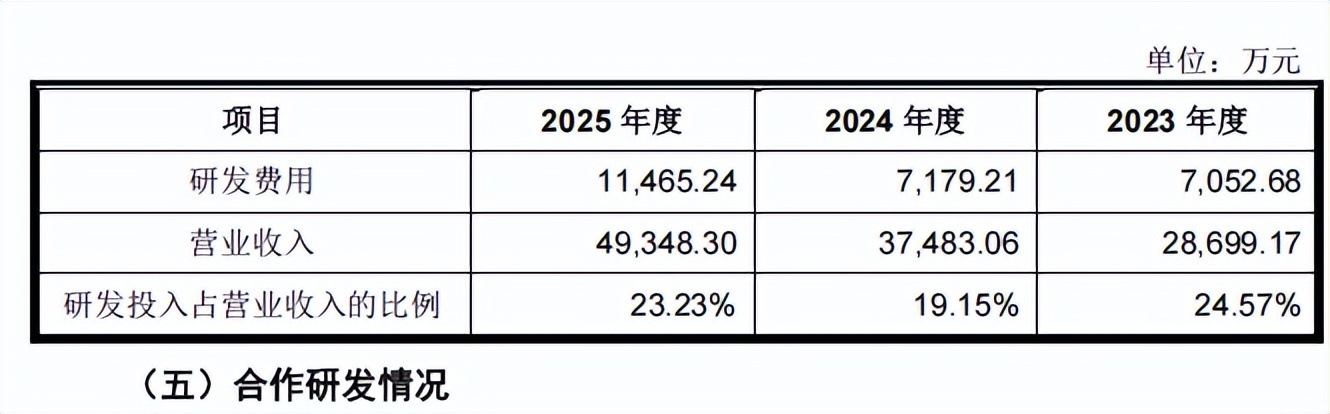
Behind the growth in patent technology, Dobot's R&D expenses grew from 70.52 million yuan to approximately 115 million yuan, with the R&D expense ratio consistently maintained above 20%.
For this return to the A-share market, Dobot plans to raise 1.2 billion yuan, with two projects directly related to embodied intelligence: a 550 million yuan multi-legged robot R&D and industrialization project.
Multi-legged robots are Unitree Technology's "private territory." Wang Xingxing stated in an interview with Economic Observer in 2024 that Unitree's robot dogs accounted for over 69% of the global robot dog market sales share.
What does Dobot have to compete for this dominant position?
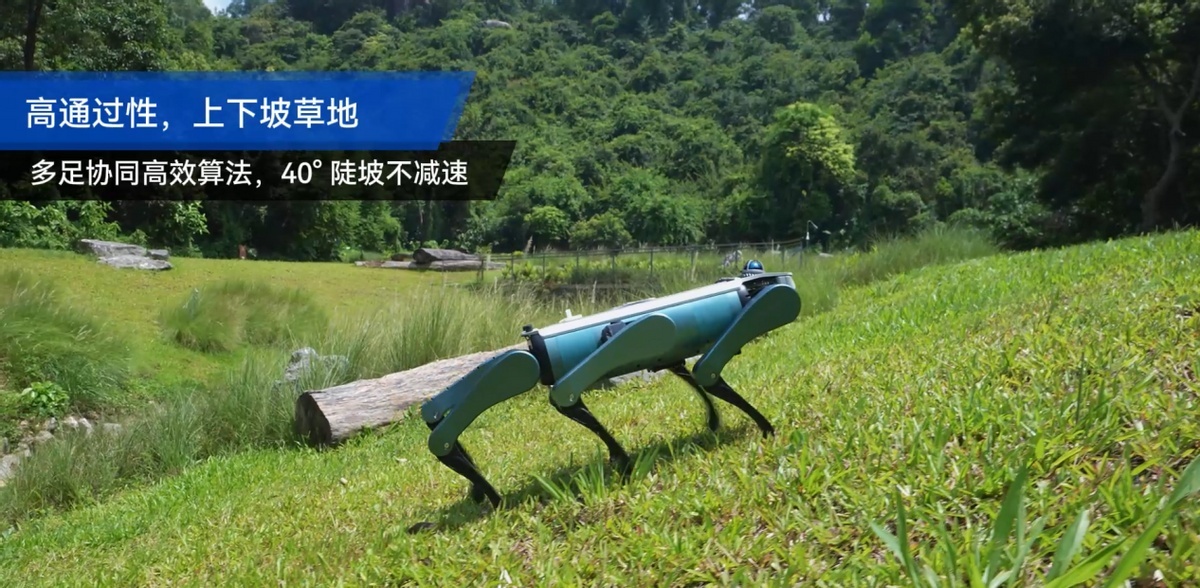
From a product perspective, the company has launched the Rover X1 quadruped robot and Hexplorer hexapod robot, and they have entered the trial production stage.
In October 2025, Dobot established strategic cooperation with enterprises such as Luyuan Electric Vehicles. Multi-legged robots have completed small-scale commercial validation in scenarios such as park security and commercial guidance.
Technological accumulation, prototype products, and scenario validation give Dobot the confidence to bet 550 million yuan.
However, this expansion also carries certain risks. Dobot's past clients were all B-end, including automobile factories, 3C factories, and research institutions.
The main market for multi-legged robots is the C-end, including family companionship and educational entertainment.
Dobot's prospectus also admits that the company needs to "achieve a transformation from a single B-end market to a 'B+C' dual-market layout."
The logic of B-end and C-end is different. B-end looks at return on investment, while C-end looks at experience and brand.
Dobot's brand awareness in the C-end is still shallow, while competitor Unitree has already established significant market influence in the C-end.
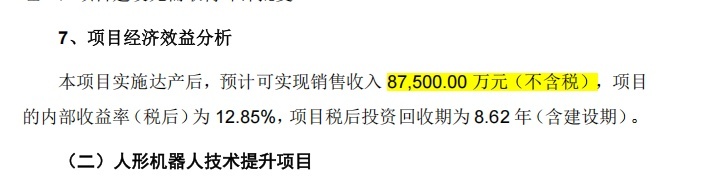
In the prospectus, Dobot set a revenue target of 875 million yuan for multi-legged robots in 2028. However, the global multi-legged robot market size in 2025 was only 2.75 billion yuan.
Source: Prospectus
A player who has just entered the field two years ago aims to capture nearly one-third of the current global market share in two years. The aggressiveness of this assumption is debatable.
The company explained in its inquiry response that "the low base of 2026 revenue leads to high growth rates," but even so, going from approximately 20 million yuan in 2025 to hundreds of millions in 2028 still leaves people scratching their heads.
Laying out Embodied Intelligence, How Many Cards Does It Hold?
The core narrative of Dobot's return to the A-share market this time is embodied intelligence.
The goal is to transition from the "First Share of Collaborative Robots" to an "Embodied Robot Mass Production Enterprise," changing both the signboard and the story.
Dobot indeed holds several good cards.
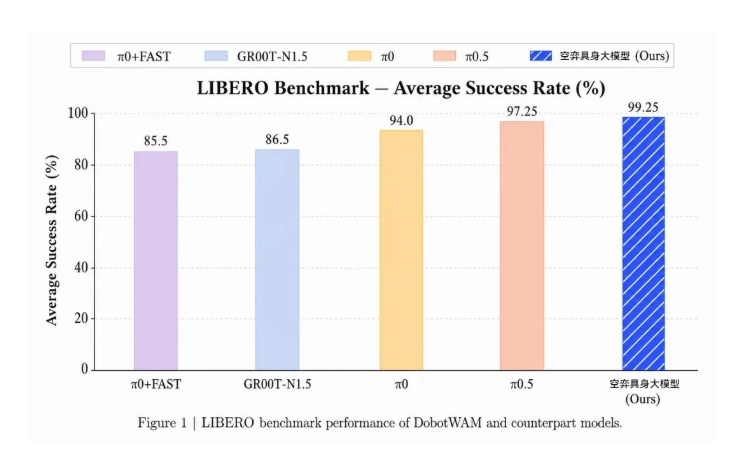
Its self-developed "Kongyi" large model ranked first in the LIBERO benchmark test with an average success rate of 99.25%, leading public models like π0.5 and GR00T.
Source: Shenzhen News Network
According to announcements, in the first half of 2026, Dobot's embodied intelligence shipments exceeded 40 million yuan, more than double its full-year 2025 revenue, with clients expanding to 231. The 80.5 million yuan contract signed with Ruide Feng Precision is the first order in the industry to introduce humanoid robots into new energy precision manufacturing.
Source: Prospectus
Regulators clearly see these uncertainties.
Two rounds of inquiries repeatedly asked three questions: How much of the orders on hand are framework intentions? How many of the 231 clients are still in the concept verification stage? On what basis is the prediction that embodied intelligence revenue will account for over 30% in 2028 valid?
Facing these questions, Dobot plans a total investment of 250 million yuan over a four-year construction period, for data toolchain development, multimodal data collection and annotation, simulation and algorithm benchmark platform construction, training and deployment engineering, and other directions for embodied intelligence projects.
This project does not directly generate revenue but serves as an "arms race" to consolidate technical barriers.
Dobot's layout direction in this project is correct.
Data, specifically high-quality, large-scale real interaction data, is the core fuel for training embodied large models.
Dobot has accumulated over 100,000 installations and massive industrial scenario data in the field of collaborative robots, which is its greatest advantage compared to pure embodied intelligence startups.
But embodied robotics is an extremely capital-intensive track. International giants like Tesla and Figure spend hundreds of millions, even billions of dollars annually on R&D.
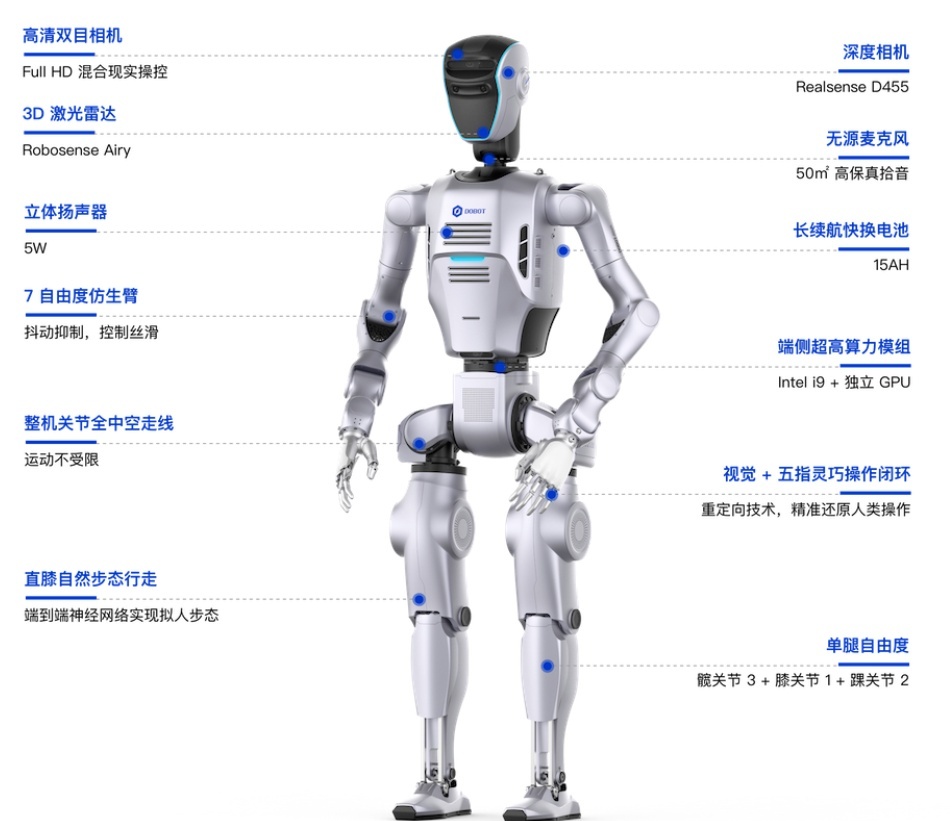
Even compared to Unitree Technology domestically, the investment is far insufficient. Unitree's IPO preparation involves allocating half of the fundraising quota, taking out 2 billion yuan for embodied intelligence.
Source: Dobot Official Website
Dobot's 250 million yuan, approximately 35 million USD, needs to cover four years of R&D, averaging less than 9 million USD per year.
Perhaps subsequent plans such as additional share issuance will be excluded to continue investing in embodied intelligence.
The company expects to turn a profit by 2028, with embodied intelligence revenue accounting for over 30%. Based on the expected 1.723 billion yuan revenue in 2028, its embodied intelligence revenue must exceed 500 million yuan. This step is no small feat.
No Side-Taking, Doing Integration, Betting on a Final Outcome?
Objectively speaking, Dobot is not on the same level as top players in pure software and AI capabilities.
But the story must be told, and growth must continue, so embodied intelligence must go with the flow.
Currently, for Dobot doing embodied intelligence, the key is not money or brand, but route selection.
Because the core divergence in the embodied intelligence industry lies in the brain layer, and routes have yet to form a consensus.
The current mainstream directions are VLA and World Models, with players making their bets. Unitree runs parallel lines, UBTech uses a layered architecture, Zhiyuan focuses on VLA implementation, and Figure AI firmly supports VLA.
Dobot's choice is different from all of the above.
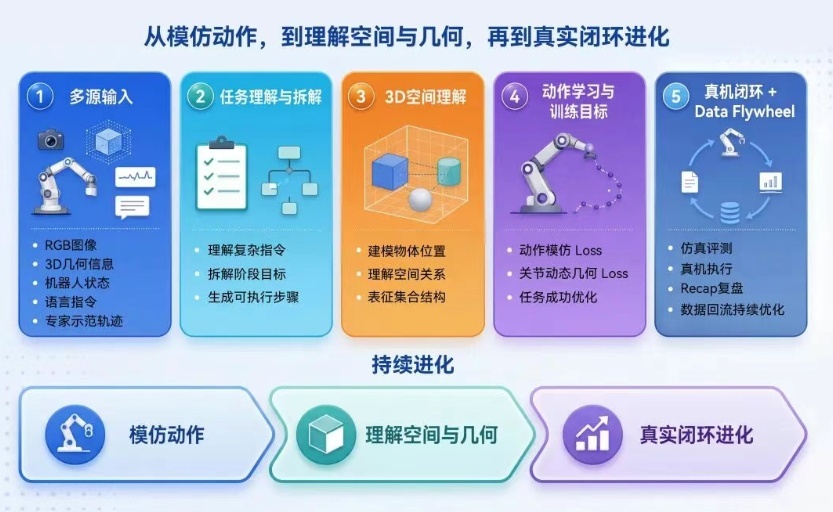
Dobot's technical architecture is "One Brain, Multiple Bodies," using its self-developed Kongyi DobotWAM embodied large model as the brain, integrating VLA to achieve unified output of vision, language, and action, and driven by world models for evolutionary capabilities.
Kongyi is designed specifically for "action understanding," introducing three-dimensional spatial understanding, robot motion geometric constraints, and real data closed loops on top of VLA.
Source: Dobot WeChat Official Account
All products, including robotic arms, wheeled humanoids, bipedal humanoids, and multi-legged robots, share the same "Brain + Cerebellum" system.
Dobot's strategy is not to take sides but to integrate. The final form of the brain layer is likely to be integration rather than substitution.
VLA provides semantics and interpretability, while world models provide prediction and deduction, naturally complementary.
The unique advantage of the "One Brain, Multiple Bodies" integration route lies in reuse, which is the core capability inherited from Dobot's collaborative robot business.
The company has accumulated over 100,000 installations and massive industrial scenario data, which can be directly used to train and optimize embodied large models without needing to build a data collection system from scratch.
Source: Company Website
Why don't other companies do this seemingly great route? It's not that they haven't thought of it, but it's too "difficult."
First, the "computing power bill is unaffordable," and high-quality real data is too scarce. Goldman Sachs predicts that the key window for widespread commercial deployment of humanoid robots is 2027 to 2029, and "scarcity of high-quality data" is currently one of the core bottlenecks restricting accelerated commercialization.
Other top companies either have money (like Tesla, BYD) to support multiple tech teams simultaneously; or have scenarios (like Unitree) to first run up volume in the C-end with robot dogs and feed the data.
Dobot chose a path that sounds logically "correct" but is "rarely dared to be taken" in engineering.
Perhaps VLA and world models will eventually converge, and early convergence is better than late convergence.
Conclusion:
Dobot's listing on both the A and H shares is a milestone in corporate development and also a side view of industry observation. On the track of embodied intelligence, what kind of company can survive until the end?
Pure startups have technology, concepts, and valuations, but lack mass production, production lines, and customers. Traditional manufacturing giants have funds, capacity, and channels, but lack AI genes and flexible organizational mechanisms.
Dobot has ten more years of production line experience than startups and more flexibility and focus than giants.
Currently, it is unknown whether VLA or world models will win. Dobot's "One Brain, Multiple Bodies" chose a smart path, but smart does not mean easy.
The integration of two models, cross-body migration, and the leap from B-end to C-end are heavy responsibilities and long roads.
The copyright of this article belongs to the original author/organization.
The views expressed herein are solely those of the author and do not reflect the stance of the platform. The content is intended for investment reference purposes only and shall not be considered as investment advice. Please contact us if you have any questions or suggestions regarding the content services provided by the platform.
