


 Likes Received
 Posts
PostsAstera Labs crashed for a week, but someone took 3.71 million in Calls?
$Astera Labs(ALAB.US) dropped significantly this week: rebalancing sell pressure from the Nasdaq 100 index adjustment, automatic share reduction under the chairman's 10b5-1 plan, and a semiconductor stampede triggered by new Korean leverage regulations. With these three factors converging, it fell 8.8% last night, wiping out 23% for the week. However, during the early trading session that day, someone placed a single order worth $3.71 million to buy 700 September $360 Call options at an average price of $53 per contract.
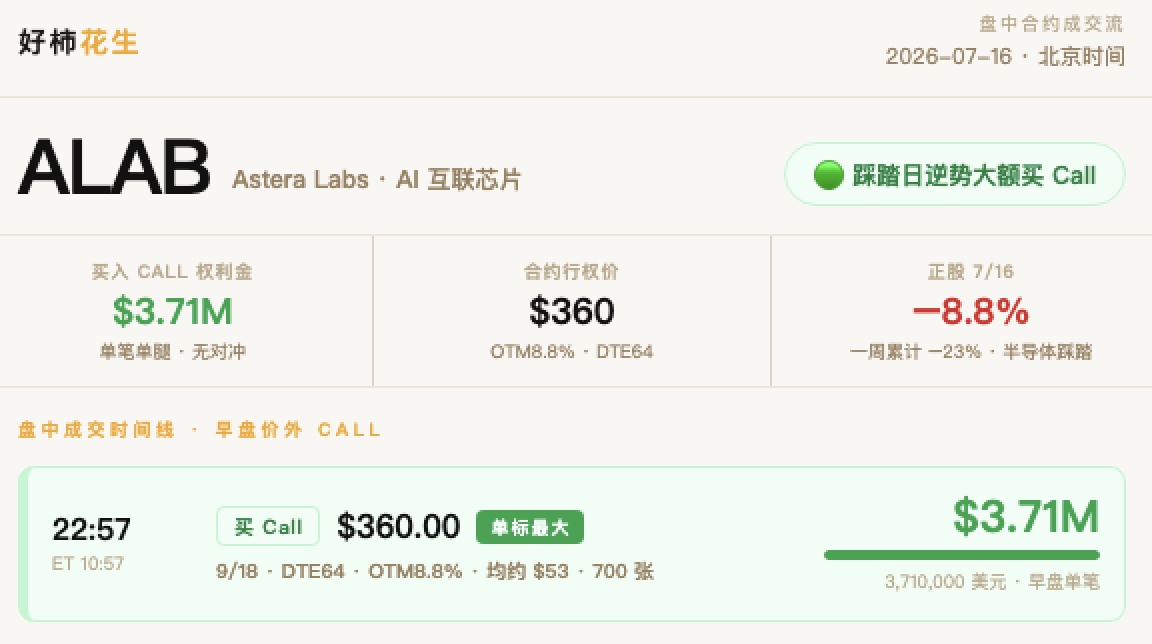
The key aspect of this trade worth noting is the combination of timing and strike price. The $360 strike price is less than 10% higher than the stock price at the time of the order, which isn't overly greedy; however, the $53 premium is a genuine high for a panic-selling day—calculating the breakeven point at $413, meaning the underlying stock needs to rise nearly 30% before any profit is made. The expiration date was set for 9/18, leaving a six-week buffer past the Q2 earnings report on 8/4, clearly indicating the bet isn't on an earnings-day spike, but rather on the earnings report filling the hole created by this round of selling.
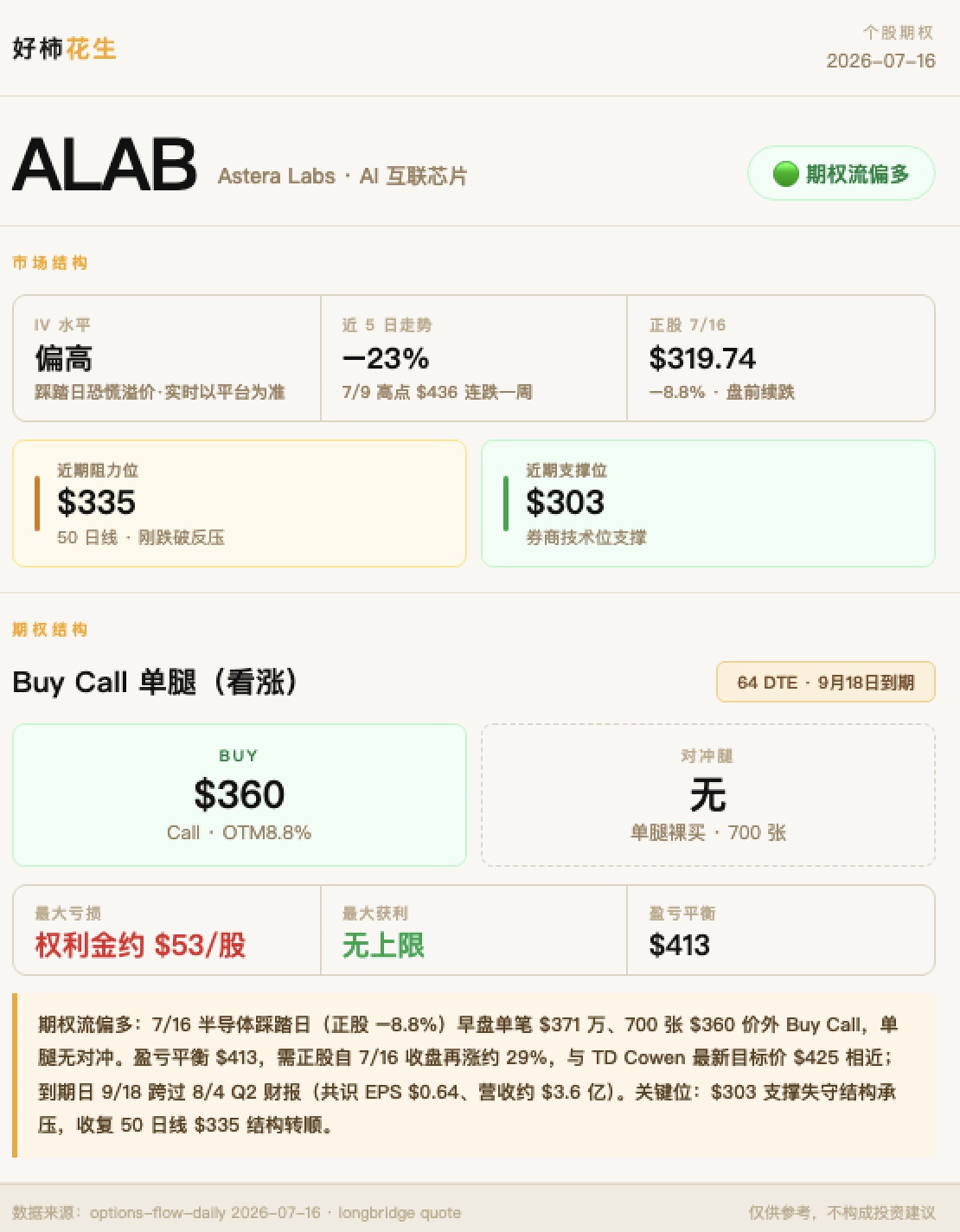
Several factors help assess whether this bet is solid or shaky. On the sell-side, TD Cowen maintained a 'Hold' rating this week but raised its target price to $425, closely aligning with the breakeven of this Call option; the consensus for the 8/4 earnings report is EPS of 64 cents and revenue of $360 million. Technically, the long-term trend remains intact—the stock is still 40% above the 100-day moving average; what's broken is the short-term trend, as the 50-day moving average has been breached, with the next support level at $303.
However, I see several issues with this trade: first, the premium paid was too high, fully pricing in the panic premium of the crash day; even if the stock stabilizes without falling further, time decay will erode value daily; second, the automatic share reductions by the chairman and directors are still ongoing, creating sell pressure driven by calendar dates rather than valuation; third, the Korean deleveraging that dragged down the entire semiconductor sector hasn't shown signs of ending, with pre-market trading still showing continued declines.
I believe this is one of the few long positions in this week's semiconductor panic where the structure makes sense—the strike price is reasonable, the expiration avoids the short-term meat grinder, and the bet is on earnings fundamentals rather than sentiment. But we need to see if $303 holds, followed by how the 8/4 earnings perform.
The copyright of this article belongs to the original author/organization.
The views expressed herein are solely those of the author and do not reflect the stance of the platform. The content is intended for investment reference purposes only and shall not be considered as investment advice. Please contact us if you have any questions or suggestions regarding the content services provided by the platform.
