


 SpaceX Option
🚨 South Korean retail investors are now borrowing money from banks to buy stocks.
Margin loans this year have reached a record 36.47 trillion Korean won, double the amount from the same period last year.
When brokerages raised margin rates close to 10%, retail investors didn't stop. They turned to using bank credit lines instead.
In May alone, household bank loans surged by 9.3 trillion won, the fastest monthly increase since August 2024. Data from the Bank of Korea directly links this surge to stock investments, not mortgages.
How extreme has it gotten?
A South Korean civil servant posted a screenshot of their brokerage account on the workplace app Blind. The account held SK Hynix shares worth 2.3 billion won ($1.7 million), of which 1.7 billion won was entirely borrowed on margin.
"I believe the semiconductor market will continue to rise until 2028, but I'm adopting a more aggressive strategy to accelerate asset growth."
He is not alone. Bloomberg reported earlier this year that a wave of stock mania has swept the nation.
Middle-aged and older South Koreans are specifically borrowing money so as not to miss out on this rally, often investing larger amounts than younger investors.
South Korea now has 102 million active trading accounts in a country with a population of 52 million.
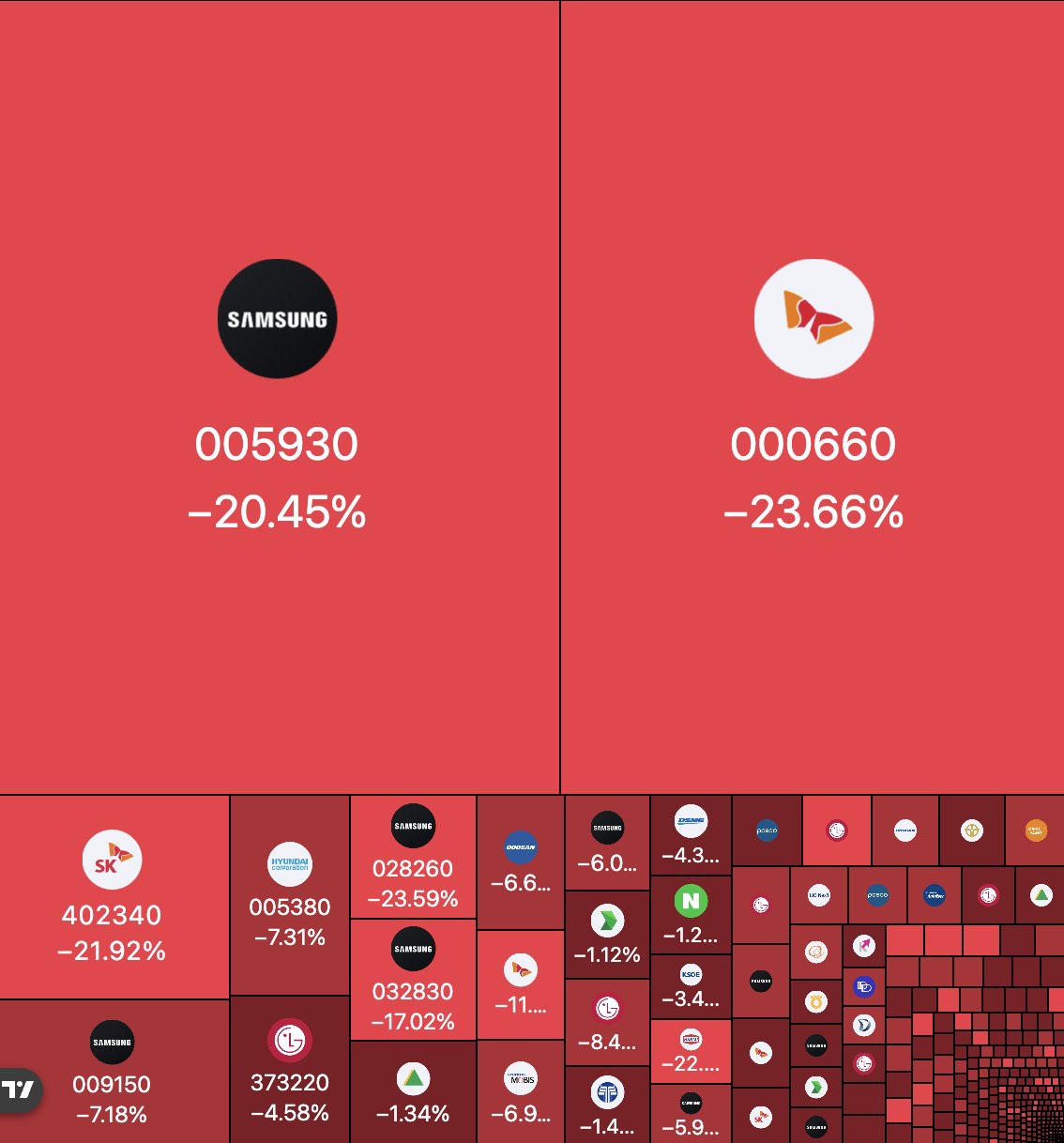
While foreign investors have been net sellers of 120 trillion won worth of Korean stocks this year, retail investors have bought 75 trillion won to absorb these sales, with most of the funds being borrowed.
Pressure is already visible behind these numbers:
- Household debt-to-income ratio: 174%
- 44% of borrowers missed or defaulted on loan repayments in the past 6 months
- Banks are limiting loan amounts as annual quotas are exhausted months early
- Brokerage margin rates are now close to 10%
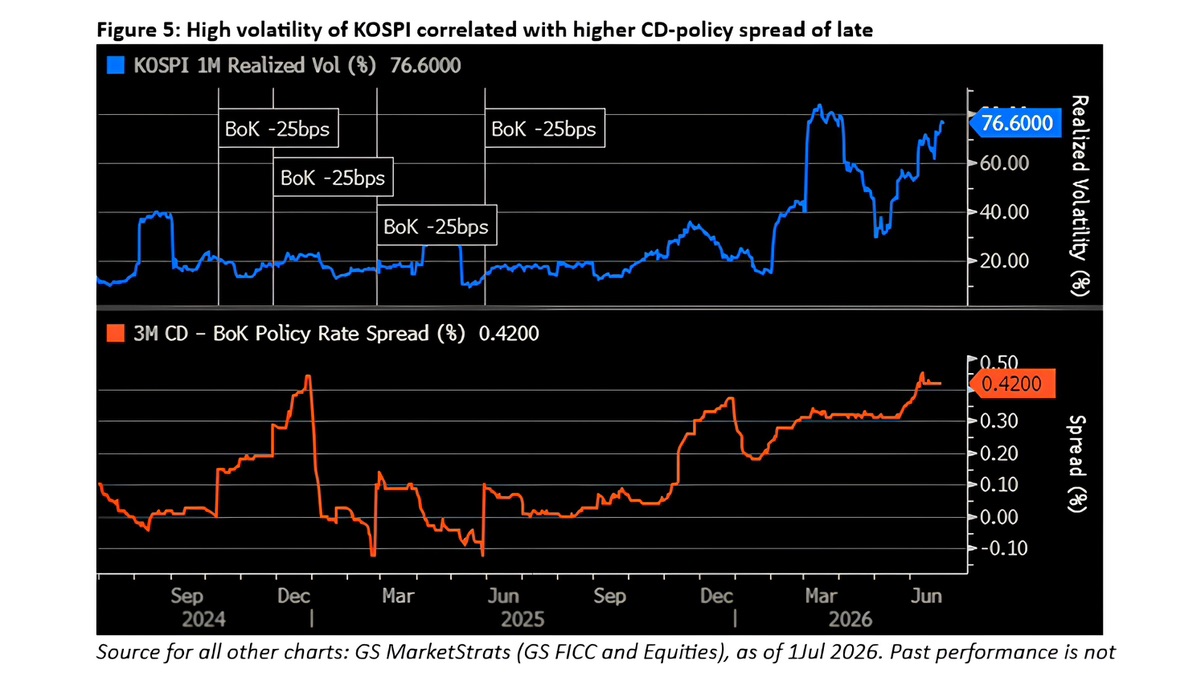
The spread between 3-month CDs and the Bank of Korea's policy rate just reached 0.42%, the highest level in over a year.
Meanwhile, KOSPI volatility is running at 76.6%.
The Bank of Korea is now expected to raise interest rates next month.
Higher rates will increase the cost of every margin loan and bank credit line currently used to hold stocks.
When borrowed money gets more expensive and the market is falling, the forced liquidations that follow will be extremely severe.

The copyright of this article belongs to the original author/organization.
The views expressed herein are solely those of the author and do not reflect the stance of the platform. The content is intended for investment reference purposes only and shall not be considered as investment advice. Please contact us if you have any questions or suggestions regarding the content services provided by the platform.
