


 Rate Of Return
Gao Sir - NVIDIA (NVDA) Investment Analysis Report
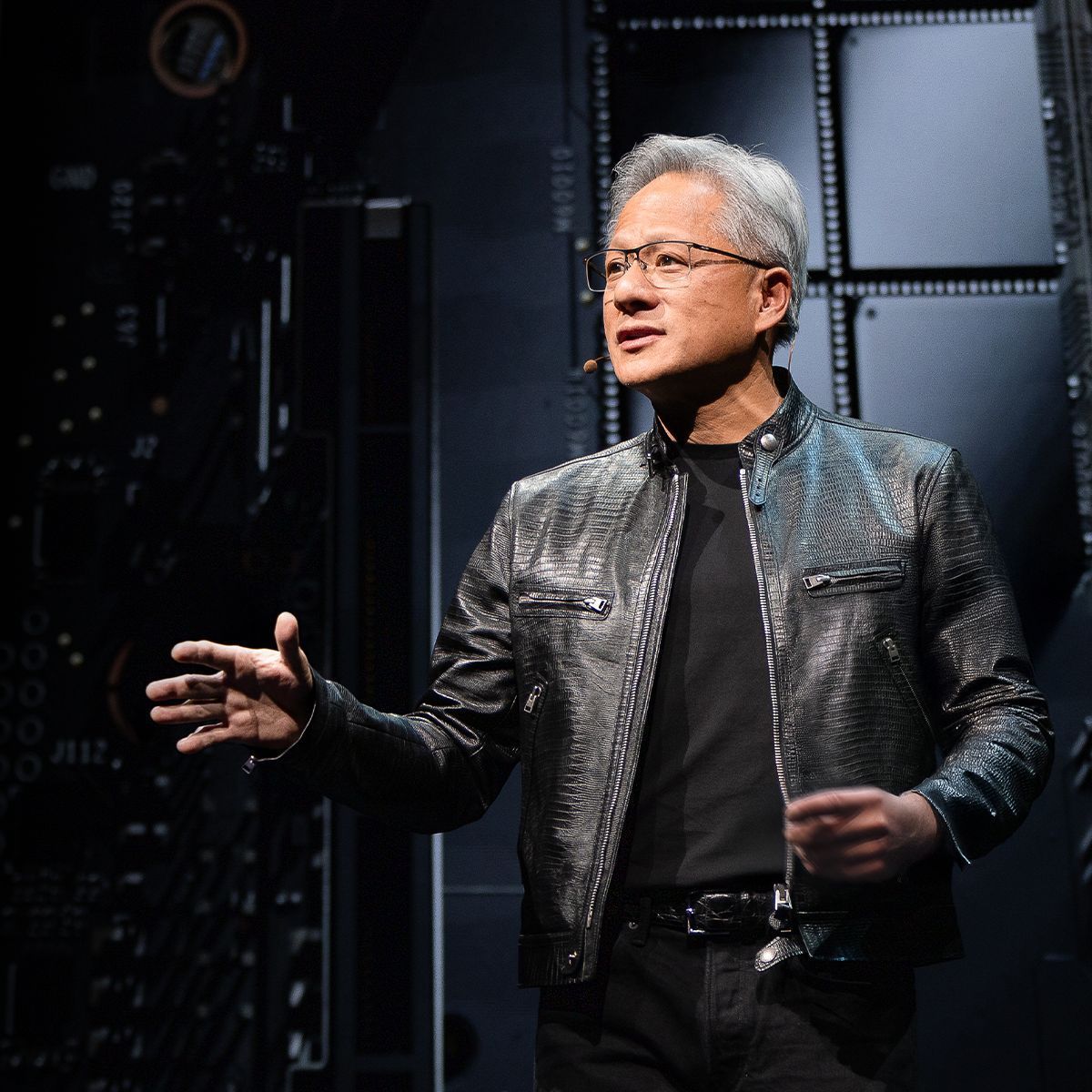
NVIDIA $NVIDIA(NVDA.US) Executive Chairman Jensen Huang's "AI Five-Layer Cake" remarks have officially ignited the prospects of the AI market. However, NVIDIA's stock price has not been boosted as a result and has retreated from its high of $236.
Sir Gao's Trend Analysis: Technicals Dominate, Stock Price in a Range Awaiting a Breakout
Based on the current stock price, I believe it is still a normal correction phase for a strong stock. Short-term trends show selling pressure with significant resistance on the upside, and technical signals have not yet formed a clear breakout. However, the stock has retreated nearly 20% from its high and is holding above the 200-day moving average around $190.73, indicating that the medium-to-long-term uptrend remains intact. The short-term weakness is merely due to persistent pressure from the 50-day moving average around $210.02, reflecting insufficient short-term momentum. Some market views further point out that if a head-and-shoulders top pattern is confirmed with a neckline break, the technical measured decline could point to the $170 region. Friends holding positions should watch the short-term support at $188/$184, which is a critical short-term level.
Observing fund flows, institutional capital's attitude towards NVDA has become more conservative, with some funds rotating into memory and other semiconductor sub-sectors, indicating the market is entering a phase of stock selection rather than blanket chasing. Overall, it is more likely that NVDA's short-term range will remain oscillating between $190 and $210. Whether it can reclaim the 50-day moving average (above $210) will be a key level to judge a shift from weakness to strength.
Fundamental Focus: AI Capital Expenditure Continues, Valuation Enters Repricing Stage
On the fundamentals, market focus has shifted from "Is AI demand real?" to "Can AI capital expenditure be continuously translated into earnings growth?". As of the latest financial report, NVIDIA's full-year revenue for FY2026 reached $215.938 billion, a year-on-year increase of 65%, with data center revenue reaching $193.7 billion, up 68% year-on-year, indicating that AI infrastructure demand remains strong.
Analyzing the financial report, NVDA delivered an excellent report card. With increasing demand, there shouldn't be major issues with the financials for the next 1-2 years. The product cycle remains the core catalyst. Blackwell has become the main revenue driver, and the Rubin platform has been listed by management as the next-generation growth engine, noted for its potential to further reduce inference costs. On the supply chain side, HBM, advanced packaging, and related supporting capacity remain short-term bottlenecks, meaning the company's growth pace is still constrained upstream. On the valuation front, although trailing and forward P/E ratios have retreated from their peaks, under the assumption of continued AI infrastructure demand, the market is still willing to grant a valuation premium above that of mature hardware stocks.
Short-term volatility has increased, with downside risks mainly concentrated in three areas:
First: If revenue growth or gross margin guidance falls below market expectations, it will trigger further valuation compression (this is temporary).
Second: The rotation of capital outflows may persist. When AI-focused capital shifts to memory, networking, or other semiconductor subsectors, NVDA's relative performance may be pressured. (Funds constantly rotate among sectors for speculation, so there's no need to worry about the medium term.)
Third, the market will also pay attention to changes in management and insider holdings. Any selling behavior may amplify short-term sentiment fluctuations. (For example, Chairman Huang's buying or selling, which is related to long-term shareholder confidence.)
Relatively, catalysts mainly include two points in time.
The first is the next financial report, which will verify data center revenue, Blackwell shipment pace, and gross margin stability. The second is the mass production and customer adoption progress of Rubin. If progress exceeds expectations, it will help the market re-rate the growth curve. If supply bottlenecks improve significantly, the stock price has a chance to restart valuation expansion.
Overall Conclusion: Medium-to-long-term outlook remains positive, short-term still awaits confirmation.
Overall, Chairman Huang's NVIDIA remains the most representative core beneficiary in the AI infrastructure cycle, and its medium-to-long-term growth logic remains unchanged. However, the market pricing method has gradually shifted from past expectation-driven to performance verification and capacity realization, causing short-term stock price volatility to significantly amplify.
In terms of operation, technical investors can focus on observing whether the $190 support holds and whether the $210 resistance can be broken. The basic trading range is between $184 and $212. Investors looking to accumulate heavily should focus on the next quarter's financial report and management guidance, especially data center revenue, Blackwell/Rubin ramp-up pace, and supply chain improvements. Before the above factors become clear, if NVDA's stock price falls below the short-term support of $184, then watch levels like $172/$166 before conducting heavier, investment-style phased accumulation.
The copyright of this article belongs to the original author/organization.
The views expressed herein are solely those of the author and do not reflect the stance of the platform. The content is intended for investment reference purposes only and shall not be considered as investment advice. Please contact us if you have any questions or suggestions regarding the content services provided by the platform.
