


 SNXX
SNXXIt is reported that, as memory chip costs rise and ByteDance accelerates its layout in artificial intelligence (AI), the company has increased its AI infrastructure expenditure plan for this year by 25% to 200 billion yuan. (Cailianshe)

The shift from self-sufficiency through Free Cash Flow (FCF) to large-scale debt financing signifies that the AI arms race among tech giants has crossed the "Rubicon"—entering an irreversible, forward-only stage.
I. The Past: The Era of "Easy Wins" with Free Cash Flow
Companies like Google, Meta, and Amazon have long been cash cows: advertising, e-commerce, and cloud services generate a steady stream of free cash flow.
Expansion relied on internal cash and minimal debt issuance, resulting in low leverage, strong credit, and high risk resistance. In short: invest what you earn, win without borrowing.
II. The Present: AI Burn Rate > Earnings Rate (FCF Turns Negative)
AI has fundamentally changed the game:
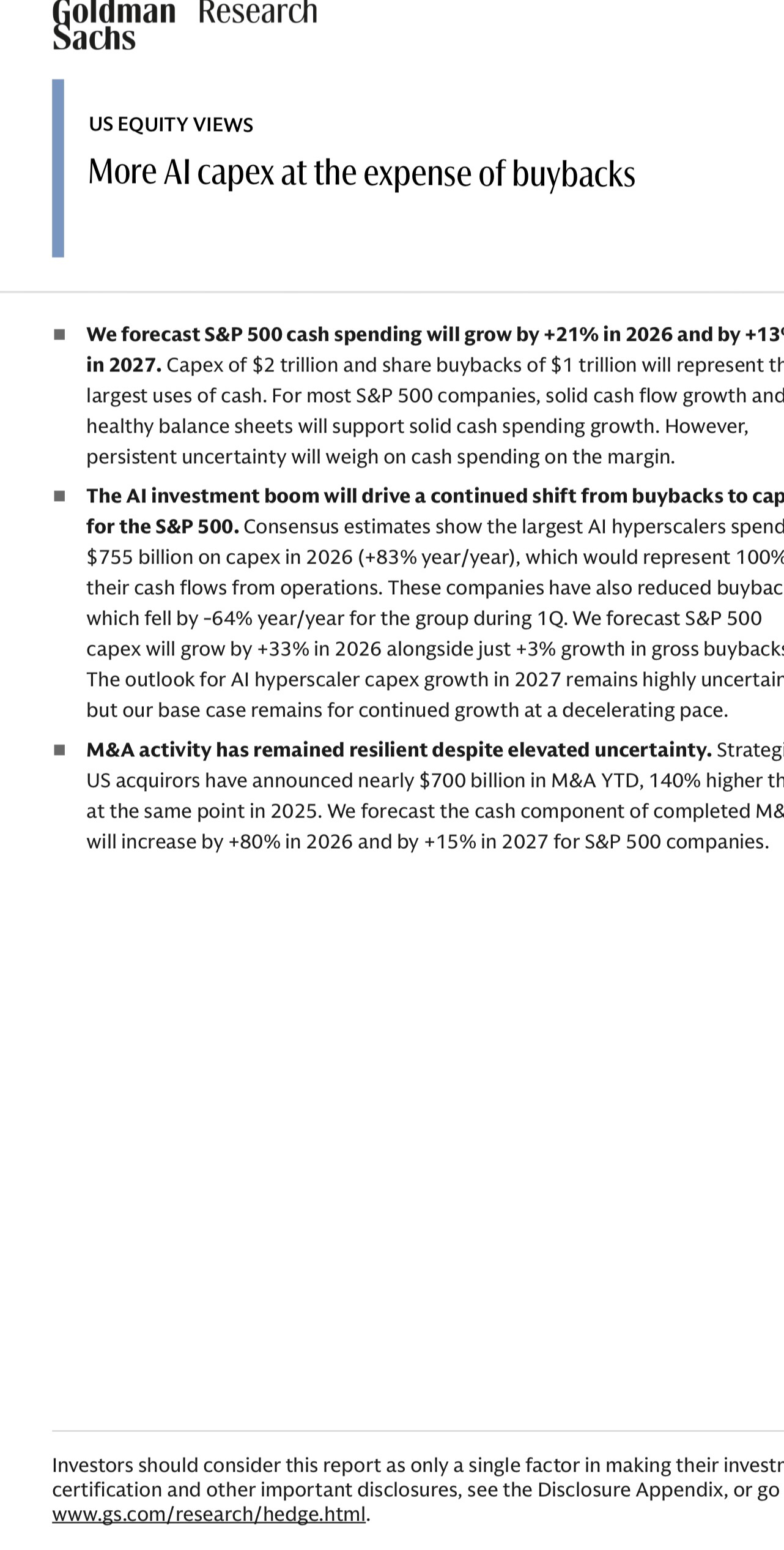
Explosive capital expenditure: The five major tech giants are projected to have $800 billion in capex in 2026, potentially reaching $1.1 trillion in 2027.
Free cash flow cliff:
◦ Amazon: FCF from $25.9B → $1.2B (-95%)
◦ Meta: FCF nearing negative territory
◦ Google: FCF halved, hitting a ten-year low
Accounting illusion: Most AI investments are capitalized (not expensed immediately), making profits look good while real cash flows out.
Conclusion: The money they earn is no longer enough to fuel the AI burn.
III. Forced to Cross the Rubicon: From Cash → Debt Financing (Irreversible)
The Rubicon River metaphor: Caesar crossing with his army meant burning bridges, no turning back.
Giants' current choice:
Don't invest in AI = Get left behind
Invest in AI = Must borrow on a massive scale
Thus:
Since September 2025, Meta, Google, Amazon, and Oracle have issued over $90 billion in bonds.
Tech debt will account for 18% of US investment-grade bonds in 2026, a record high.
Global AI infrastructure-related debt has reached $1.2 trillion.
Fundamental shift:
Past: Light assets, low leverage, cash is king.
Present: Heavy assets, increased leverage, debt-driven.
Once leverage is up and capital expenditure is locked in, there's no return to the past "easy cash win" model—the river is crossed, there's no going back.
The copyright of this article belongs to the original author/organization.
The views expressed herein are solely those of the author and do not reflect the stance of the platform. The content is intended for investment reference purposes only and shall not be considered as investment advice. Please contact us if you have any questions or suggestions regarding the content services provided by the platform.
