


Pop Mart: Revenue Surges, Shares Plunge — Who Got It Wrong?---
On the afternoon of Mar 25 (Beijing time), Pop Mart (9992.HK) reported its 2H25 results, and the stock plunged 22% intraday. On headline numbers, H2 performance was broadly in line with Bloomberg consensus, but fell short of some bullish buy-side models. Stripping out the print, management’s conservative 2026 guide was the other disappointment, and the two together fueled the afternoon selloff.$POP MART(09992.HK)
Key takeaways:
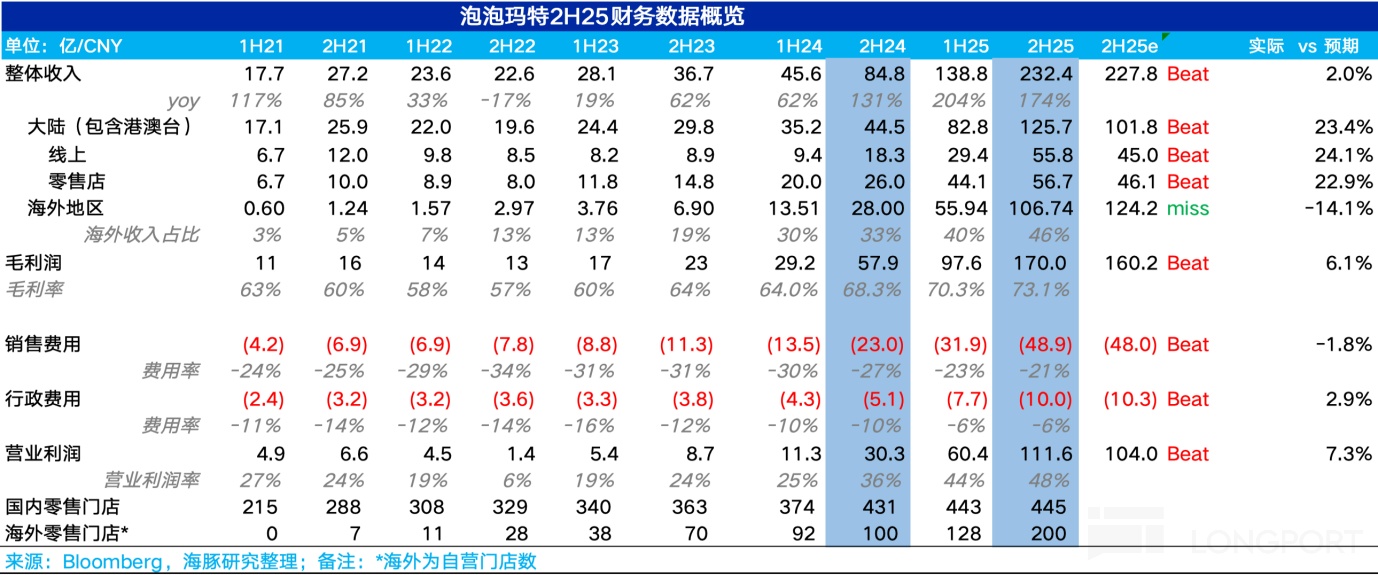
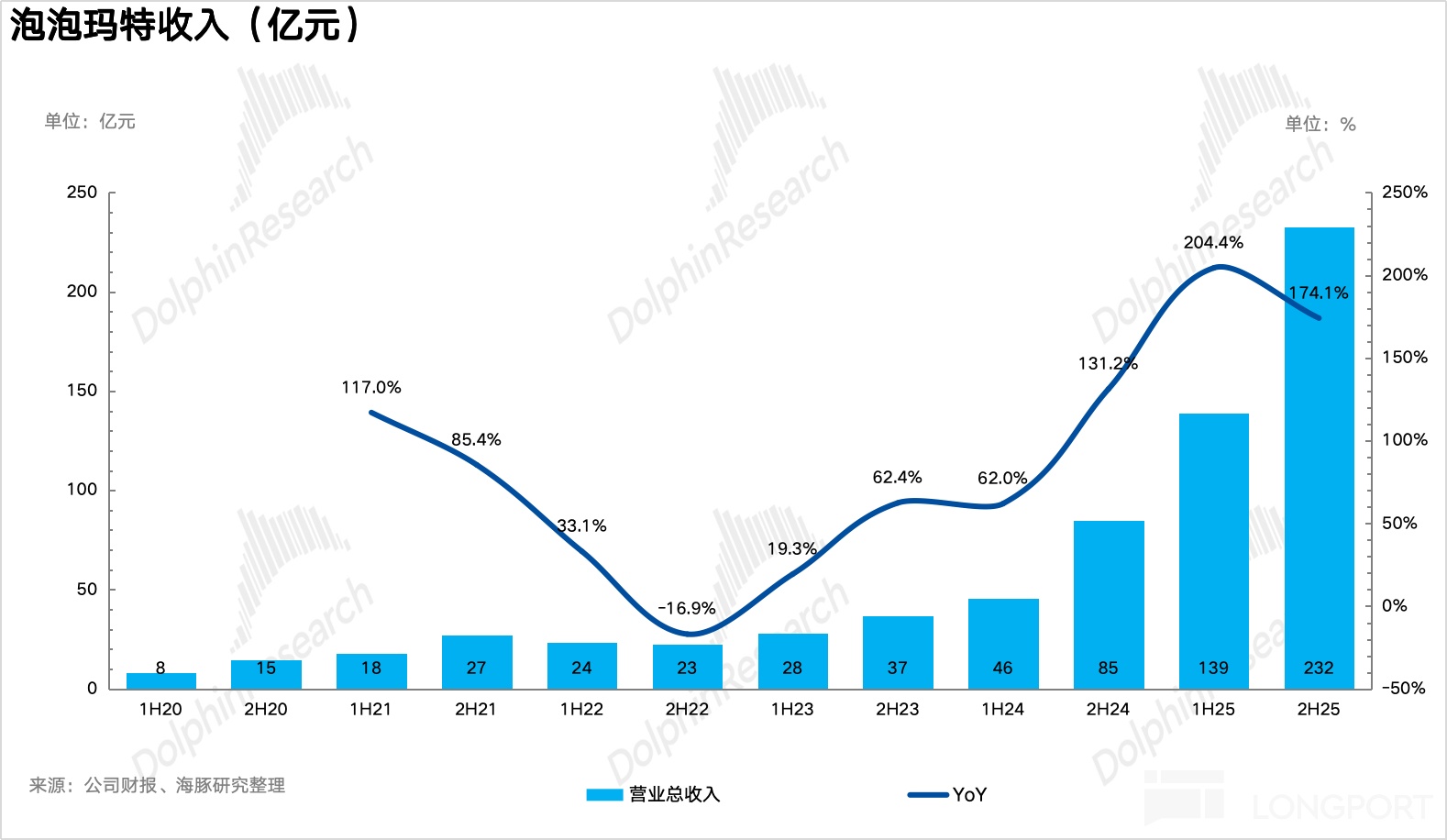
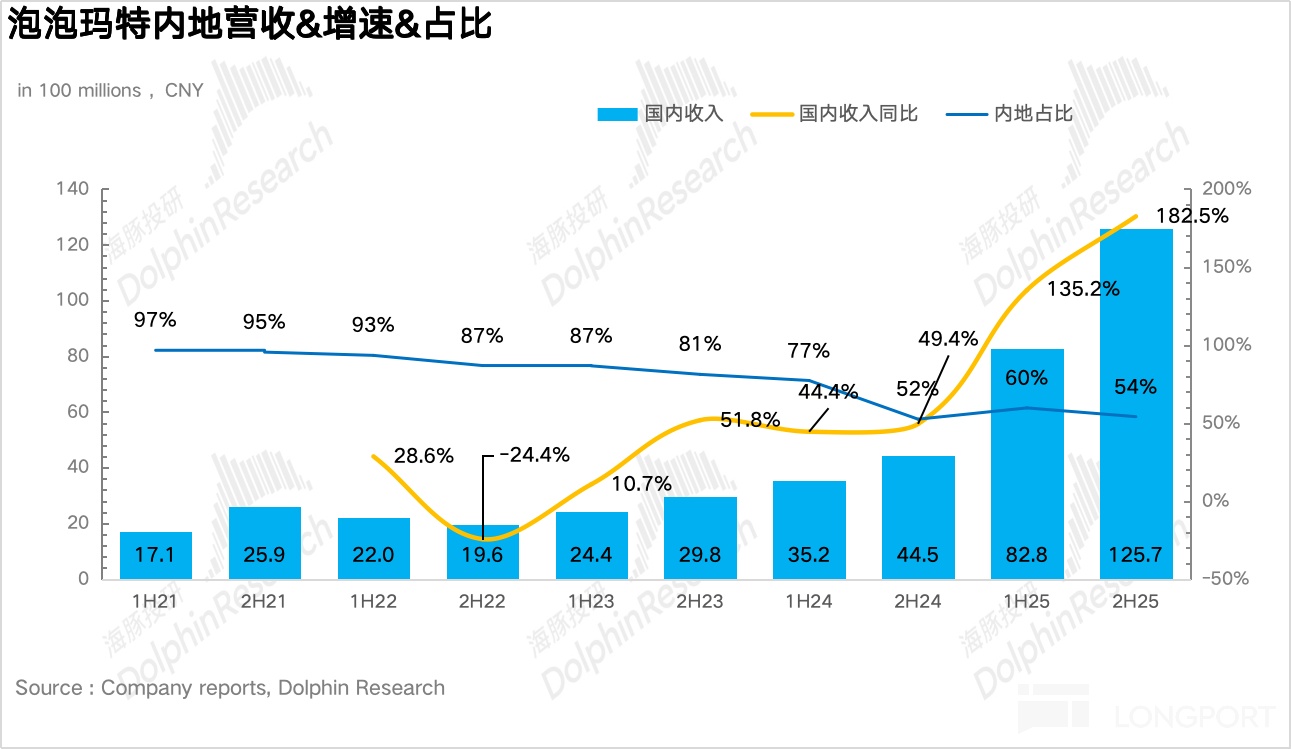
1) Overseas revenue missed. In 2H25, Pop Mart delivered revenue of RMB 23.2bn (+174% YoY), with growth moderating from 200%+ in 1H. Domestically, benefiting from tighter omnichannel ops (notably stronger online), revenue reached RMB 12.6bn (+183% YoY), with a sequential acceleration that beat the Street.
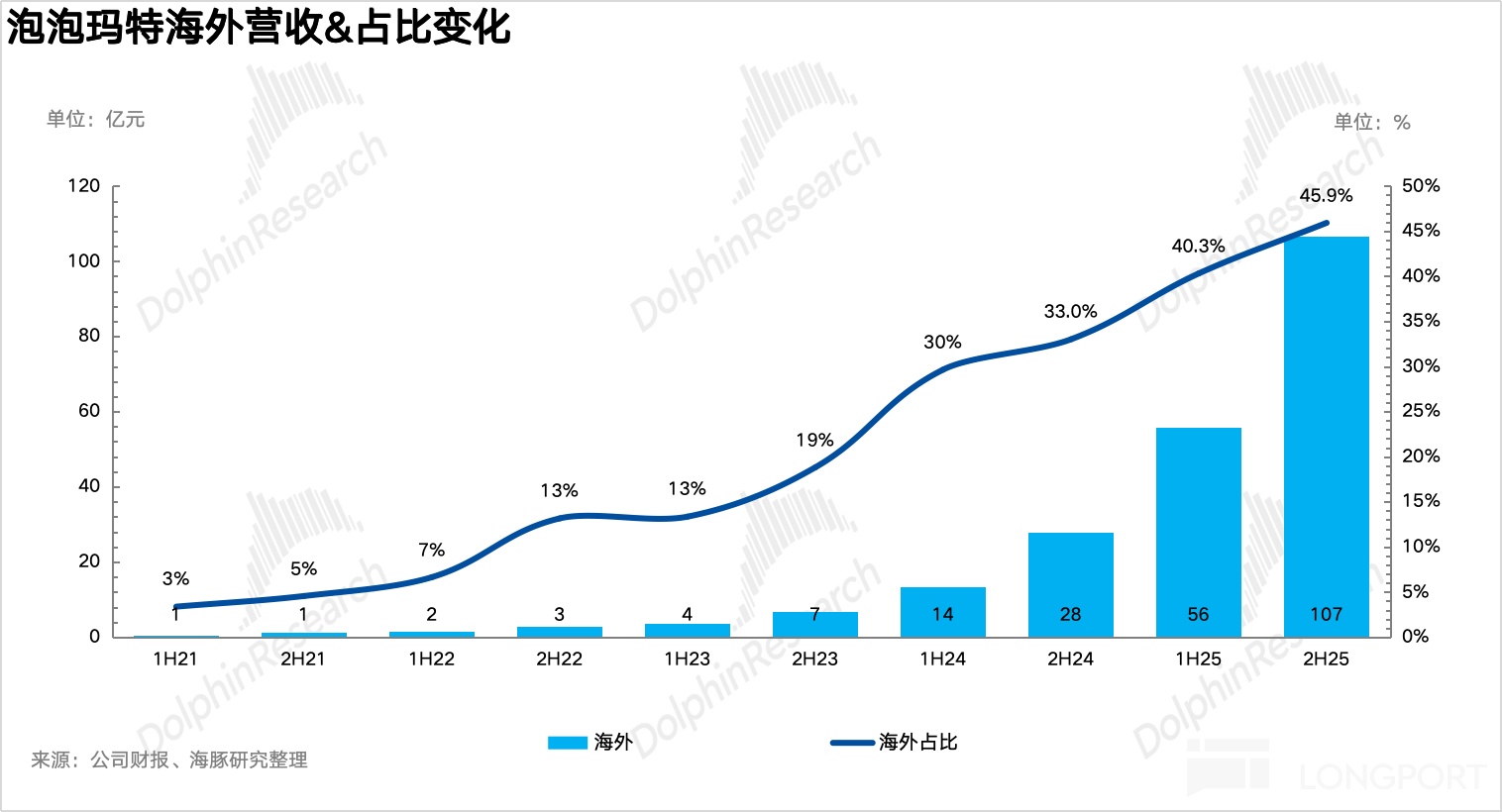
Overseas rose 281% YoY but decelerated QoQ, especially in North America. Versus 10x+ growth in Q3 and based on channel checks, limited refined operations overseas led to a visible slowdown in offline sales after Nov, and 'Black Friday' promotions lacked the expected spike, taking growth below 500% and dragging overall overseas performance.
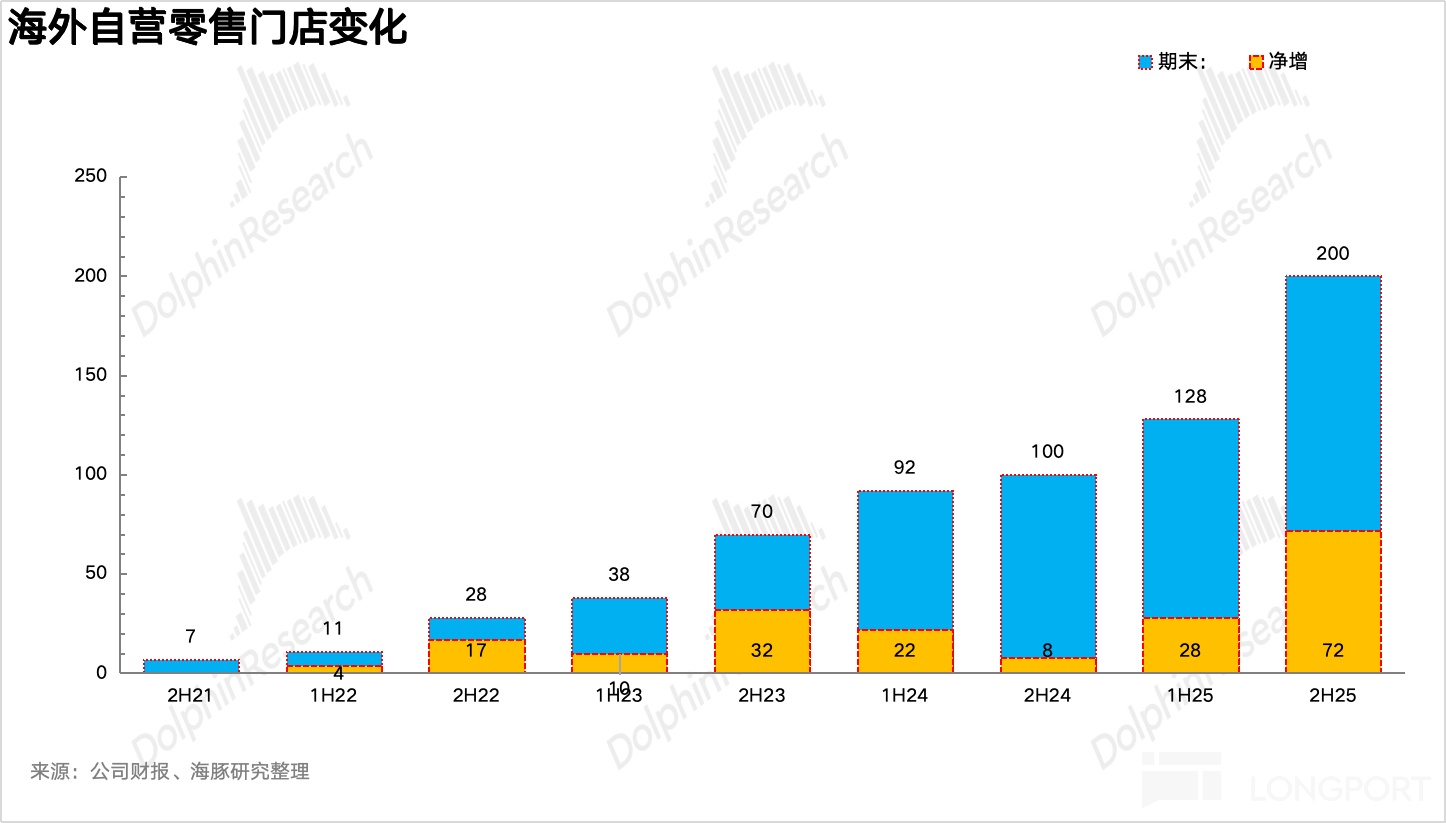
2) Faster overseas store openings. To capture LABUBU-driven traffic, the company accelerated overseas openings in H2, adding a net 72 stores, mainly in North America, and pursued clustered layouts in core districts like New York and Los Angeles.
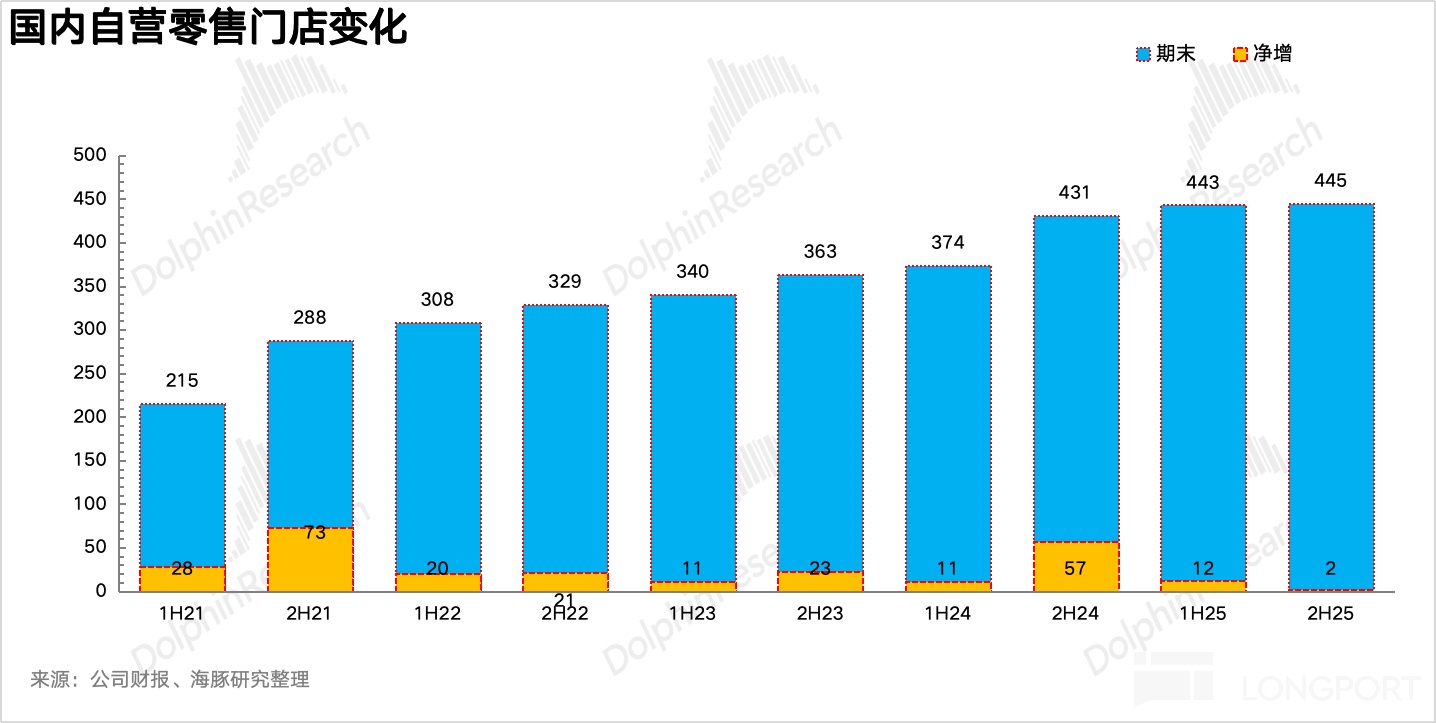
In China, net adds were just two, with a focus on upgrading existing stores; after boosting store area by 30–50%, sales density roughly doubled.
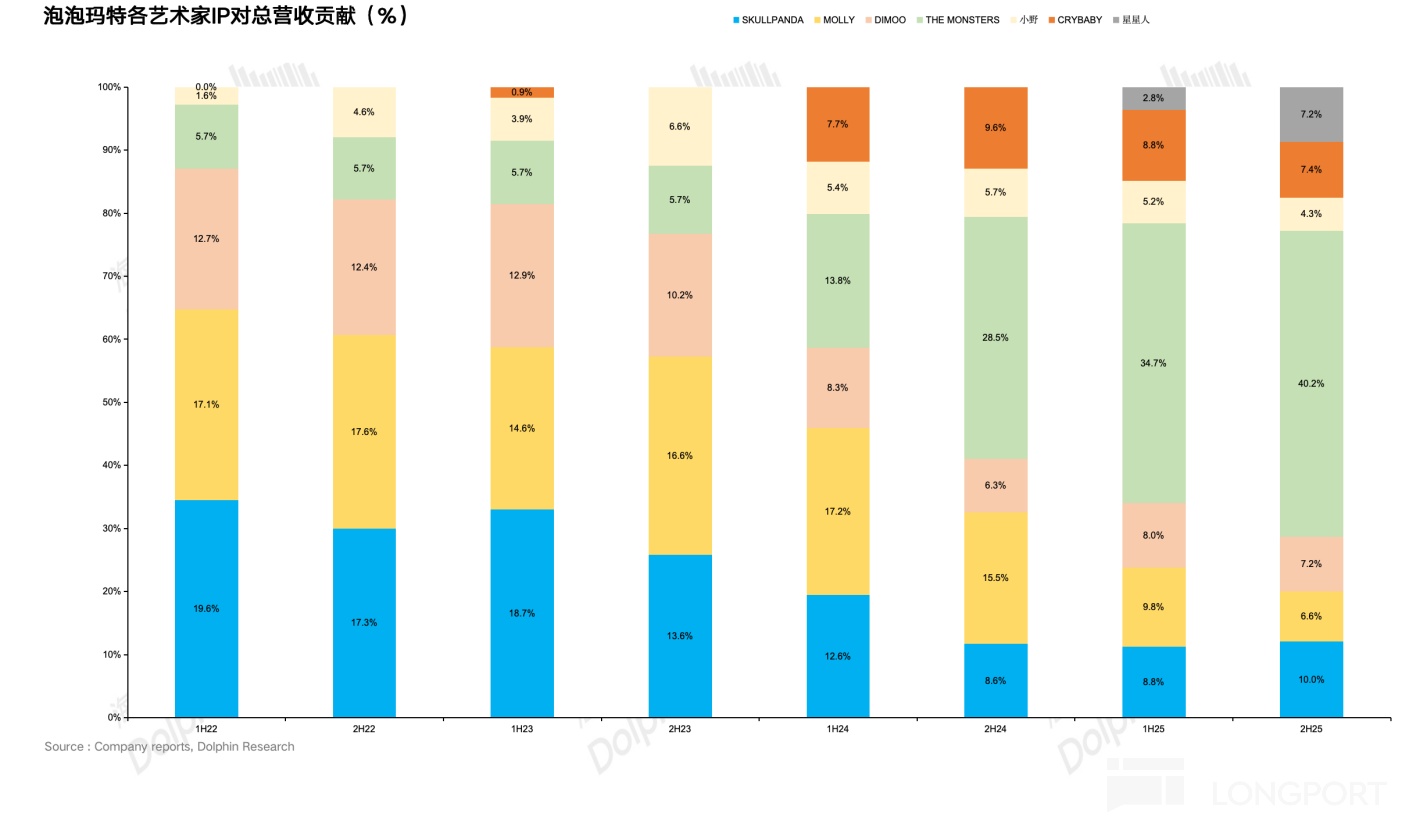
3) Higher mix for The Monsters. As Labubu capacity freed up in H2, The Monsters’ mix rose from 34.7% to 40%. Other legacy core IPs, including Molly and Dimoo, were softer with lower mix. The bright spot was the Xingxingren series, the fastest-growing IP, lifting its mix from below 3% in 1H to 7.2%.
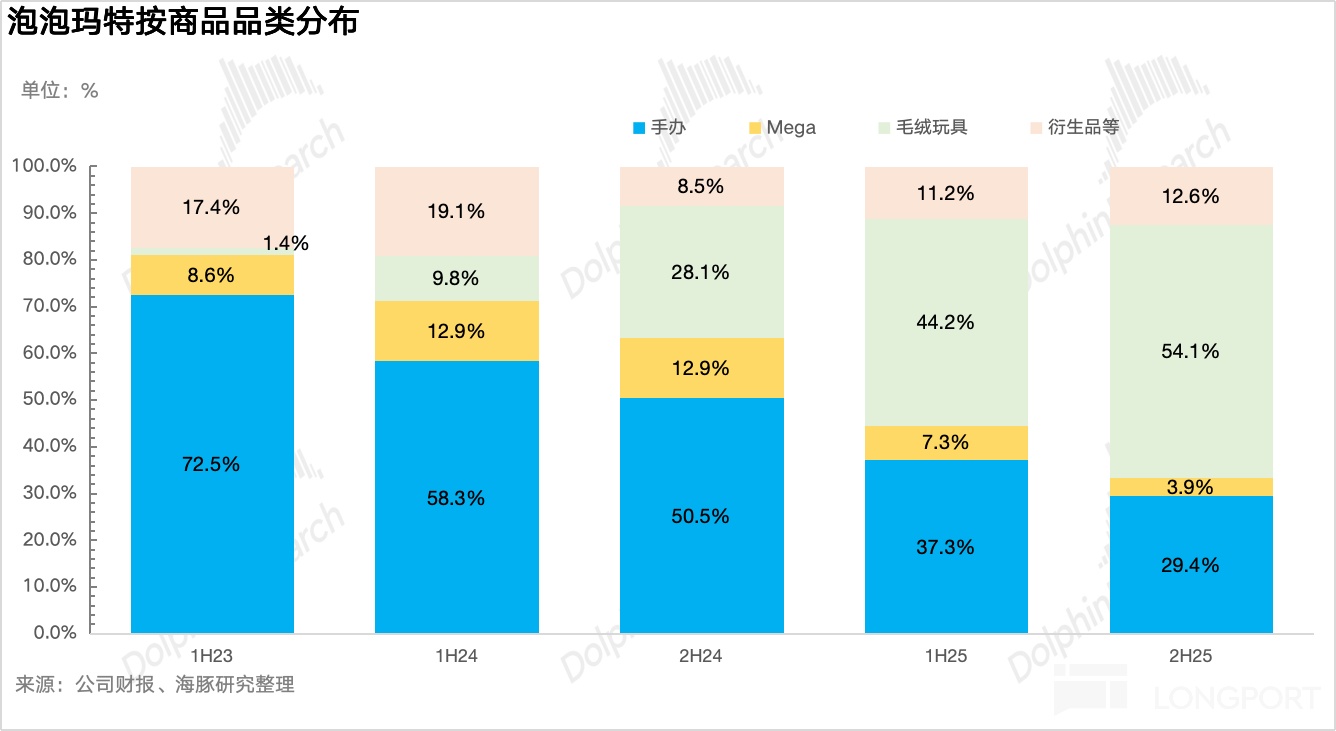
4) Plush now the primary category. Figurines led by blind boxes kept losing share, while higher-margin plush surged.
Beyond LABUBU, other flagship IPs also turned more ‘plush’, lifting the overall plush mix from 44% in 1H to 54%.
Separately, the POP BLOCK brick brand saw its business double HoH on launches like Molly Architecture and Labubu Forest, sustaining solid momentum.
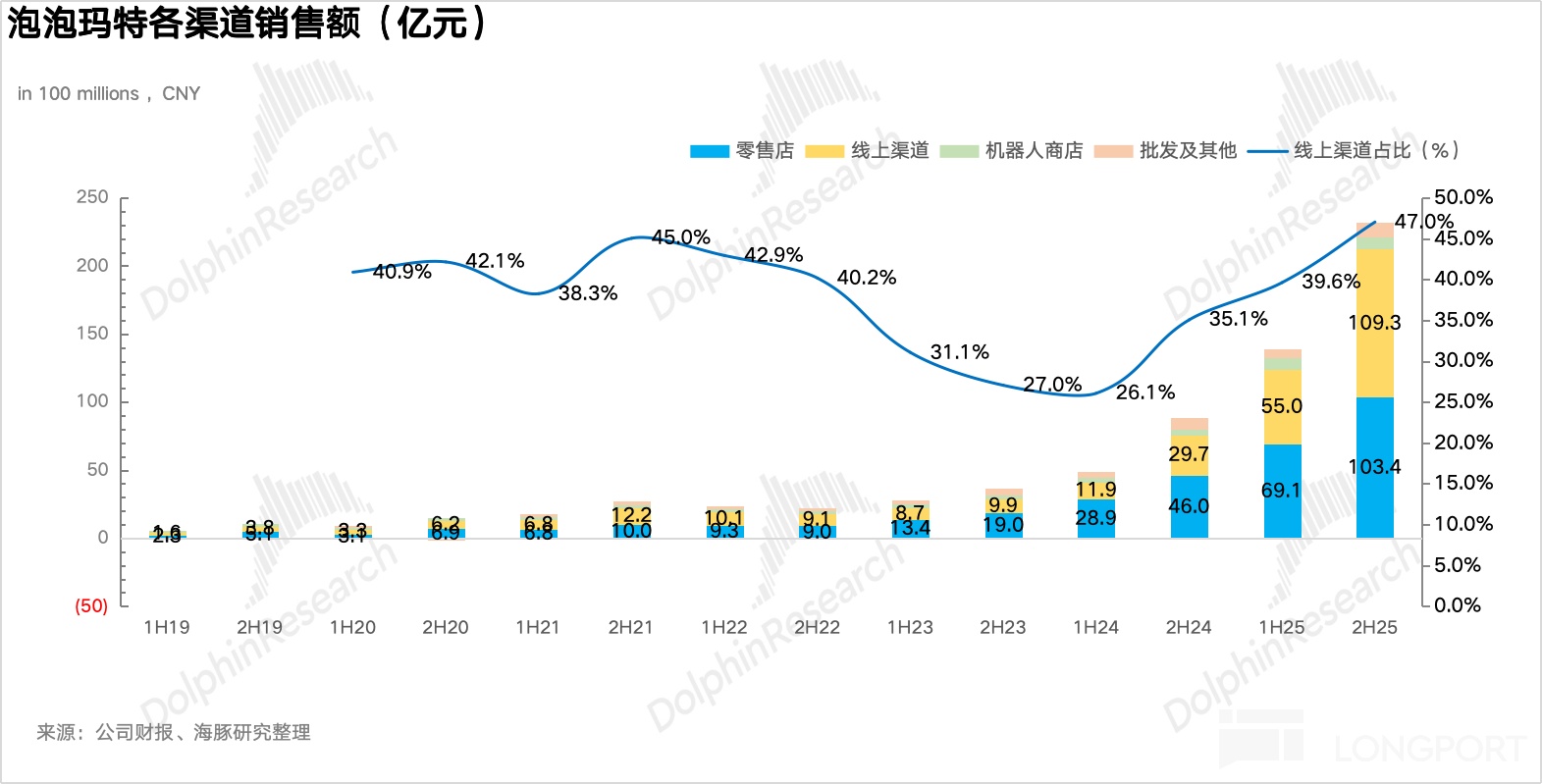
5) Online outperformed. By ramping livestream frequency on Douyin and other platforms in H2, Pop Mart drove a notable uplift in online conversion.
In its WeChat mini-program ‘抽盒机’, features like team draws and disclosed odds for rare items boosted engagement and concentrated private-domain traffic, taking online channel growth past +200% YoY, ahead of the overall market.
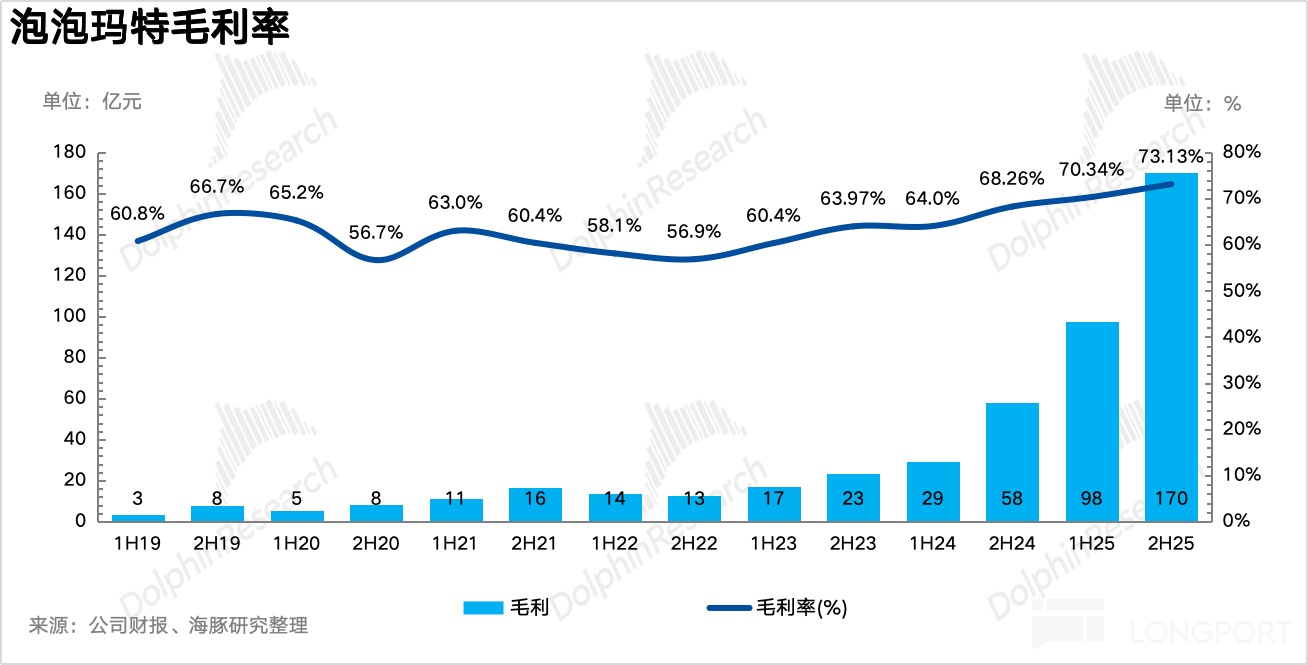
6) Operating leverage kept improving. With the higher-margin overseas mix rising and plush share surging, GPM reached a record 73% in H2.
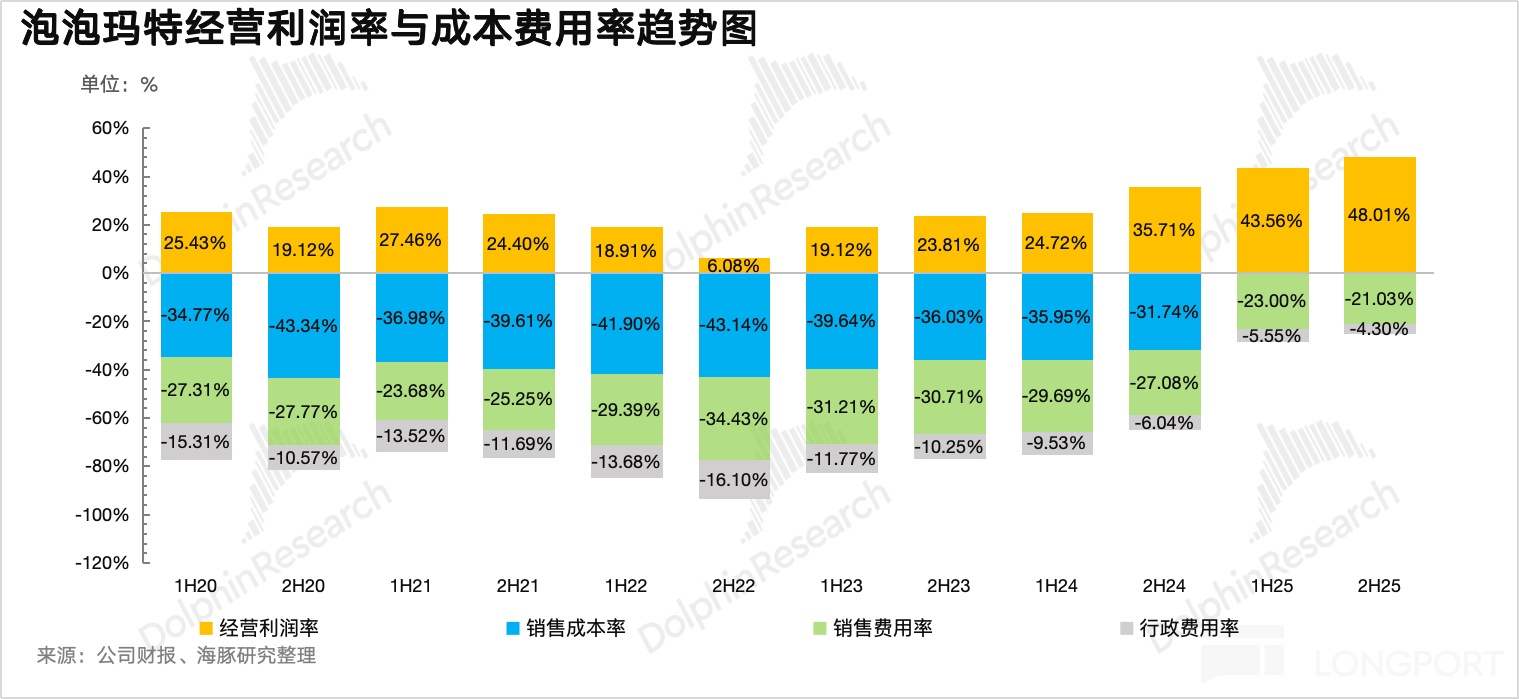
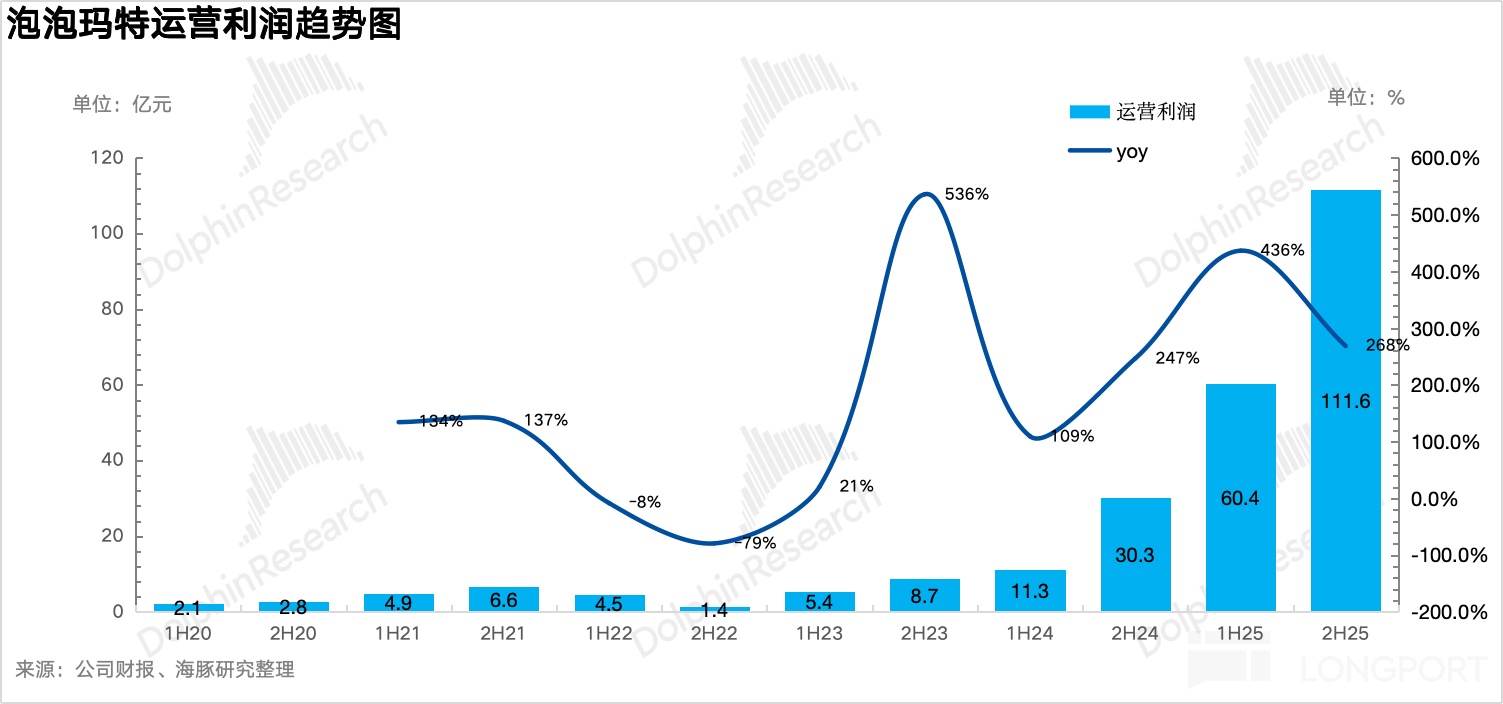
On opex, a higher online mix lifted customer-acquisition efficiency, taking the selling expense ratio down 600bps to 21%, while G&A fell 400bps to 6% on disciplined spending. Core OPM expanded to a record 48%.
7) Guidance. On the call, management guided 2026 revenue growth of no less than 20%; ex-store additions, implied same-store growth is low single-digit. In their words, it will be a ‘pit stop year to refuel and change tires’, well below the ~30% market expectation.
8) Detailed financials:
Dolphin Research’s take:
As discussed above, H2 was not weak and broadly matched our expectations. We see the midday plunge as primarily driven by the underwhelming 2026 guide.
At this stage, the key risk for Pop Mart is what comes after The Monsters: where is the next mega IP? The answer to that question is reflected in management’s 2026 growth outlook.
Pop Mart is essentially an end-to-end IP incubation and distribution platform, analogous in model to a streaming platform like Netflix. If Netflix fears a content gap, Pop Mart worries about IP aging and gaps in the pipeline.
From early reliance on Molly to SKULLPANDA, Dimoo and then The Monsters, any lull without a hit quickly dents growth, similar to Netflix in a ‘content-light’ year.
From this angle, The Monsters at 40%+ is not ideal, as a fade in Labubu’s heat without a similarly scaled successor IP would hit earnings hard.
In fact, at least domestically, indicators such as secondary-market prices, search volumes and topic heat all suggest Labubu’s popularity is trending down. We see this as the core reason behind the sharply slower guide.
To mitigate this risk, Pop Mart clearly accelerated new IP launches from Q4 last year, though early feedback on Supertutu and After-school Merodi has been lukewarm.
History shows Pop Mart’s industrialized ‘star-making’ system works — constant ideas from global artists, an internal ‘screen-test-scale’ mechanism to gauge IP potential, and powerful channel and supply-chain support to push winners to the fore. With stepped-up IP creation, we see the next hit akin to Xingxingren as a matter of time.
Finally, on valuation, the LABUBU-fueled hypergrowth phase has passed, and the focus shifts to hard-mode, refined operations to lift store productivity.
On management’s 2026 profit growth target of 20%, or RMB 15.6bn in net profit, the post-plunge valuation is ~13x — ordinary retail territory, arguably an overshoot.
On our math, assuming low-single-digit SSS growth overseas and in China, plus ~50 net overseas openings per year, 2026–2029 CAGR can still be ~20%.
With improving overseas ops and continued IP creation and operations, a rerating back above 20x (HKD 312bn) looks likely.
In addition, management flagged a 5-year focus on group-level IP monetization (parks, film & games). Current valuation lacks this optionality, and upside exists if group-level initiatives exceed expectations.
Detailed results analysis:
I. Overseas revenue below expectations
In 2H25, Pop Mart delivered total revenue of RMB 23.24bn (+174% YoY). By segment, overseas revenue was RMB 10.67bn (+281% YoY), slower vs 1H, with mix rising from 40% in 1H to 46%.
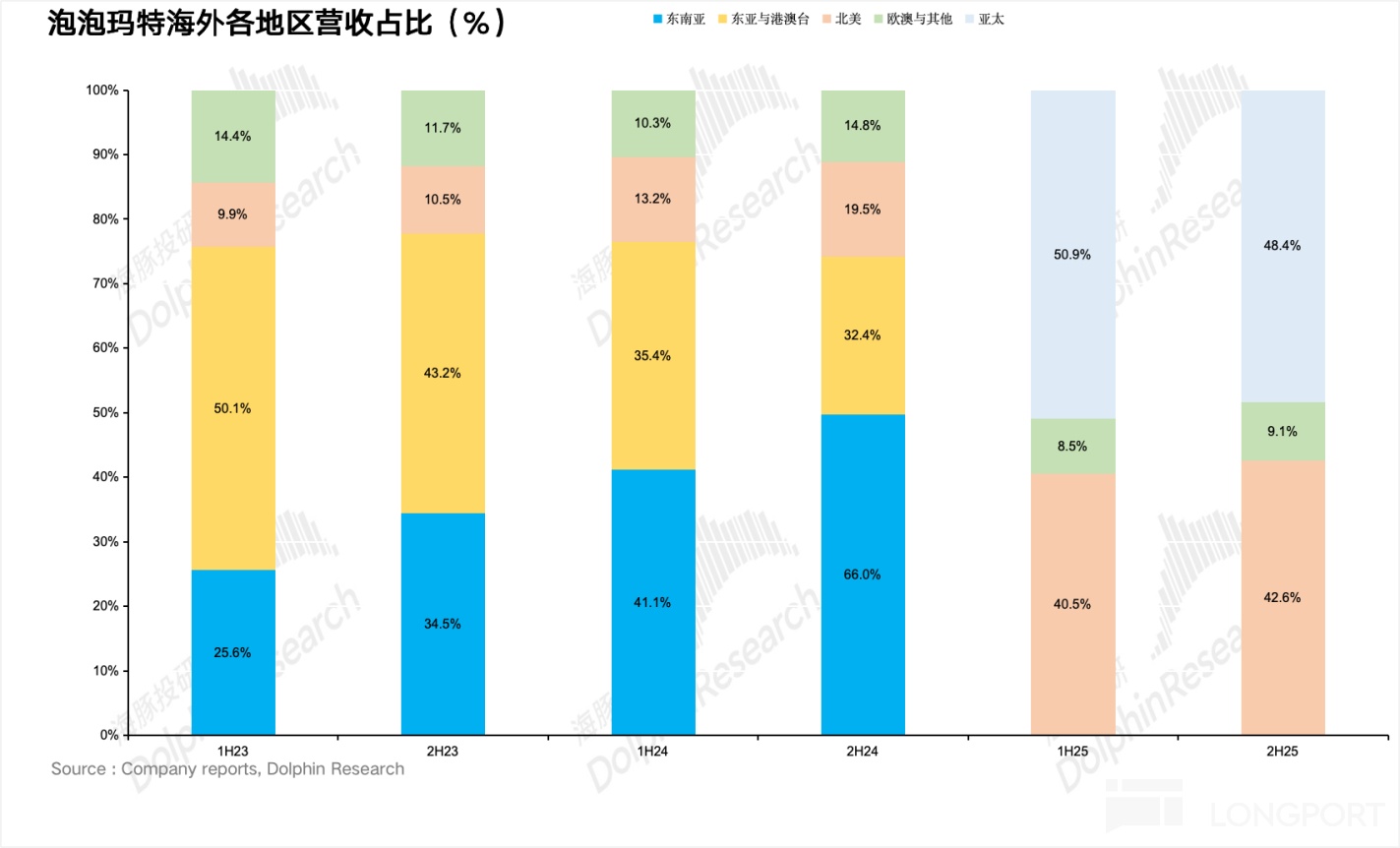
North America: H2 revenue was RMB 4.54bn, +733% YoY, with mix surging from below 20% a year ago to 43%.
Despite more local artist and streetwear collaborations and greater exposure in mainstream cultural moments like Thanksgiving parades, North America remains the market with the highest single-store productivity and fastest growth globally (per-store revenue est. RMB 45–50mn).
However, rapid near-term store expansion constrained fine-tuned operations; offline trends softened after Nov, and 'Black Friday' lacked the expected step-up, taking growth below 500% and weighing on overseas results.
Europe: After nearly a year of testing, Pop Mart expanded in H2 across core cities in the UK, France, Spain, the Netherlands, Denmark and Belgium. Revenue reached RMB 970mn (+135% YoY), or close to 10% of the total.
Asia-Pacific: Revenue was RMB 5.16bn (scope changed, no YoY for now). Thailand and Singapore shifted from a ‘breakout’ phase to ‘steady growth’, with seasonality like the rainy season diluting offline traffic in SE Asia.
China revenue was RMB 12.57bn (+183% YoY), with a clear acceleration vs 1H. Based on checks, LABUBU mini (RMB 99–149) and Halloween plush (RMB 199–299) lifted AOV, while IP adjacency into accessories, stationery and desserts raised ARPU among members.
II. Overseas store openings accelerated
On pace, Pop Mart sped up overseas openings in H2, adding a net 72 stores, primarily in North America.
By end-2025, North America had 60+ stores across New York, Los Angeles, Chicago, Miami and other key metros. In Dec, Vancouver saw the first store in Canada, marking entry into the region’s second-largest market. Toronto is slated for early 2026, completing core coverage on both coasts.
Strategically, most H2 openings were full-format, long-term standard stores (large flagship formats) to absorb LABUBU-driven traffic.
Europe added 18 net stores in 2H25, an acceleration vs 1H, taking coverage across the UK, France, Germany, Italy, the Netherlands and Spain, now the second growth engine overseas.
APAC added 16 stores; with a larger base, H2 focused on format upgrades. In Dec, Pop Mart opened its first store in Manila, filling the last strategic gap in SE Asia.
In China, Pop Mart closed low-efficiency community and basement stores, upgrading toward premium malls, cultural landmarks and top shopping centers; net adds were only two, far slower than overseas as resources were focused offshore.
The domestic pace implies limited room for further footprint expansion; future growth must rely on refined operations to lift store productivity.
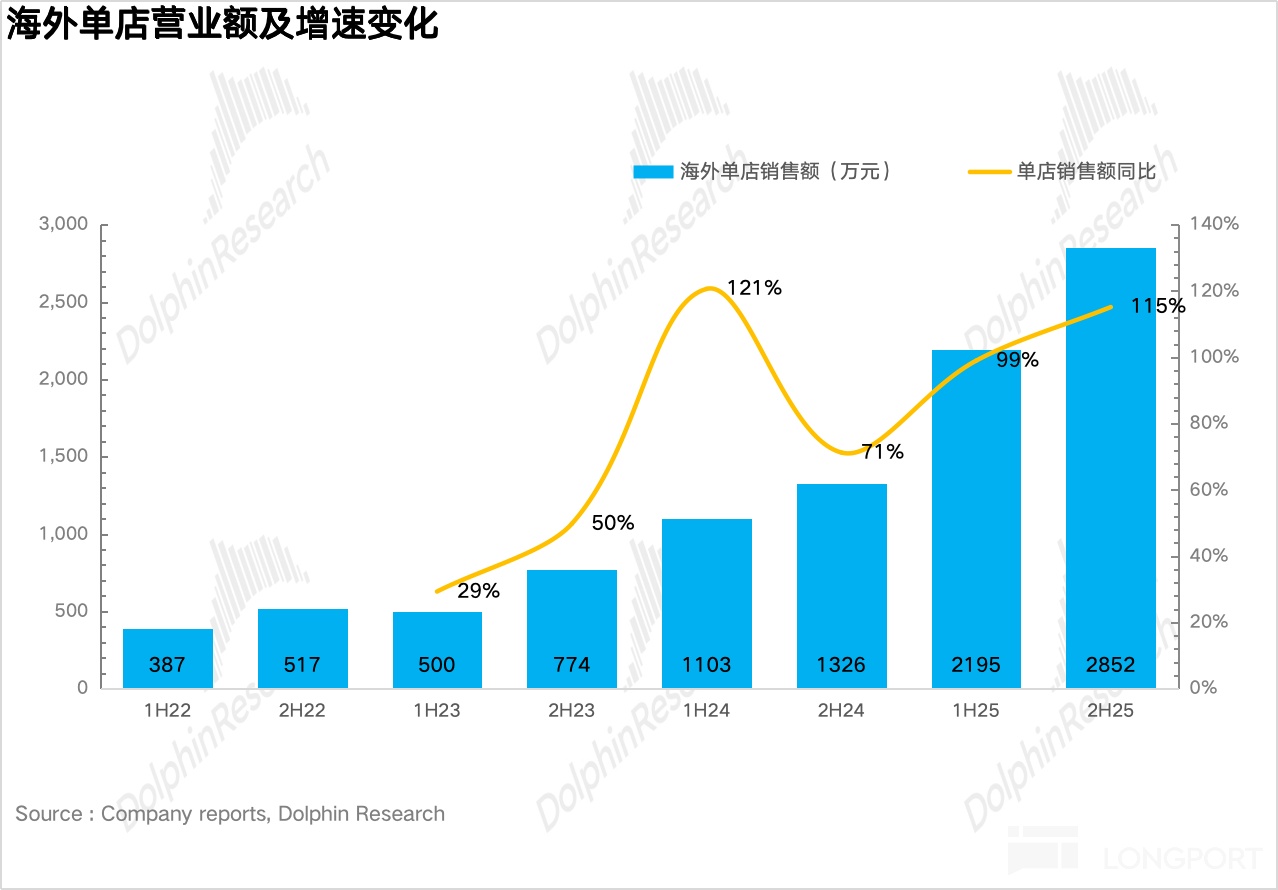
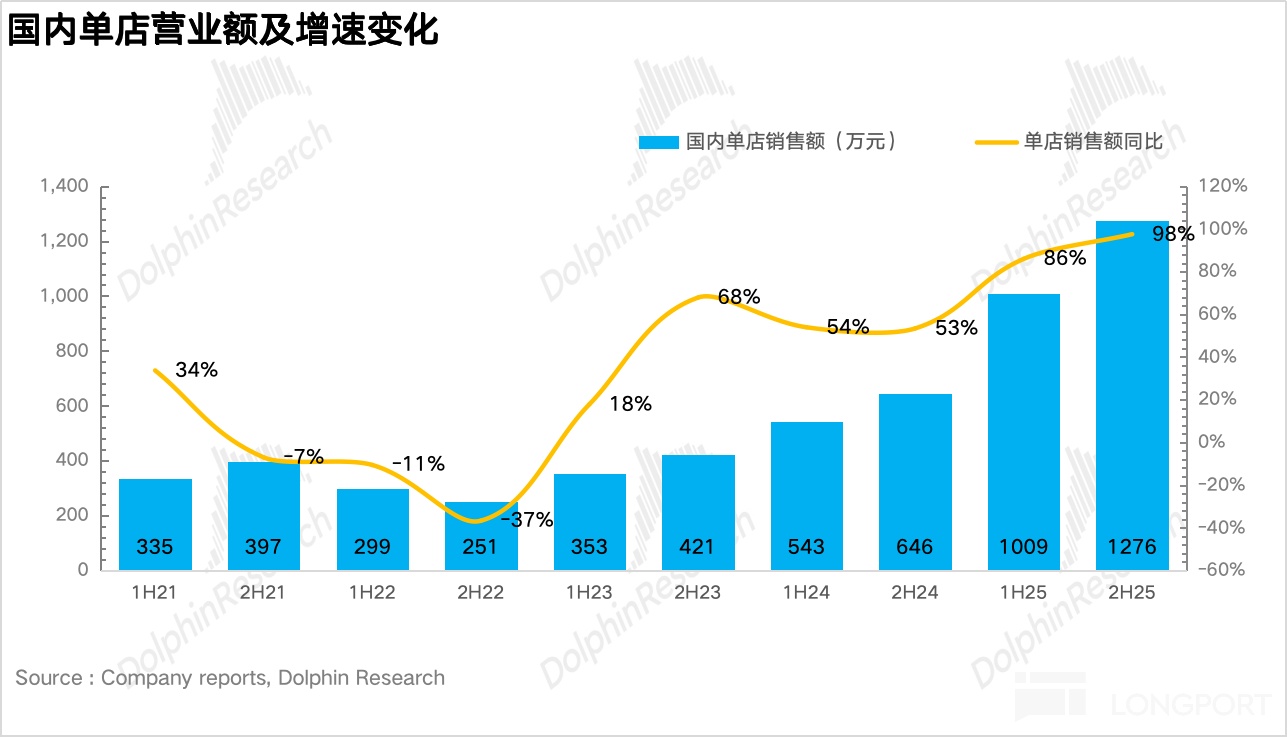
On per-store sales, with better store quality and broader categories, we estimate average H2 domestic per-store revenue at RMB 12.76mn (+98% YoY). Both traffic and ticket size rose meaningfully.
Overseas averaged RMB 28.52mn per store (+115% YoY), narrowing the gap vs domestic, largely because overseas openings stepped up in H2.
Net-net, while overseas white space remains, stores are conversion points; if product heat fades and sales stall, stores can become a drag. The core remains IP heat sustainability.
III. The Monsters mix rose further
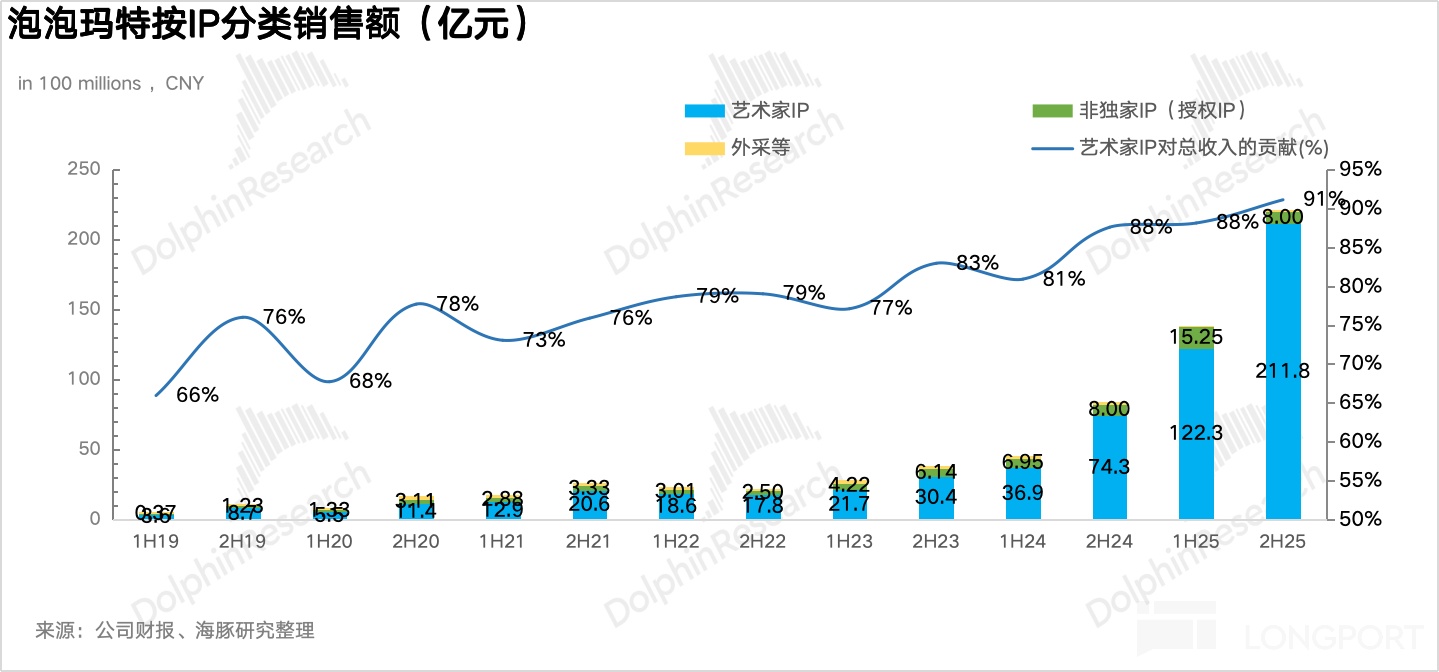
By IP contribution, as LABUBU’s H2 capacity constraints eased, The Monsters’ mix climbed from 34% to 42%, a new high, making it the core IP.
Given softer trends in prior core IPs like Molly and Dimoo, without a ‘brick breakout’ or a new top-tier IP baton in 2026, repeating 2025’s explosive growth will be difficult.
Meanwhile, the domestically focused Xingxingren series lifted mix from 3% to 7%, with full-year revenue at an estimated RMB 2.5bn. As overseas is still in the early awareness stage for Xingxingren, a 2026 overseas ramp should offset slowing growth in China.
IV. Plush entrenched as the largest category
By product, figurines led by blind boxes kept losing share, replaced by explosive growth in the higher-margin plush category. Beyond LABUBU, other flagship IPs also moved toward plush, lifting overall mix from 44% in 1H to 54%.
In addition, POP BLOCK (bricks) doubled HoH on the Molly Architecture and Labubu Forest series, showing strong momentum.
V. Online mix rose sharply
By channel, Pop Mart increased livestream frequency on Douyin and other platforms in H2, clearly boosting online conversion.
Furthermore, the WeChat mini-program ‘抽盒机’ added gameplay like team draws and published rare-item odds, concentrating and unlocking private-domain traffic, taking online growth above +200% YoY, ahead of the broader market.
VI. GPM hit a new high
With the higher-margin overseas mix rising (overseas GPM ~10ppt above domestic) and richer product mix (plush), H2 GPM reached a fresh high of 73%.
VII. Operating leverage expanded, profitability surged
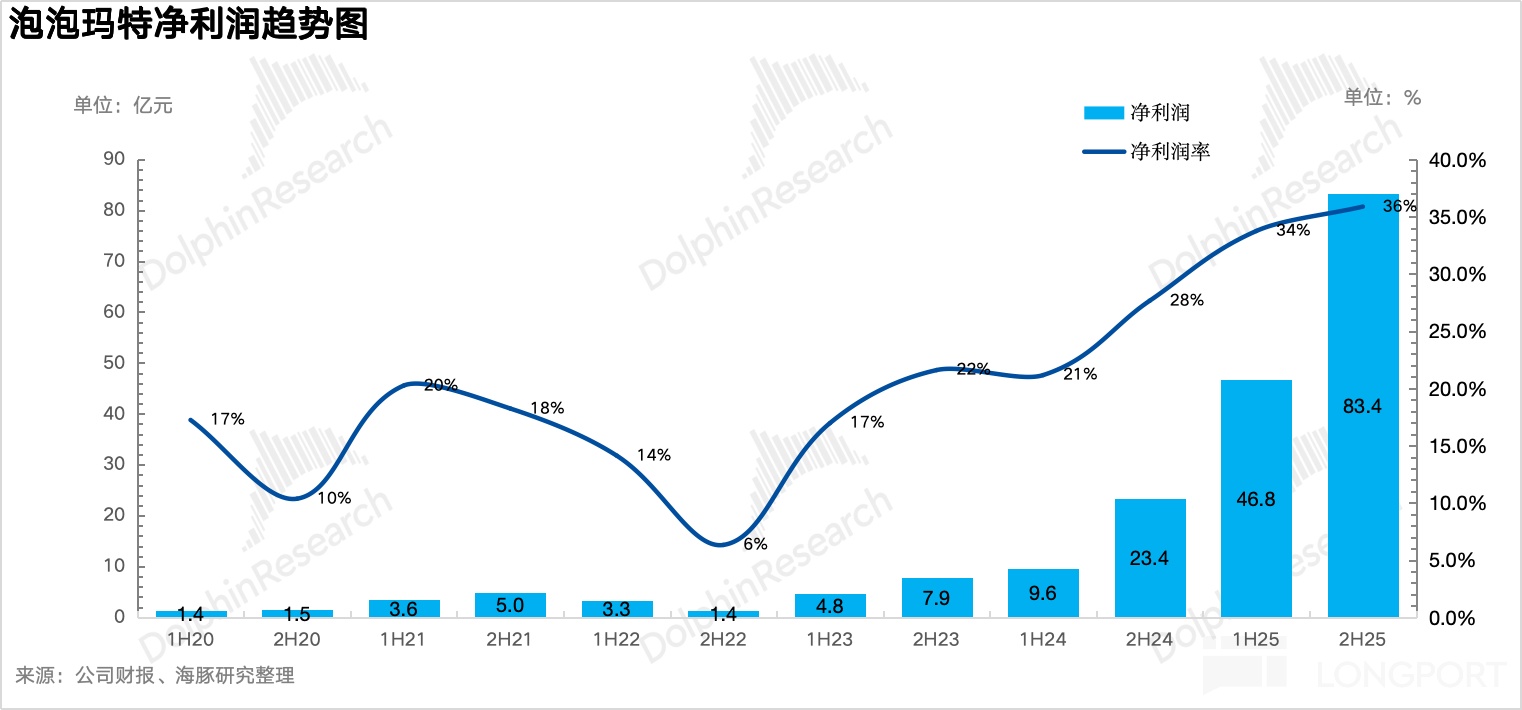
With a higher online mix and better CAC efficiency, the selling-expense ratio fell 600bps to 21%, and G&A declined 400bps to 6% on restrained spending. Core OPM climbed to 48%, a record.
<End>
Related reading:
Earnings season
Mar 26, 2025 Earnings Take: ‘Pop Mart: Pedal to the metal — can the run continue?’
Mar 26, 2025 Earnings Take: ‘Pop Mart: Overseas legend — still ‘full throttle’?’
Aug 20, 2024 Earnings Take: ‘PDD’s way is ‘too low’? Taking brand ‘vibes’ global is the real deal’
Aug 21, 2024 Call Notes: ‘Pop Mart sprint: ‘Full-year >60%, overseas +200%’’
Mar 28, 2022 Earnings Take: ‘Pop Mart: even trendy toys can’t escape the grind’
Mar 28, 2022 Call Notes: ‘Pop Mart’s new magic?’
In-depth
Nov 28, 2024 Deep Dive: ‘It’s just a toy — why the big comeback?’
Dec 10, 2024 Deep Dive: ‘Overseas hypergrowth — this ‘bubble’ won’t burst’
Risk disclosure and disclaimer:Dolphin Research Disclaimer and General Disclosure
The copyright of this article belongs to the original author/organization.
The views expressed herein are solely those of the author and do not reflect the stance of the platform. The content is intended for investment reference purposes only and shall not be considered as investment advice. Please contact us if you have any questions or suggestions regarding the content services provided by the platform.
