


KO: Betting on AI — Is the 'happy soda' playing a long game?---
The 'No.1 consumer stock in the universe' KO released Q4 2025 results (quarter ended Dec 2025) pre-market on Feb 10, 2025 Beijing time. $可口可乐.US
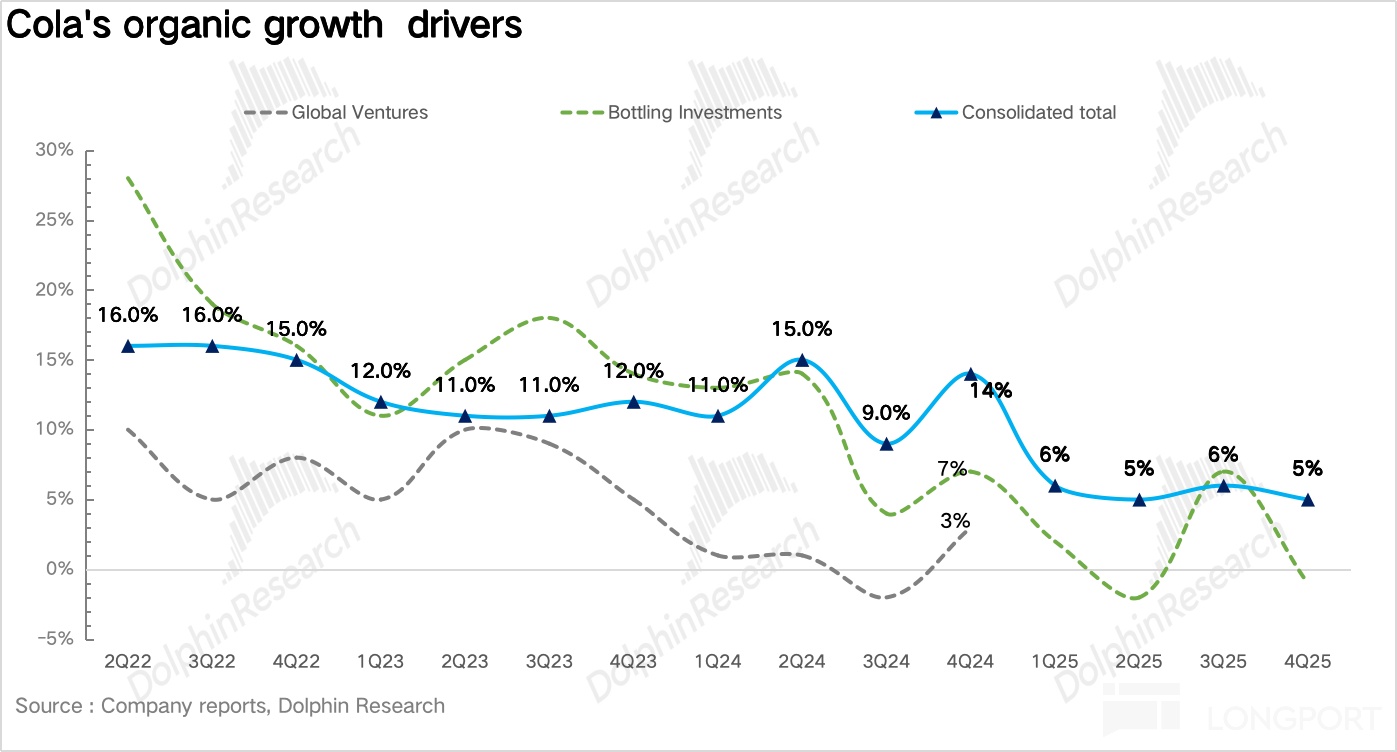
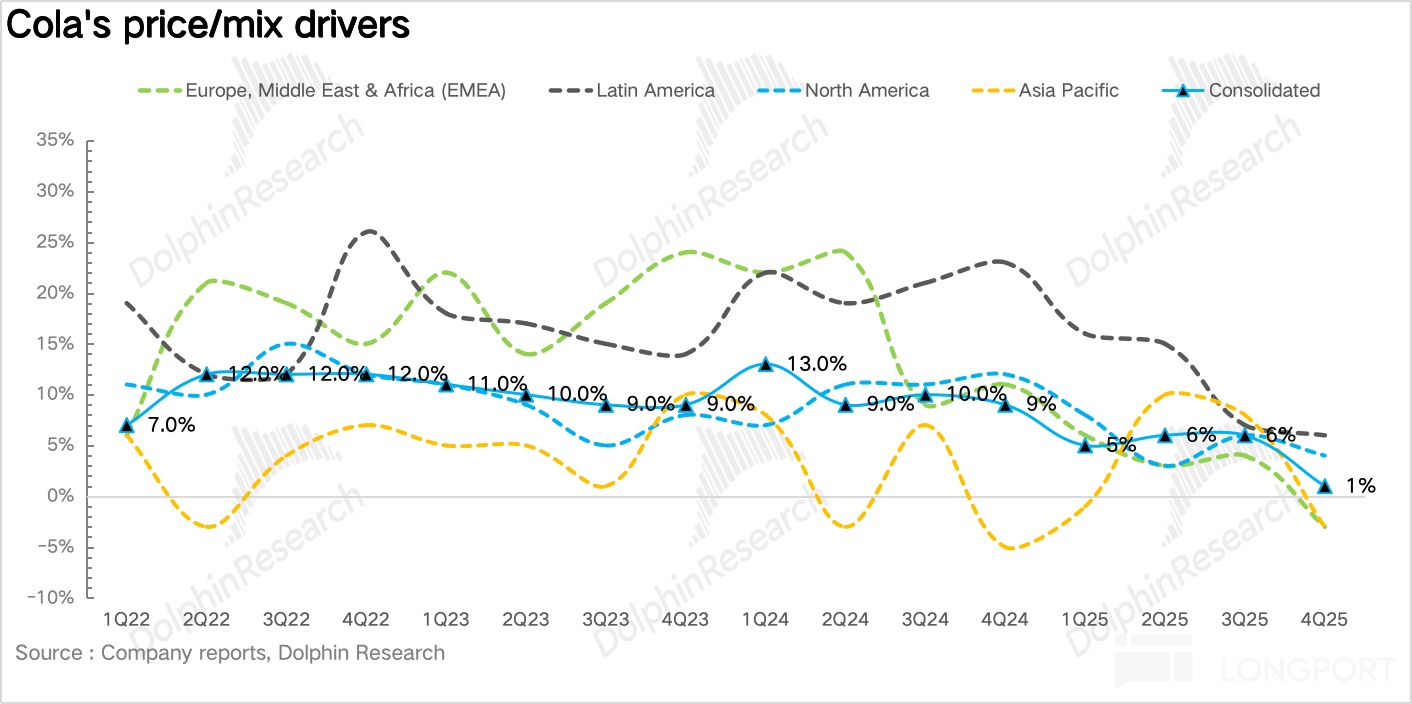
1) Pricing underwhelmed. In 4Q25, reported revenue was $11.82bn (+2.4% YoY), missing estimates, while organic revenue rose 5%. Concentrate sales were up 4% YoY; paired with unit case growth of 1%, this likely reflects bottlers' forward buying.Pricing, previously the core organic growth engine, rose just 1% in Q4, as last year's inflation-driven pass-through faded. Growth is normalizing to a more moderate pace.
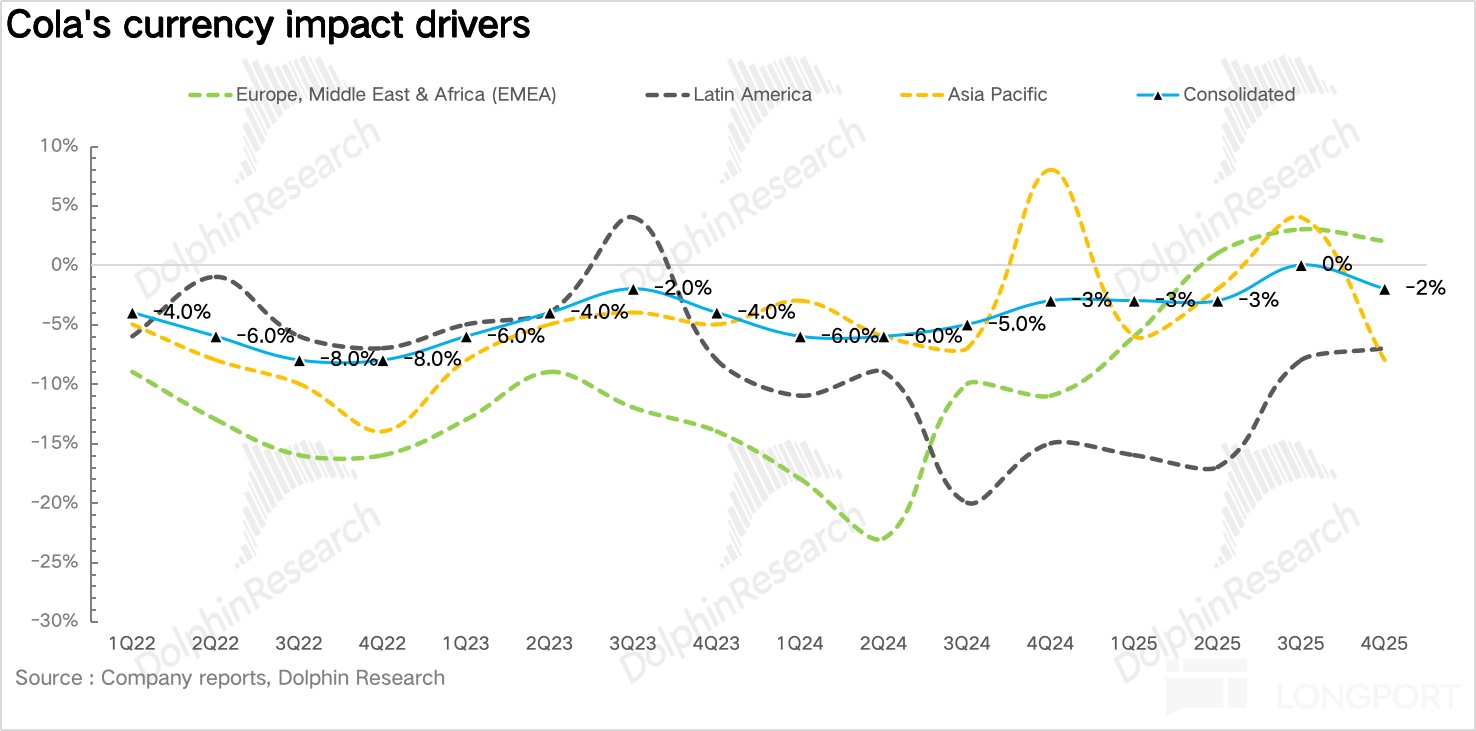
2) APAC and EMEA were the main drags. Macro pressure-induced downtrading and FX headwinds slowed APAC and EMEA noticeably. North America, the home market, held up better as the shift toward healthier portfolios offset softness in legacy high-sugar drinks.
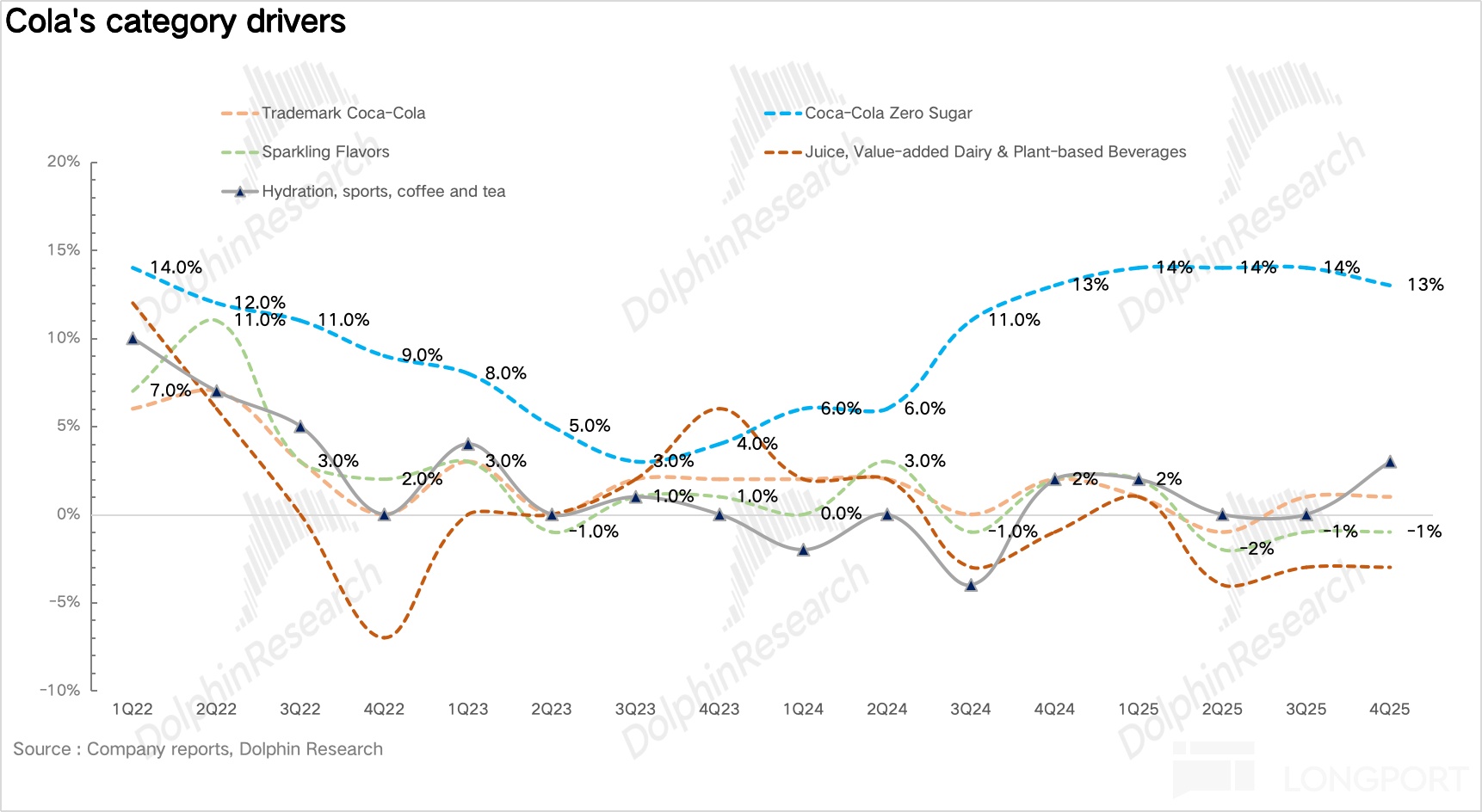
3) Coke Zero Sugar kept surging. With the global sugar-free trend accelerating and holiday limited editions launched in Q4, Zero Sugar continued to post high growth across all regions, up 13% YoY. Sugary CSDs and juices kept declining.
As its 'Total Beverage' strategy advances, health-oriented categories such as RTD tea (Fuze Tea), sports drinks, and value-added dairy all outgrew the market. These helped diversify growth drivers.
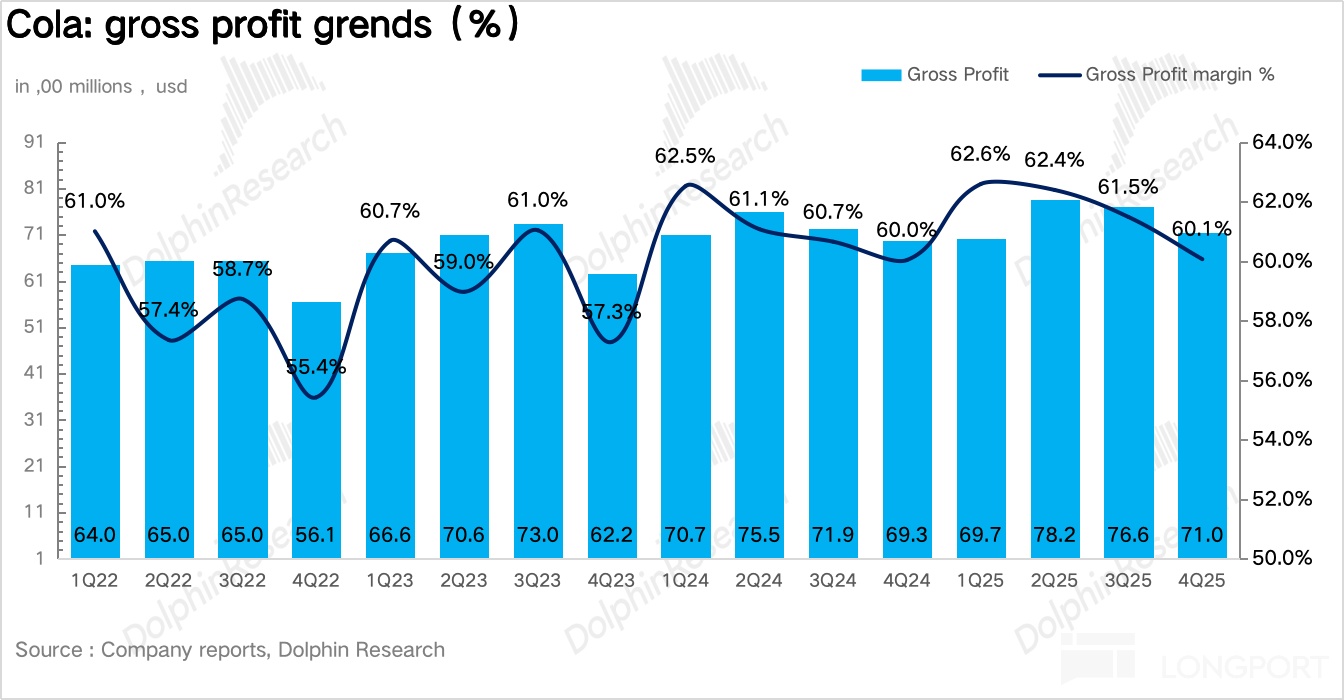
4) Margins ticked up slightly: While mix continued to skew toward premium and healthier high-margin products, rising raw material and packaging costs plus heavier promotions left Q4 GPM roughly flat.
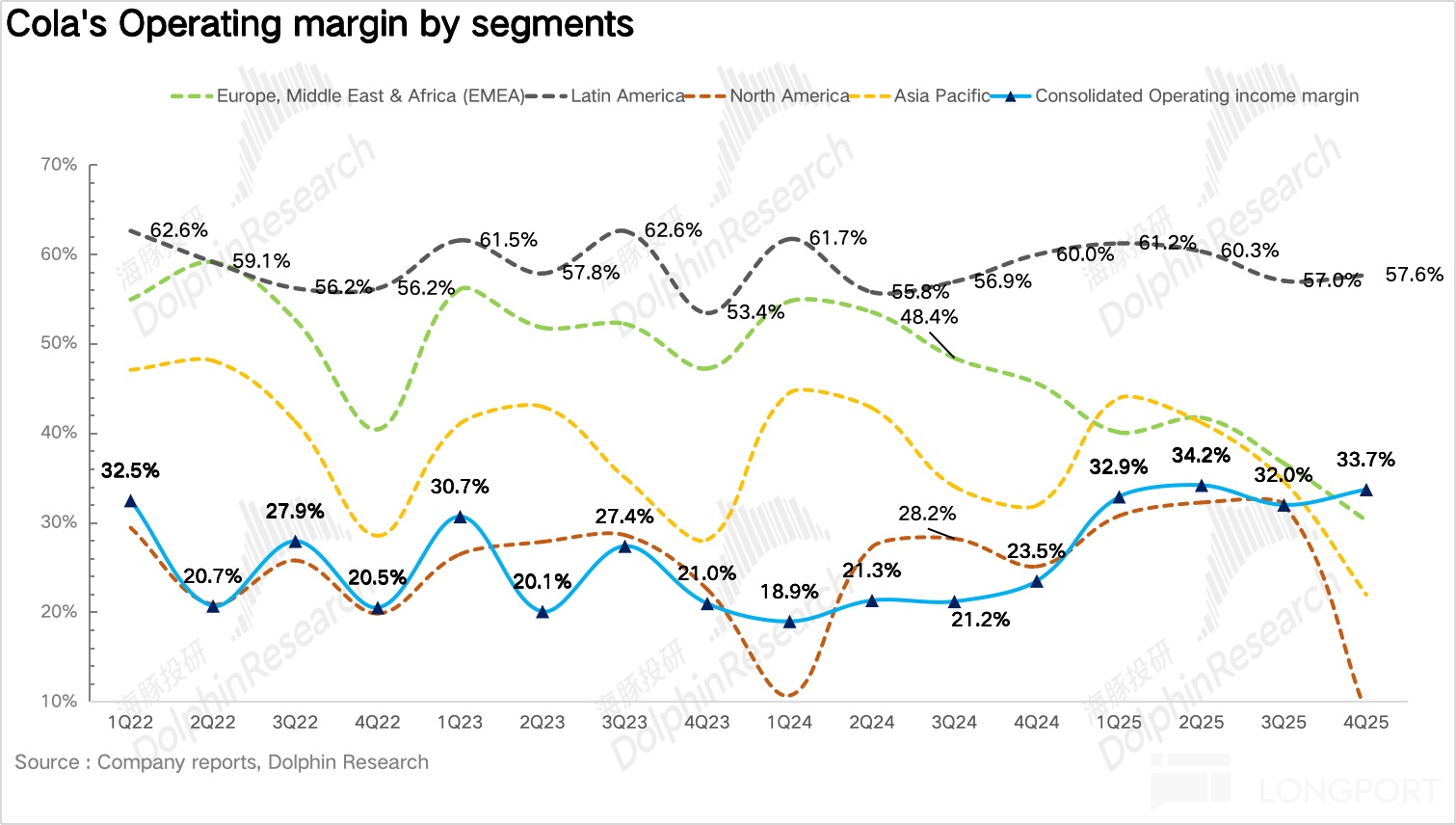
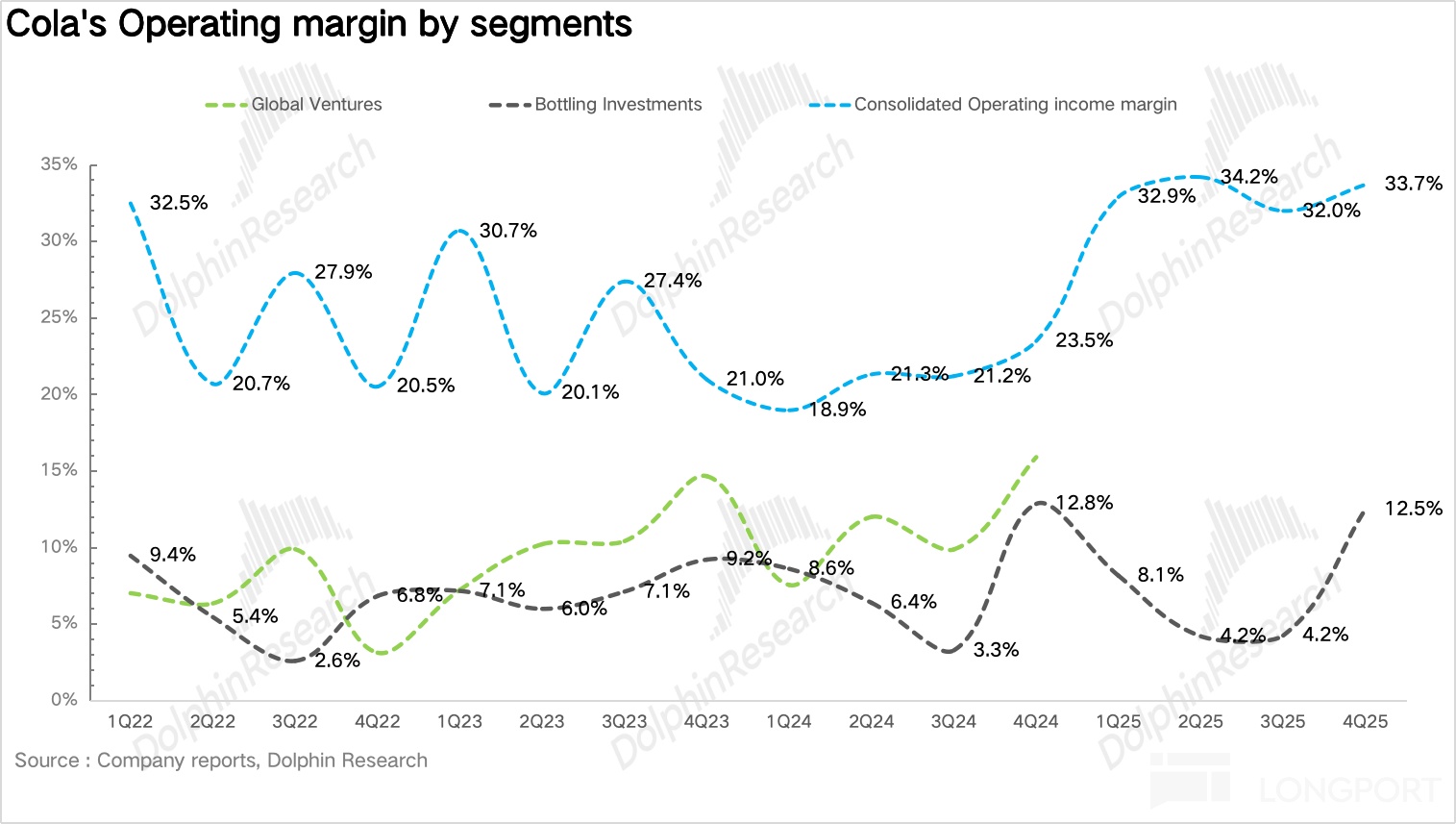
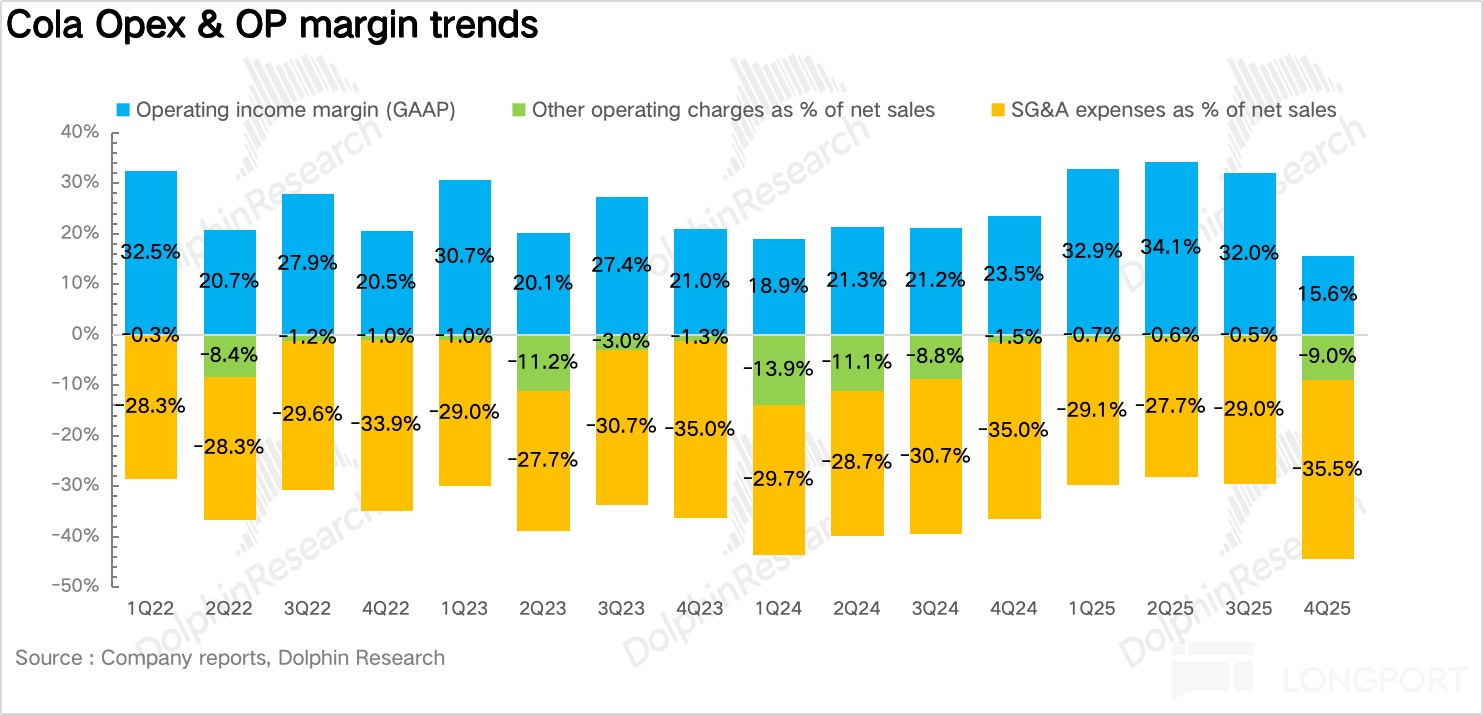
On opex, deeper AI integration improved operating and spending efficiency. Ex the $960mn non-cash impairment on the BodyArmor trademark, comparable OPM expanded 40bps to 24.4%.
5) Guidance: The company guides 2026 organic growth of 4–5%, slightly below Street expectations. Management signals a balanced approach to volume and price.
6) Financial snapshot
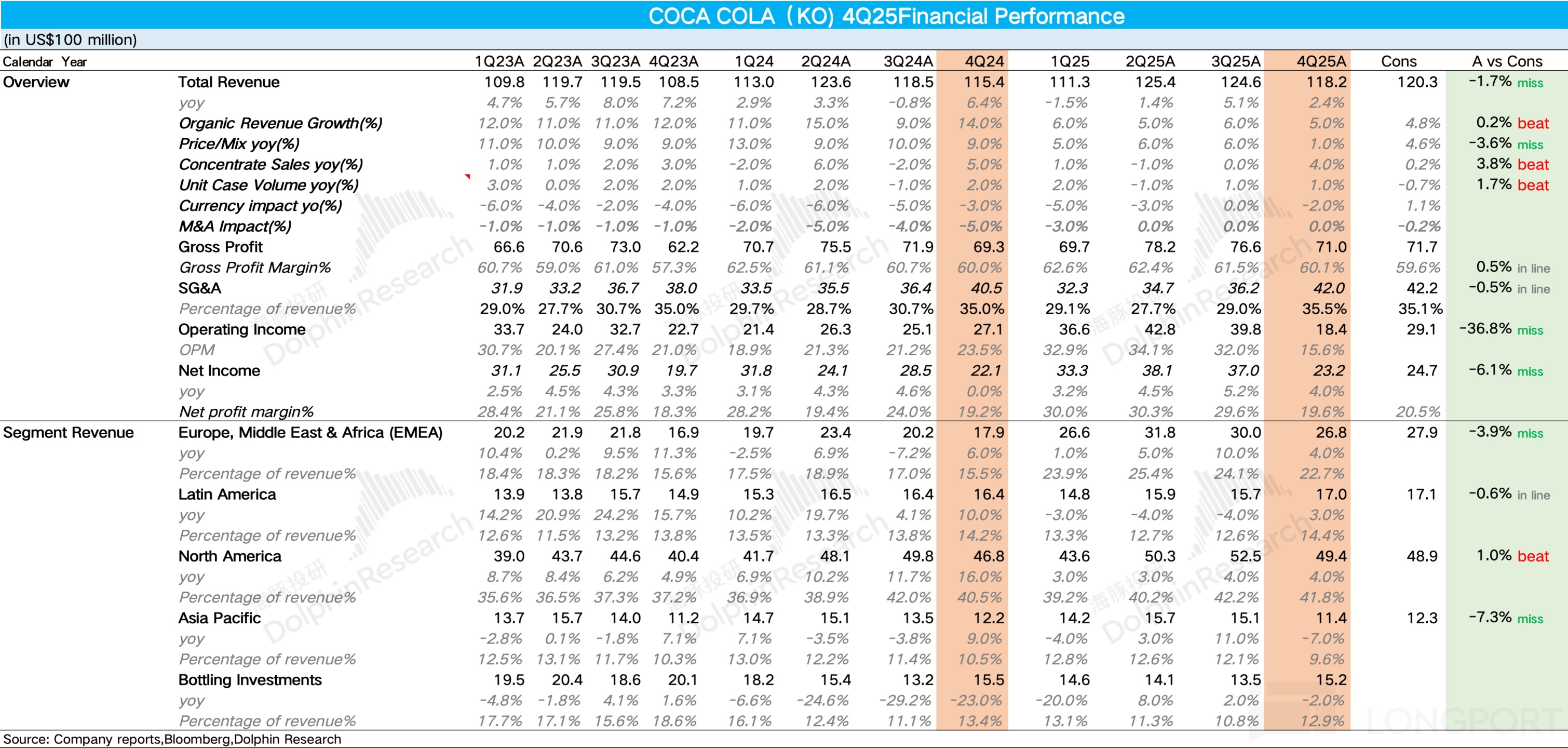
Dolphin Research's take:
On Q4 alone, the shortfall mainly reflects FX headwinds and a one-off impairment related to the BodyArmor trademark. Neither meaningfully alters the organic growth picture.Over a longer horizon, KO targets balanced volume and price growth (roughly 2% each). Last year's rapid price-only moves amid high inflation were not healthy, so Q4's slower pricing on a tough base effectively 'deflates an irrational price bubble'.
Beyond a single quarter, Dolphin Research is more focused on AI's enterprise-wide enablement. Based on the call, KO's AI push goes far beyond 'AI-made ads to cut costs', aiming to connect consumer, customer, and enterprise data to empower marketing, supply chain, R&D, sales, and customer service across the stack.The goal is to speed up the insight–decision–execution loop and make AI the 'intelligence hub'.
In our view, KO is moving from 'digital transformation' to 'intelligent reconstruction'. As AI deeply integrates with core workflows, it could be a key earnings engine over the next five years.
Valuation-wise, after YTD gains, KO now trades at ~25x 2026E vs. ~22x post last print, near its 10-yr avg. While absolute value is less attractive than last quarter, over 60% of revenue is Intl and a weaker USD could further lift profits.Separately, bond-like assets such as KO typically command higher premia in easing cycles as they look better vs. USTs. On balance, KO still has allocation value here.
I. Investment framework
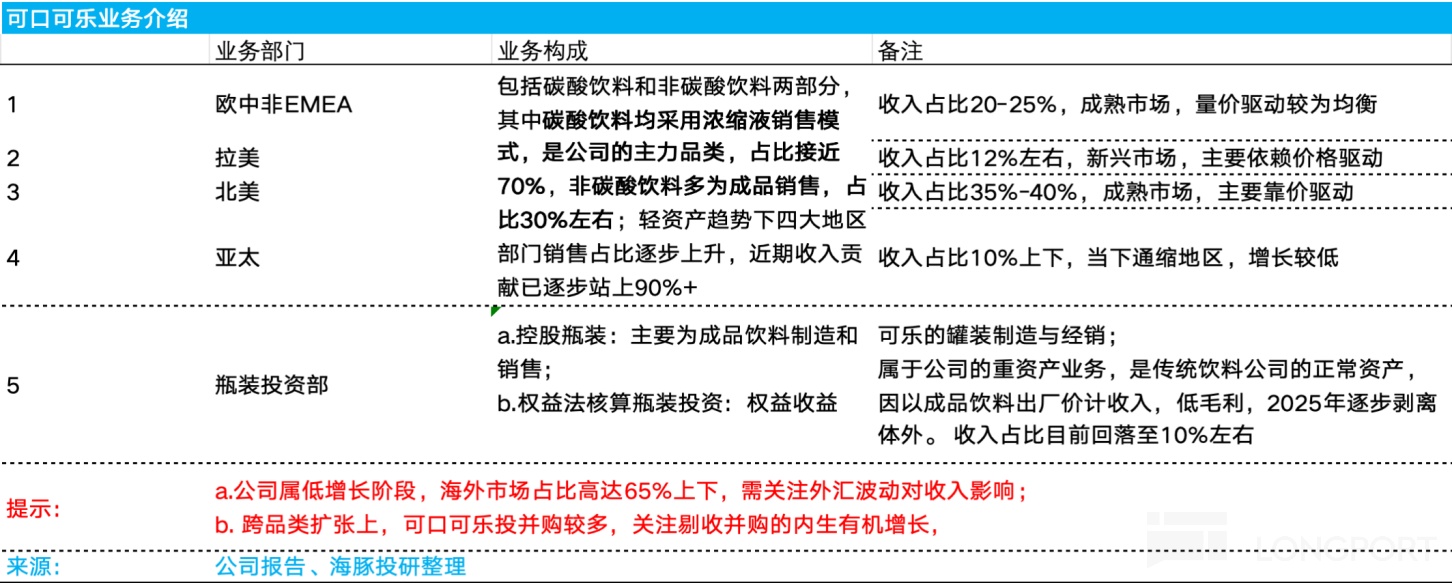
By disclosure, reported revenue is broken down by EMEA, Latin America, North America, APAC, and Bottling Investments. Each segment's growth reflects organic growth, M&A/structural effects, and FX.
(1) EMEA, LatAm, North America, and APAC are region-based segments. They include CSDs and non-CSDs; CSDs are mainly sold as concentrates and account for nearly 70%, while non-CSDs are largely finished goods at ~30%.
(2) The Global Ventures unit, launched in 2019 to acquire promising brands, stopped standalone disclosure from 2015. Acquired brands like Costa (coffee), Innocent (juice), and Dogadan (tea) are run within their respective regions.
(3) Bottling Investments comprises KO-controlled bottlers globally, with most revenue from manufacturing and selling finished beverages. Given the capital intensity and lower profitability, KO has been refranchising since 2015.
Below we focus on organic revenue, analyzed via concentrate volume and price/mix drivers:
II. Pricing missed expectations
In 4Q25, KO delivered reported revenue of $11.82bn (+2.4% YoY), below estimates, with organic revenue up 5%. The growth mix shifted toward volume vs. price.
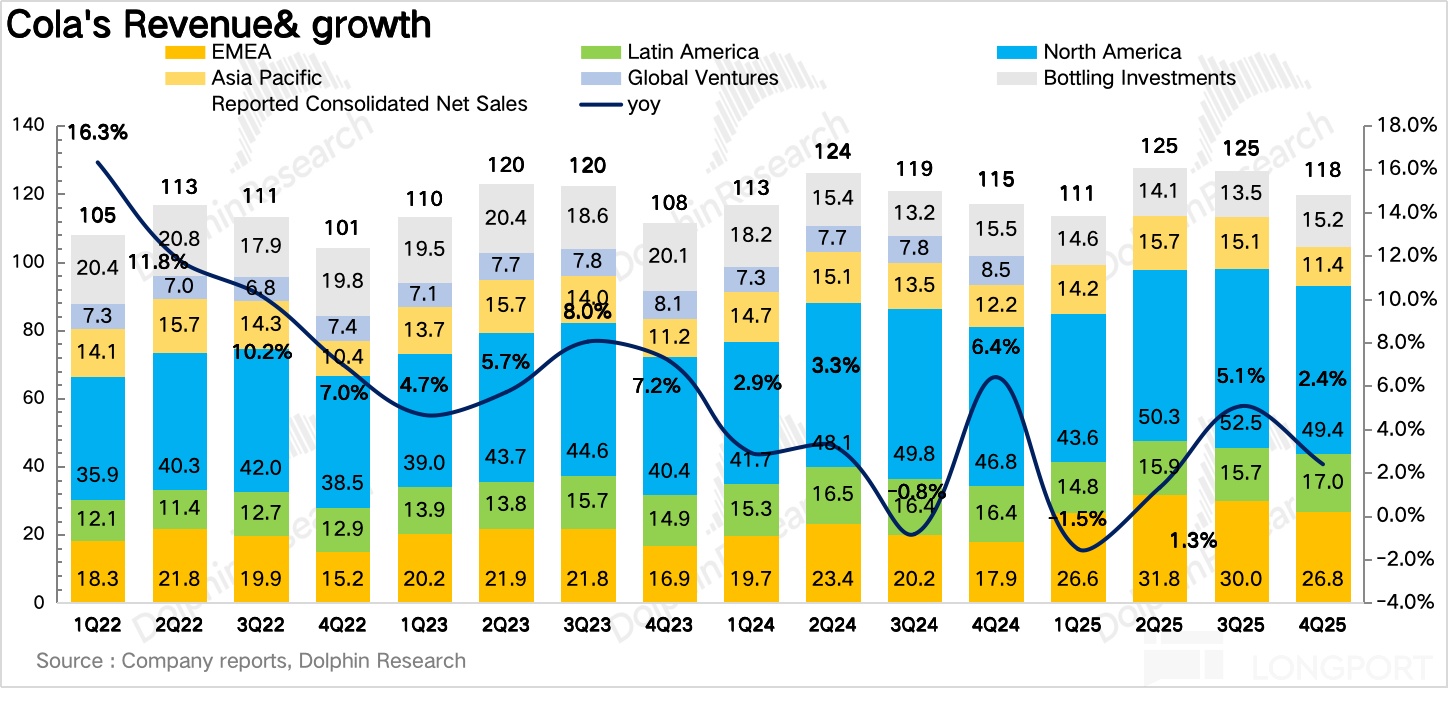
By region:
North America revenue was $4.94bn (+1% YoY), with price still the key driver. Vs. last year's inflation-led pass-through, 2025 strategy is about proactive mix upgrades, and Q4 was consistent.On premium lines, KO doubled down on fairlife (ultrafiltered milk), Topo Chico (hard seltzer), and Coke Zero to penetrate higher-income cohorts and lift ticket size. For value-seeking consumers, smaller packs/mini cans helped preserve frequency.
EMEA, the No.2 region by revenue, delivered $2.68bn (+4% YoY), with volume as the main driver. In Western Europe, spending power for lower/mid-income cohorts remained pressured, but heavier promos and SKU tweaks (e.g., Fanta Halloween limited, Sprite Cranberry) offset share pressure in CSDs.Eastern Europe, the Middle East, and Africa outperformed Western Europe on channel expansion and localized campaigns around holidays and events.
LatAm revenue was $1.7bn (+3% YoY). Mexico still saw volume decline on macro headwinds, though the drop narrowed vs. 1H, while Brazil, Colombia, Argentina, and others improved as weather and tax noise faded.
APAC revenue was $1.14bn (-7% YoY), with pricing the main drag. In China, downtrading pushed some consumers to value packs and local brands, and a slow recovery in foodservice weighed on RTD channel growth.India and ASEAN were disrupted by monsoons and floods, leaving volumes soft.
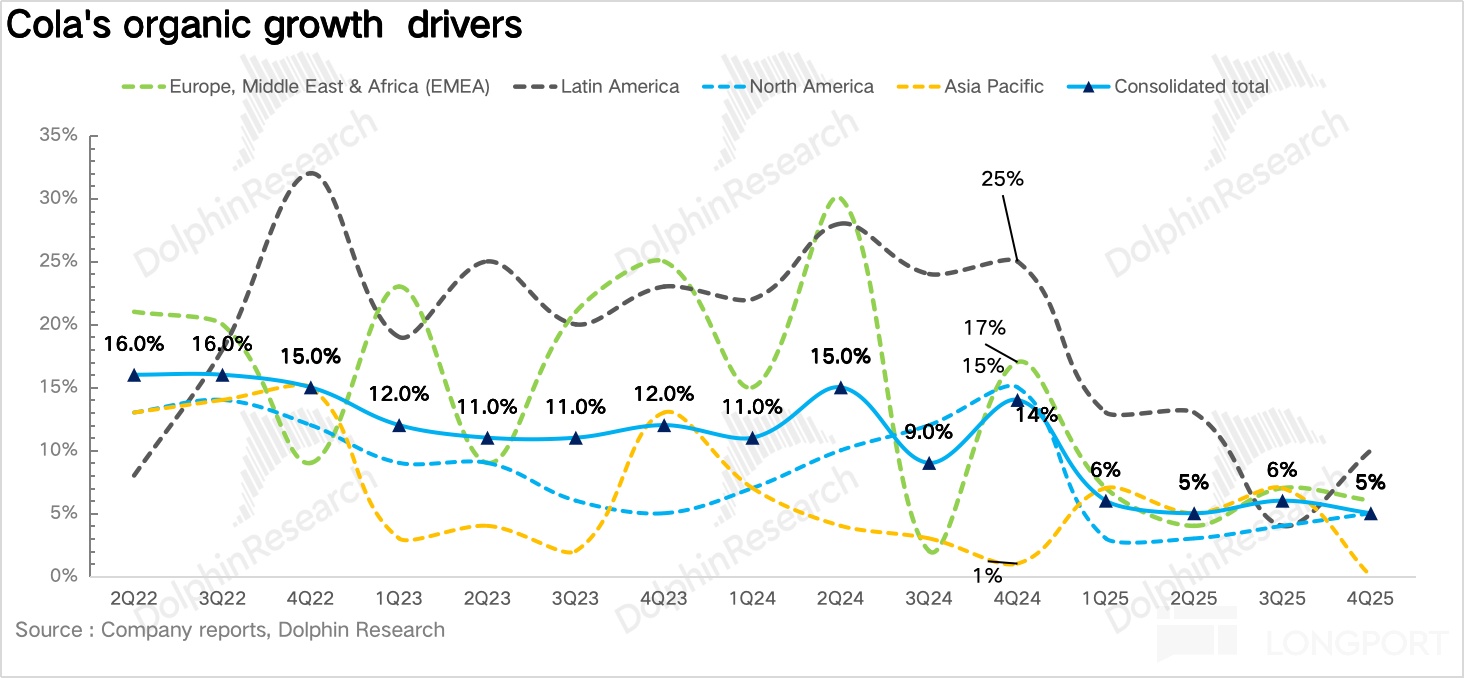
Volume: 4Q25 concentrate volume rose 4% YoY. As in Q3, Zero Sugar, fairlife, and energy drinks remained the key volume engines.
Within CSDs, the sugar-free wave and seasonal limited editions kept Coke Zero Sugar growing fast across all regions, up 13% YoY.To cushion Classic's decline, KO fine-tuned portfolios by channel and cohort, including mini cans (7.5oz) in convenience that helped make mini cans a $1bn core SKU.
Juice, value-added dairy, and plant-based fell 3% YoY, with notable divergence. Fairlife, a strategic focus of KO's health-oriented pivot, benefited from holiday pantry-loading and fitness occasions, lifting penetration in North America and cementing its No.1 position in value-added dairy.
Traditional juice (Minute Maid Pulpy, Qoo, etc.) continues to face a 'high sugar' stigma, with demand shifting toward low-sugar/compound blends. Plant-based, while aligned with health trends, saw intense price competition as lower/mid-income consumers became more price-sensitive; per the call, only North America achieved growth.
Water grew 3% YoY. Premium sparking water brands like Smartwater and Topo Chico posted strong gains on flavor innovation and placements in airports and premium grocery, while value water (Ice Dew in China) faced heavy price wars.
Sports drinks rose 5% YoY, accelerating sequentially. With more winter skiing and indoor training, KO deepened partnerships with the NBA and NFL; premium BodyArmor kept strong growth in North America, while mass-market Powerade launched a 'winter energy series' to reach broader users.
RTD tea grew 5% YoY. Winter 'herbal wellness' lines performed well; per the call, retail growth was 5x the industry average, and global RTD tea share reached 15%.
RTD coffee was flat YoY, likely pressured by brewed coffee occasions.
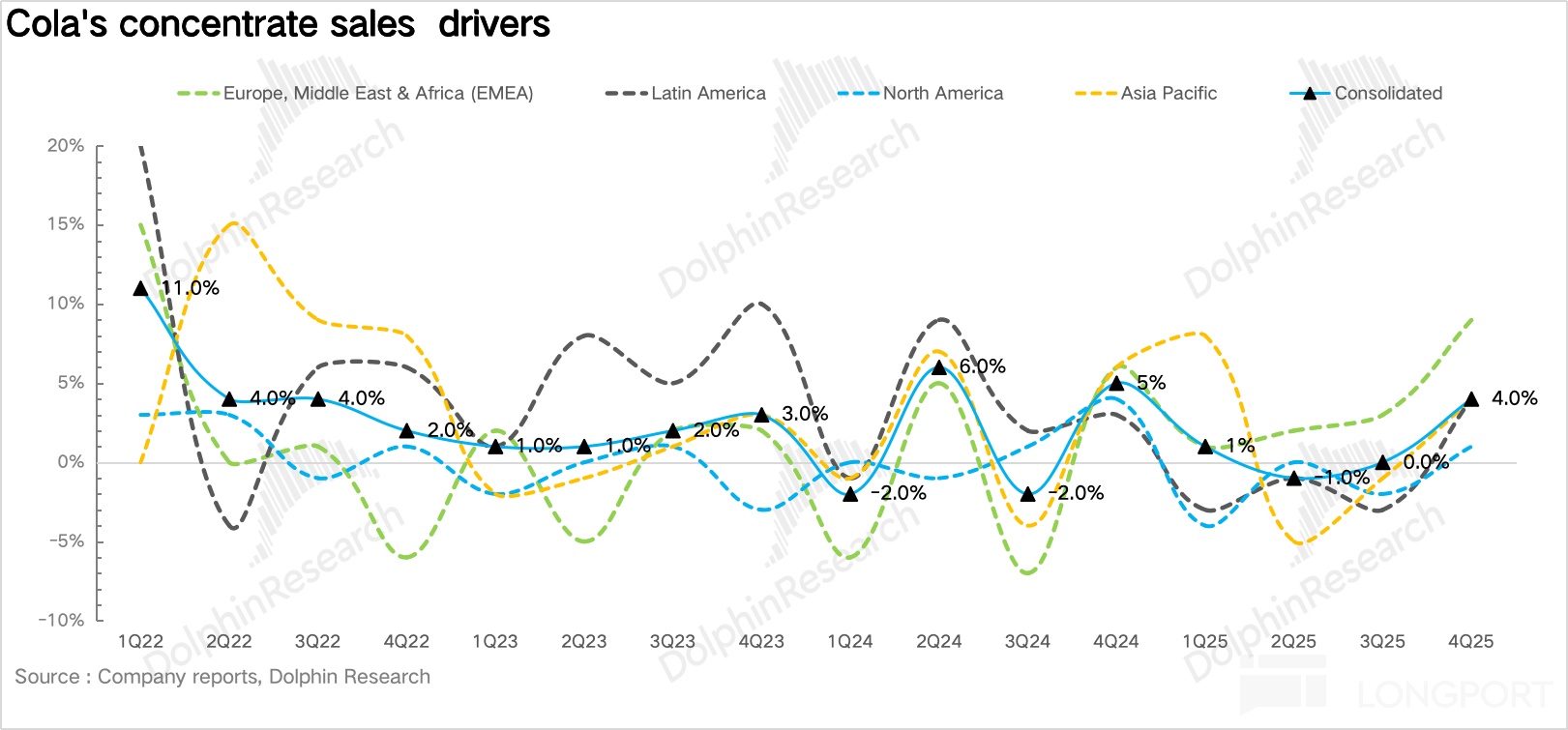
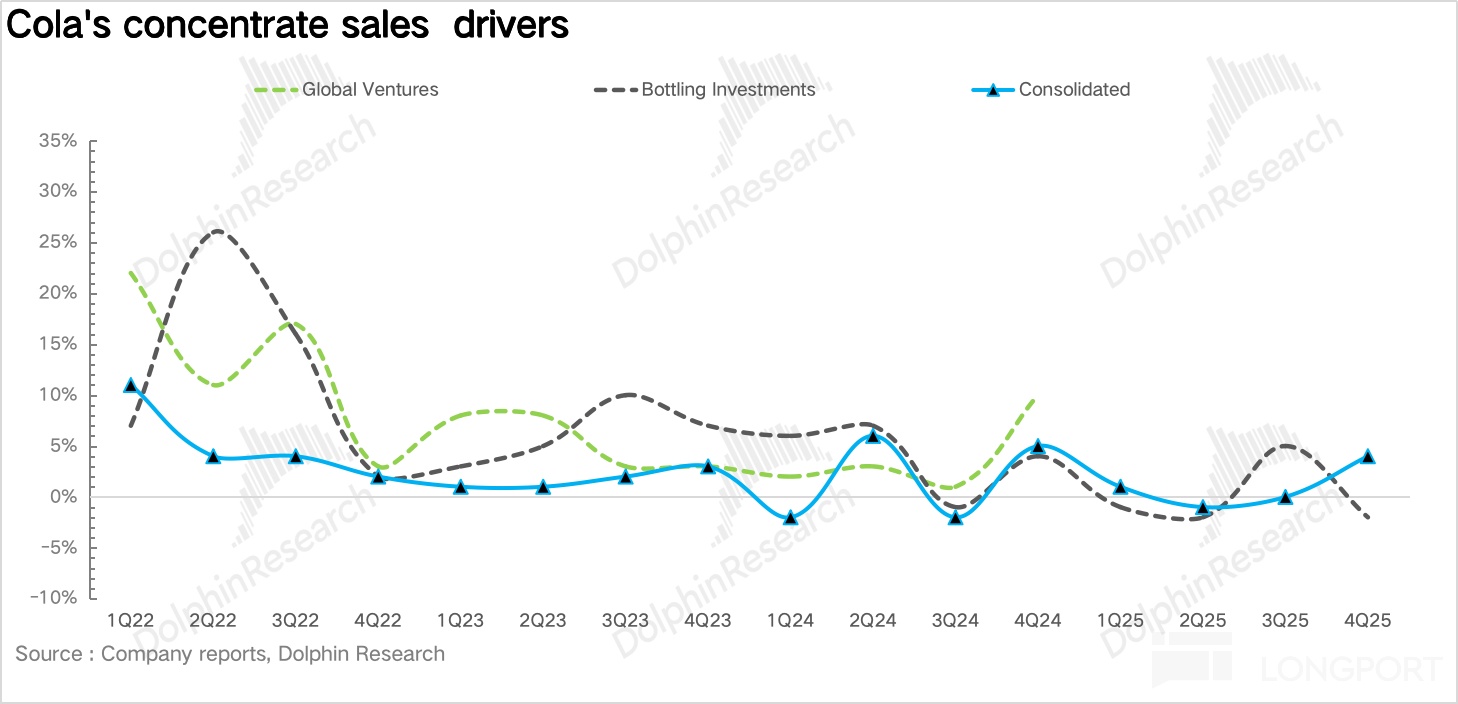
Price: 4Q25 concentrate price/mix rose 1% YoY, slowing sharply on a tough base.
By region, APAC saw the sharpest price declines, especially China, on downtrading and local brand competition. North America and EMEA shifted from last year's passive inflation pass-through to proactive premiumization and health-led mix upgrades (higher shares of Zero/Low Sugar, fairlife, BodyArmor).LatAm is normalizing as Argentina's hyperinflation impact fades.

III. Margins: slight improvement
On GPM, despite ongoing premiumization toward high-margin health portfolios, higher input and packaging costs plus heavier promotions kept Q4 GPM roughly flat.
On opex, while KO did not break out line items, the call implied that efficiency gains largely stem from AI. The uplift is visible in both internal ops and spend effectiveness.
For example, three years ago 70% of ad spend was offline; today, AI-assisted digital ads are nearly 70%. Beyond cost savings, tighter targeting by channel and cohort reduced waste, lifting ad ROI by 10–15%.
<End>
The copyright of this article belongs to the original author/organization.
The views expressed herein are solely those of the author and do not reflect the stance of the platform. The content is intended for investment reference purposes only and shall not be considered as investment advice. Please contact us if you have any questions or suggestions regarding the content services provided by the platform.
