



Amid the smart home boom, why is Huaxida, which went public in Hong Kong, slowing down?

While the global smart home market is expanding at a double-digit growth rate, Huaxida's financial curve has almost been drawn as a straight line.
Prospectus data shows that the global AI Home solution market grew from $53.5 billion in 2020 to $88.6 billion in 2024, with a compound annual growth rate exceeding 13%, and is expected to continue rising in the coming years. The Internet of Things, broadband upgrades, the explosion of streaming content, and the wave of operator terminal replacements—almost all industry variables point to a consensus: this is a typical high-growth sector.
However, Huaxida, which is sprinting on this track, appears out of place. From 2022 to 2024, its revenue compound annual growth rate was only 0.24%; during the same period, net profit slid from 251 million yuan to 137 million yuan, almost halving. The industry is accelerating, the company is decelerating—this divergence is more damaging than any slogan.
After withdrawing its IPO from the Beijing Stock Exchange and turning to the Hong Kong stock market again, Huaxida is trying to tell a story of being "China's leading smart home solution provider and a core global player in Android TV terminals." But what the capital market cares about has never been the completeness of the story, but the authenticity of the growth.
Thus, the question arises: against the backdrop of surging industry dividends, why couldn't Huaxida run out a growth curve? The answer may lie in its previous period of "exceptionally beautiful" growth.
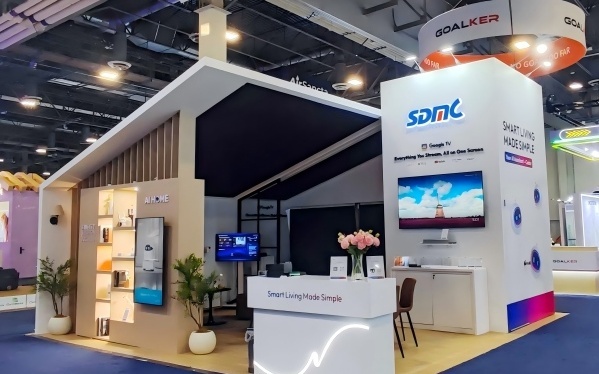
The Industry Accelerates, the Company Decelerates: A Real Test Hidden by High Growth
Judging from its performance, Huaxida was once a standard "high-growth tech company."
From 2020 to 2022, the company's revenue surged from 683 million yuan to 2.529 billion yuan, nearly quadrupling in two years; net profit attributable to the parent company jumped from 49 million yuan to 251 million yuan, an increase of over 3 times. This steep curve almost perfectly fit the most popular narrative template of the registration-based era: segment leader, import substitution, global expansion, and profit explosion.
But when viewed over a longer period, this curve quickly flattened. After reaching its performance peak in 2022, the company has never achieved a substantial breakthrough again. Revenue has been stuck around 2.5 billion yuan, and profits have declined for three consecutive years. Economies of scale have not materialized, gross margin improvement has been limited, and operating leverage hasn't been unlocked.
This implies a more realistic judgment: Huaxida's growth was not truly endogenous expansion, but more like a "temporary surge" driven by a wave of concentrated orders.
From a business model perspective, Huaxida's core remains a To B hardware integration solution provider for operators and brands. Whether it's Android TV boxes, smart terminals, routers, or optical modems, they are essentially highly standardized equipment businesses with weak bargaining power.
The customers are global telecom operators, with large order volumes, but pricing power lies in their hands. Any slowdown in the procurement cycle or supplier switch can cause extremely obvious fluctuations in performance.
This model makes it difficult for a company to maintain a sustained high growth slope. It is closer to a "project-based manufacturer" than a "platform-based tech company." It is precisely here that the first crack appears between Huaxida and the market's positioning of it as an "AI Home solution provider."
A solution implies software capabilities, platform capabilities, recurring service revenue, and ecosystem stickiness. However, judging from the revenue structure, over 80% of the company's revenue still comes from terminal hardware sales, with software and platforms being more of a supplement rather than the core of profit. This structure makes it more like an upgraded ODM, not a true tech ecosystem company.
Strong industry Beta, weak company Alpha. When the market enters deep waters, true capabilities naturally become apparent.
The True Color Beneath the Ecosystem Narrative: When Growth is Highly Tied to "Customer A"If growth stagnation is merely an efficiency issue, then the customer structure directly touches the risk bottom line. Opening the prospectus, the core "Customer A" has been present at almost all key junctures for Huaxida in recent years.
From 2021 to 2024, the company's sales to Customer A were 253 million yuan, 575 million yuan, 435 million yuan, and 268 million yuan respectively, contributing over 1.5 billion yuan cumulatively, accounting for more than 17% of total revenue over the four years. At its peak in 2022, its share once exceeded 20%, making it the absolute largest customer.
What's more intriguing is that this customer is not an ordinary business partner but an enterprise—Smart Media Technology—closely related to the company's senior management. The two parties constitute a typical related-party transaction relationship.
Over the past few years, the changes in Huaxida's profits have almost resonated in sync with this client's order rhythm: a surge in related-party sales in 2022 led to a record-high profit for the company; a decline in orders in 2023 and 2024 was followed by consecutive drops in net profit; a more than 50% drop in related-party sales from the peak in 2024 led to a simultaneous shrinkage in profit.
This is no longer simple customer concentration, but "single-point-driven growth."
For a company to be considered as having long-term competitiveness, its revenue sources should be diversified, dispersed, and replicable. But when profits are mainly tied to one or two key customers, it essentially remains in a passive position. Any order adjustment can be directly transmitted to the financial statements.
Of course, Huaxida is not without advantages. Its deep integration with ecosystems like Google and Netflix, its channel presence in over 80 countries globally, and the cost flexibility brought by its asset-light OEM model do constitute certain barriers. However, these advantages are more "entry thresholds" than "exclusive moats."
Android TV certification is not an exclusive qualification, and operators can also switch suppliers at any time. In a highly standardized terminal market, the real power to dictate terms often lies with platform and content providers, not device integrators.
In other words, the position Huaxida occupies is closer to the middle of the industry chain—it neither possesses the technological monopoly of upstream chip companies nor controls the traffic entry points like downstream platforms, naturally limiting its profit ceiling.
As the industry narrative shifts from "hardware proliferation" to "AI and software service monetization," the imagination space for such a middle-of-the-chain role will only narrow further.
Therefore, using the IPO proceeds for R&D and channel expansion is more like a recapitalization financing than an offensive move: preparing a safety cushion for the next round of order fluctuations during a profit downturn cycle.
Conclusion
From this perspective, Huaxida's listing story is more worthy of being redefined—it is not an AI upstart about to explode, but a mature enterprise striving to shed its manufacturer label and transform into a solution provider.
The capital market will ultimately give a calm answer: when the industry is galloping ahead, but the company can only maintain stability, this "misalignment" is more telling than growth itself.
In the ecosystem war of smart homes, the real winners are often the platforms and rule-makers, not the hardware integrators. Whether Huaxida can cross this watershed determines not the success or failure of one IPO, but its position in the next decade—whether it will continue to be an invisible supplier behind global operators or become a player that truly possesses pricing power and ecosystem dominance.
At least from the current financial and customer structure, this transformation has only just begun.
The copyright of this article belongs to the original author/organization.
The views expressed herein are solely those of the author and do not reflect the stance of the platform. The content is intended for investment reference purposes only and shall not be considered as investment advice. Please contact us if you have any questions or suggestions regarding the content services provided by the platform.
