


 Rate Of Return
 Total Assets
How will the 'Wash-style central bank' price global assets?

To understand Kevin Warsh, one must approach it from three dimensions: policy stance, ideological framework, and market influence. In Wall Street and macroeconomic circles, he is typically categorized as a central banking figure who is "hawkish, values credibility, and emphasizes institutional constraints," yet he is not a traditional academic economist.
Over the past decade, the market has grown accustomed to a "central bank version of a safety net": whenever risk assets plummet and financial conditions tighten abruptly, policies tend to favor rate cuts, balance sheet expansion, and liquidity support—this is the so-called Fed put.
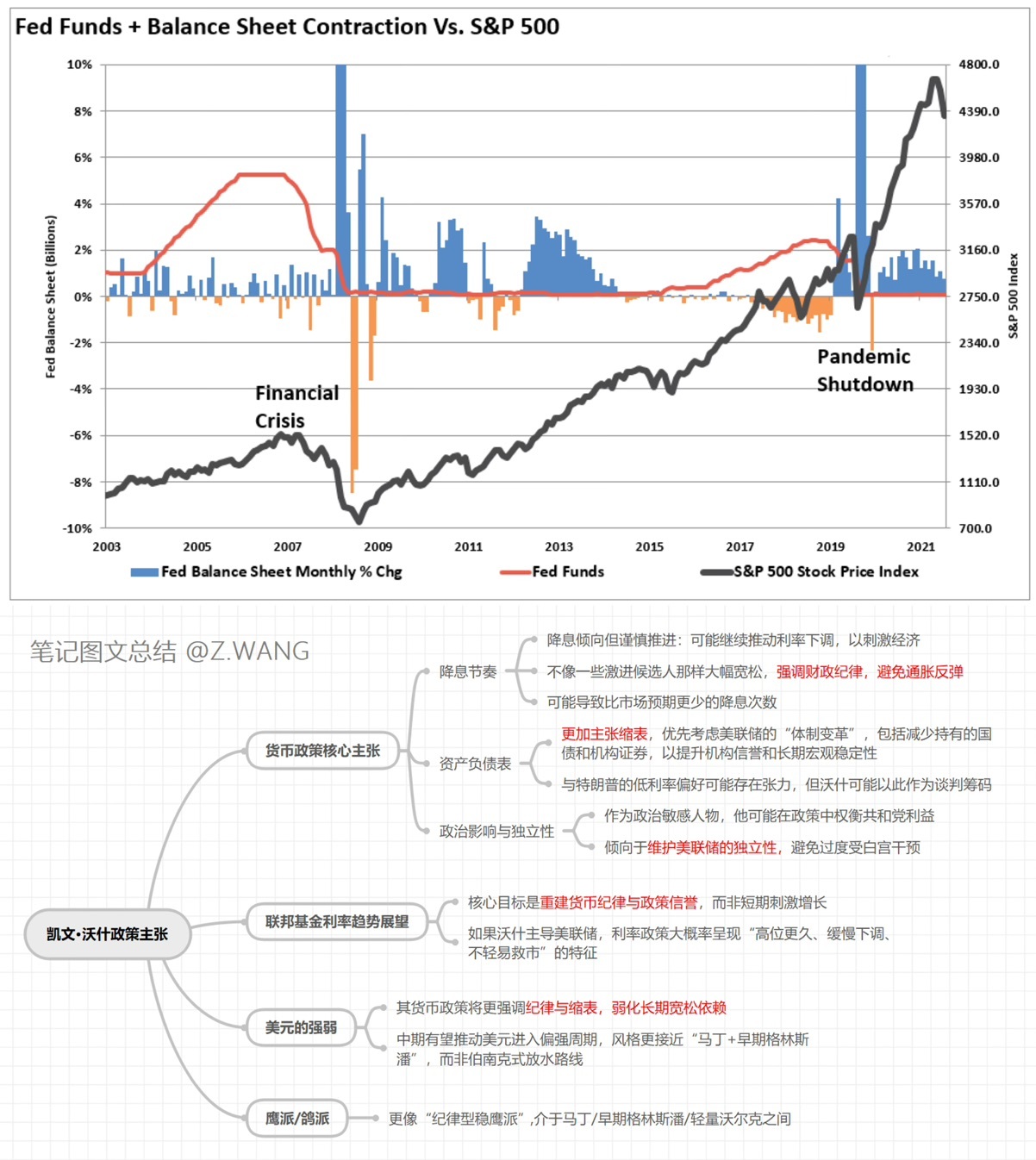
In contrast, the "Warsh-style central bank" represents a different reaction function that prioritizes discipline and credibility: inflation control and institutional credibility come first, balance sheet reduction is more rule-based, bailout thresholds are higher, and there is less endorsement of asset prices.
If this approach becomes mainstream, asset repricing will not hinge on "a single rate cut" but rather on shifts in the "underlying assumptions of the valuation framework."
1) Interest Rates: Higher for Longer, but Not Forever
The Warsh approach does not mean "forever hawkish" but rather "slower and more cautious rate cuts." Policy easing will only occur when inflation expectations truly return to anchor or when financial system stress escalates to a critical level.
The result: real interest rates are more likely to bottom out, and term premiums are more likely to rise.
2) Nasdaq Valuations: From Liquidity Pricing to Earnings Pricing
The high valuations of growth stocks rely on "low discount rates + low risk premiums." A Warsh-style mainstream implies two things: first, the discount rate midpoint will be higher (or decline more slowly); second, the market will no longer assume "a bailout after a crash," making it harder to suppress equity risk premiums to extremely low levels.
Thus, the Nasdaq will enter a more normalized structure: valuation expansion periods will shorten, earnings realization will become more critical, and future gains will depend more on "performance-driven growth."
3) Gold: The Game with Real Rates Becomes "Two-Phased"
High real rates typically suppress gold. However, the Warsh approach also increases tail risk pricing: a weaker Fed put makes markets more wary of credit and liquidity breakdowns.
As a result, gold will likely oscillate/face pressure during periods of sustained high real rates. But once high rates start undermining growth and credit, and the market shifts to pricing in rate cuts and risks, gold will strengthen due to falling real rates and safe-haven demand.
Gold is no longer just an "inflation trade" but more of a "credibility and tail risk asset."
4) Asset Allocation: From "Betting on Loose Beta" to "Rebalancing in the Age of Discipline"
A Warsh-style mainstream will elevate the strategic value of cash and short-duration assets while demanding higher quality and cash flow from risk assets. The allocation mindset shifts from "solely betting on growth valuation expansion" to a three-tiered structure:
· Core holdings: Short-duration/high-cash-flow (resistant to rising discount rates)
· Equities: Focused on earnings realization and pricing power (rather than pure duration)
· Hedges: Event-driven volatility/tail protection (trigger-based rather than long-term holdings)
As policies shift from "propping up asset prices" to "anchoring credibility and controlling tail risks," global assets will rely less on liquidity narratives and more on cash flows and risk pricing itself. Investors must reorient their portfolios toward real rates, term premiums, credit stress, and volatility structures, rebuilding the rhythm of offense and defense.
The copyright of this article belongs to the original author/organization.
The views expressed herein are solely those of the author and do not reflect the stance of the platform. The content is intended for investment reference purposes only and shall not be considered as investment advice. Please contact us if you have any questions or suggestions regarding the content services provided by the platform.
