


Yipinhong's stock price has fallen by 28.53%! It gained new cash through equity transfer, but lost 'votes of confidence' in its innovation transformation?

A share sale plan has put Yipinhong at the center of public attention.
It is reported that Yipinhong recently announced that its affiliated company, Arthrosi Therapeutics, Inc. (hereinafter referred to as "Arthrosi"), intends to sign a merger agreement with Sobi US Holding Corp. (hereinafter referred to as "Sobi US"), a wholly-owned subsidiary of Swedish Orphan Biovitrum AB (pub1). Sobi US plans to acquire 100% of Arthrosi's shares with an upfront payment of $950 million (approximately RMB 6.713 billion) and up to $550 million (approximately RMB 3.887 billion) in clinical, registration, and sales milestone payments.
Arthrosi is dedicated to the research and development of innovative drugs for metabolic diseases. Previously, Yipinhong held 13.45% of Arthrosi's shares through its wholly-owned subsidiary, Ruiteng Biotechnology (Hong Kong) Co., Ltd.
After the completion of the above deal, Yipinhong will no longer hold any shares in Arthrosi. More importantly, the most anticipated aspect of Yipinhong's innovation transformation is an innovative drug for gout treatment, AR882 (generic name: deuterated benzbromarone), which is Arthrosi's main research product and the core bargaining chip in this equity transaction.
After the equity sale, Yipinhong retains the rights to AR882 in the Chinese market, but its participation in the global development of AR882 may be limited in scope and depth.
However, Yipinhong remains optimistic: "The equity sale is expected to have a positive impact on the company."
The company believes that the cooperation agreement between Arthrosi and SOBI is another important milestone in its development, laying a solid foundation for the global launch and commercialization of AR882.
At the same time, although there is no equity connection, Yipinhong will still participate in the development of AR882. The company stated that it holds 100% of the market rights for AR882 in China (including Hong Kong, Macau, and Taiwan) and has the right to provide global production and supply of AR882 to Arthrosi. In the future, the company will collaborate with Arthrosi in the global industrial chain to promote AR882 for the benefit of a broader population of gout patients with unmet needs.
However, this has not alleviated concerns in the secondary market. According to East Money, from December 15 to 17, Yipinhong's stock price fell by 28.53%. On December 18, it improved slightly, rising by 4.14% to RMB 34.72 per share.
Amid stock price fluctuations, the value of anti-gout drugs stands out
Looking back, the innovative drug AR882 once helped Yipinhong reach a stock price peak. From the beginning of the year to August, Yipinhong's stock price rose from a low of RMB 17.23 per share to a high of RMB 75.72 per share, an astonishing increase.
How valuable is AR882?
Regarding the drug's uses and clinical progress, Yipinhong's 2025 interim report provided detailed information: AR882 is a highly selective uric acid transporter (URAT1) inhibitor with three major indications—lowering blood uric acid for gout treatment, dissolving tophi, and treating chronic kidney disease.
Data from the completed global multicenter Phase II clinical trial of AR882 show that, compared with existing therapies, AR882 has more significant efficacy and higher safety in treating gout patients, making it a potential best-in-class product. Additionally, in the first half of the year, original research papers—"Long-term Safety and Tolerability of Deuterated Benzbromarone in Patients with Chronic Gouty Arthritis and Subcutaneous Tophi" and "Long-term Durable Efficacy of the Novel Selective URAT1 Inhibitor Deuterated Benzbromarone in Patients with Chronic Gouty Arthritis"—were presented at the 2025 European League Against Rheumatism (EULAR) Congress, showcasing AR882's long-term safety and efficacy data, which garnered widespread attention.
The data indicate that AR882, whether used alone or in combination, can rapidly and continuously reduce the volume of urate crystals, achieving clinically significant dissolution of at least one target tophus. AR882, whether used alone or in combination with allopurinol, was well-tolerated over 18 months of treatment, with no clinically significant adverse events (AEs) or abnormal laboratory indicators. Serum creatinine levels were tested 478 times post-administration during the trial period, and no increases were observed.
For such an innovative drug with both therapeutic efficacy and safety, market demand is bound to be high.
According to Frost & Sullivan data, the global population of hyperuricemia and gout patients exceeded 1.1 billion in 2020, including 170 million in China. By 2030, the global number is expected to reach 1.42 billion, with China's patient population exceeding 240 million.
Although there are many existing anti-gout drugs, they can be divided into three categories by function: those that inhibit uric acid production (e.g., allopurinol, febuxostat), those that promote uric acid excretion (e.g., probenecid, benzbromarone, lesinurad), and those that decompose uric acid. However, they have side effects such as hypersensitivity, cardiovascular risks, and liver and kidney toxicity.
Therefore, many investors believe that if AR882 can accelerate its market launch and replace traditional anti-gout drugs with better efficacy and safety, it could enjoy substantial commercial benefits and expand Yipinhong's growth potential.
Yipinhong revealed that AR882 is currently undergoing a pivotal Phase III clinical trial. As of the end of June, the global Phase III REDUCE 1 trial had enrolled over 50% of patients. As of August 1, the domestic Phase III trial had enrolled over 50% of participants. The company expects the AR882 clinical trial to conclude around mid-2026. After data compilation and reporting, it will submit a New Drug Application (NDA), which is expected to take about 12-15 months for approval before commercialization can begin.
During this process, Yipinhong's strategic focus and close collaboration with Arthrosi are crucial. However, an announcement has introduced uncertainty—Yipinhong's equity partnership with Arthrosi has ended, and the overseas rights to AR882 have been cashed out early. "The golden goose is gone," and the valuation logic has changed accordingly.
With uncertainties in innovative drugs, what else is there to watch?
The fact that innovative drugs have become Yipinhong's biggest highlight also reflects that its main business is no longer strong enough.
Financial reports show that in 2024, Yipinhong achieved total revenue of RMB 1.45 billion, a year-on-year decrease of 42.07%, and a net profit attributable to the parent company of -RMB 540 million, a sharp decline of 392.52% year-on-year, marking the company's first loss since its listing. In the first three quarters of 2025, Yipinhong's revenue was RMB 814 million, down 34.35% year-on-year, with a net profit of -RMB 143 million.
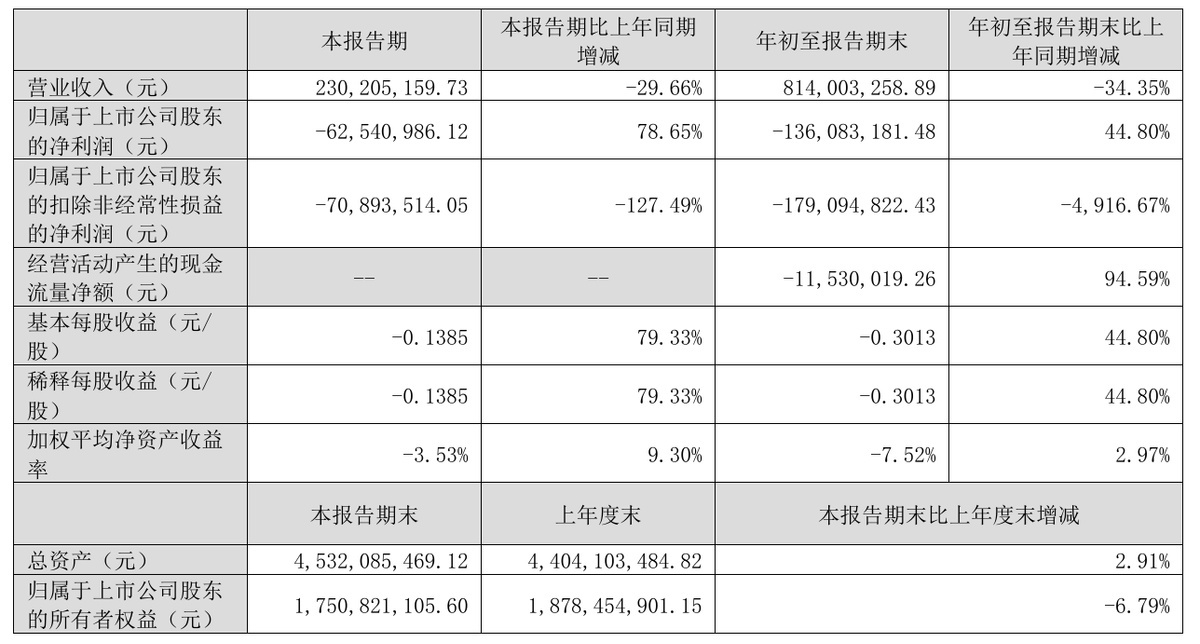
Behind this, the company's main businesses—pediatric drugs and chronic disease drugs—are declining. In the first half of the year, revenues from these two businesses fell by 28.93% and 58.16% year-on-year, respectively. What's the problem?
According to the interim report, in pediatric drugs, Yipinhong has 27 pediatric drug approvals, covering the full age range of 0-14 years and over 70% of pediatric diseases, including influenza, colds, infectious diseases, functional dyspepsia, hand-foot-and-mouth disease, eczema, and allergic diseases—common conditions with urgent clinical needs.
In chronic disease drugs, the company has 67 approvals, covering cardiovascular and cerebrovascular diseases, kidney diseases, digestive system diseases, liver diseases, and other therapeutic areas. Several products are included in the National Essential Medicines List and the National Reimbursement Drug List.
Although the product portfolio is comprehensive, covering a wide range of diseases and with abundant reserves, most are generic drugs facing fierce market competition.
Take pediatric drugs as an example. Yipinhong's interim report mentioned that since 2016, the National Health Commission and relevant departments have issued four batches of the "List of Encouraged Pediatric Drug Research and Development," covering 129 drugs. So far, 30 of these drugs have been approved for marketing, covering eight therapeutic areas, including nervous system drugs, digestive and metabolic drugs, and cardiovascular drugs, with 15 being rare disease drugs. It is expected that relevant departments will continue to deepen policies supporting pediatric drug R&D, registration, production, use, and reimbursement, enriching the variety, dosage forms, and specifications of pediatric drugs.
Against this backdrop, the pediatric drug market will undoubtedly offer more choices, but industry competition will also intensify, and centralized procurement will continue to deepen. To adapt to changes, meet demand, and break through difficulties, Yipinhong must accelerate product upgrades and enter higher-value-added fields. For the company, innovative drugs have become a necessity.
On the path of innovation transformation, AR882, as a BIC product, is highly symbolic, with strong potential and a large market, confirming Yipinhong's long-term growth value and aligning with investor preferences. However, after the equity sale, the core narrative of AR882's innovation has changed, leaving the market confused and lacking confidence: What are Yipinhong's more concrete future growth points?
It is reported that as of the first half of this year, Yipinhong has 61 R&D projects (excluding technical transformation projects), including 14 innovative drug projects. Besides AR882, the highly active and selective glucagon-like peptide-1 receptor agonist APH01727 tablets also have market appeal, aiming to become a once-daily oral small-molecule agonist for the treatment of type 2 diabetes and weight management in overweight/obese patients. The newly acquired cash is expected to be primarily used for the development of promising projects like APH01727.
However, the related market is becoming increasingly saturated, most innovative projects are in early-stage clinical development, and the company's current performance is poor. Yipinhong's path to innovation transformation is clearly fraught with challenges.
Source: Pharmaceutical Research Society
The copyright of this article belongs to the original author/organization.
The views expressed herein are solely those of the author and do not reflect the stance of the platform. The content is intended for investment reference purposes only and shall not be considered as investment advice. Please contact us if you have any questions or suggestions regarding the content services provided by the platform.
