


Ping An Insurance: Is it time to be optimistic?

This article is based on publicly available information and is for informational purposes only, not constituting any investment advice.
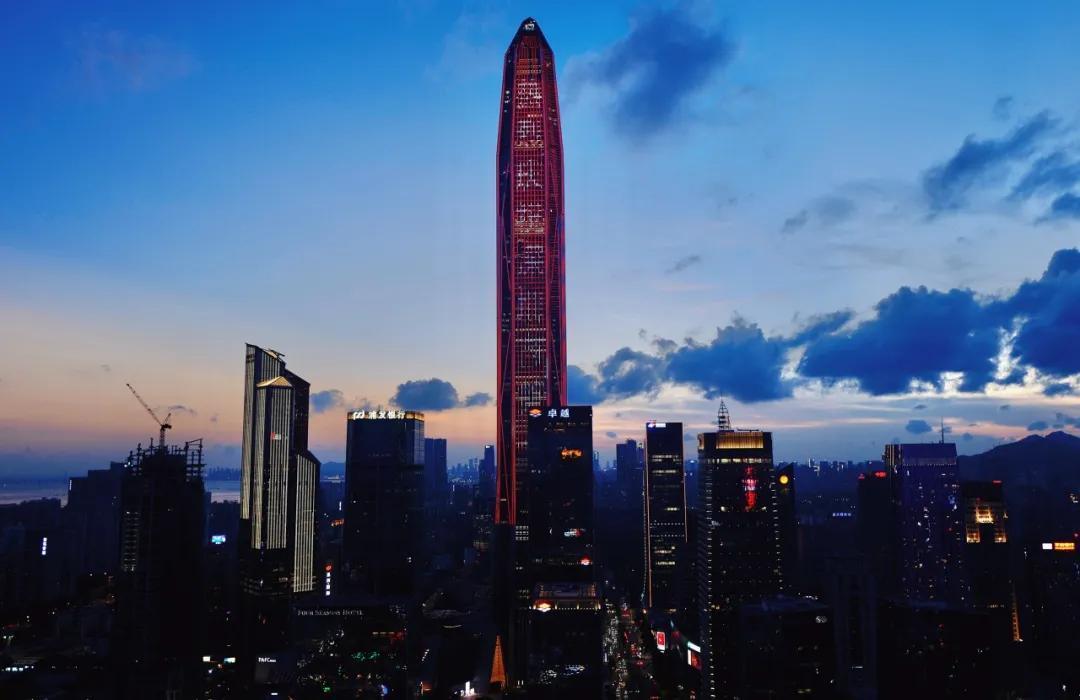
"Please cherish Ping An below XX yuan"—this once widely circulated joke, though tinged with sarcasm, also reflects the general pessimism among investors over the past few years.
In hindsight, after a four-year continuous correction, it wasn’t until the bull market began in August last year that Ping An’s stock price finally broke out of its prolonged bottom consolidation phase and entered a restorative upward trend.
As of December 15, Ping An closed at 67.08 yuan, doubling from its recent low of 30.99 yuan on October 31, 2022, and outperforming the CSI 300 Index over the same period. However, when viewed over the past five years, its performance still lags behind its insurance industry peers.
How should we view Ping An’s investment value today?
01 The Underperforming Recovery Journey
Over the past five years, Ping An’s stock price has followed a clear trajectory: decline from highs, volatility at lows, and valuation recovery. This curve is deeply intertwined with the pains of its strategic transformation and changes in the external environment.
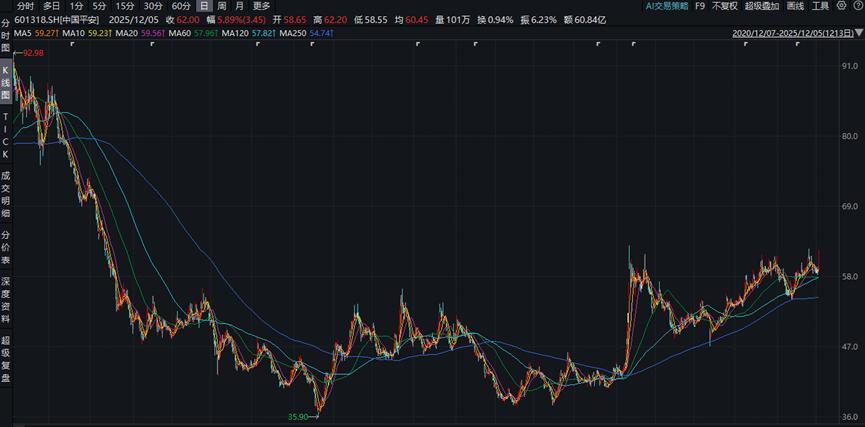
Chart: Ping An’s deep V-shaped journey over the past 5 years
●2020: The Turning Point for Real Estate Policies
To counter the pandemic’s impact, real estate policies were temporarily loosened that year: many regions extended land transfer payment deadlines and allowed installment payments; presale fund supervision quietly relaxed; and micro-adjustments like talent settlement and homebuyer subsidies were rolled out.
After the pandemic was brought under control, the market briefly heated up. With strong exports and a boom in new energy, economic expectations turned optimistic, and the stock market flourished. That was also Ping An’s highlight moment.
But the turning point soon arrived—in August 2020, the central bank introduced the "three red lines"; in December, it further rolled out the "two concentration" rules, tightening financing channels for developers across the board.
●2021–2022: A Wave of Real Estate Defaults and Heavy Losses in Key Holdings
The effects of the financing squeeze quickly materialized. At the end of 2021, Evergrande announced its default, followed by a chain reaction of risks from highly leveraged developers. In 2022, a total of 44 developers defaulted on their debts.
Ping An was deeply embroiled: its subsidiary Ping An Real Estate had taken stakes in 13 developers, including Country Garden, CIFI, and China Fortune, under a "financial investment + strategic partnership" model, securing its position as the second-largest shareholder in several leading developers.
Amid the thunderous collapse of real estate, Ping An’s stock price plummeted, falling about 61% from its peak.
●2023–September 2024: The Consolidation Phase
During this period, Ping An began systematically reducing its real estate exposure. Its investment logic quietly shifted: from "investing in developer equity" to "acquiring core rental assets," aiming to isolate risks and enhance asset stability.
●September 2024–Present: The Start of Valuation Recovery
With the start of the "9/24 rally," Ping An’s stock price gradually climbed from 43.75 yuan to the current 59.11 yuan, a gain of about 35%, entering a valuation recovery phase.
However, over a longer timeframe—the past five years (December 6, 2021, to December 5, 2025)—Ping An has risen 54.8%, still significantly underperforming its peers: PICC (+108.4%), New China Life (+101.1%), and China Life (+66.6%).
This tumultuous cycle is not just a stock chart for Ping An but also a mirror reflecting the hardships of its transformation, the challenges of timing, and the resilience of its recovery.
02 What Is the Market Worried About?
Ping An’s underperformance over the past five years stems mainly from concerns about real estate provisions and valuation pressures.
1. Valuation History: From Pressure to Slow Recovery, Current P/E Still in Single Digits.
During economic upcycles, Ping An achieved relatively fast earnings growth through strategic focus and flexible risk control, and the market rewarded it with higher valuations than its peers.
In early December 2020, its P/E ratio was around 13x.
But as risks among private developers gradually surfaced, market concerns about its asset quality intensified, and valuations remained under pressure.
In October 2022, the P/E hit a low of 6.63x, nearly halving from its previous high. Since then, valuations have slowly recovered, currently around 8.6x.
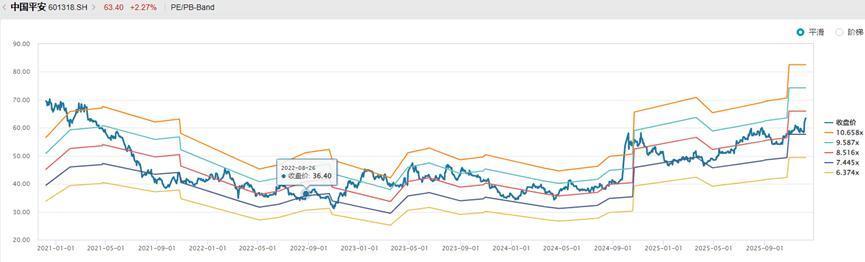
Chart: Ping An’s P/E band over the past 5 years
2. Real Estate Exposure Gradually Cleared, Investment Share Now at 3.3%.
Real estate investments were once the market’s top concern for Ping An.
At the end of 2021, Ping An’s real estate investments totaled 216.1 billion yuan, accounting for 5.5% of total investments; by the first half of 2025, real estate investments had fallen to 206 billion yuan, or 3.3%, with both the amount and proportion declining.
Structurally, the share of property rights investments rose sharply from 46.6% in 2021 to 81.8% in the first half of 2025, while debt and other equity investments shrank accordingly.
Property rights investments are mainly directed toward income-generating assets like commercial offices, logistics properties, industrial parks, and long-term rental apartments, matching liability durations and contributing stable rental and dividend income to further solidify asset quality.
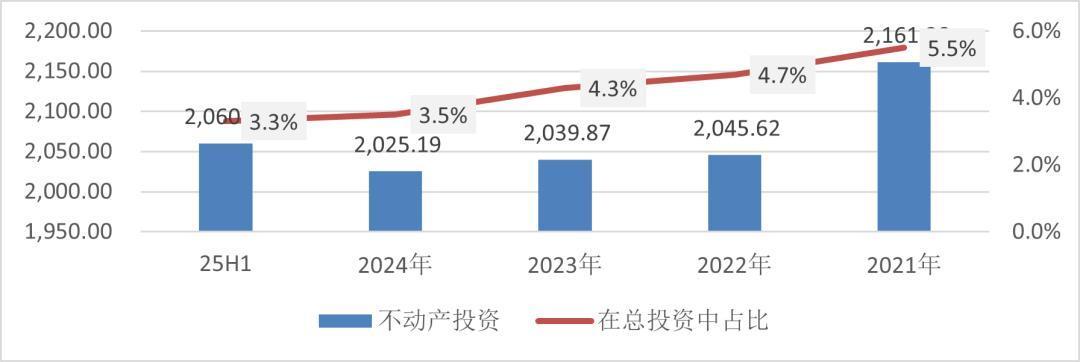
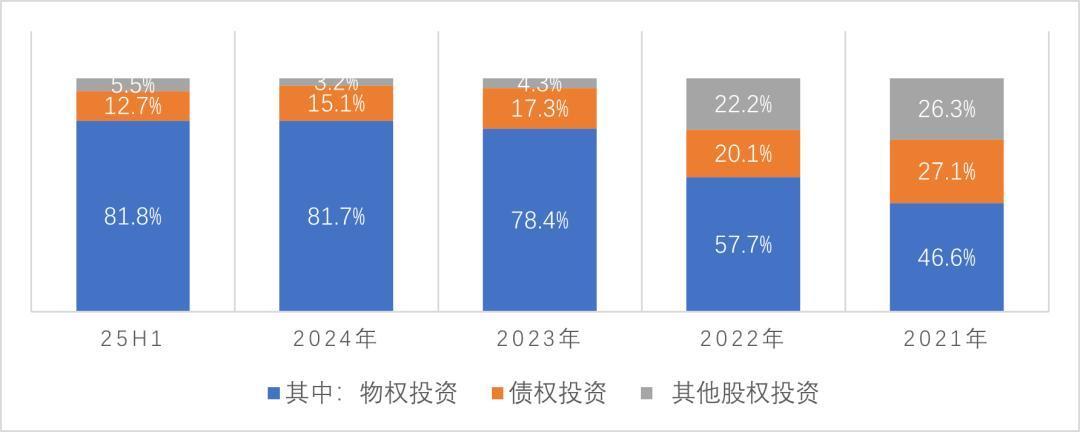
Chart: Ping An’s real estate investments and structure
Additionally, performance changes in the company’s asset management segment also reflect the gradual clearing of real estate risks.
The segment posted losses for 2023 and 2024, totaling 32.646 billion yuan, mainly due to real estate project disposals; in the first half of 2025, it turned a profit of 2.723 billion yuan.
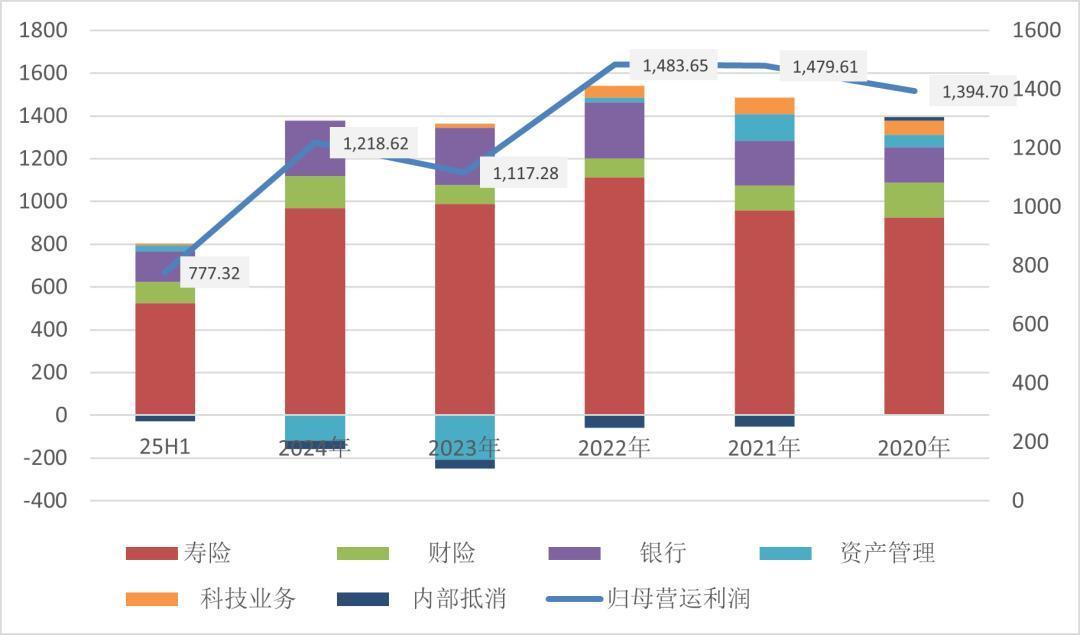
Chart: Ping An’s operating profit structure
3. Operating ROE Relatively Stable, Positive Signs in Q3 2025 Report
Ping An’s operating profit attributable to shareholders has been generally stable, with operating ROE ranging between 17.9% and 19.5% from 2020 to 2022. In 2023 and 2024, dragged down by real estate and low interest rates, the metric fell to around 12.5%; in the first half of 2025, it was 7.5%.
The Q3 2025 report showed revenue of 832.94 billion yuan, up 7.42% YoY; net profit attributable to shareholders of 132.856 billion yuan, up 11.47% YoY; and adjusted net profit up 26.9% YoY.
Ping An’s ROE peaked at 52.41% in 2022. Starting in 2023, investment income (mainly from the Julong Copper Mine project) contributed significantly to net profit, driving up net profit margins. The ROE for the first three quarters of 2025 was 18.99%, annualized to about 25.32%.
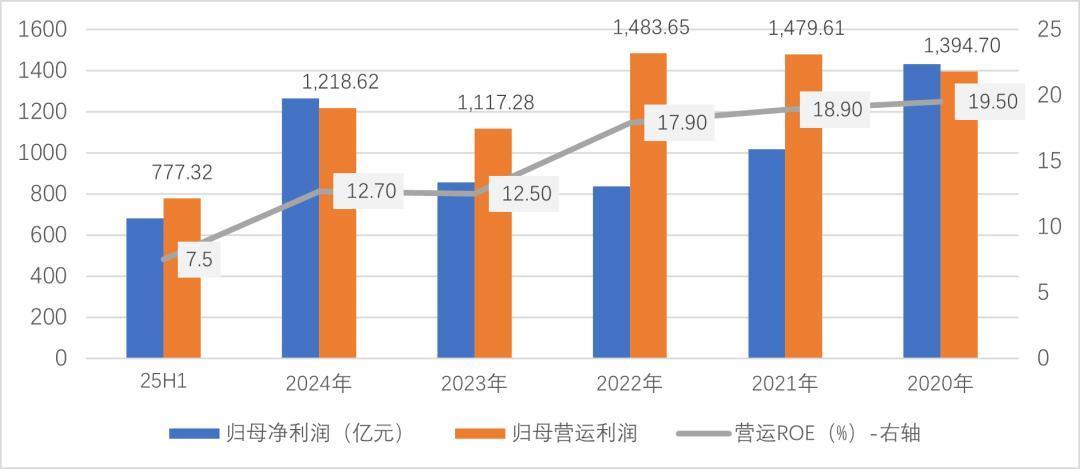
Chart: Ping An’s net profit attributable to shareholders, operating profit, and operating ROE (in billion yuan)
Ping An’s business segments include life insurance, property & casualty insurance, banking, securities, and trusts, with life insurance, P&C, and banking as the main components. Specifically:
Life Insurance: Steady Development, Stable New Business Value
Looking at policy persistency rates, Ping An’s low points were in 2020, 2021, and 2022, with clear recovery in 2023 and beyond. The company’s embedded value has been rising, with life insurance EV reaching 960.608 billion yuan at the end of 2024, up 16.5% from 2021. New business value in the first three quarters of 2025 was 35.724 billion yuan, up 1.6% YoY, mainly due to narrowing interest spreads in a low-rate environment.
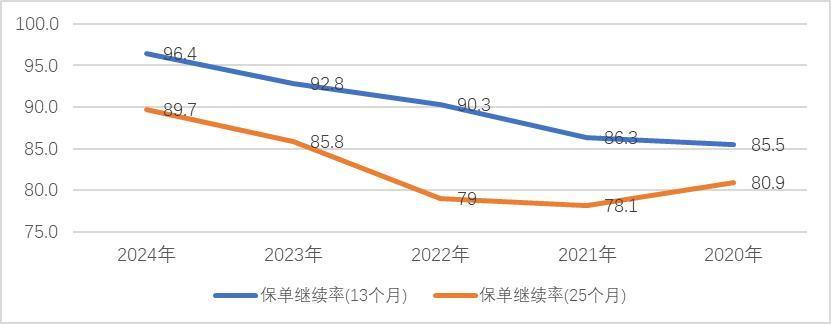
Chart: Ping An’s policy persistency rates
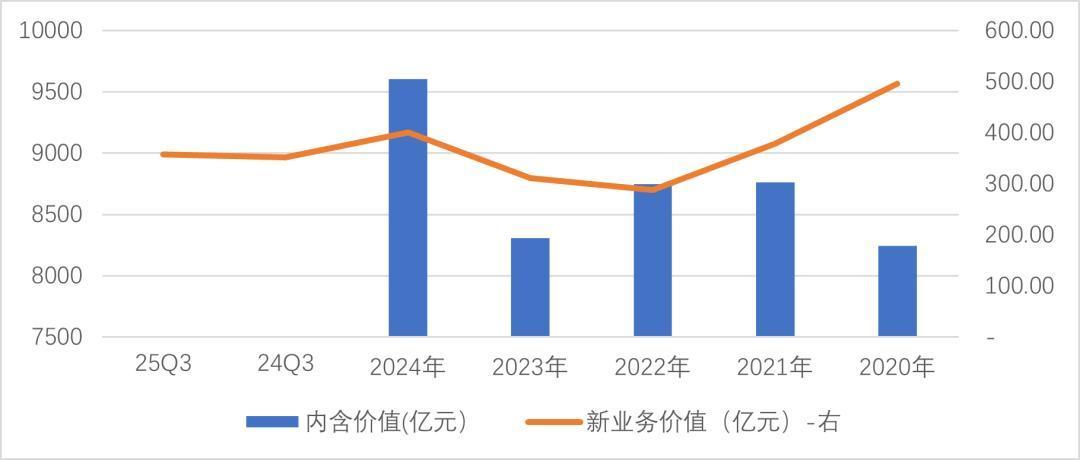
Chart: Ping An Life’s EV and NBV
P&C Insurance: Continued Growth, Further Profitability Gains
Auto insurance, including compulsory and commercial auto insurance, accounts for about 65% of Ping An P&C’s revenue, with the rest coming from liability, commercial property, and tech insurance, among others.
In the first three quarters of 2025, insurance revenue was 256.247 billion yuan, up 7.1% YoY.
The key metric is the combined ratio (100% is breakeven, above 100% is unprofitable). From 2020 to 2024, the combined ratio was 99.1%, 98%, 100.3%, 100.7%, and 98.3%, respectively; in the first three quarters of 2025, it improved further to 97%.
Banking: Net Interest Margin Stabilizing, Retail Strategy Adjusting
In the first three quarters of 2025, revenue was 100.668 billion yuan, down 9.78% YoY, mainly due to narrowing interest spreads and declining investment income (mostly fixed income). Net profit was 38.339 billion yuan, down 3.5% YoY. ROE was 7.4% (non-annualized), better than the median of 7.06% for listed banks.
In recent years, Ping An Bank has shifted from rapid growth (2018–2021) to declines in both revenue and profit, tied to its retail strategy.
Non-performing pressures in personal loans (including credit card installments) have risen. Since 2024, Ping An Bank has sharply cut personal loans, reducing them by 210 billion yuan from 1.98 trillion yuan to 1.77 trillion yuan.
The NPL ratio for personal loans peaked at 1.39% in 2024; by Q3 2025, the balance was further reduced to 1.24%. Bad loans in personal lending have been largely cleared.
4. Investments: Bonds Dominate, Equity Allocation Balances Out
Interim reports show that as of the first half of 2025, Ping An’s insurance fund investment portfolio totaled 6,202.475 billion yuan, with bonds accounting for 61% and equities 10.47% (market value ~649.29 billion yuan).
In terms of allocation changes, bonds were heavily added in 2023–2024, while equity investments gradually increased; in the first half of 2025, bond and equity additions were roughly equal, matching market volatility.
The company’s equity investments follow a "high dividend + growth" dual-drive strategy, with multiple stakes taken in bank and insurance H-shares, such as China Merchants Bank, Postal Savings Bank, Agricultural Bank, ICBC, China Pacific Insurance, and China Life.
According to the 2025 interim report, other equity investments (OCI account) totaled 520.519 billion yuan, mostly stocks.
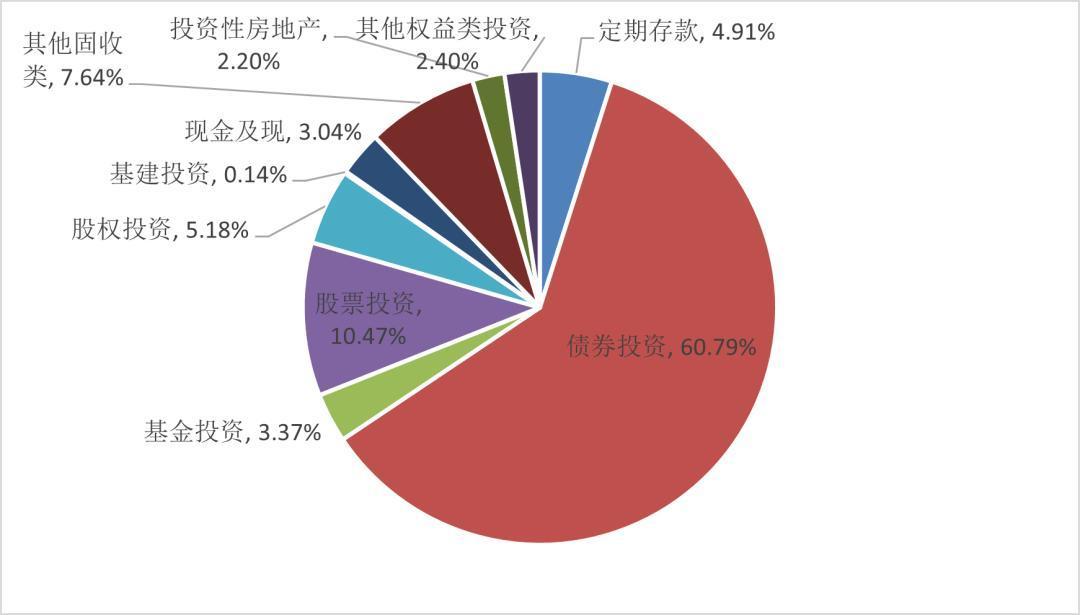

Chart: Investment portfolio dominated by bonds, with equities rising noticeably
03 Is It Time to Be Optimistic?
As of December 15, 2025, Ping An’s P/E ratio is 8.6x, P/B ratio is 1.23x, and dividend yield is about 4%. By P/B, Ping An is the lowest-valued among A-share insurers; by P/E, it still carries a premium over peers.
The company’s strategic focus on "integrated finance + healthcare/pension" and "tech enablement," along with banking’s high profit share, makes a sum-of-the-parts valuation appropriate:
Banking: Holds 55.67% of Ping An Bank, currently trading at ~5.1x P/E, among the lowest for listed banks. Implied equity value: ~122.525 billion yuan.
Life Insurance: Using embedded value, 2024 EV was 960.608 billion yuan, plus 2025 H1 NBV of 35.724 billion yuan, totaling ~996.332 billion yuan.
P&C Insurance: Based on PICC (H-shares) at 1.2–1.4x P/B and 2025 H1 capital of 149.881 billion yuan, valuation range: 179.9–209.8 billion yuan.
Other Businesses: 2025 H1 operating profit for asset management, tech, etc., totaled 874 million yuan; conservatively valued at 10x P/E: ~8.74 billion yuan.
Summing up, from a personal perspective, the total SOTP valuation is roughly ~1.4 trillion yuan.
"Looking back at the bleakness of the past, returning, there is neither wind nor rain nor sunshine." In our view, as risk assets are further cleared, the toughest times may be over, and it might be time to be a bit more optimistic about Ping An.
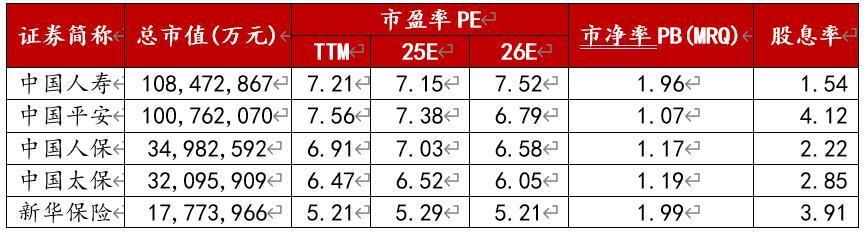
Chart: Valuations of A-share listed insurers
$PING AN(02318.HK) $Ping An(601318.SH)
The copyright of this article belongs to the original author/organization.
The views expressed herein are solely those of the author and do not reflect the stance of the platform. The content is intended for investment reference purposes only and shall not be considered as investment advice. Please contact us if you have any questions or suggestions regarding the content services provided by the platform.
