


Cursor "Takes Down" GitHub Overnight
Cursor announced the launch of Origin, a new code hosting platform, officially competing with GitHub. Designed for the Agent era, the platform is deeply integrated with the Cursor editor and supports stacked PRs, AI-powered automatic merging, and bidirectional synchronization with GitHub. The Origin beta is now available to paid users. Following this news, Microsoft's stock price fell by over 3%, wiping out more than $112 billion in market value. This comes after GitHub experienced a major service outage
Today, programmers around the world collectively experienced an "absurd drama."
At 9:40 a.m. Eastern Time, GitHub suffered a complete outage, taking Copilot down with it.
For a full seven hours, with core services paralyzed for three of them, developers were brought to a standstill—unable to pull code or use AI tools...


Coincidentally, today was also the day Cursor officially declared war on GitHub!
Following its formal integration into SpaceXAI, the original team unveiled a brand new "code hosting platform," Origin.

What exactly is Origin? Here are the key highlights:
- Positioning: A Git code hosting platform designed specifically for the Agent era, deeply integrated with the Cursor editor
- Core capabilities: Stacked PRs, merge queues, machine-readable review states, MCP protocol support, and event-driven automation
- Compatibility: Bidirectional real-time synchronization with GitHub, requiring no changes to existing workflows
Starting today, the Origin beta is open to all Pro/Teams/Enterprise paid users.
Previously, it was thought that Cursor merely aimed to replace VS Code, but it now appears that GitHub is its true "ultimate prey."
Almost simultaneously, Microsoft's stock price dropped by over 3%, evaporating more than $112 billion in value in an instant.

The Cursor Version of GitHub Is Live
Origin is not just "Cursor storing a code copy in the cloud"; it is a complete git hosting platform.
The early beta version offers extensive functionality—
Creating repositories, performing standard git clone/push/pull operations, syncing repositories from GitHub, browsing and searching code in the browser, opening PRs, reviewing, merging, and managing permissions.
It has essentially rebuilt the entire suite of GitHub's core features.

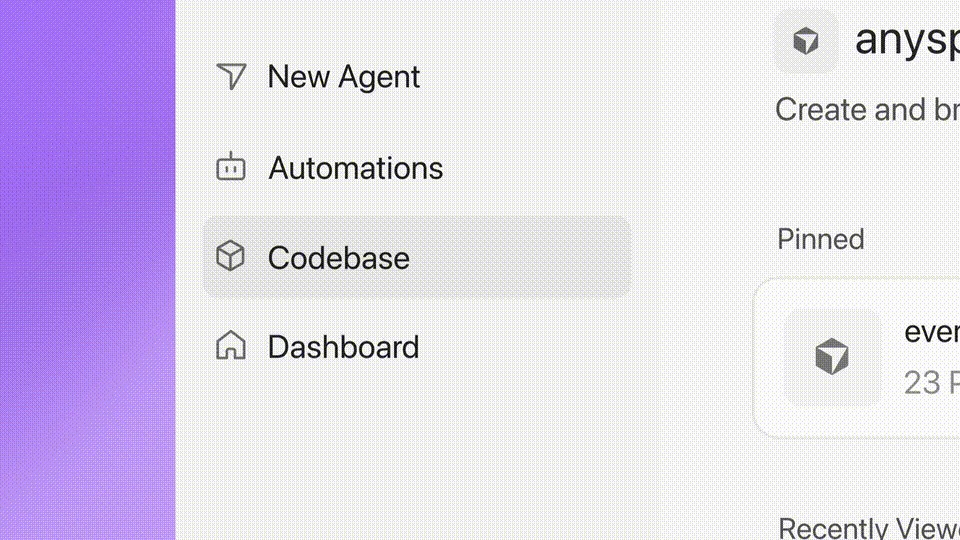
Usage is straightforward: click "+New" on the new Codebase tab to create a repository.
The page directly instructs you on how to install the CLI and push your local project.
The name you first assign to a codebase becomes part of each repository's URL, for example, cursor.com/codebase/acme-corp.

AI-Powered Automatic Merging, Eliminating the Need for Human Review
Like GitHub, every code repository in Origin has PRs, with three main highlight features.
- Stacked PRs
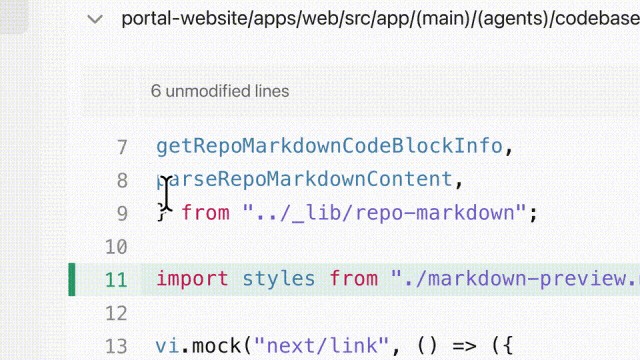
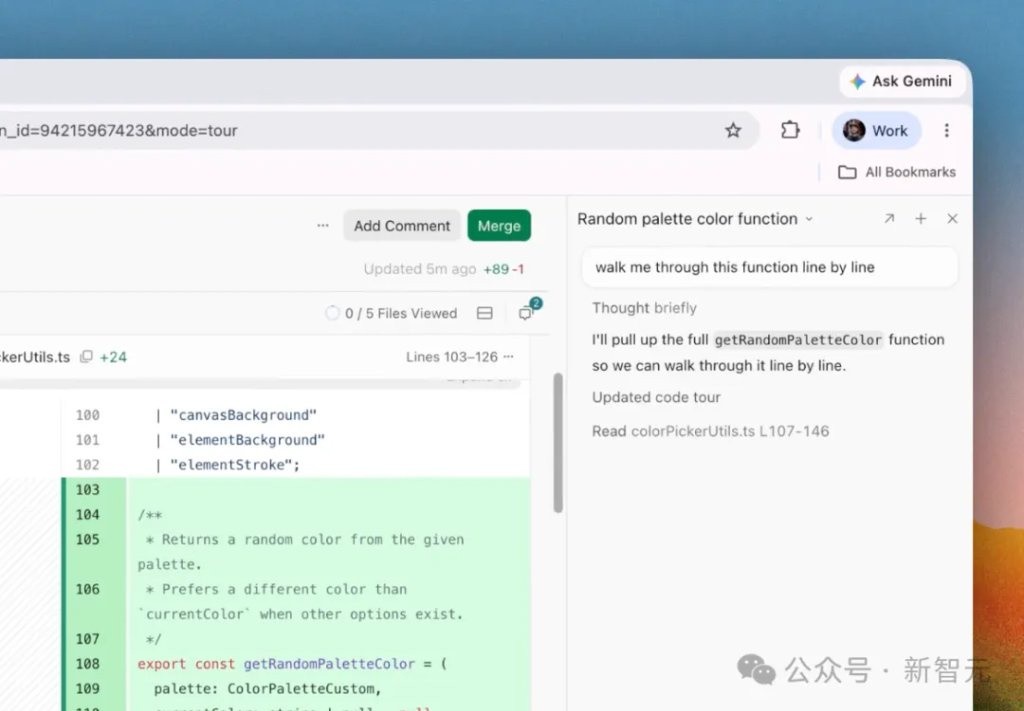
Stacked PRs allow a large change to be broken down into multiple smaller PRs, stacked according to dependencies, which Origin displays using a visual dependency graph.
This is crucial for Agents. Agents naturally tend to make bulk code changes, often modifying 50 files at once. Cramming everything into a single PR? Human reviewers would immediately bounce off the page. Stacked PRs solve this problem by breaking it down.
- Merge Queue
Imagine ten Agents in a repository each modifying a batch of code and submitting their own PRs, with all CI checks passing green.
The question arises: Which one gets merged first? After merging one, can the test results of the remaining nine still be trusted?
Handling this scenario on traditional GitHub is painful, often leading to merge conflicts, CI reruns, and repeated rebasing. Origin's merge queue automatically sorts and detects conflicts, ensuring the main branch always stays green in CI.
Even more aggressively, when encountering conflicting branches spanning dozens of files, Origin has an AI engine built directly into the merge layer to automatically resolve conflicts, eliminating the need for human intervention.
- Machine-Readable Review States
GitHub's review states are essentially designed for humans, consisting of a green checkmark and some comment text.
For an Agent to determine if a PR can be merged, it must parse the comment content. Origin structures review states as a structured API, allowing Agents to read and write directly without guessing.
One-Click Migration Away from GitHub
Most importantly, there is no need to migrate legacy projects, as Origin supports direct mirroring of GitHub repositories.
Git history, branches, and tags are all carried over, and PRs can be synchronized bidirectionally.
Upon initial synchronization, GitHub remains the source of truth.

Simply put, while the same code may exist in multiple places, there must be one authoritative version: which one prevails in case of disagreement, where CI pulls from, and which one is recognized for deployment.
For the past twenty years, the "source of truth" for the vast majority of teams worldwide has been held by GitHub.
Now, Origin has completely disrupted this landscape.
By simply clicking "Detach from GitHub," Origin takes the lead, becoming the true "code headquarters"!

This sufficiently demonstrates that it is not merely GitHub wrapped in a Cursor skin. It is genuinely building its own "foundation."
This time, Origin has also connected with the app ecosystem, initially integrating with Vercel, Depot, and Buildkite.
Vercel handles automatic preview deployments for each PR; Depot and Buildkite handle CI, and both can run your existing GitHub Actions workflows.
A Foundation Built for Agents
Furthermore, Origin natively supports MCP, allowing Agents to drive the entire forge like calling an API, not limited to the IDE.
The performance data is spoken for Agents.
296,000 clones per hour, 81,000 pushes, 22.6 commits per second, global synchronization latency under 400 milliseconds, and automatic failover in 10 milliseconds.
Twenty-two commits per second may sound absurd, but it is just enough for an army of Agents.
Humans Are No Longer the Primary Coders
The fundamental reason Cursor is building Origin is that GitHub can no longer keep up with the speed of Agents.
In March this year, Truell revealed an internal figure: 35%-40% of PRs merged in Cursor were autonomously completed by Agents on cloud virtual machines.
In other words, Agents create their own branches, commit their own code, and open their own PRs.
In contrast, GitHub's workflow, designed in 2008, is inherently built for "humans."
One person writes code, one or two others review it, and they wait in line for merging, with rhythms measured in hours and days.
But clearly, Agents do not operate on this rhythm; dozens may flood into a repository simultaneously, operating on a timescale of seconds.
Origin was built for this reality.
Code, PRs, and Agents reside in the same place. When writing code in Cursor, Agents can directly modify code, update PRs, and push branches without needing to switch to another platform.
So, Should You Move Today?
Don't rush. In the short term, no team will move their core projects entirely away from GitHub.
If you are already using Cursor's cloud Agents to run background tasks, it is worth trying Origin.
Moreover, the migration cost is nearly zero; simply click Detach from GitHub in the repository settings, and the roles reverse.

SpaceXAI researchers went straight for the jugular: GitHub is down, why not check out Origin!
On the day GitHub collapsed, Cursor opened its doors to guests.
The next time GitHub goes down, you may no longer need to wait for it to recover.
Risk Disclosure and Disclaimer
The market carries risks; invest with caution. This article does not constitute personal investment advice, nor does it consider the specific investment objectives, financial status, or needs of individual users. Users should consider whether any opinions, views, or conclusions in this article align with their specific circumstances. Responsibility for investments made based on this content lies solely with the investor.
