


Five Factors Converge: JPMorgan Chase Warns Global Food Crisis May Erupt Next Year
JPMorgan Chase warns that a global food crisis could erupt in the first half of 2027, driven by the combined impact of war, weather, warehousing, water resources, and waste. Global food inflation is projected to rise from 2.8% in the first half of 2026 to 5% in the first half of 2027. The combined effect of a super El Niño and energy shocks is expected to push food CPI up by an additional 1.5 percentage points, with emerging markets such as India, Indonesia, and Brazil bearing the brunt
War, weather, warehousing, water resources, and waste—five pressures are simultaneously tightening the "valve" on global food supply.
On August 15, the latest research report from JPMorgan Chase indicated that the outline of the next global food crisis is beginning to take shape, with food inflation pressure expected to persist until the first half of 2027.
The report, titled "Food Security Is National Security: A Compound Storm," was led by Nora Szentivanyi, Senior Global Economist based in London. The report warns that ongoing disruptions in the Strait of Hormuz and a potential record-breaking super El Niño are developing in tandem, which will reduce crop yields, constrain agricultural production capacity, and keep food inflation elevated in the first half of 2027.
Szentivanyi pointed out directly in the report: "Since the pandemic, successive shocks have created a compounding effect, eroding food production capacity and extending food price pressures into 2027. This is not a transient shock; it reduces the likelihood of near-term disinflation, and the food inflation cycle is likely to remain pressurized in the first half of 2027."
She expects global food inflation to accelerate from 2.8% in the first half of 2026 to 5% in the first half of 2027.
The "Five Ws": Five Root Causes of the Crisis
JPMorgan Chase attributes this risk to the "Five Ws": War, Weather, Warehousing, Water, and Waste.
These five factors do not exist in isolation but overlap and reinforce each other. War disrupts key shipping lanes, abnormal weather impacts agricultural output, insufficient warehousing capacity weakens buffer stocks, water scarcity restricts irrigation, and food waste further compresses effective supply.
Szentivanyi specifically highlighted the most direct vulnerability—fertilizers. She stated, "Disruptions in the Strait of Hormuz and the impending super El Niño are exacerbating pressure on fertilizer and food prices."
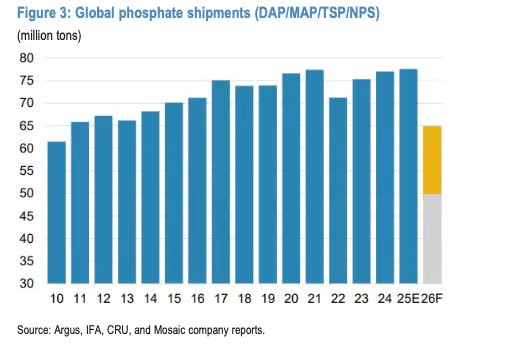
Fertilizer is a core input for food production, and its price increases are directly passed through to crop costs, thereby pushing up retail food prices. The Strait of Hormuz is a critical channel for global energy and fertilizer raw material transportation; any obstruction there will amplify impacts along the supply chain.
Super El Niño: A "Time Bomb" with a 6- to 12-Month Lag
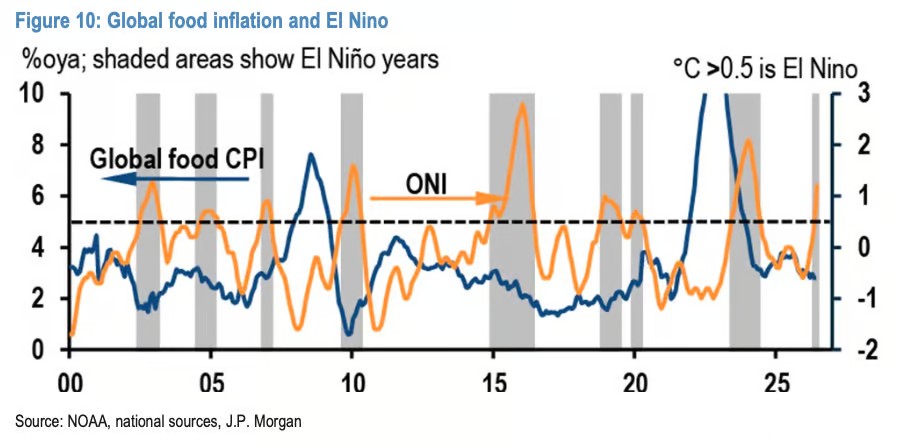
A significant characteristic of El Niño's destructive power is its lag effect. Szentivanyi noted, "The impacts on crops and prices are still accumulating; agricultural shocks typically lag behind oceanic peaks by 6 to 12 months."
This means that even if the climatic peak of El Niño has passed, its substantial impact on food production is only just beginning to manifest.
More alarmingly, this year's energy shock is amplifying the inflationary effect of El Niño. Szentivanyi estimates that the combination of the two will raise the global food CPI by approximately 1.5 percentage points, whereas the average impact of historical El Niño events alone was only 0.7 percentage points—effectively doubling the shock.
Specifically, food inflation is expected to reach an annualized rate of 5% in the first half of 2027, contributing an additional 0.6 percentage points to overall inflation and slowing the annual disinflation process by 0.3 percentage points.
Emerging Markets Bear the Brunt
The geographic distribution of this shock is uneven, with emerging markets facing the greatest pressure.
Szentivanyi pointed out: "Risks are concentrated in South and Southeast Asia (involving rice, sugar, and coffee), West Africa (cocoa), and parts of East and Southern Africa. Emerging markets bear the main brunt of El Niño. The economies with the strongest food inflation responses are concentrated in emerging Asia and Latin America—regions where agriculture is more sensitive to weather and food has a higher weight in the consumption basket. India, Colombia, Indonesia, Brazil, and South Korea are among the most vulnerable economies."
In contrast, while Western countries possess strategic petroleum reserves, they have almost no buffer in terms of fertilizer reserves. The report also notes that major Asian powers are already stockpiling food, fertilizers, energy, and industrial metals on a large scale, leaving the West significantly disadvantaged in this dimension.
Szentivanyi's assessment is that the epicenter of the next inflation shock may no longer be gas stations, but supermarket shelves.
Multiple Institutions Issue Warnings Simultaneously
JPMorgan Chase is not alone. Research departments at multiple institutions, including Goldman Sachs and HSBC, have previously issued warnings regarding food inflation risks.
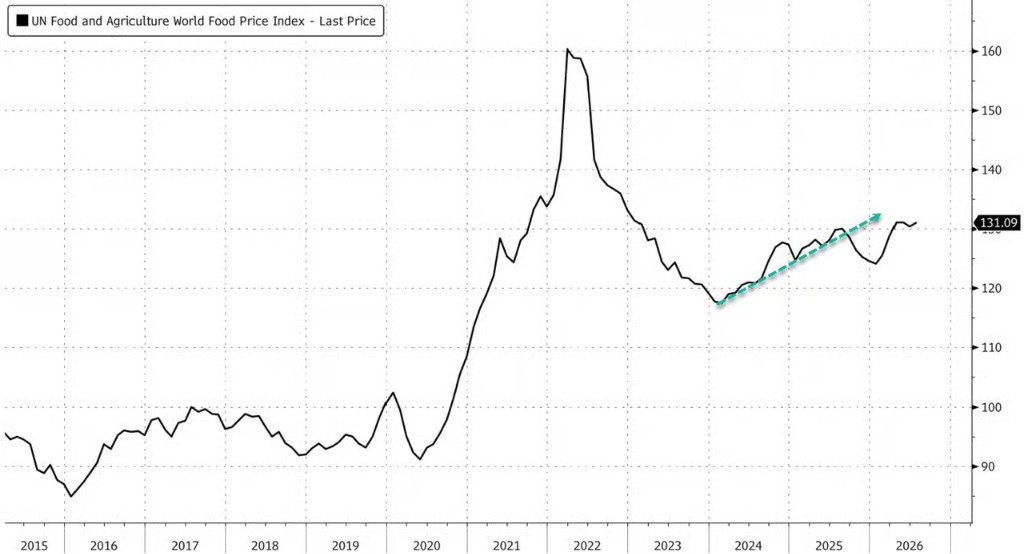
The Food and Agriculture Organization of the United Nations (FAO) Global Food Price Index rose to a three-year high in July this year, providing data support for the above judgment.
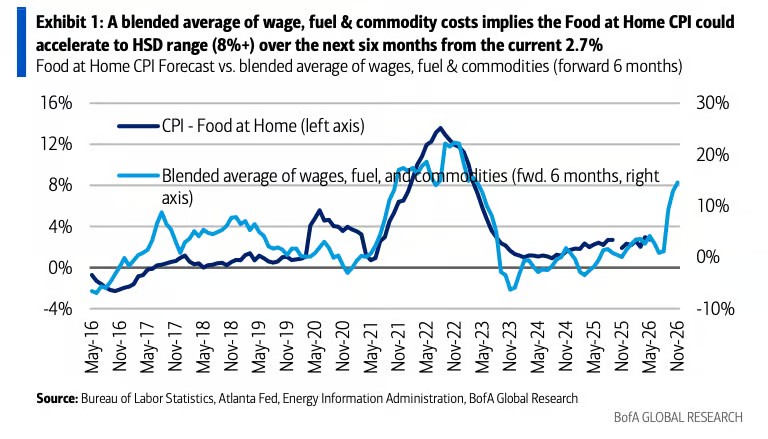
Bank of America analyst Robert Ohmes recently issued a similar warning. He stated that grocery store inflation "may be on its way," citing a composite index of wages, diesel, and commodity costs as evidence, and predicting that a new surge in food prices could appear on supermarket shelves as early as this autumn.
Nevertheless, global hunger statistics show some improvement—approximately 645 million people faced hunger in 2025, a decrease of about 43 million from 2022. However, 2.1 billion people (25.8% of the global population) remain in a state of moderate or severe food insecurity. This large base means that any price shock will rapidly translate into humanitarian pressure.
