


Hong Hao: China's AI Rally Enters Phase Two, High-Quality Companies Outperform
Economist Hong Hao stated that China's AI rally has entered its second phase, with the market shifting from "storytelling" to "competing on quality." After a two-month correction, tech stock valuations have returned to reasonable levels. High-quality stocks are expected to continue outperforming due to their performance and earnings sustainability, while companies relying solely on concepts will lag. Semiconductor exports are growing strongly, but differences in quality need attention; giants like Tencent and Alibaba still have a long way to go in their transformation, and recent gains are largely technical rebounds
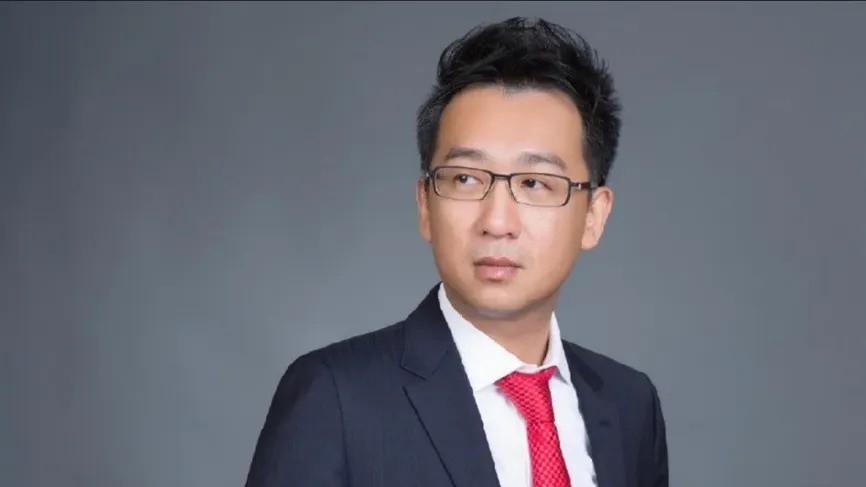
On August 13, renowned economist Hong Hao shared his outlook on the future AI rally in an interview.
The editor of Investment Homework Book summarized the key points as follows:
1. (Tech stocks) After a two-month correction, many individual stocks have fallen back to more realistic price levels, making valuations more reasonable.
2. This round of (AI) gains has entered the second phase. Basically, quality is now more important than the story itself or the number of targets.
The market is entering a phase of divergence: high-quality targets will perform well, while some targets that only tell stories will continue to underperform the entire sector.
- Chinese semiconductor companies currently dominate the mid-to-low-end segment. Semiconductor exports are still growing, with year-on-year increases of up to 50%–60%, representing very high double-digit growth.
Therefore, I believe many targets are poised to continue performing well, but considering valuations and the sustainability of earnings growth, some lower-quality targets will underperform.
- (Tencent and Alibaba) They are still on the path of transforming from traditional internet companies into new-type AI cloud computing companies, with a long way to go. Although the stock prices of these companies have risen recently, most of it is just a technical rebound.
Hong Hao believes that after a two-month correction, valuations of Chinese tech stocks have returned to a reasonable range. The AI rally has moved from "storytelling" to the second phase of "competing on quality." High-quality targets with realized performance will continue to outperform, while those merely telling stories will lag. In addition, South Korean capital is rotating into Hong Kong stocks, becoming a new variable in the market, though it has not yet changed the structure of the Hong Kong market.
Below is the essential content summarized by the editor of Investment Homework Book (WeChat ID: touzizuoyeben), shared for everyone:
Valuations of Many Tech Stocks Have Become More Reasonable After Correction
Host: Do you think the correction in July also helped bring the valuations of Chinese tech stocks back to more attractive levels, making you more optimistic about the market?
Hong Hao: Yes, I believe that after a two-month correction, many individual stocks have fallen back to more realistic price levels, making valuations more reasonable.
Thus, part of the overvaluation and some extreme relative gains have been corrected. Therefore, many funds are re-evaluating these targets. I have also heard that some foreign investors are re-examining Chinese AI targets.
This Round of AI Rally Enters Phase Two
Host: However, have the criteria for evaluating Chinese targets changed? Previously, it was simply participating in AI trading; now, how much focus is there on whether these companies' investments can translate into actual performance?
Hong Hao: Yes, I believe this round of gains has entered the second phase. Basically, quality is now more important than the story itself or the number of targets.
In China's AI sector, many targets have stories to tell, and they are good stories, but there is hardly any performance to back them up.
So I believe the market is entering a phase of divergence: high-quality targets will perform well, while some targets that only tell stories will continue to underperform the entire sector.
Selection of High-Quality Companies
Host: What indicators constitute true quality? Is it cash flow, monetization capability, capital expenditure, or returns?
Hong Hao: Yes, some companies are still in the early stages of development, but many of them have already shown promising results. For example, DeepSeek's newly released Pro model, and Kimi 3—the capabilities of many models can already benchmark against their US counterparts, but at a significantly lower cost.
So I believe many such companies are moving towards raising capital in the capital markets and will receive a good response. In addition, some existing companies that continue to show progress in model development and token consumption will also remain in focus.
But on the other hand, some targets had impressive performance last quarter, with profit increases potentially as high as 1000%. But many people doubt whether such strong earnings growth can be sustained, as their capacity still relies on overseas orders to fill.
I believe Chinese semiconductor companies currently dominate the mid-to-low-end segment. Looking at recent Chinese export data, semiconductor exports are still growing, with year-on-year increases of up to 50%–60%, which is very high double-digit growth.
So I believe many targets are poised to continue performing well, but considering valuations and the issue of earnings growth sustainability, some lower-quality targets will underperform.
Rise in Tencent and Alibaba Stock Prices Is a Technical Rebound; Long Road Ahead in Transformation from Internet Companies to AI Cloud Computing Companies
Host: What about tech giants like Tencent and Alibaba? Taking Tencent as an example, we see its revenue exceeded expectations, but at the same time, AI and computing power expenditures doubled. When will their AI investments yield returns? How should investors weigh this? And what is your view on their reliance on the domestic Chinese market, especially retail?
Hong Hao: Yes, I believe these companies are investing heavily in AI, but most investors still view them as old-economy companies, internet platform companies, or gaming companies.
Although their investments are substantial, some have already achieved certain results—for example, Tencent Yuanbao, a very popular AI tool in China, is performing well; Alibaba Cloud has also demonstrated very strong earnings growth.
But the problem is that the contribution of AI business to the group's overall performance is still relatively small. So I believe they are still on the path of transforming from traditional internet companies into new-type AI cloud computing companies, with a long way to go.
Therefore, although the stock prices of these companies have risen recently, most of it is just a technical rebound.
For instance, as the news headline just showed, short positions in many individual stocks have fallen from their peaks—but this is usually a contrarian indicator, suggesting that the technical rebound has completed most of the gains in this round, and the easiest money in this rebound has already been made.
So entering the second phase, we need to look for quality and the new earnings drivers of these companies.
Strong Exports, but Stimulating Consumption Is More Urgent
Host: Expanding this question to the entire Chinese economy: We see the boom in the AI industry, along with strong manufacturing and exports related to it; but on the other hand, domestic demand is shrinking. Will demand pressure—sluggish economy, weak consumption—at some point outweigh the more positive and brighter aspects of the Chinese economy?
Hong Hao: I think China is handling it quite well so far, with the export sector rising steadily.
Our exports are still maintaining very high double-digit growth. Currently, the export sector and high-end manufacturing are contributors to growth, but the urgency of stimulating consumption is becoming increasingly prominent—consumption growth and the growth rate of total retail sales of consumer goods are slowing down significantly, and growth cannot rely solely on exports.
China's share of global exports is at a historical high. Basically, many trading partners find it difficult to compete with China. I believe almost all industries in China are recording trade surpluses—Chinese manufacturers enjoy an absolute advantage.
Recently, we have heard increasingly strong criticism from the European Union, and there is growing evidence in academia that Chinese exports are basically taking away the jobs of European exporters.
So I believe we will see more trade friction ahead, especially between China and Europe.
South Korean Capital Flowing into Hong Kong Stocks Becomes a New Force in the Market
Host: You wrote in your notes that under the AI boom, aggressive South Korean traders are entering the Hong Kong market. Of course, after experiencing this round of market volatility, will this have a substantial impact on the structure of the Hong Kong market? Is there anything we should pay attention to?
Hong Hao: It won't have an impact yet. I think South Korean traders are known for being daring and having extremely high risk appetite. You see, the rebound in the Hong Kong market over the past two weeks has been quite remarkable—the Hang Seng Index has risen more than 15% from the bottom.
You must admit that new capital has come in.
I heard that a significant portion of this capital actually rotated from the South Korean market to Hong Kong to seek opportunities—where valuations are cheap, and many Chinese AI targets are yet to be discovered.
So I believe this is a new force in the market. Hong Kong welcomes this new type of trader who has both capital and risk appetite.
Source: Investment Homework Book Pro, Author Wang Li
For more insights from industry leaders, please follow ↓↓↓
Risk Warning and Disclaimer
The market involves risks; investment requires caution. This article does not constitute personal investment advice, nor does it take into account the specific investment objectives, financial status, or needs of individual users. Users should consider whether any opinions, views, or conclusions in this article align with their specific circumstances. Investors bear full responsibility for their own investment decisions.
