


Korean Stocks Rise 11% to End Seven-Week Losing Streak, but Institutional Positions Haven't Caught Up—Is a Short Squeeze Imminent?
The KOSPI ended its seven-week losing streak this week, led by chip stocks. However, hedge funds had previously significantly reduced their positions, and current institutional holdings are clearly lagging behind the index's gains. With foreign capital returning and tech stocks continuing to strengthen, underweight institutions face performance pressure and may be forced to chase the rally, creating a positive feedback loop of "rising prices—covering positions." If the index continues to climb, this rebound could evolve into a short squeeze
The South Korean stock market is experiencing a strong rebound, but what may be more noteworthy is the "position gap" behind the rise.
The KOSPI rose 11.5% this week, marking its largest single-week gain in over three months and ending a previous seven-week declining trend. Chip stocks became the main line of the rebound, with Samsung Electronics and SK Hynix rising 19% and 16% respectively this week, as foreign investors also returned to buy Korean tech stocks in large volumes.
However, at the same time, hedge funds had already significantly reduced their KOSPI positions, and current institutional holding levels are clearly lagging behind the index's gains. In other words, the market has risen substantially, but some major institutional capital has not yet returned. If the index continues to rise, underweight institutions may be forced to chase the rally, further pushing this rebound toward a "short squeeze" style advance.
This potential driver is particularly worth noting: foreign buying is flowing back in, chip stocks continue to lead the gains, while retail investors are taking profits, and leveraged funds in the market have visibly receded due to tighter regulations. In this context, the key to whether the KOSPI can continue its upward attack may shift from "whether there is capital to buy" to "when underweight capital will be forced to buy back in."
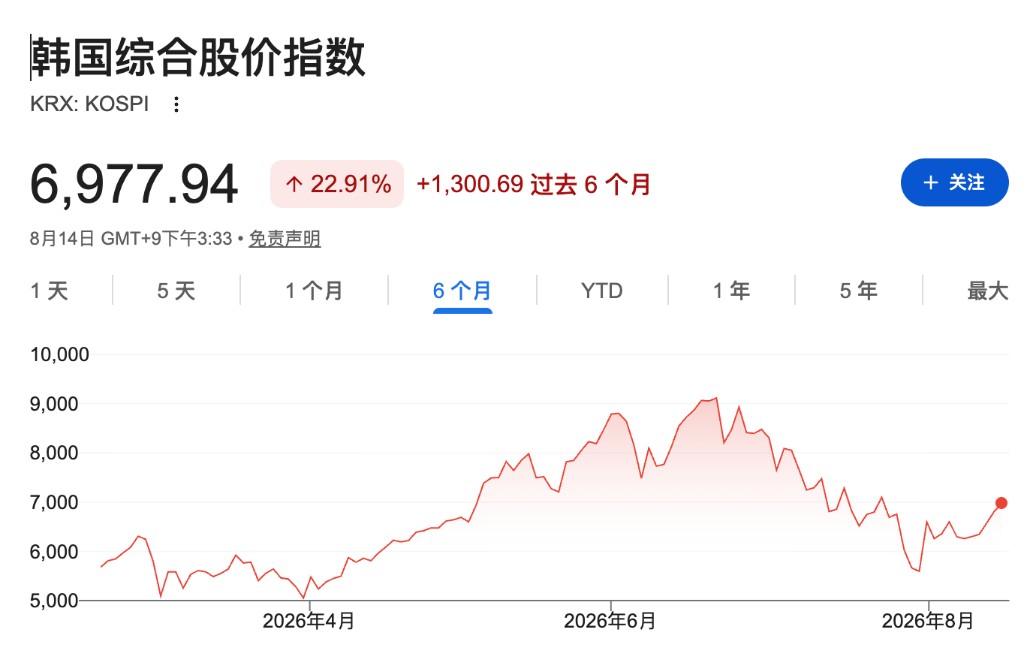
Chip Stocks Lead Gains, KOSPI Rebounds Strongly
The KOSPI closed up 2.42% on Friday at 6,977.94 points, hitting its highest closing level since July 23 and marking its fifth consecutive day of gains. The cumulative rise for the week was 11.5%, the largest single-week gain in over three months. Calculated from the low on July 30, the KOSPI has rebounded more than 22%, following a previous seven-week cumulative decline of nearly 31%.
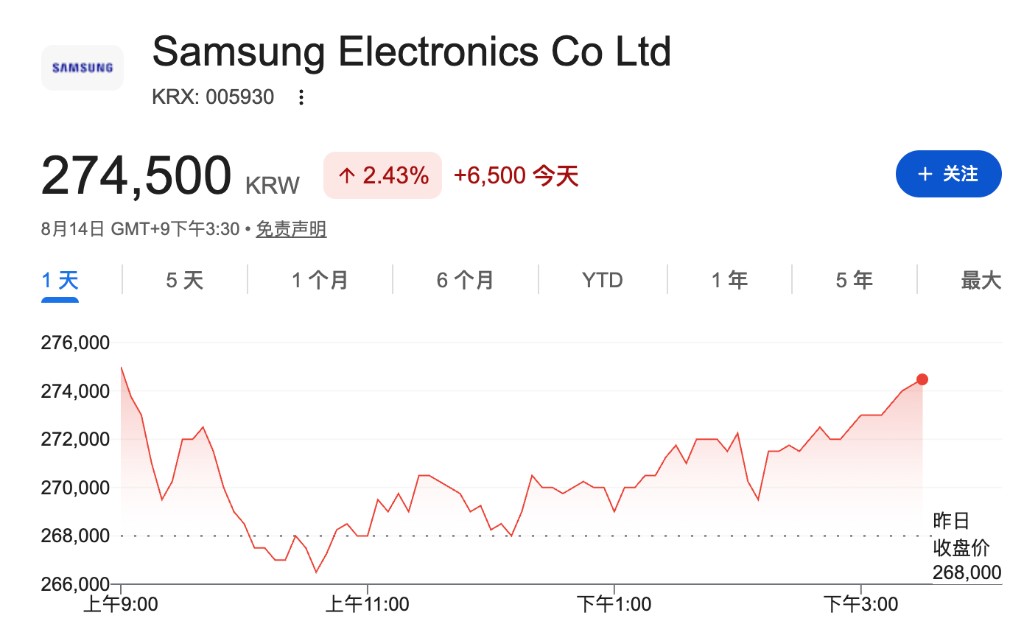
Chip stocks remain the core driver of the rebound. Samsung Electronics rose 2.43% on Friday, and SK Hynix rose 3.26%, bringing their weekly cumulative gains to 19% and 16% respectively. Lee Kyoung-min, an analyst at Daishin Securities, stated that signals of long-term growth potential and high profitability released by U.S. memory chip manufacturer SanDisk boosted sentiment in the semiconductor sector, further driving the strength of Korean memory chip stocks.
Other heavyweight stocks also performed strongly. Hyundai Motor rose 8.24% on Friday, Kia Corporation rose 3.13%, and LG Energy Solution rose 1.09%. Among the 906 stocks traded throughout the day, 677 rose and only 204 fell.
Foreign Capital Returns to Tech Stocks, Retail Investors Take Profits
Capital flows further confirm the structural characteristics of this rebound: foreign and institutional investors are buying back in, while retail investors are cashing out on the rise.
According to Goldman Sachs sales desk data, foreign investors net bought approximately $1.2 billion worth of KOSPI stocks this week, with about $1.1 billion concentrated in the tech sector, meaning almost all buying was contributed by tech stocks. Reuters data showed that foreign investors' net buying scale for the week was about 3 trillion Korean won. Local institutions were also on the buy side, with net purchases of KOSPI stocks totaling about $383 million, including net purchases of about $432 million in the tech sector.
Meanwhile, retail investors continued to take profits, with net sales in the tech sector alone reaching about $1.5 billion. The overnight rise in the Philadelphia Semiconductor Index, coupled with optimistic market expectations for shareholder returns from Samsung Electronics and SK Hynix, provided further sentiment support for Korean chip stocks.
Hedge Funds Hold Low Positions, Short Squeeze Potential Is Forming
Compared to the return of foreign capital, the low positions of hedge funds may be a variable more worthy of attention in this rally. During the previous continuous decline of the KOSPI, hedge funds had significantly reduced their exposure to Korean stocks. Now that the index has rebounded rapidly from its lows, institutional positions have not recovered in sync, creating a clear divergence between index performance and capital allocation.
This means the market may be forming a potential "position vacuum."
If the KOSPI continues to rise, institutions underweight in Korean assets may face increasing performance pressure and be forced to add to their positions. At that point, further index rises could trigger more institutional chasing, forming a positive feedback loop of "rise—cover positions—rise again."
Currently, the Philadelphia Semiconductor Index still significantly leads the KOSPI. If the Korean market continues to catch up with the performance of overseas semiconductor stocks, the pressure to cover positions may increase further for those who had previously significantly reduced their holdings.
