


Yen Surges Sharply in Short Term: Report Says Japanese PM Sanae Takaichi Supports Faster BOJ Rate Hikes
Driven by reports that Japanese Prime Minister Sanae Takaichi supports faster interest rate hikes by the Bank of Japan, the USD/JPY exchange rate surged sharply in the short term. The market expects the Bank of Japan may raise rates in September or October to address inflationary pressures and consolidate the effects of Japan-U.S. currency market interventions. Currently, the market-implied probability of a rate hike at the September 18 monetary policy meeting has risen to 74%, as government and central bank policy objectives converge to jointly promote monetary policy normalization
The USD/JPY exchange rate surged sharply in the short term. Bloomberg reported that the administration of Japanese Prime Minister Sanae Takaichi supports recent interest rate hikes by the Bank of Japan (BOJ).
Insiders revealed that the window for the BOJ's next rate hike is likely to fall in September or October. Concerns within the BOJ that yen weakness is driving up inflation are gradually aligning with the Japanese government's desire to consolidate the effects of recent Japan-U.S. exchange rate interventions, with both sides tending to support near-term rate hikes.
Following the news, the yen exchange rate quickly rose by 20 pips in the short term.
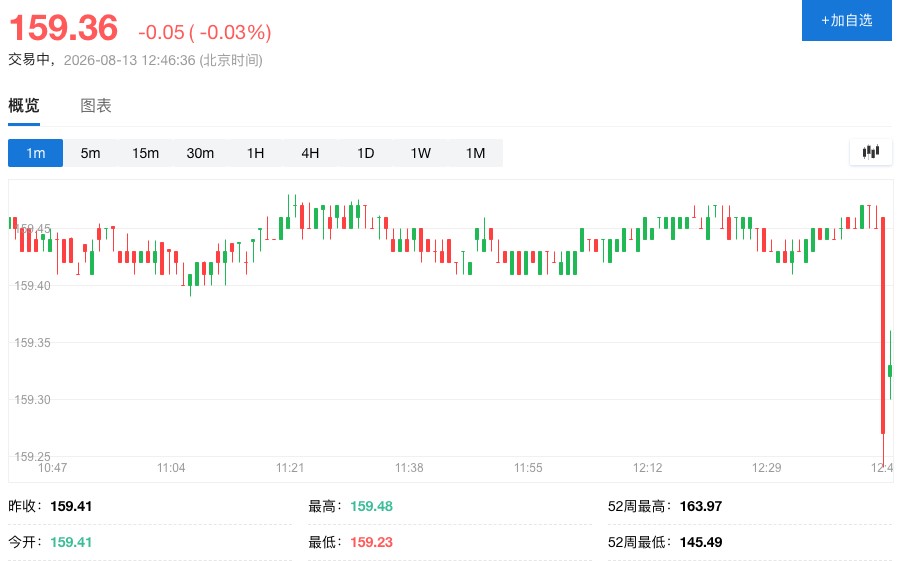
Currently, the market-implied probability of a rate hike at the BOJ's policy meeting on September 18 has risen to 74%. Meanwhile, U.S. Treasury Secretary Bessent had previously signaled that it is necessary for the BOJ to take action to boost the yen. The emergence of this government stance has further strengthened market expectations for an acceleration in the normalization of Japanese monetary policy.
Government and Central Bank Policy Objectives Converge
According to Bloomberg, citing insiders, there are two core logics driving the alignment of positions between the two sides: First, the BOJ is concerned that persistent yen weakness will exacerbate imported inflation pressures; second, the government hopes to amplify the policy effects of the recent joint U.S.-Japan intervention in the foreign exchange market.
The effects of the first joint U.S.-Japan intervention to buy yen since 1998 are fading, with market expectations that the central bank needs to support the exchange rate fundamentally through rate hikes.
BOJ Governor Kazuo Ueda already mentioned the possibility of accelerating the pace of rate hikes at the press conference following the July 31 monetary policy meeting, citing risks from upward pressure on prices. Insiders also revealed that the government had communicated to the central bank before the July meeting that it would support Ueda in making hawkish remarks at the press conference.
The Prime Minister's Office stated in a declaration, "We believe that specific monetary policy measures, including rate hikes, should be left to the decision of the Bank of Japan," and pointed out that the central bank should work closely with the government to achieve the 2% inflation target in a "stable manner." The Bank of Japan declined to comment.
Central Bank Officials Retain Flexibility, Do Not Rule Out September Action
Although the government's stance has shifted towards support, central bank officials still wish to further assess economic and price trends before making a final decision, but they have not ruled out the possibility of action in September.
In the summary of opinions from the central bank's July meeting, one board member explicitly pointed out that monetary policy requires greater flexibility. The member stated that given that the core CPI inflation rate is close to 2%, "the pace of policy rate hikes could be faster than market expectations."
From a legal framework perspective, the Bank of Japan possesses independence in monetary policy, and the Cabinet has no authority to force it to set specific interest rate levels, but it can influence its decisions by sending signals.
Recently, several government officials have successively expressed support for central bank independence, including Minoru Kiuchi, Minister of State for Economic and Fiscal Policy, who stated in an interview with Bloomberg Television on Monday that "we respect the central bank's independence," which was interpreted by the market as a signal that the government is open to further tightening of monetary policy.
If Rate Hikes Materialize, It Will Mark the Fastest Tightening Pace Since 1989
Since Sanae Takaichi took office, the Bank of Japan has raised rates twice, with the benchmark interest rate still at a low level of 1%. If rates are raised again in September or October, it will mark the third rate hike by the BOJ within 12 months, creating the fastest tightening pace since 1989—the peak period of Japan's asset bubble economy.
Sanae Takaichi was previously long regarded as a political figure cautious about rapidly pushing up interest rates, with concerns that overly rapid hikes might dampen the momentum of Japan's economic recovery, which is closely watched by global investors. However, inflationary pressures and rising living costs caused by the continuous weakening of the yen have become core issues that voters demand the government address, and this political pressure is tilting the policy balance towards supporting rate hikes.
The excessive interest rate differential between the U.S. and Japan is one of the structural factors behind the yen's depreciation. Against the backdrop of diminishing effectiveness of exchange rate interventions, rate hikes are viewed as a more sustainable tool for exchange rate stability and are the key focal point of current policy coordination between the government and the central bank.
Risk Warning and Disclaimer
The market involves risks, and investment requires caution. This article does not constitute personal investment advice, nor does it take into account the specific investment objectives, financial status, or needs of individual users. Users should consider whether any opinions, views, or conclusions in this article are suitable for their specific circumstances. Investment based on this content is at the user's own risk.
