


TME: Generous buybacks — can they reignite the 'small-and-beautiful' narrative?
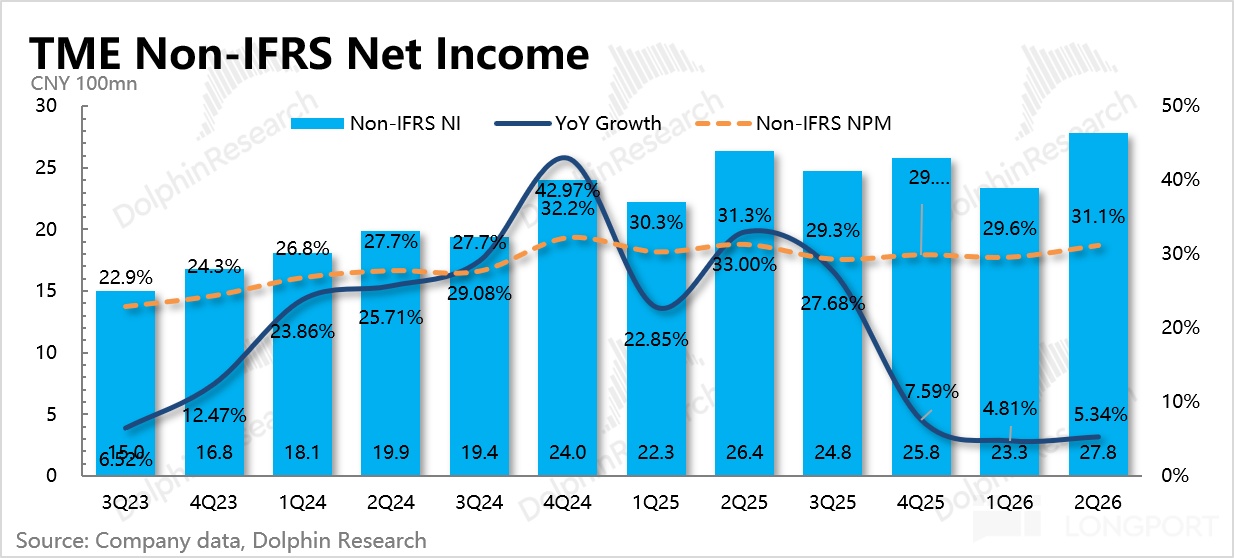
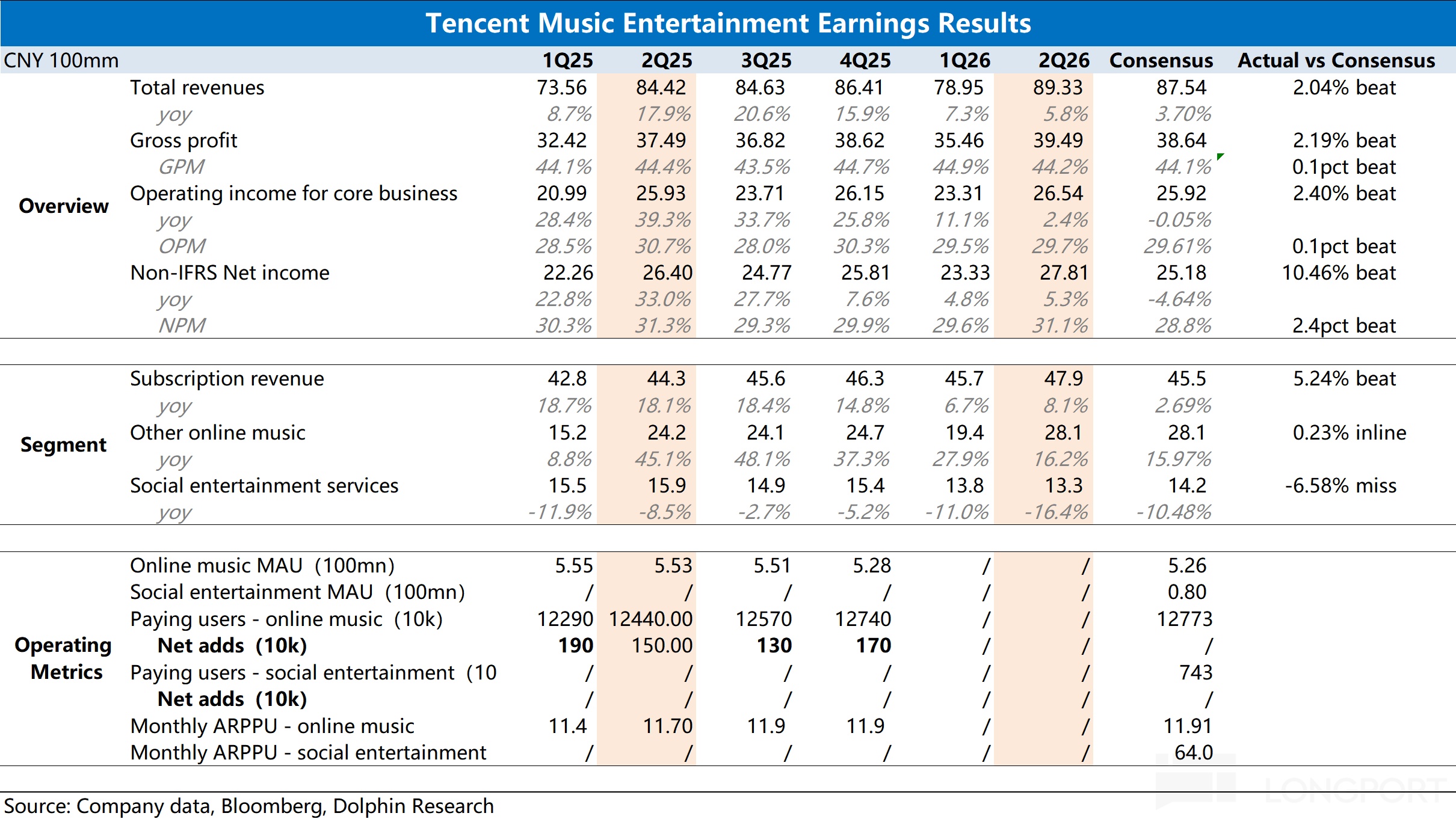
$Tencent Music.US Q2 results were not strong. The apparent beat was largely due to consolidating just over one month of Ximalaya, while Bloomberg consensus did not fully reflect this shift, as most houses still modeled a H2 consolidation at end-Q1 and only some updated in mid-Jul.
Excluding Ximalaya, Dolphin Research estimates Q2 tracked roughly in line with the guidance given at end-Q1. Core subscriptions likely underperformed, underscoring a company squeezed by competition at home and abroad and trying to push through.
The only consolation lies in shareholder returns. That was also the post-selloff catalyst Dolphin Research flagged last quarter, and Q2 buybacks were generous. Management had planned to spend just over $900 mn over a year, but actually deployed about $400 mn in a single quarter.
In detail:
1. User ecosystem: no turn yet
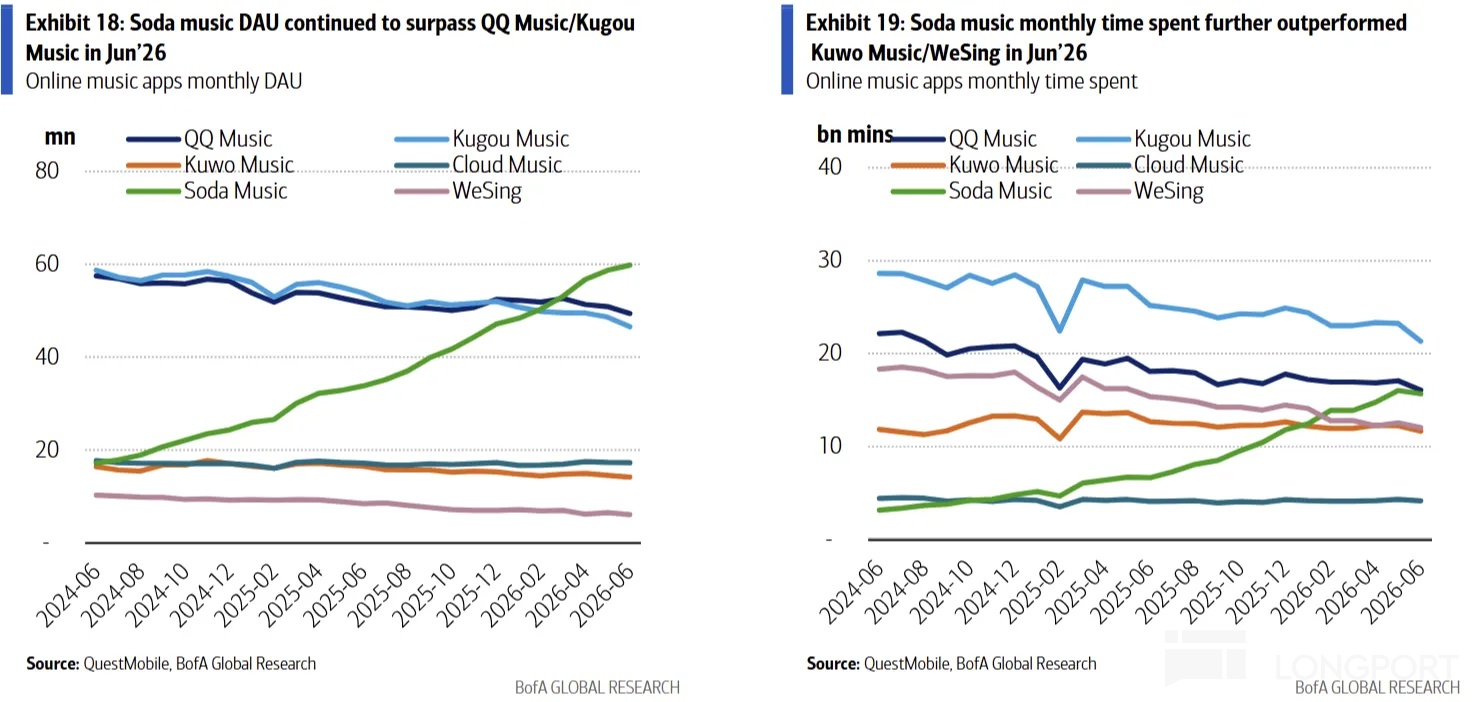
The company stopped disclosing user metrics this year. Based on QuestMobile trends and a back-solve from subscription revenue, we can sketch Q1 dynamics for reference only.
MAU fell QoQ again in Q2, with Kugou Music seeing the steepest drop given its overlap with Qishui Music’s core users. The initial consolidation of Ximalaya has not yet slowed the erosion, and the platform still needs deeper integration and product innovation.
2. Subscription growth driven by long-form audio
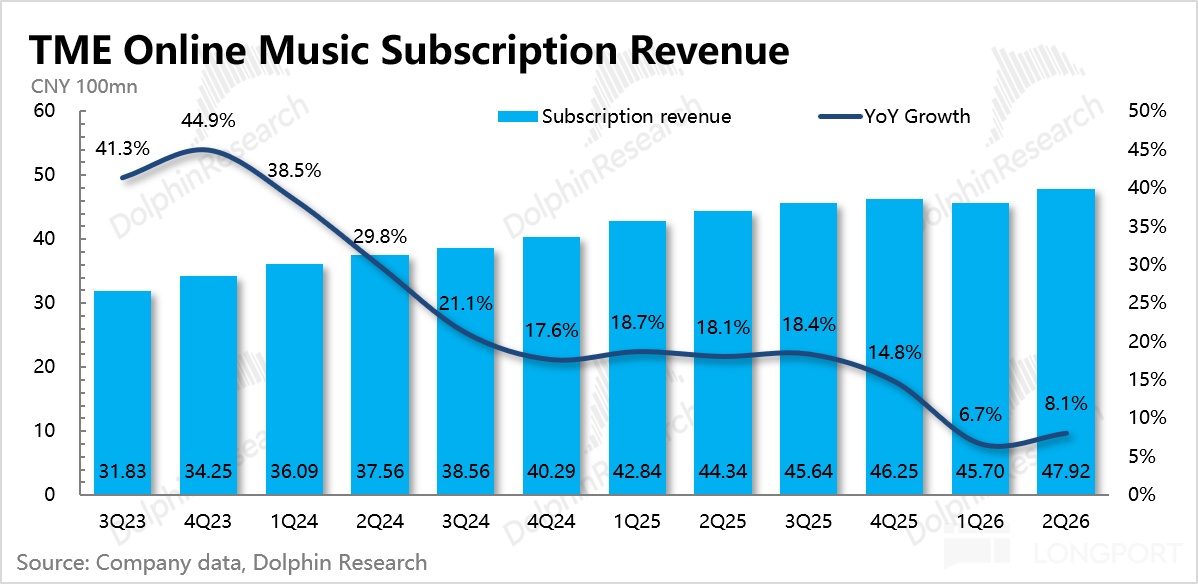
Subscription revenue rose 8% in Q2. If we strip out RMB 400 mn from Ximalaya and assume 65% is subscription, the legacy music subscription revenue grew only 2%.
Assuming ARPPU fell 2% YoY to RMB 11.5, net adds were about 0.6 mn, which is near a historical low.
3. Concerts remain hot
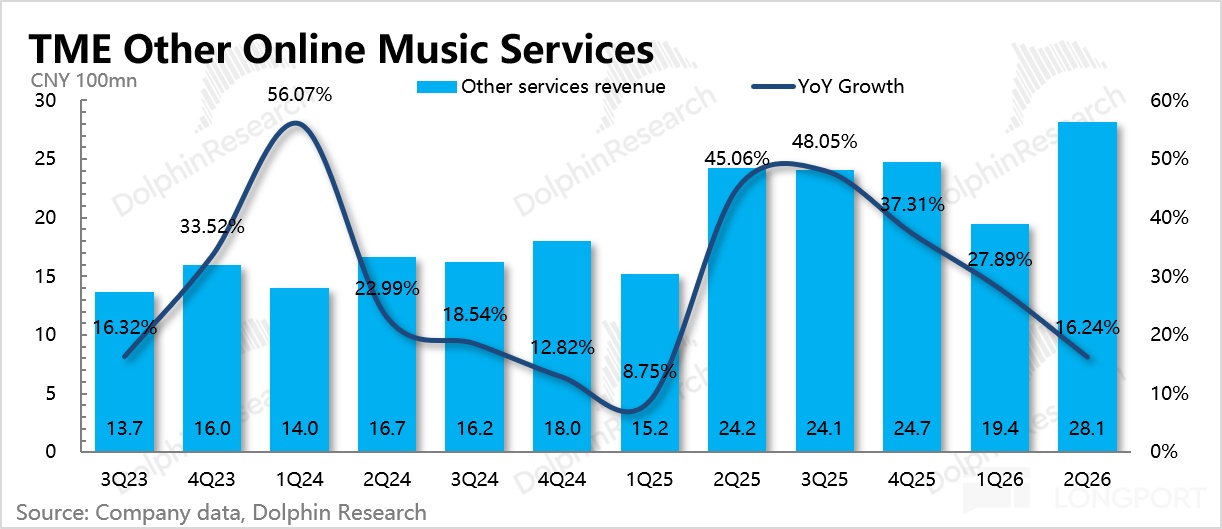
Other music revenue (ads, offline concerts, digital albums, etc.) grew 16% and moderated on a higher base. Ads likely faced macro headwinds and pressure from Qishui Music.
Offline concerts were the main driver, reflecting new business expansion enabled by Tencent Music’s value-chain positioning.
4. Social entertainment struggling to find a floor
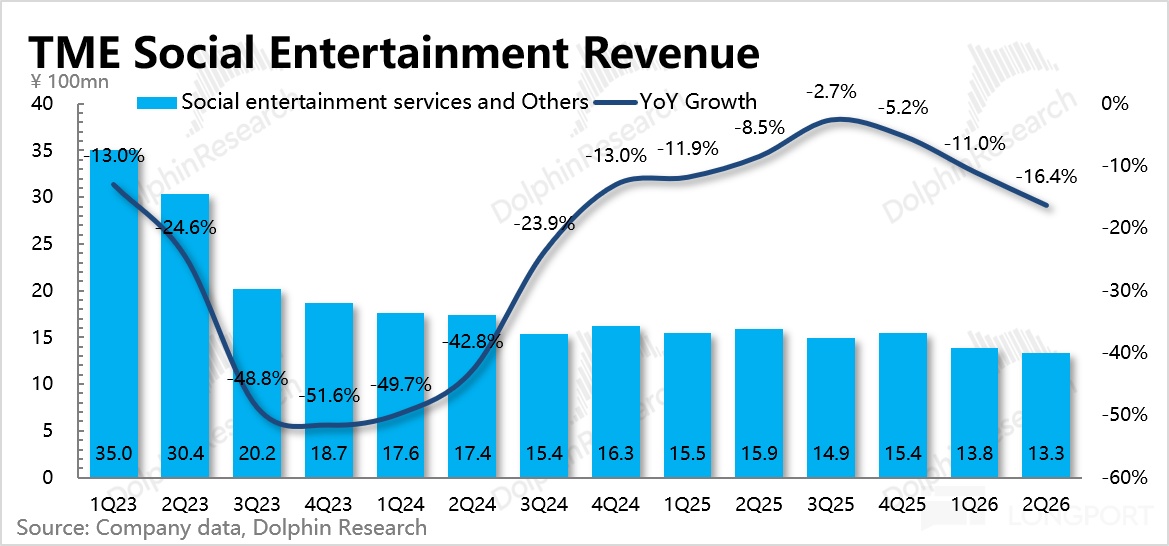
Live streaming and karaoke revenue fell 16% YoY. Even after the cleanup period in live streaming, there is still no clear bottoming, and competition from peer products likely weighed further.
5. Slight improvement in operating efficiency
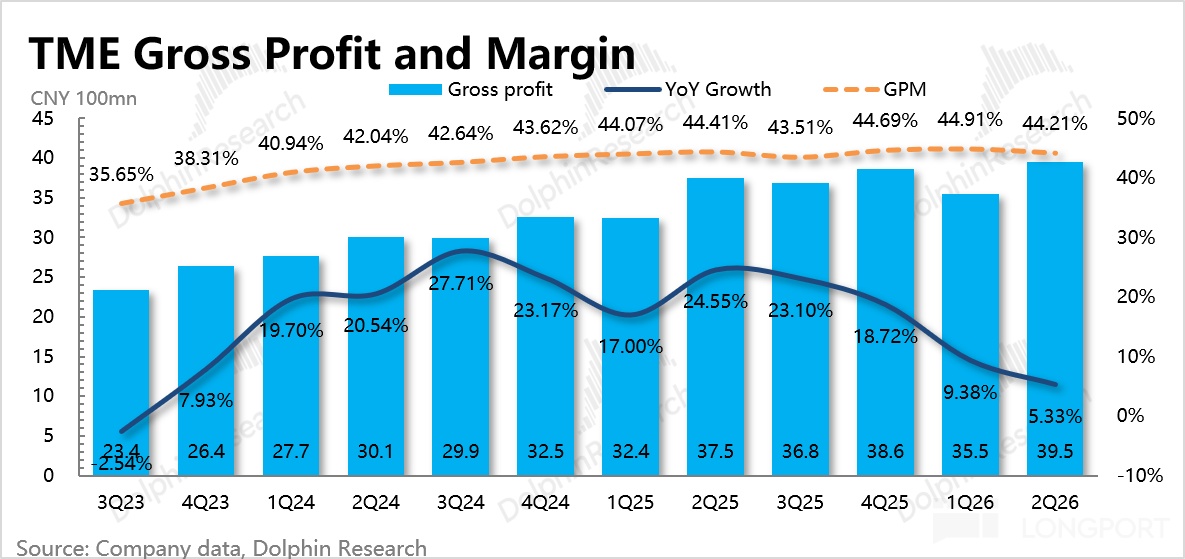
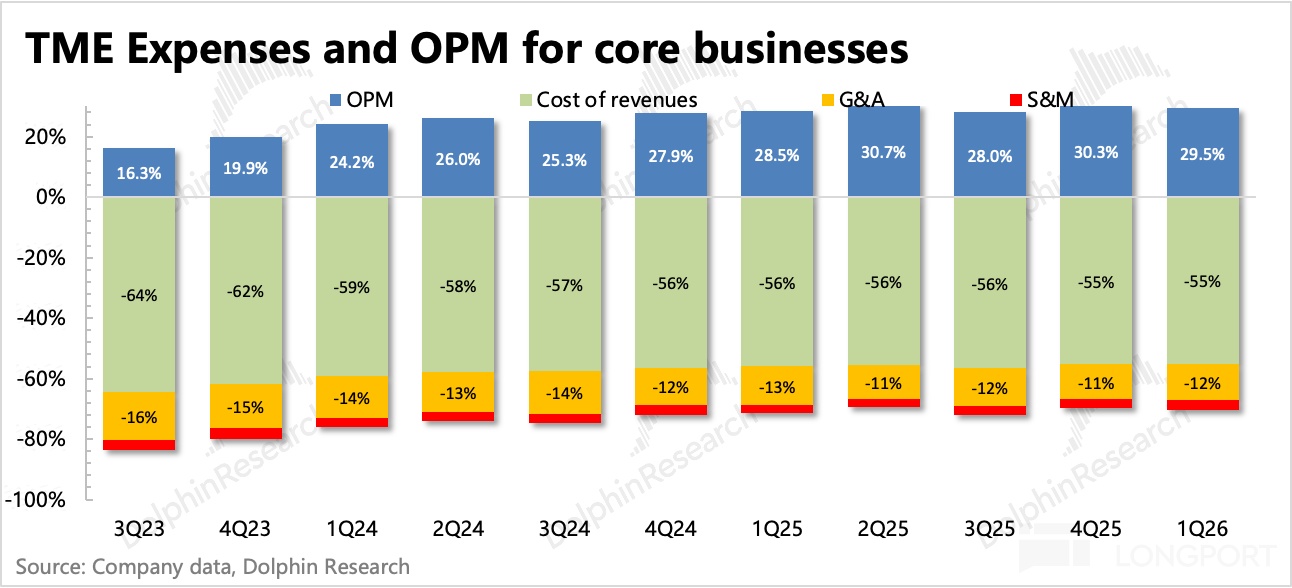
GPM edged down in Q2, reflecting the relatively higher cost of offline concerts. However, consolidating Ximalaya helped optimize overall content costs.
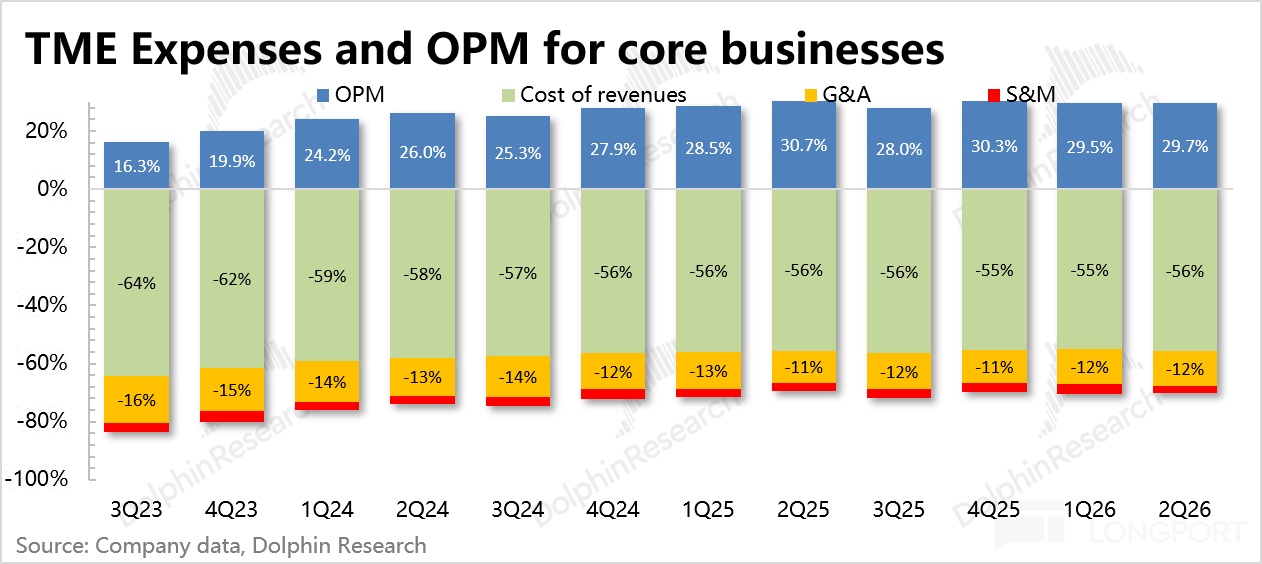
OPM improved slightly. While Ximalaya consolidation added amortization of intangibles, sales expense growth eased, partly because Q1 had already stepped up spend (+36% YoY), and long-form audio integration itself aided user acquisition.
6. Detailed financials
Dolphin Research View
Although Ximalaya contributed just over a month, it still masked some issues in the legacy music business. Conversely, expanding long-form audio strengthens moats and helps slow competitive erosion.
Overall, Q2 shows sustained competitive pressure, and Tencent Music is leaning on two self-help levers: offline entertainment expansion via the value chain and M&A integration.
But a clear competitive inflection is not yet visible. TME and Ximalaya still need more innovation and optimization in platform functionality and content resources to deliver a 1+1>2 outcome on the user side.
Cost benefits from asset consolidation are already showing up, and further integration gains may emerge with help from Tencent Music’s industry footprint and the broader Tencent ecosystem.
From an investment standpoint, Dolphin Research’s view is unchanged.
Near term, TME’s floor looks relatively clear, underpinned by the basic value of its music and audio assets plus buybacks. Upside elasticity remains limited for now and hinges on whether integration can deliver 1+1>2, so the more prudent opportunity is an oversold rebound trade, i.e., expanding from ~8x P/E toward ~10x P/E.
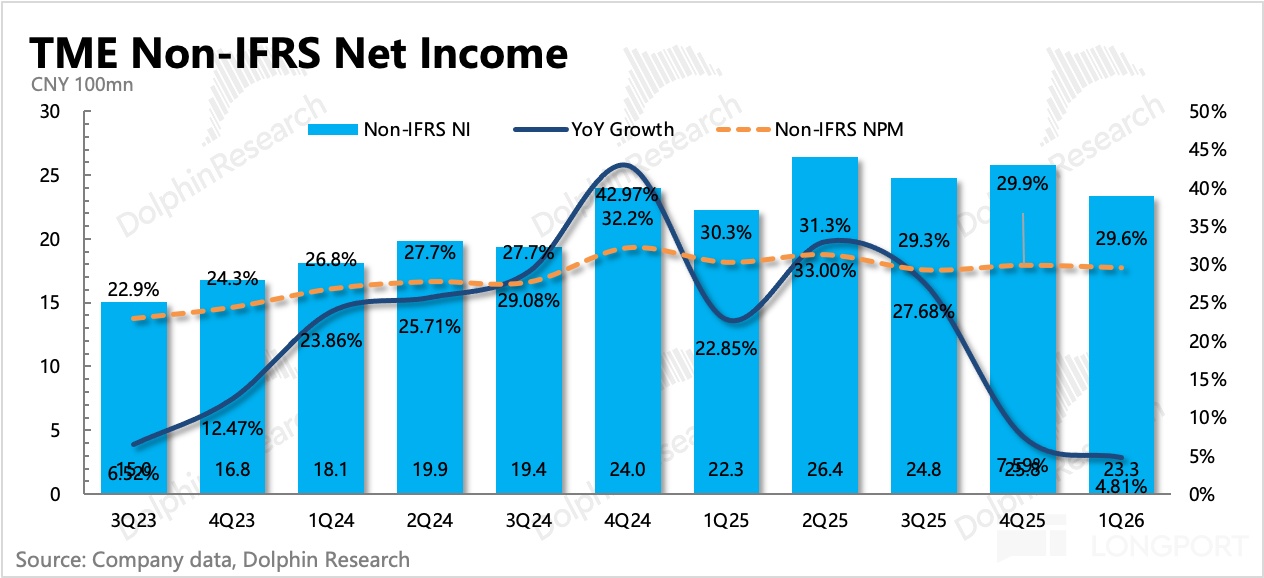
TME closed at $15.3 bn yesterday. On our 2026 Adj. profit of RMB 10.5 bn, P/E is ~10x, and with organic growth still in the high-single digits, we would not call this a clearly oversold valuation.
We see ‘floor value’ at ~8x P/E, or ~RMB 84 bn (~$12.4 bn). Against ~$900 mn in annual buybacks plus >$300 mn in dividends, total shareholder return of ~$1.2 bn implies a near-10% yield, which is attractive on a risk-reward basis.
<End>
Dolphin Research recent work on Tencent Music
Earnings season
May 12, 2026 call Trans: Tencent Music (Trans): competition remains intense; deep collaboration with Channels this year
May 12, 2026 earnings take: Consolidating Ximalaya: can Tencent Music win the defensive game?
Mar 27, 2026 call Trans: Tencent Music (Trans): agile against competition, focused on shareholder returns
Mar 27, 2026 earnings take: Tencent Music: Qishui’s aggressive push, are the easy days gone?
Risk disclosure and statement: Dolphin Research disclaimer and general disclosures
