


TrendForce expects the cost of iPhone 18 Pro to rise by nearly 40%, and Apple may actively narrow its profit margins to stabilize shipments
TrendForce expects that due to the increase in prices of components such as memory, the BOM cost of the iPhone 18 Pro 256GB version will increase by approximately 38% year-on-year. To maintain consumer purchasing willingness and market share, Apple may control the price increase by reducing gross margins and stabilize shipment volumes by referencing the MacBook strategy. In addition, Apple may adjust the pricing of older models to alleviate cost pressure, while the Android camp faces a more severe test of gross margins
According to the latest smartphone industry research by TrendForce, due to the rising prices of components led by memory chips, the overall cost of the iPhone 18 series to be released by Apple (AAPL.US) is expected to increase. Taking the BOM (Bill of Materials) cost of the 256GB version of this series as an example, the estimated year-on-year growth rate is about 38%, which will inevitably raise the retail price. To avoid affecting consumer purchasing willingness, Apple may control the price increase by lowering its gross margin in exchange for market share expansion.
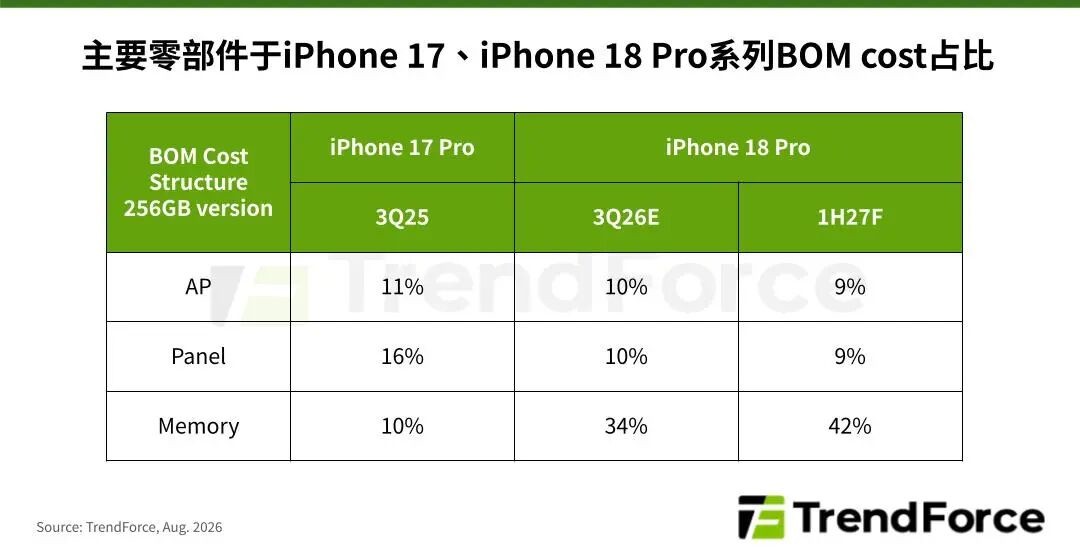
Analyzing the BOM costs of the last two generations of the iPhone Pro series 256GB, the proportion of memory has rapidly grown from about 10% a year ago to around 34% by the third quarter of 2026, and it is expected to exceed 40% by the first half of 2027, changing the previous dominance of the AP (application processor) and display. Affected by the soaring prices of memory, TrendForce estimates that the cost of the iPhone 18 Pro 256GB in the third quarter will be about 38% higher than that of new models in the same period of 2025; by 2027, due to the expected continued rise in memory prices, the cost increase of the iPhone 18 Pro 256GB may further expand.
TrendForce indicates that, referring to the recent pricing strategy of new MacBook products, Apple may lower the price adjustment range of the iPhone 18 Pro series by adjusting its gross margin to stabilize shipment volumes. Additionally, Apple may also reconsider the pricing mechanism for older models, and it is not ruled out that the prices of older models will be raised simultaneously after the new models are released to buffer the impact of rising memory prices.
Even Apple, which has shown excellent profitability, faces such pressure, and the Android camp will experience even more significant gross margin challenges. If they want to reflect costs while maintaining basic operations and avoiding negative margins, the price increase for their devices will be more pronounced than that of the iPhone. In the mid-to-low-end market, due to limited gross margin buffer space, brands can only significantly adjust prices or limit/suspend product lines that have fallen into negative margins, facing a cumulative increase in memory prices of five to seven times since early 2025. TrendForce estimates that due to the sustained rise in memory costs, the global smartphone production scale will continue to face downward pressure from the second half of 2026 to 2027
