


Computing Power Deployment, Software Intelligence Upgrades, "First Model Application Scenarios" …… Beijing Offers Subsidies Up to RMB 30 Million
On July 23, Beijing released the "Several Measures on Accelerating the Development Led by AI Agents," offering subsidies of up to RMB 30 million. Beijing's information software industry revenue leads the nation, with leading model technologies such as Z.AI's GLM-5.2 and Moonshot AI's Kimi K3. Beijing will launch the "Model-Data Resonance" special initiative, focusing on deploying 140 high-quality datasets across four major industries to solidify the data foundation for AI agent implementation and promote bidirectional empowerment between technology and industrial scenarios
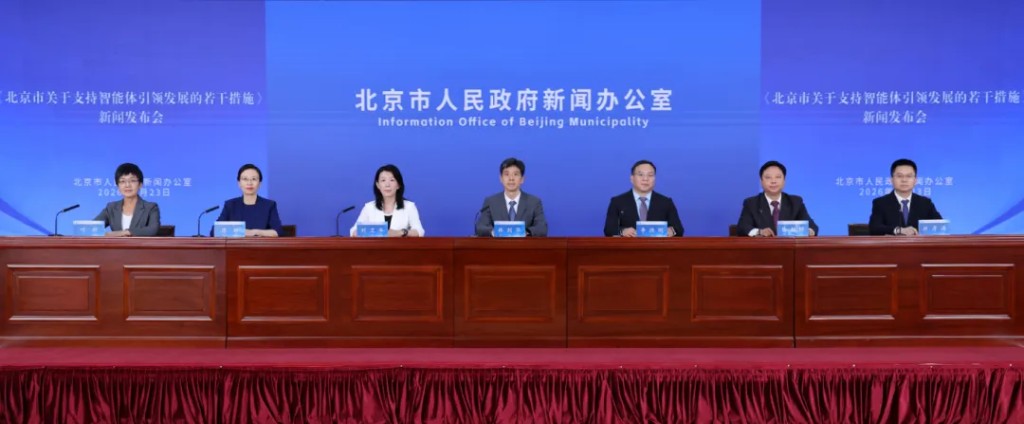
On July 23, the Information Office of the Beijing Municipal People's Government held a press conference on the "Several Measures of Beijing Municipality on Accelerating the Development Led by AI Agents." Relevant officials from the Municipal Development and Reform Commission, the Municipal Cyberspace Administration, the Municipal Science and Technology Commission (Zhongguancun Administrative Committee), the Municipal Bureau of Economy and Information Technology, Haidian District, and the Beijing Economic-Technological Development Area Administrative Committee attended the conference to introduce relevant details and answer questions from reporters. The session was moderated by Ye Chang, Director of the External News Division of the Municipal Party Committee Publicity Department.
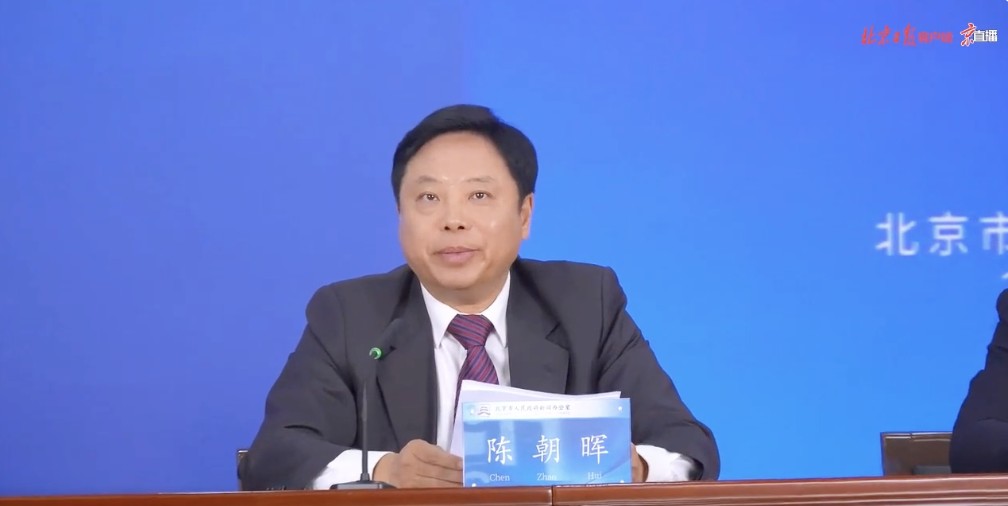
Chen Chaohui, Deputy Director of the Beijing Municipal Bureau of Economy and Information Technology
Currently, artificial intelligence is transitioning from the stage of "models being usable" to "tasks being deliverable." As the latest form of AI technological evolution, AI agents are profoundly reshaping the product forms and service models of the information software industry. As a global hub for AI innovation and the first "China Software Famous City" in the country, Beijing boasts a solid industrial foundation and abundant innovative momentum. In 2025, the total revenue of Beijing's information software industry exceeded RMB 3.8 trillion, with value-added accounting for 23.4% of the city's GDP. From January to May, the city's information software industry revenue reached RMB 1524.03 billion, a year-on-year increase of 9.1%, with its industrial scale continuing to lead the nation.
Since the implementation of last year's "Action Plan of Beijing Municipality on Supporting Information Software Enterprises to Strengthen AI Application Service Capabilities" (also known as the "Eight Soft Articles on AI"), technological breakthroughs among the city's AI enterprises have emerged frequently, core capabilities have remained leading, and the AI application service capabilities of information software enterprises have steadily improved. Z.AI released its new generation flagship base model, GLM-5.2, which ranked first among globally available models in the Code Arena leaderboard, involving blind testing by millions of users worldwide; Moonshot AI's newly released next-generation model, Kimi K3, has a parameter scale of 2.8 trillion, making it the largest open-source model globally by parameter count. We continue to promote bidirectional empowerment between model technology and industrial scenarios, launching the "Model-Data Resonance" special initiative. The first batch focuses on four key industries: software, pharmaceuticals, cybersecurity, and information communications. We have established 10 municipal industrial consortia and deployed 140 high-quality industry-specific datasets to address the implementation needs of hundreds of industry models and specialized AI agents, continuously solidifying the data foundation for the large-scale deployment of AI agents. Next, our bureau will accelerate the promotion of AI agent-led development in the following areas.
Solidifying Foundations: Building Common Infrastructure for AI Agents
Currently, the three-layer architecture of “Model + Computing Power + AI Agent Framework” is evolving rapidly and synergistically. Under the guidance of our bureau, the Beijing Tongminghu Information Technology Application Innovation Center, together with multiple industrial partners, has created "Lingji OS," the first open-source and open AI agent operating system in China. This fundamentally reshapes the new paradigm of AI agent software, addressing the four major pain points facing the current AI agent industry: “connectivity issues, execution failures, management difficulties, and control instability.” We have built the "Yangmei" Industrial AI Agent Development Platform, developed over 1,200 AI agents, and aggregated more than 5 billion industry data records, covering key sectors such as healthcare, construction, and automotive.
Empowering Industries: Promoting Deep Integration of AI Agents with the Information Software Industry
We encourage information software enterprises to reconstruct product architectures and service models using AI agent technology, providing rewards for software intelligence upgrades. We support the integration of AI agents into EDA tools for integrated circuit design and flexible display production lines, reconstructing the R&D and production processes of the electronic information manufacturing industry with AI agents. In terms of smart terminals, we support the deep embedding of AI agent capabilities into terminal products such as AI smartphones, AI glasses, other AI wearable devices, intelligent robots, and smart cars, promoting the synergistic development of the five-in-one "Chip-Model-Terminal-Cloud-Application" ecosystem, and creating a batch of benchmark "Beijing Smart Manufacturing" AI agent terminal products. We aim to create benchmark scenarios in key areas, encouraging AI agent service providers, software enterprises, and industry users to develop collaboratively, and provide reward support for the first-time implementation of AI agent solutions with demonstrative and leading roles.
Cultivating New Business Formats: Supporting OPC Innovation and Entrepreneurship and Token Economy Development
We are constructing a layered and categorized professional service system, building a number of public service platforms, and promoting the establishment of OPC full-lifecycle service stations. We are accelerating the planning of key links in the entire Token economy industrial chain, cultivating new business models such as Token-as-a-Service and Agent-as-a-Service. New AI agent products and services that meet certain criteria will be included in the scope of support for SME service vouchers, helping small and medium-sized enterprises and innovative entities reduce costs and increase efficiency.
Open Source and Openness: Building an Autonomous and Controllable Industrial Ecosystem
We are accelerating the construction of the "One Institute, One Center" initiative. In collaboration with the Open Source Chip Research Institute and the Beijing Tongminghu Information Technology Application Innovation Center, we are speeding up the creation of an “RISC-V + AI OS” open-source ecosystem. This involves promoting chip adaptation for the RISC-V architecture and optimizing AI agent development frameworks, constructing a full-stack autonomous technology system from chip instruction sets to operating systems and finally to AI agent applications. We support platform enterprises and open-source communities in collaborating with upstream and downstream partners to build open-source platforms and technical communities covering AI agents, smart terminals, and embodied intelligence. We also support innovative entities in open-sourcing core code such as autonomous interconnection protocols and AI agent development frameworks.
In terms of policy support intensity, we will provide support of up to RMB 30 million for eligible computing power deployment, software intelligence technical upgrades, and "First Model Application Scenarios." Next, our bureau will work with relevant departments to ensure the effective implementation of these policies. We sincerely look forward to the active participation of all sectors of society to jointly promote the innovative and leading development of Beijing's AI agent industry.
Q&A with Reporters
Last year, the Municipal Bureau of Economy and Information Technology released the "Action Plan of Beijing Municipality on Supporting Information Software Enterprises to Strengthen AI Application Service Capabilities (2025)" (the "Eight Soft Articles on AI" policy). This year, you participated in issuing the "Several Measures on AI Agents." What is the connection between these two policies?
Chen Chaohui, Deputy Director of the Beijing Municipal Bureau of Economy and Information Technology:
The "Eight Soft Articles" released last year mainly addressed the issue of "how enterprises can effectively use AI," while the current "Several Measures on AI Agents" primarily addresses "how to build a robust AI agent ecosystem for the industry." The two policies form a tiered connection, collectively constituting Beijing's complete policy chain from "AI empowering software" to "AI agents reconstructing industries."
In terms of similarities, both policies adhere to the principle of "setting benchmarks and creating demonstrations," positioning information software enterprises as the main channel and primary service providers for AI application. The level of financial support is also consistent. The upgrades are mainly reflected in three aspects:
First, the policy positioning has upgraded from "AI empowering software" to "AI agents reconstructing software." The core logic of the "Eight Soft Articles" was to support information software enterprises in applying AI to improve their own R&D efficiency and product intelligence levels, which is essentially an "AI + Software" empowerment logic. In contrast, the "Several Measures on AI Agents" explicitly proposes "encouraging innovative entities to reconstruct underlying architectures and interaction paradigms based on AI agents," representing a paradigm shift starting from the software's underlying architecture, moving software products from being "empowered by AI" to being "reconstructed by AI agents."
Second, the scope of support has expanded from "software enterprises" to the "entire industrial chain." The support targets of the "Several Measures on AI Agents" cover various innovative entities such as base model enterprises, chip companies, smart terminal manufacturers, open-source communities, and OPCs, forming a full-chain policy layout of "Model – Computing Power – Framework – Application – Terminal."
Third, the policy system has upgraded from "point breakthroughs" to "systemic reconstruction." The "Several Measures on AI Agents" is a systematic measure that introduces new concepts for the first time, such as AI agent infrastructure foundations, AI Agent Interconnection Protocol (AIP), Token Economy, and OPC innovation and entrepreneurship models. It forms a policy system covering the entire lifecycle of AI agents, ranging from technological innovation and infrastructure construction to application scenarios, new business format cultivation, security governance, and factor guarantees.
Risk Warning and Disclaimer
The market carries risks, and investment requires caution. This article does not constitute personal investment advice, nor does it take into account the specific investment objectives, financial status, or needs of individual users. Users should consider whether any opinions, views, or conclusions in this article align with their specific circumstances. Investors bear full responsibility for their investment decisions.
