


Tesla's automotive business weakens, free cash flow turns negative, Musk accelerates layout in AI and humanoid robots
Tesla's net profit in the second quarter fell 17% year-on-year to $1.2 billion, which was below expectations. Although revenue increased due to record sales, the automotive business's profit margin narrowed due to significant price cuts and a sharp decline in carbon credit revenue, resulting in negative free cash flow. The stock price dropped 4% in after-hours trading. In the face of operational pressure, Musk is accelerating the company's strategic transformation, focusing on the fields of autonomous taxi services and AI humanoid robots
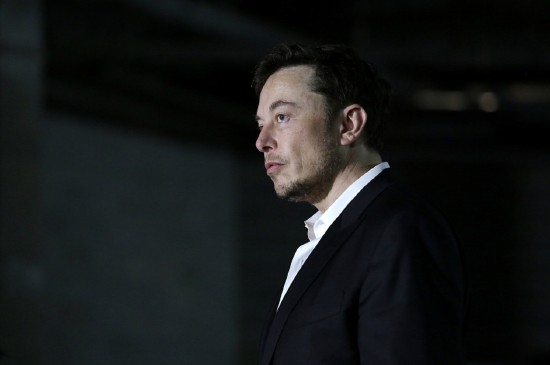
Tesla, the car company led by Elon Musk, has significantly reduced prices to boost electric vehicle sales, coupled with a sharp decline in revenue from selling carbon emission regulatory credits. As a result, the net profit for the second quarter fell short of expectations and unexpectedly declined.
Tesla, headquartered in Texas, announced its financial results on Wednesday: for the three months ending in June, adjusted net profit fell 17% year-on-year to $1.2 billion, far below Wall Street's consensus expectation of $1.9 billion.
Although the number of new vehicle deliveries reached a historic high of 480,126 units this quarter, driving revenue up 26% year-on-year to $28.2 billion, the revenue performance exceeded market expectations, but profits still saw an unexpected decline. After the earnings report was released, Tesla's stock price fell 4% in after-hours trading.
This performance highlights Tesla's current operational situation: after a significant decline in sales last year, the company relied on price cuts to regain customers; meanwhile, Musk's deep involvement in reducing federal spending during the Trump administration has also sparked consumer backlash, dragging down sales.
Tom Narayan, an analyst at Royal Bank of Canada Capital Markets, stated that the continuous narrowing of profit margins in Tesla's automotive business is enough to prove that the significant increase in deliveries this quarter was largely achieved through price cuts.
Excluding carbon credit revenue, the gross margin for the automotive business was only 16.3%, below the average analyst expectation of 18.7% as reported by market data firm Visible Alpha; the company's overall operating margin plummeted from 4.1% in the same period last year to 1.4%.
The recovery in sales momentum is most evident in Europe, where high oil prices have also encouraged some consumers to switch to electric vehicles.
The U.S. market, on the other hand, is facing difficulties: the Trump administration cut the $7,500 electric vehicle tax credit and abolished several incentive policies supporting electric vehicle production. Tesla's revenue from selling carbon credits, which helped other automakers offset compliance costs, plummeted from $439 million in the same period last year to $146 million.
The automotive business still contributes over 70% of Tesla's revenue. Faced with pressure on the overall vehicle segment, Musk is accelerating the company's strategic transformation: shifting from electric vehicle business to autonomous taxi and AI humanoid robot sectors.
To ramp up investment in artificial intelligence and robotics, Tesla's capital expenditures this quarter more than doubled year-on-year, and the massive investment also led to the company's first quarterly negative free cash flow in two years, with a cash shortfall of $1.1 billion.
Musk stated during the earnings call on Wednesday that the company will still invest over $25 billion in 2026 as planned, nearly three times last year's capital expenditure of $8.5 billion.
The world's richest man described this large-scale investment plan as: "Perhaps the fastest industrial expansion of American companies since World War II." Musk also cited data showing that global large technology companies plan to invest over $725 billion this year to build AI infrastructure, supporting the rationale for Tesla's transformation strategy. Tesla's capital expenditure this quarter was $5.79 billion, a staggering increase of 142% year-on-year.
The net profit calculated according to Generally Accepted Accounting Principles (GAAP) was $1.1 billion, a decrease of 5% year-on-year; this figure includes stock-based compensation expenses, as well as the value fluctuations of cryptocurrencies held by Tesla and investments related to SpaceX.
Tesla's Chief Financial Officer Vaibhav Taneja stated that the company's capital expenditures will continue to grow over the next two to three years. He added that, in addition to its own cash, Tesla has been approved for a total credit line of $30 billion, which can be drawn upon at any time to accelerate investments in related fields.
Tesla is simultaneously advancing multiple heavy asset investments: jointly building the Terafab semiconductor research and development factory with SpaceX, procuring high-end chips for the Cortex 2 supercomputer cluster, and laying out supporting infrastructure for the power grid.
In February of this year, Tesla's fully autonomous taxi, Cybercab, officially went into production; at the same time, the company launched small-scale autonomous taxi operation services in Texas and Florida. Musk admitted that the autonomous taxi business will not generate substantial revenue until at least next year
