


Strategy Discloses Sale of 3,588 Bitcoins; Intraday Stock Price Drops 5%
Strategy sold 3,588 bitcoins (approximately $216 million) to pay preferred dividends. This move breaks its "buy-only" commitment, signaling that bitcoin is shifting from a strategic reserve to a liquidity management tool. The company's annual dividend expenditure has reached $1.5 billion, putting pressure on its capital chain
Strategy is rewriting its business model. The world's largest corporate holder of bitcoin disclosed on July 6 that it sold 3,588 bitcoins between June 29 and July 5, raising approximately $216 million to pay dividends on its preferred shares. This is not only the largest bitcoin sale in the company's history but also its third sale since launching its bitcoin strategy in 2020.
This sale sends an important signal: bitcoin is gradually transforming from Strategy's "buy-only" strategic reserve into an asset that can be used to manage liquidity.
According to Bloomberg, the company just expanded its authorization last week, allowing it to sell bitcoin to supplement liquidity when new equity financing becomes less attractive. This adjustment comes as both bitcoin and Strategy's stock price are under pressure. Over the past year, MSTR has cumulatively fallen by about 75%, while bitcoin has retreated more than 45% from its historical highs.
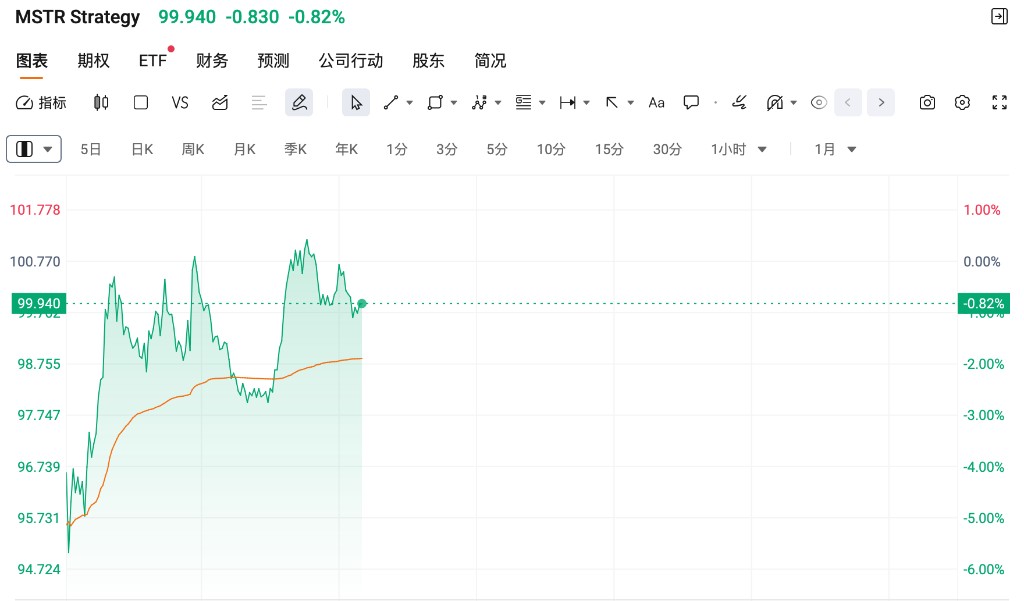
Following the announcement, Strategy's stock price dropped more than 5% intraday, and bitcoin fell to around $61,800, below the company's average holding cost of approximately $75,700.
"Never Sell Bitcoin" Policy Begins to Loosen
Strategy had long regarded "never selling bitcoin" as the foundation of its business model, but this commitment has shown clear signs of loosening.
In late May this year, the company broke with precedent for the first time by selling 32 bitcoins, raising about $2.5 million to pay preferred dividends. At the time, the company emphasized that this move was solely to fulfill its commitments to preferred shareholders and did not represent a strategic shift.
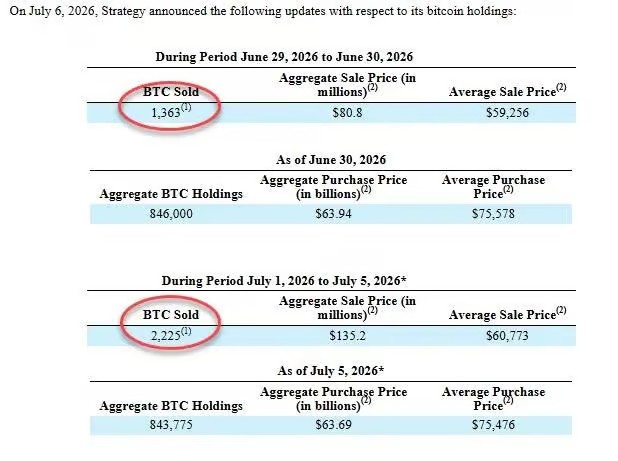
However, the scale of the latest sale has expanded significantly to 3,588 coins, about 100 times the volume sold in May. According to the company's disclosure, 1,363 coins were sold at an average price of about $59,300, and the remaining 2,225 coins were sold at about $60,800. This indicates that selling bitcoin is no longer a one-off symbolic operation but is gradually becoming integrated into the company's regular financing system.
$1.5 Billion Annual Dividend Burden; Hundred-Fold Sale Exposes Capital Chain Strain
The proceeds from this sale will be specifically used to pay the second-quarter dividends for four preferred securities—STRF, STRE, STRK, and STRD—as well as the June monthly dividend for STRC. Analyst Zach Pandl pointed out that Strategy's annual preferred dividend expenditure alone amounts to approximately $1.5 billion, which its software business cash flow is far from covering. When cash reserves are insufficient, the company can only continue to raise funds or sell bitcoin.
As of July 5, Strategy held 843,775 bitcoins, with cash reserves of $2.55 billion and an average holding cost of about $75,700. Although the company quickly bought back 1,550 bitcoins after the first sale in late May, and completed large-scale purchases of $2.54 billion and $2 billion in April and May respectively, this sale does not mean a halt to accumulation but rather a flexible adjustment within the system.
Strategy's operational logic is becoming clearer: continue buying coins when financing is smooth, and sell small amounts of bitcoin to pay dividends when financing tightens, thereby maintaining a closed loop in its capital operation system. According to Bloomberg, the company recognized an $8.32 billion loss on digital assets in the second quarter, while bitcoin prices fell 14% during the same period, further exacerbating the pressure on its cash flow management.
