


Aluminum prices hit a four-year high! Middle East conflict disrupts supply, analysts target the $4,000 mark
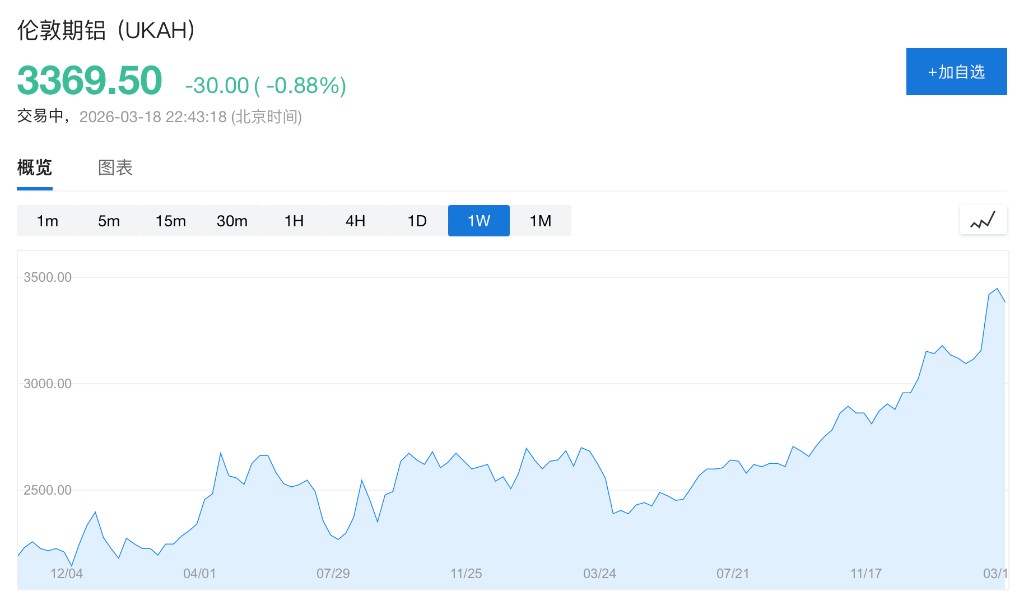
The Middle East conflict has led to the effective closure of the Strait of Hormuz, severely impacting global aluminum supply. Aluminum prices on the London Metal Exchange have risen by approximately 8% since February 28, approaching a four-year high of nearly $3,370 per ton. The world's largest aluminum smelter, Bahrain Aluminum, has reduced production by 19%, exacerbating supply concerns. CRU Group warns that if supply disruptions persist, aluminum prices could rise to $4,000. However, there is a significant divergence in the market regarding the upward trend, with short interest increasing by 15,000 contracts, indicating that some investors expect a price decline
The Middle East conflict is reshaping the global aluminum market landscape. The effective closure of the Strait of Hormuz has caused severe supply disruptions, driving aluminum prices to become the strongest performer among industrial metals in this round, currently nearing a four-year high.
Since the outbreak of the conflict on February 28, the three-month aluminum price on the London Metal Exchange (LME) has surged by as much as 10%. As of Wednesday afternoon in London, it closed at approximately $3,370 per ton, an increase of about 8% compared to before the conflict. The tension on the supply side has further intensified due to the announcement of production cuts by Alba, the world's largest aluminum smelter, leading to rising concerns about global supply shortages.
The metal industry research firm CRU Group warned that if inventory levels continue to decline and supply disruptions in the Middle East persist, aluminum prices are expected to rise further to $4,000 per ton.
Supply Side Faces Dual Impact
The effective closure of the Strait of Hormuz is the core driving factor behind the recent rise in aluminum prices. Although aluminum is the most abundant metal in the Earth's crust, it is indispensable in key areas such as electronics, transportation, construction, photovoltaics, and packaging. Any disruption on the supply side will quickly translate into price increases.
The production cut decision by Alba has further amplified the supply shock. The company has an annual production capacity of about 1.6 million tons, with this production cut amounting to 19%, translating to an annual production gap of about 300,000 tons, significantly heightening market concerns about aluminum supply.
Guillaume Osouf, chief analyst at CRU Group, pointed out in a recent report that if it were not for the overall weak global aluminum demand, the current increase in LME aluminum prices would have been more significant. He also warned: “If the conflict continues, it is highly likely to fundamentally change our market outlook for the remainder of the year, not only due to the lasting impact on global supply but also potentially negatively affecting the demand side.”
Limited Institutional Participation, Short Sellers Quietly Increasing Positions
Despite the significant rise in aluminum prices, the market generally believes it is difficult to replicate the retail investment frenzy seen in silver or copper. Reports indicate that an analyst expressed “surprise” at retail funds' involvement in this highly industrial commodity.
Institutional participation is also limited. Osouf revealed to CNBC that since the outbreak of the conflict, the scale of fund long positions has only slightly contracted compared to the end of January. In contrast, short positions have been more active—short positions have increased by about 15,000 contracts. “This indicates that a considerable portion of investors expects prices to retreat from current levels,” he added.
This position structure reflects a clear divergence in the market regarding the sustained upward trend of aluminum prices. The duration of the supply disruptions will become an important variable in determining the future market direction
