


Li Auto Conference Call: New L9 Breakthrough, Pure Electric Climbing, 10 Billion R&D Investment, This Year is a Key Year for Evolving into an "Embodied Intelligence" Company

In 2026, the new generation L9 flagship model will be launched, with the ramp-up of pure electric models as the core driving force, while increasing investment in AI technology, aiming for a year-on-year sales growth of 20%. The company will officially launch the new L9 series in the second quarter. Li Xiang pointed out that 2026 is a key year for Li Auto to evolve into an "embodied intelligent enterprise." The company is accelerating its strategic transition from an intelligent electric vehicle manufacturer to an artificial intelligence enterprise through organizational restructuring and core technology self-research
Li Auto is responding to the intensified competition in the new energy vehicle market through organizational transformation, product upgrades, and an AI strategic shift. However, the short-term financial pressure has yet to be reversed.
Li Auto's revenue in the fourth quarter of 2025 saw a significant year-on-year decline, and its profitability narrowed considerably compared to the same period last year, as the company is undergoing a deep strategic adjustment. Management stated during the earnings call that the core drivers for 2026 will be the launch of the new generation L9 flagship model and the ramp-up of pure electric models, while also increasing investment in AI technology, aiming for a 20% year-on-year increase in annual sales.
According to Li Auto's financial report, total revenue for the fourth quarter was RMB 28.8 billion, a 35% year-on-year decrease, with an operating loss of RMB 443 million, compared to an operating profit of RMB 3.7 billion in the same period last year. Although there was a quarter-on-quarter improvement, the overall profitability has significantly declined compared to 2024, reflecting multiple pressures such as model structure adjustments and the impact of L6 new car deliveries on average prices.
In terms of business outlook, the company expects first-quarter 2026 deliveries to be between 85,000 and 90,000 units, with total quarterly revenue ranging from RMB 20.4 billion to RMB 21.6 billion, below previous market expectations. Meanwhile, the company announced that it will officially launch the new L9 series in the second quarter, equipped with the self-developed M100 chip and a fully controlled chassis, which is seen as a key battle to regain market share in the high-end SUV segment.
It is noteworthy that Li Auto continues to increase its investment in the AI field. In 2025, total R&D expenditure reached RMB 11.3 billion, with about 50% allocated to AI-related projects, covering self-developed chips, computing infrastructure, and autonomous driving systems. CFO Li Tie stated that R&D expenses are expected to remain around RMB 12 billion in 2026, with AI investment accounting for about 50%. He emphasized that the company does not view automotive and AI as separate businesses, and all R&D investments are monetized through existing business models.
Li Xiang further pointed out that 2026 is a crucial year for Li Auto to evolve into a "embodied intelligent enterprise." The company is accelerating its strategic transition from an intelligent electric vehicle manufacturer to an artificial intelligence enterprise through organizational restructuring and core technology self-development.
Fourth Quarter Revenue Recovers Quarter-on-Quarter, but Year-on-Year Pressure is Significant
Li Auto's total revenue in the fourth quarter was RMB 28.8 billion, a 5.2% increase from the previous quarter, but a year-on-year decline of 35%, mainly due to a drop in vehicle deliveries. Among them, vehicle sales revenue was RMB 27.3 billion, a 36.1% year-on-year decrease.
In terms of gross margin, the overall gross margin for the fourth quarter was 17.8%, recovering from 16.3% in the previous quarter, but still lower than 20.3% in the same period last year. The vehicle gross margin was 16.8%, compared to 19.7% in the same period last year. The quarter-on-quarter improvement was partly due to the non-recurrence of the Li MEGA recall-related expenses accrued in the previous quarter, but the launch of Li L6 deliveries has lowered the overall average price In terms of operating expenses, research and development expenditures amounted to 3 billion yuan, a year-on-year increase of 25.3%, mainly used for AI-related projects and product line expansion; sales and administrative expenses were 2.6 billion yuan, a year-on-year decrease of 14%, with reduced employee compensation being the main factor.
Regarding net profit, the net profit for the fourth quarter was only 2.02 million yuan, significantly narrowing from 3.5 billion yuan in the same period last year, with a diluted earnings per ADS of 0.1 yuan. Operating cash flow was 3.5 billion yuan, and free cash flow was 2.5 billion yuan, both significantly down from the same period last year. As of the end of 2025, the total number of employees in the company was 30,728.
All-New L9: Technological Reconstruction, Aiming for High-End Flagship
In the fourth quarter earnings call of Li Auto, the company's founder, chairman, and CEO Li Xiang elaborated on the technological positioning of the all-new L9 series, which will be launched in the second quarter of 2026. This model is defined as an "embodied AI robot," with its core breakthrough being a fundamental reconstruction of the intelligent driving technology paradigm, achieving a comprehensive upgrade across three dimensions: perception, decision-making, and execution.
At the decision-making level, Li Auto is shifting from the traditional path of video-based imitation of human driving to a VLA (Vision-Language-Action) model. Li Xiang stated that the new system aims to enable AI to understand the laws of the physical world from a linguistic perspective and then make action decisions based on that, rather than merely replicating behavior through visual data. Coupled with the evolution of perception hardware from 2D cameras to 3D visual Transformers, the company claims this move will drive autonomous driving towards a true understanding of the physical world.
At the execution level, the all-new L9 will be equipped with the world's first mass-produced fully drive-by-wire chassis, integrating steer-by-wire, four-wheel steering, electronic mechanical braking, and an 800-volt fully independent active suspension system. This architecture allows the large model to directly output control commands, bypassing the traditional MCU (Microcontroller Unit) intermediary layer, compressing the end-to-end latency of sensor photon input to vehicle execution to about 200 to 300 milliseconds, significantly enhancing response speed.
As the flagship version, the L9 LiVOS, priced at 559,800 yuan, will be equipped with two self-developed M100 chips (5-nanometer process), achieving effective computing power six times that of the previous generation 4U solution. Chief Technology Officer Xie Yan added that the M100 not only represents a significant leap in performance but also has advantages in cost control: the material cost of a single chip is lower than external procurement, and by removing the XCU controller from the previous generation platform, each vehicle can save over 1,000 yuan.
Li Xiang emphasized that the competitiveness of the new generation L9 will be rooted in technological barriers, rather than the product definition capabilities that the previous generation relied on. "The success of the L9 will directly determine the market potential of the entire L series," he stated.
Progress of Pure Electric Models: L6 Production Bottleneck Resolved, L8 Orders Rebound Driven by Reputation
Li Auto's pure electric vehicle business is reaching a critical turning point. Company President Ma Donghui stated at the earnings meeting that the supply chain bottleneck that previously plagued the delivery of the family five-seat pure electric SUV Li L6 has been fully resolved.
Among them, the short-term fluctuations in battery supply have calmed down after deepening cooperation with core suppliers. Currently, the L6 has entered a stable delivery phase, with an expected steady monthly sales volume of about 20,000 units, and plans to fully digest the existing order backlog within the next one to two months Management pointed out that the success of the L6 has effectively extended the brand influence of Li Auto from the range-extended market to the pure electric market.
Another pure electric model, the Li Auto L8, is also showing strong rebound momentum. Since its launch in July 2025, as users accumulate mileage, the actual experience of the L8 has boosted its reputation, with the net promoter score increasing by over 20% compared to the initial launch period. In the health study of new energy vehicle brands released by Langlu in the second half of 2025, the L8 topped the large SUV category. In terms of orders, the order volume of the L8 in early March increased by nearly 180% compared to January and grew by 33% compared to the same period in February, reflecting a clear trend of converting reputation into orders.
In terms of battery strategy, the company announced that starting in 2026, all Li Auto models will only be equipped with batteries from the "Li Auto proprietary brand" and CATL. This move marks a further deepening of the company's relationship with core suppliers, aiming to unify performance and quality standards from the source, enhancing supply chain stability and cost control capabilities.
Sales Network Restructuring: Closing Traditional Management Thinking, Activating Store Operation Vitality
In response to recent market rumors about "Li Auto closing 100 stores," company president Ma Donghui clearly denied this during the earnings conference call, stating that the related reports are untrue. He pointed out that routine optimization adjustments to a small number of inefficient stores are part of the company's normal operational management actions and not a large-scale contraction.
Ma Donghui further elaborated on the company's current core channel strategy—"exchanging quality for quantity." He revealed that new store expansion will prioritize first-tier shopping centers and large automotive display centers to enhance brand exposure and customer flow quality; with the layout of stores in lower-tier cities nearing completion, future efforts will focus on increasing store density in higher-tier cities to match the ramp-up pace of pure electric vehicle sales.
To further activate the vitality of sales terminals, Li Auto officially launched the "Store Partner" program on March 1. This mechanism positions each store as an independent operating unit, granting store managers autonomy over customer acquisition, daily operations, and team management. At the same time, the assessment dimensions have expanded from a single sales metric to the overall operational results of the store, introducing a profit-sharing mechanism. Company founder Li Xiang stated that the goal is to enable excellent store managers to earn over one million yuan annually, with top performers reaching three times the industry average.
Ma Donghui stated that significant improvements in sales and operations are expected from the third quarter onwards. He emphasized that the plan aims to fundamentally address historical issues such as hasty store site selection and rough management, building an efficient and healthy sales system for long-term development.
10 Billion R&D Restructuring Organization, Betting on the Next Step of "Embodied Intelligence"
Li Auto is accelerating its transformation into an artificial intelligence company, with total R&D expenditure reaching 11.3 billion yuan in 2025, of which about 50% is invested in AI-related projects. Company CFO Li Tie stated at the earnings meeting that R&D expenses are expected to remain at around 12 billion yuan in 2026, with the proportion of AI-related investments also maintaining around 50%, covering areas such as self-developed chips, computing infrastructure, and autonomous driving systems. He emphasized that the company does not view automobiles and AI as independent business segments; all AI R&D is monetized through existing business models To support the long-term strategy of "embodied intelligence," Li Auto completed a significant adjustment to its R&D organizational structure in January this year. The company broke away from the previous model divided by business units and product lines, reorganizing into three major sections: "Brain" (data sets, chips, operating systems), "Core Software" (application layer, intelligent agents, skills and memory modules), and "Hardware" (energy, electric drive, controllers), aiming to achieve the reuse of core technological capabilities across product forms. Li Xiang revealed that after the adjustment, the model iteration cycle of the autonomous driving team has been shortened from two weeks to one day, improving efficiency by 14 times.
In response to the departure of several R&D executives with over five years of experience earlier this year, Li Xiang publicly addressed this for the first time. He stated that this has provided promotion opportunities for a group of young technical backbones born in the 1990s and even after 2000, and he highly recognized the technical output of the new generation team, saying, "This gives us confidence for the next decade."
Regarding the commercialization path of embodied intelligence, the company maintains a cautious exploratory stance. Li Xiang stated, "For emerging fields such as AI glasses and robots, Li Auto will adopt a 'startup model' to take small steps quickly and validate directions, rather than betting on unclear tracks with the scale of a large enterprise." 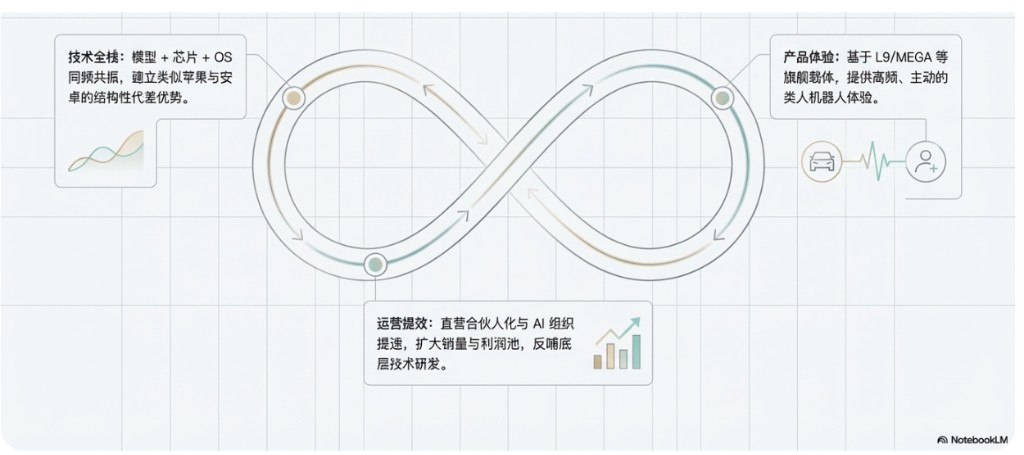
Below is the full transcript of the conference call (translated with AI assistance):
Operator:
Hello, ladies and gentlemen. Thank you for waiting to participate in Li Auto's Q4 2025 and full-year earnings conference call. Currently, all participants are in listen-only mode. Today's conference call is being recorded.
I will now turn the call over to the host, Ms. Janet Zhang, Director of Investor Relations at Li Auto. Please go ahead, Janet.
Ms. Zhang: Director of Investor Relations at Li Auto
Thank you, operator. Good evening, good morning, everyone.
Welcome to Li Auto's Q4 2025 and full-year earnings conference call. The company's financial and operational results were released earlier today in a press release and are available on the company's investor relations website. In this conference call, our Chairman and CEO Mr. Li Xiang and CFO Mr. Li Tie will first make prepared remarks. Our President Mr. Ma Donghui and CTO Mr. Xie Yan will participate in the Q&A session.
Before I continue, please remember that today's discussion will contain forward-looking statements made under the safe harbor provisions of the Private Securities Litigation Reform Act of 1995. Forward-looking statements involve inherent risks and uncertainties. Therefore, the company's actual results may differ materially from those expressed today. More information about risks and uncertainties is contained in certain documents the company has filed with the U.S. Securities and Exchange Commission and the Hong Kong Stock Exchange.
Unless required by applicable law, the company does not undertake any obligation to update any forward-looking statements. Also, please note that Li Auto's earnings press release and this conference call include discussions of unaudited GAAP financial information and unaudited non-GAAP financial metrics. Please refer to the Li Auto disclosure documents in the investor relations section of our website, which contain reconciliations of unaudited non-GAAP metrics to comparable GAAP metrics Our CEO will begin his speech in Chinese.
After he completes all his remarks, there will be an English translation. Next, I will hand the call over to our CEO, Mr. Li Xiang. Please go ahead.
Li Xiang: Founder, Chairman, and CEO: Li Auto
Thank you all for joining our earnings call today. Over the past year, Li Auto has undergone a significant strategic adjustment period. As we have scaled up, we have reassessed some core capabilities, particularly how to maintain sales efficiency and organizational vitality under a direct sales model. The issue we identified was that in the past, we managed our stores with a dealer mindset. However, for a direct sales model, the key is to truly manage each store well.
Therefore, without dealers, we need to figure out how to effectively manage these stores ourselves. Since the third quarter of last year, we have focused on improving the quality of store openings, strengthening daily store operations, and upgrading incentives, training, and support for the team. Ultimately, this boils down to one question: How can we sell well? With sales volume and per capita sales efficiency as core metrics, we have implemented a series of targeted reforms.
First, we optimized the division of labor and integrated the sales force. By closing and replacing underperforming stores, we addressed location issues and moved the sales team from low-traffic second-tier malls to higher-potential locations, such as flagship stores in prime shopping areas and major automotive centers. This directly improved store productivity and per capita sales. To further strengthen our frontline sales, we also upgraded our operational mechanisms.
In March, we launched the Store Manager Partner Program, making each store a basic operational unit. Outstanding store managers now have real operational decision-making power and profit-sharing rights, transforming from purely managerial roles to true store operators. During a time when the automotive retail industry generally faces profitability challenges, we aim to cultivate store managers who can earn over one million yuan annually and allow our top performers to earn three times the industry average. Equally important, this strengthens our frontline capabilities and helps keep our orders and delivery volumes firmly in the top tier of the high-end segment. Turning to products, we will officially launch the all-new L9 series in the second quarter. Through comprehensive upgrades in powertrain, autonomous driving, and chassis technology, our goal is to create a significant leap in user experience compared to competing models and reclaim leadership in the flagship SUV market. The new Li Auto L9 will come standard with an 800-volt architecture and 5C ultra-fast charging technology. It will also feature our next-generation fully self-developed range extender 3.0 system, providing higher power generation efficiency and better performance, along with further NVH improvements and our proprietary EGR low-temperature start technology, offering cabin quietness and driving experience comparable to the best models, as well as improved winter energy consumption performance.
We will also launch the world's first AI-driven oil maintenance system, which can achieve maintenance intervals of up to three years or 30,000 kilometers. Our top-tier Li Auto L9 LiVIS, priced at 559,800 yuan, embodies our vision for flagship SUVs in the era of embodied intelligence It will be equipped with the world's first mass-produced fully controlled chassis and an 800-volt fully active suspension system, providing the best comfort and handling in its class. The response speed and safety of steering, braking, and suspension have also been significantly improved, providing an execution foundation for autonomous driving and embodied intelligence. In addition, the Li Auto L9 LiVIS will be powered by two self-developed 5-nanometer M100 chips, offering effective computing power equivalent to six times that of the previous generation chips. Combined with our data flow architecture and self-developed intelligent driving stack, it achieves end-to-end integration of our algorithms and computing platform. The success of the new Li Auto L9 will directly determine the market potential of the entire L series. If the competitiveness of the previous Li Auto L9 mainly came from its excellent product definition, the new generation L9 will build its core advantages through technology.
Our pure electric models are also continuously climbing. Through ongoing efforts with suppliers, the supply constraints of the Li Auto L6 have gradually eased. We will continue to increase production capacity to further shorten delivery cycles. Meanwhile, as the mileage of owners increases, positive real experiences are driving the Li Auto L8 forward. In the recent new energy vehicle brand health study released by Langlu, the Li Auto L8 ranked first in net promoter score among all large SUVs. Improved experiences and satisfaction are now translating into a recovery in orders and sales. Since March, the order volume of the Li Auto L8 has increased by 33% compared to the same period in February. The Li Auto L6 and Li Auto L8 together consolidate the market foundation of our pure electric product lineup. Our priority is to thoroughly address the issues we previously encountered, ensuring that our pure electric products can progress steadily and establish a solid foothold in the market.
Looking back at last year, the Li Auto L6 faced multiple timing-related resistances after its launch, including initial sales policies, production ramp-up, and the decline of purchase tax subsidies. This put pressure on gross margins. At the same time, these factors laid the groundwork for this year's margin improvement. In the second half of 2026, we will launch a new flagship pure electric SUV, the Li Auto i9, further expanding our pure electric product lineup to meet a broader range of customer needs. The year 2026 will be a key year for Li Auto's evolution into an embodied intelligence company.
As competition in the new energy vehicle market intensifies, we will continue to strengthen our technological model, completing the transformation from a smart electric vehicle company to an embodied intelligence company, preparing for the next phase of competition. In 2025, our total R&D expenditure will be RMB 11.3 billion, with approximately 50% allocated to AI-related projects. We will maintain this investment strategy in 2026, continuing to build the core capabilities required as an embodied intelligence company. For Li Auto, artificial intelligence has two main dimensions: creating AI and applying AI, bringing our products to people, integrating into life, while improving the efficiency of the entire organization.
In terms of creating AI, we have rebuilt our R&D organization from scratch to operate in the way an embodied intelligence company should. We are cultivating capabilities and attracting top talent across areas such as interface chips, foundational models, software, and hardware. At the product level, we view vehicles as intelligent entities with real vitality, and AI is the source that gives this vitality. Based on our next-generation technology platform, our products will evolve over time in ways that you will see
They will not just be extensions of traditional cars or electric vehicles. Instead, they will become proactive and increasingly realistic in learning and improvement, which will be reflected in our high-frequency experiences in daily life. From an efficiency perspective, artificial intelligence is helping to reverse the trend of slowing information flow and decision-making speed that may occur as scale increases. By integrating artificial intelligence and collaborative intelligent agents, we have regained the speed and agility of startups in iteration and development, and this year we have already seen initial results in daily operations.
In other words, artificial intelligence is not only reshaping our tools, but it is also building a more dynamic and faster-operating organization. Finally, I want to emphasize that we will transform the capabilities and systems built from the launch of the Li Auto L9 in 2022 to the broader automotive and embodied intelligent technology stack into real user experiences and measurable business value. This will be the cornerstone of our long-term competitive positioning for the next decade. We look forward to your continued attention and welcome you to experience our next-generation products.
Next, we will hand the phone over to our Chief Financial Officer Li Tie, who will introduce our financial performance.
Li Tie: Executive Director and Chief Financial Officer
Thank you, Li Xiang, hello everyone. Given the time constraints, my remarks today will be limited to the financial highlights for the fourth quarter.
Unless otherwise stated, all figures will be in Renminbi. For more details, including the corresponding US dollar amounts and full-year financial performance, we encourage you to refer to our earnings press release. Total revenue for the fourth quarter was RMB 28.8 billion, a year-on-year decrease of 35% and a quarter-on-quarter increase of 5.2%. This includes RMB 27.3 billion from vehicle sales, a year-on-year decrease of 36.1% and a quarter-on-quarter increase of 5.4%.
The year-on-year decline was mainly due to a decrease in vehicle deliveries. The quarter-on-quarter increase was mainly due to an increase in vehicle deliveries, partially offset by a decrease in average selling price due to the different product mix after the delivery of the Li Auto L6 began. The cost of sales for the fourth quarter was RMB 23.6 billion, a year-on-year decrease of 33% and a quarter-on-quarter increase of 3.3%. The gross profit for the fourth quarter was RMB 5.1 billion, a year-on-year decrease of 42.8% and a quarter-on-quarter increase of 14.8%.
The gross margin for vehicles in the fourth quarter was 16.8%, compared to 19.7% in the same period last year and 15.5% in the previous quarter. The year-on-year decline was mainly due to the different product mix. The quarter-on-quarter increase was mainly due to the estimated costs related to the Li Auto MEGA recall recognized in the previous quarter, partially offset by a decrease in average selling price due to the different product mix after the delivery of the Li Auto L6 began. The overall gross margin for the fourth quarter was 17.8%, compared to 20.3% in the same period last year and 16.3% in the previous quarter.
The operating expenses for the fourth quarter were RMB 5.6 billion, a year-on-year increase of 5.8% and a quarter-on-quarter decrease of 1.3%. The R&D expenses for the fourth quarter were RMB 3.0 billion, a year-on-year increase of 25.3% and a quarter-on-quarter increase of 1.4%. The year-on-year increase was mainly due to costs related to AI and other projects to support product mix expansion and technological advancement. The sales, general, and administrative expenses for the fourth quarter were RMB 2.6 billion, a year-on-year decrease of 14% and a quarter-on-quarter decrease of 4.4%
The year-on-year decline is mainly due to a reduction in employee compensation. The operating loss for the fourth quarter was RMB 442.6 million, compared to operating revenue of RMB 3.7 billion in the same period last year, and an operating loss of RMB 1.2 billion in the previous quarter. The operating profit margin for the fourth quarter was negative 1.5%, compared to 8.4% in the same period last year and negative 4.3% in the third quarter. The net profit for the fourth quarter was RMB 20.2 million, compared to a net profit of RMB 3.5 billion in the same period last year and a net loss of RMB 624.4 million in the previous quarter. The diluted earnings per American Depositary Share attributable to ordinary shareholders for the fourth quarter was RMB 0.1, compared to diluted earnings per American Depositary Share of RMB 3.31 in the same period last year and diluted losses per American Depositary Share of RMB 0.62 in the previous quarter. Regarding our balance sheet and cash flow, our cash position remains robust, with net cash provided by operating activities in the fourth quarter amounting to RMB 3.5 billion, compared to net cash provided of RMB 8.7 billion in the same period last year and net cash used of RMB 7.4 billion in the third quarter. The free cash flow for the fourth quarter was RMB 2.5 billion, compared to RMB 6.1 billion in the same period last year and negative RMB 8.9 billion in the third quarter.
As of the end of 2025, we have a total of 30,728 employees. Now, let’s move on to our business outlook. For the first quarter of 2026, the company expects delivery volumes to be between 85,000 and 90,000 vehicles.
Total quarterly revenue is expected to be between RMB 20.4 billion and RMB 21.6 billion. This business outlook reflects the company's current preliminary view of its business situation and market conditions, which may change. This concludes our prepared remarks. I will now turn the call over to the operator to begin our Q&A session.
Thank you.
Q&A Session
Operator:
Thank you. (Operator instructions) Your first question comes from Tim Hsiao of Morgan Stanley.
Tim Hsiao:
(In Chinese) So my first question is about the channels.
I believe management just mentioned that Li Auto is now planning to optimize its sales network and is reportedly going to close up to 100 stores. What are the company's plans and progress regarding channel optimization? Additionally, could you elaborate on the store manager partner program mentioned by the CEO? Besides the incentive plan for store managers, what further implementation details can you share with us? When can we expect to see positive effects? That’s my first question.
Ma Donghui: Executive Director and President
I need to clarify the information regarding channel optimization first. The rumor about closing 100 stores is not true. In fact, we have been routinely optimizing our stores, gradually phasing out a small number of underperforming stores that cannot meet sales targets. This is just a normal part of addressing past issues (such as poor store locations or declining foot traffic in certain business districts). Our core channel strategy this year is very clear: quality over quantity.
We will be adding new stores this year. New stores will prioritize top shopping malls and high-quality automotive parks to enhance brand influence and attract higher-quality foot traffic. In terms of urban coverage, our footprint in lower-tier cities is already quite complete In the future, we will focus on increasing the store density in high-tier cities, in line with the growth of our pure electric vehicle sales. At the same time, we will continue to enhance the sales and service experience by providing in-store reception, test drives, deliveries, highway supercharging stations, and holiday employee service. Therefore, we see user satisfaction and positive feedback continuously rising.
Since we mentioned this topic, I would also like to share some information about our new store manager partner program, which officially launched on March 1st. We view each store as a core business unit and build a truly unique direct sales model belonging to Li Auto.
Our stores remain fully committed to direct sales. This ensures a uniform service quality and a nationwide consistent pricing strategy. At the same time, we are now decentralizing decision-making and sharing profits with store managers to truly motivate our frontline team, enabling them to think like real business operators. In terms of store operations, store managers now have autonomy in three areas: customer acquisition, daily operations, and team management. We have also changed our evaluation method, which is no longer solely based on sales volume. Now, performance is measured based on the operational results of the store. The goal is for every store manager to feel like they are running their own business and to be fully accountable for the results. This new model also helps us fundamentally address past issues, such as opening stores without careful consideration and other expansion-related problems. In the future, store managers will be involved from day one of site selection, with clear ownership and a sense of responsibility. This way, we improve store quality from the outset, and the company will provide financial support and digital tools to empower our frontline team. Our goal is to see significant improvements in sales and operations starting from the third quarter. Ultimately, we believe that a healthy and efficient sales and service system is the foundation for strong sales and market leadership.
Since last August, we have spent seven months systematically readjusting our direct sales management framework. This includes high-quality store expansion, refined operations, store manager incentives, and frontline training. All of this is aimed at building a truly sustainable and competitive sales and service network for the long term. Thank you.
Tim Hsiao:
Thank you. My second question is about the product. Can you share your views on the release rhythm, strategy, productivity, and profitability of the new L9 and L9-Levice? My second question is about the product, specifically the upcoming all-new L9 and L9-Levice. Can you elaborate on the timeline for release, pricing strategy, product competitiveness, as well as gross margin and vehicle profitability? Thank you.
Li Xiang: Founder, Chairman, and CEO of Li Auto: First, let me answer your question about the product. This year, we will launch our all-new Li Auto L9 LiVus in the second quarter, equipped with our self-developed M100 chip. We refer to it as an embodied intelligent robot because we have comprehensively innovated the technology stack from three dimensions: perception, brain, and body. First, let me start with autonomous driving.
In the past, the technological paradigm was to let machines learn to drive by watching videos. They did not truly understand the physical world; they merely watched videos and tried to mimic human behavior from those videos. However, as we conducted research and development, we found that the most efficient way is to truly understand the physical world So when we talk about the VLA model, what we are really trying to do is use language to understand how the world works and act accordingly, rather than just interpreting videos.
Therefore, as we evolve from 2D cameras to 3D vision Transformers, we can better understand the three-dimensional world. This requires a full-stack innovation from video encoders, chips to algorithms. How to achieve direct computation from large models to actually drive physical behavior. I believe this will be a significant technological shift in the fields of autonomous driving and physical robotics globally this year.
As I mentioned earlier, this will be the true VLA. Language models genuinely understand and think about the physical world before deciding on actions. This is in terms of perception. Next is the hardware itself, in terms of execution. As we previously announced, the Li Auto L9 will be equipped with a full drive-by-wire system, including steer-by-wire, four-wheel steering, electronic mechanical brakes, and an 800-volt fully independent active suspension, with each wheel having an independent pump-driven suspension. All of this combined will provide us with unprecedented vehicle agility.
In addition, all signals and decisions will no longer go through the MCU (which was the previous paradigm), but will be directly processed by the large model, with outputs sent directly to the actuators, rather than going through a less complex MCU. This is what we believe a truly intelligent car should look like. We believe the L9 will be the beginning of all this. Thank you.
Operator:
Your next question comes from Paul Gong of UBS.
Paul Gong:
(In Chinese) So my first question is about the 2026 sales target based on the current environment.
More importantly, how should we balance sales and market share targets with our own profit margins? How important are sales targets in the overall balance of our development?
Li Xiang: Founder, Chairman, and CEO
2026, as you all know, will be an important year from a product perspective, as we will launch our third-generation products. We are very confident in our products. We also note that this will be the most competitive year to date. This year, in the market of 200,000 RMB and above, you will see more new car launches than in all previous years combined.
But at the same time, the overall growth of the market is very limited. Considering this, our overall target for 2026 is still to achieve a 20% year-on-year growth. To support this goal, we have a 3+2 strategy.
First, starting with the 3. The three pillars supporting our sales: the first is the sales system. We will continue to focus on our direct sales model. As we implement new mechanisms, we will start to see the benefits of the direct sales model this year. The second pillar is the launch of the L series, starting with the L9. The new generation L series will be a key pillar of our sales this year. Therefore, we will ensure that every detail from product launch, supply, delivery to maintenance is in place to ensure the success of the L9 and subsequent L series models. The third pillar is the ramp-up of pure electric models, including the i6, i8, i9, and MEGA. In the past few months, we have addressed supply constraints We have also addressed issues related to publishing, sales, and marketing. Therefore, over time this year, we believe that the sales of pure electric products will steadily climb, which will occupy a very important share in the high-end market.
Now let's talk about point 2. The first is investments related to artificial intelligence. Over the past year, we have invested billions in chips and models. I believe this year will be the year when all these investments begin to yield results, meaning they will provide our users with a very differentiated product experience. In summary, these experiences will be proactive and high-frequency, allowing every consumer to feel and benefit from them in their daily lives. The second is our overseas strategy. This year will be our first full year of officially operating in overseas markets. However, through years of accumulation, we believe we will start to see results this year, supporting long-term growth. Overseas remains a long-term growth opportunity we see. Thank you.
Paul Gong:
So, my second question is about the impact of rising raw material costs, including metals, storage chips, and batteries.
What strategies will the company adopt to cope with this challenge? Are we digesting it within the supply chain, or are we passing this cost increase onto downstream? I believe the best strategy is to maintain supply chain stability. On one hand, we need to keep prices stable, and on the other hand, we need to maintain supply chain stability.
Li Xiang: Founder, Chairman, and CEO
We believe that the current cost pressure is still mainly concentrated on key components such as batteries and storage chips, which indeed has some impact on the cost per vehicle. To address this, we have taken the following measures.
First, we are strengthening supply chain collaboration to stabilize prices while ensuring supply. In terms of costs, we have signed long-term agreements with core suppliers to lock in the prices and quantities of key raw materials in advance. This helps us hedge against short-term market fluctuations; in terms of supply, especially for AI-related components like storage chips that have been tight recently, we continue to work with key suppliers to secure exclusive allocations, ensuring priority support for production and new model launches.
For contracts with clear pricing terms and adjustment mechanisms, we strictly adhere to these terms. In the absence of such agreements, we work hand in hand with suppliers to share cost pressures and navigate the cycle together, aiming for long-term mutual benefits. We sincerely appreciate the continued support of all supply chain partners for Li Auto. Secondly, we are also promoting end-to-end cost optimization. We are identifying cost-saving opportunities across the entire value chain from product development, manufacturing, logistics, to quality costs. At the same time, we maximize economies of scale through platform development and increasing the interchangeability of parts across models. This allows us to absorb external cost pressures internally as much as possible. We self-develop and produce range extenders, electric drive units, power modules, self-developed and outsourced domain controllers, silicon carbide power chips, M100 autonomous driving chips, and battery packs.
All of these help us better manage costs. Third, we take a more rational and robust approach to pricing new vehicles. For our 2026 models, pricing will comprehensively consider raw material fluctuations, R&D investments, and user value to ensure healthy and sustainable profitability Our goal is to bring the gross margin of new products back to a normal and healthy range.
Overall, we are confident that by combining supply chain collaboration, locking in key costs through long-term agreements, platformization, self-developed technology, and rational pricing, we can control the impact of rising raw material prices within manageable limits and maintain stable gross margins and operational quality. Thank you.
Li Xiang: Founder, Chairman, and CEO
Thank you very much.
Operator:
Your next question comes from...
Analyst:
So my first question is about responding to recent rumors; we have heard some media reports that the company is considering a stock buyback. Can you confirm whether there are any related plans? (in Chinese)
Li Tie: Executive Director and Chief Financial Officer
Yes, I am Li Tie. I believe this is not media reporting but rather a statement from a media reporter on Weibo. As a company dual-listed in the U.S. and Hong Kong, we recognize that stock buybacks are one of the ways or tools to consider for enhancing shareholder value.
Regarding stock buybacks, we currently have no additional information to disclose. Thank you.
Analyst:
My second question is about R&D expenses. What guidance do we have for R&D expenses in 2026? Additionally, last year, nearly half of our R&D expenses were related to intelligence or artificial intelligence.
What is the guidance for this proportion this year? Okay, thank you for your question. This is also Li Tie. We expect this year's R&D expenses to remain around RMB 12 billion, with projects related to artificial intelligence accounting for about half.
This includes investments in AI infrastructure, such as self-developed chip development and computing power, as well as R&D for AI products, such as autonomous driving systems and the "Li Xiang Classmate" from the past few years. It should be clarified that we do not view automobiles and artificial intelligence as different, independent businesses. Our investment in R&D is to build AI capabilities and integrate them into our overall business model. We monetize all R&D investments through our current business model. This is not an independent business model. Thank you.
Operator:
Your next question comes from Fei Xingyao of Scientech.
Analyst:
My first question is about the i series.
Can you provide us with some details about the i series? My first question is about the i series. Can you give us some details about the i8 and i6, particularly regarding the sales and production ramp-up of the i6? How do you assess the contribution of battery safety and cost reduction? Thank you.
Unnamed Speaker:
Let me start with the Li Xiang i8. Since its launch in July last year, user satisfaction has continued to rise as the accumulated mileage of owners increases. Especially in terms of charging experience during long-distance driving, its net promoter score has improved by over 20% compared to the initial launch period. During the Lunar New Year holiday, our 5C ultra-fast charging and OTA 8.3 autonomous driving upgrade received enthusiastic praise from users, pushing the net promoter score to a historical high. In the survey conducted by Langlu in the second half of 2025, the Li Xiang i8 ranked first in net promoter score among all large SUVs With strong word-of-mouth, orders for the Li Auto i8 are steadily rising. The order volume in early March increased by nearly 180% compared to January. This significant upward trend reflects the strengthening market demand. Now turning to the Li Auto i6, we have successfully navigated the most challenging phase of capacity ramp-up.
We are now in a stable delivery phase. The product strength of the Li Auto i6 has been fully validated, with its unique exterior design, spacious interior, efficient energy consumption, and agile handling precisely meeting the needs of young families. Since its launch, the order momentum has been strong. Meanwhile, all supply chain bottlenecks have now been completely resolved. We previously faced short-term fluctuations in battery supply, but we have closely collaborated with core suppliers to expand capacity. We have also introduced purchase tax subsidies and extended care policies. I want to thank all Li Auto i6 users for their understanding and patience.
We expect the Li Auto i6 to maintain a stable monthly sales volume of around 20,000 units, and we hope to efficiently fulfill the current backlog of orders in the next month or two. Most importantly, the success of the Li Auto i6 clearly indicates that the brand appeal of Li Auto has successfully expanded from the range-extended field to the pure electric field. Speaking of our battery strategy, we are committed to open partnerships. While closely collaborating with industry leaders, we retain control in all these partnerships.
In terms of vehicle performance, we lead the battery architecture design and strictly control quality at every step. Regardless of which partner supplies the battery cells, all batteries must meet Li Auto's unified LiD standards to ensure performance, quality, and safety. For users, the experience is completely the same, with no differences.
Furthermore, starting in 2026, all Li Auto vehicles will be equipped with batteries from only two brands: Li Auto's own brand and CATL. This marks a deeper integration with our core partners. We ask you to continue trusting the Li Auto brand, as the quality of Li Auto never relies on any single supplier. It is defined by our fully self-developed R&D, our strict quality control system, and the systems and core values we have adhered to since day one. When people choose Li Auto, it means they choose the most reliable guarantee.
Thank you.
Unnamed Speaker:
(Chinese)
Xie Yan: Chief Technology Officer
Okay, I am Xie Yan. I will answer your questions. The M100 will be delivered alongside the new L9 series.
We have already started mass production. For the M100 itself, it offers significantly higher effective computing power within the same chip area, providing more design space for our VLA algorithm. For example, we can run a VLA model with approximately six times the number of parameters and ten times the computational load of the previous generation, while achieving higher frame rates and faster inference speeds. More importantly, as our self-developed models, compiler stack, and operating system evolve through collaborative design, we are beginning to unleash the true potential of our fully self-developed autonomous driving stack. The performance improvements we see today are significant, but the greater impact lies in the fact that this system-level integration will significantly accelerate the pace at which our autonomous driving capabilities improve over time. Once the system is officially deployed, we expect the speed of capability enhancement to increase significantly The M100 also works closely with Halo OS and the steer-by-wire vehicle system to achieve tighter coordination between autonomous driving computation, preprocessing, postprocessing, and vehicle control. This reduces the overall end-to-end latency of sensor photon input to vehicle execution to about 200 to 300 milliseconds, directly improving the driving experience.
Higher local computing power also enables us to deliver more intelligent capabilities beyond autonomous driving. Over time, vehicles will behave more like robots. Some of these capabilities will first appear in the new L9, and we will continue to expand them in the future. Additionally, the M100 brings significant cost advantages.
First, the material cost per chip is much lower than that of external solutions. Second, we have removed the XCU controller used in the previous generation platform. By replacing it with M100 combined with Halo OS virtualization, we save over 1,000 internal components per vehicle. Third, thanks to our data flow architecture and the collaborative design of models and chips, we not only achieve higher operational efficiency but also maintain greater room for future performance enhancements.
When we began developing our own chips in 2022, we believed that by around 2025, the industry would enter a new phase where models, chips, and operating systems must be co-designed. This vertical integration creates real differentiation in performance, efficiency, and user experience. Over time, the gap between ordinary solutions and ours will begin to resemble the gap between Apple and Android in the mobile world. Once you achieve full-stack software and hardware integration, this advantage becomes structural and will continue to expand.
Thank you.
Operator:
Your next question comes from Tina Hou of Goldman Sachs.
Tina Hou:
Thank you. Thank you for your time.
My first question is about embodied intelligence. I would like to ask about the strategic planning for embodied intelligence in the next one to two years and the forms and pace of product implementation. For example, what are the strategic priorities among different products such as cars, Robotaxis, and robots? Thank you for answering my question. So my first question is about embodied intelligence. What is Li Auto's strategic planning for the next one to two years? What kind of products can we expect to see? And what is the progress or timeline for these products?
Additionally, how do you make decisions on strategic priorities among electric vehicles, Robotaxis, and humanoid robots?
Li Xiang: Founder, Chairman, and CEO
Regarding the strategy for embodied intelligence, first, in terms of technology and products, we believe that there are many commonalities regardless of the form of physical products we discuss. Therefore, this will be an area we invest heavily in, as we believe all these investments will be shared across different product forms. This includes inference chips at the device end, foundational models and operating systems, as well as the entire data training process. At the same time, in terms of business, we will be very cautious in our investments and explorations.
In areas such as AI glasses and robots, we will adopt a startup model. We will not take the traditional approach of large companies, which involves making significant investments in unproven directions, but will initiate these new projects like startups and proceed steadily
Unnamed Speaker:
So my second question is about our R&D restructuring. Has the restructuring been completed? How is our progress in autonomous driving under the new structure?
Li Xiang: Founder, Chairman, and CEO
We underwent a significant organizational change in January, completely restructuring our hardware and software functions.
All of this has a common goal, which is to build a silicon-based digital human, or intelligent human. This is our overarching goal. To achieve this restructuring, we created a horizontal organization across business units and redefined functions based on the corresponding parts of the human body, rather than dividing them by so-called business units or product lines as before. This specialization occurs in three areas. The first is what we consider the brain department. This includes datasets (analogous to human lungs), chips (analogous to the heart), and operating systems (analogous to the nervous system). Then we organize all of these together so that we can jointly conduct pre-training, post-training, and infrastructure work, viewing them as the brain. My requirement for these teams is that they cannot touch the application layer. Because in many companies, basic research teams are easily tempted to work on applications, but here, the brain should not have its own hands; it should focus on building a very powerful and general brain that can be used across different software and hardware applications.
Above the brain team, we have what we call the application team, or in our words, the core software team. This core software team includes software tools like MCP, teams that build agents, and teams focused on skills and memory. All of these different components are designed to work in conjunction with the shared operating system. This is how we organize all these different software components to perform tasks for us, rather than just being a chatbot. This way, it can truly strategize and execute tasks assigned to it by humans. Everything I mentioned above is software, including skills and memory. Similarly, we also avoid tempting them to build their own little brains. We do not want the body to have its own little head; instead, we want them to fully utilize the powerful brain built by the strong team I mentioned earlier. So this team mainly focuses on the body and application layer.
Finally, there is the hardware team. This is about building dedicated hardware for embodied intelligence, including the energy team, electric drive team, and controller team. When I mention the controller team, we do not necessarily use the kind of actual controllers seen in past cars, because our current working model is to build MCPs for different components, allowing the large model to directly communicate with these MCPs and control these different components, making them smarter and more efficient. When I bring these three teams together, the main benefit I see is that they can collaborate across different products because they empower each other, contrasting with the silo phenomenon in traditional models. This is how we can deliver products that are different from traditional ones.
After we made this adjustment, initially many people did not understand why we were making this change. But over time, they quickly began to see improvements in workflow efficiency. For example, for the autonomous driving team, they used to iterate the model every two weeks But after the transformation, they are now able to complete an iteration every day, which is a 14-fold improvement. Again, as I mentioned earlier, this is partly due to the collaboration between different teams. They work together instead of communicating in isolated silos across different departments. We believe this is how we can build embodied intelligence that can be seen quickly.
(In Chinese) There is also an important thing I want to add. Around the beginning of this year, we saw several key managers, particularly in the R&D field, leave the company. Many of them had served the company for over five years, and I believe you have noticed this in the market as well. These leaders, in many cases, were the top individuals in their business areas. They experienced the startup phase from 0 to 1 with Li Auto and received a positive response in the investment community, as we have seen in the news, many of them have secured significant funding. So first, I want to congratulate these former colleagues on their positive reception in the market, not just in terms of funding but also overall recognition. I sincerely wish you good luck in your respective markets, hope your businesses thrive, and wish you success in your new endeavors.
At the same time, I want to point out that this change has sparked a very exciting shift within the company. It has allowed many of our young leaders, spanning across technology, business units, foundational models, complete vehicle product lines, and embodied intelligence, to stand out and take on responsibilities. Many are post-90s or post-95s. We are starting to see a large group of very talented and motivated colleagues, which truly prepares the company for the next decade. I believe this is overall a win-win situation for us and our employees, truly setting us up for our new decade of development. I hope all investors and those concerned about the company can rest assured that the younger generation is taking over well. They are continuing to build on the solid foundation laid by their predecessors and have achieved very good results in some key technological areas, including some arguments and key research questions. Our post-95s have made significant contributions, and even some recent graduates, many of whom are post-00s, have made substantial contributions to our products and technologies and are at the forefront of our R&D. So this is truly an exciting time, and I am glad to see all of this, which also fills me with confidence for the upcoming next decade. Thank you.
Operator:
As our conference call is about to conclude, I will now hand the call back to the company for closing remarks. Ms. Zhang, please go ahead.
Ms. Zhang: Director of Investor Relations
Thank you again for joining our meeting today. If you have any further questions, please feel free to reach out to the Li Auto U.S. Investor Relations team using the contact information provided on our investor relations website. This conference call has now concluded. You may now disconnect. Thank you.
The meeting has ended
