


U.S. Energy Secretary: The Navy is "not ready" to escort in the Strait of Hormuz, and oil prices are unlikely to rise to $200

Lait expressed that the U.S. Navy's escort plan will be implemented soon, but currently, the conditions are not in place. It is expected that the capability to escort tankers will be available by the end of this month at the earliest. The U.S. will use its strategic petroleum reserves through swaps in the short term, rather than direct sales
U.S. Energy Secretary Chris Wright said in an interview with U.S. media on March 12 that the U.S. Navy is currently "not ready" to escort tankers through the Strait of Hormuz.
"All military forces are currently focused on destroying Iran's offensive capabilities and the military-industrial complex that supports those capabilities."
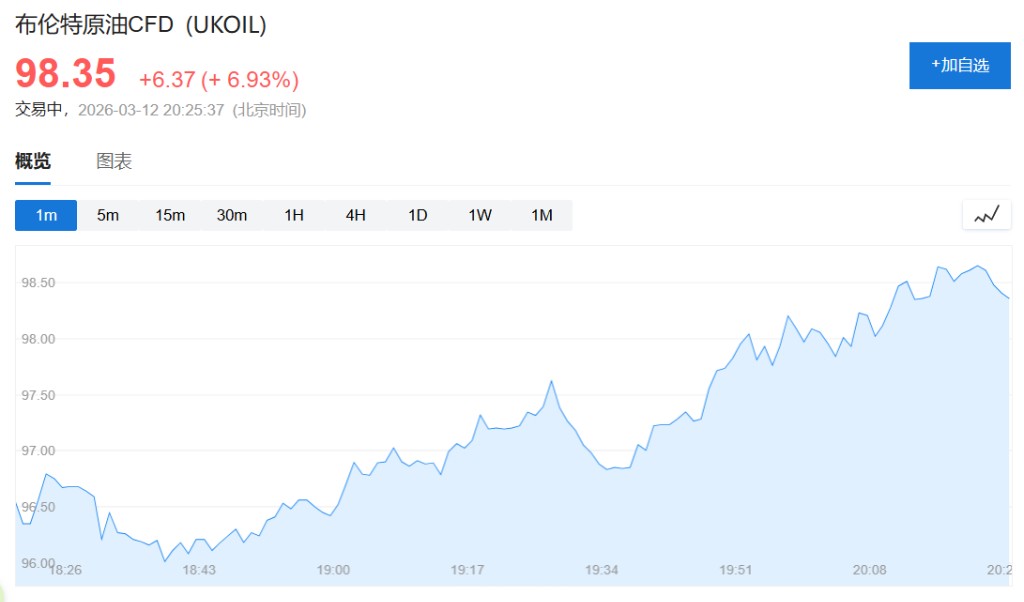
Due to the ongoing fallout from attacks on commercial vessels in the Persian Gulf, international benchmark crude oil Brent earlier in the day briefly touched the $100 per barrel mark. Despite concerns in the market about rising oil prices, Wright remained relatively optimistic. He clearly stated that oil prices are unlikely to rise to $200 per barrel.
Escort Timeline: Conditions May Be Met by the End of the Month
He made it clear that the U.S. Navy's escort plan will be implemented soon, but currently, the conditions are not in place, and it is expected that the capability to escort tankers will be available by the end of this month at the earliest. Wright revealed that he would be going to the Pentagon that afternoon, claiming that the escort deployment is currently the focus of the U.S. military's work.
"This will be achieved in a relatively short time, but it is not possible right now."
Supply Shock Regionally Uneven, Releases to Be Conducted via Swap
Wright characterized the current situation as "a significant short-term supply disruption," but emphasized that the tension is clearly regionally differentiated—Asia is facing more pronounced pressure, while supply in the Western Hemisphere is generally not tight.
Regarding the issue of reserve releases, Wright stated that the U.S. will utilize its strategic petroleum reserves in the short term through swaps, rather than direct sales. This aligns with the International Energy Agency's (IEA) previously announced largest-ever reserve release plan, aimed at coordinating actions to stabilize short-term oil price fluctuations. Wright did not comment on the issue of refined product export bans
