


Middle East situation escalates: Multiple drone attacks occur in Dubai, oil prices surpass the $100 mark

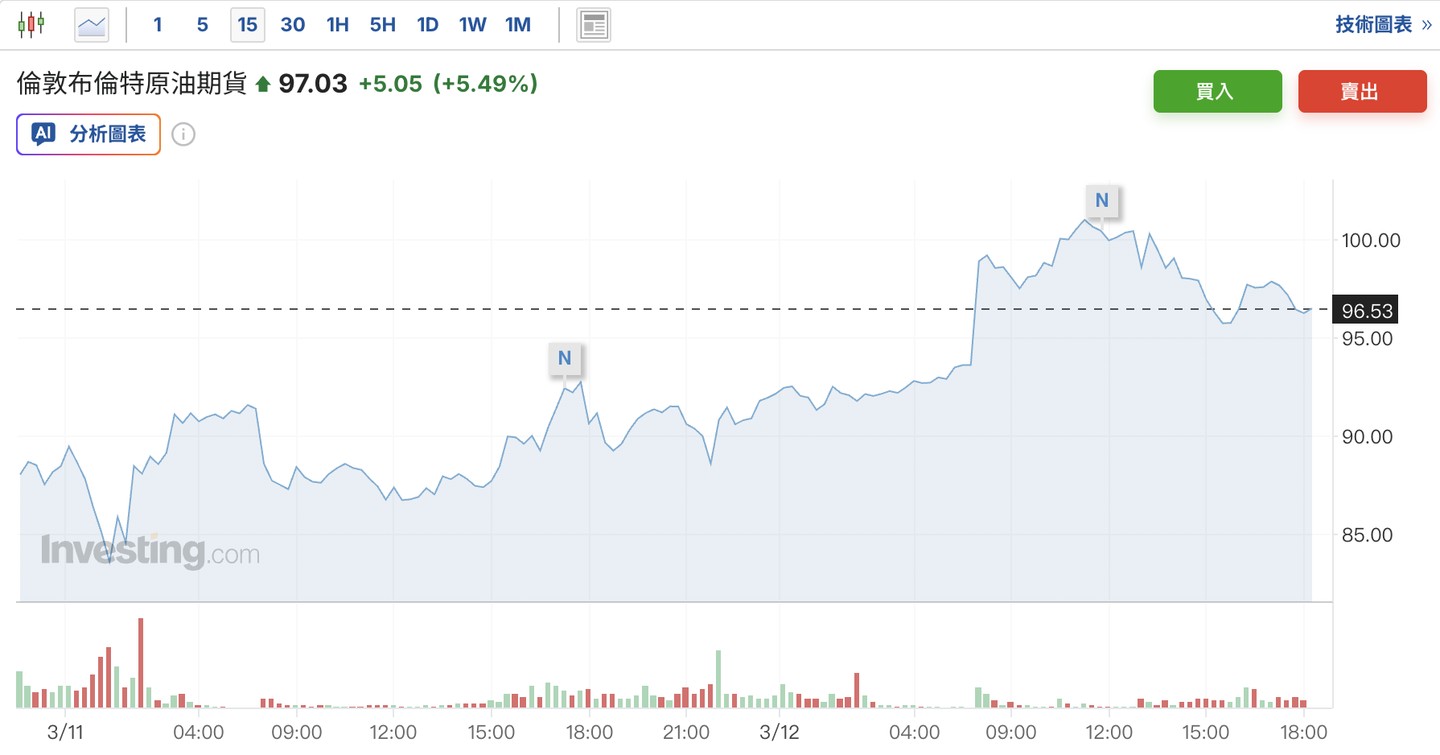
According to Xinhua News Agency, on March 11, two drones crashed in the vicinity of Dubai International Airport, resulting in 4 injuries. Goldman Sachs, Citigroup, and other institutions urgently evacuated personnel, and over 46,000 regional flights were canceled. Due to the paralysis of the Strait of Hormuz, countries like Saudi Arabia were forced to cut production, and Brent crude oil briefly surpassed $101.50. Models predict that if the closure continues for three months, oil prices could peak near $164
Iran has launched a new round of strikes against Dubai and regional shipping assets, pushing the Middle East conflict into a new dangerous phase. Brent crude oil prices briefly surpassed $100 per barrel in early trading today, while the Strait of Hormuz remains nearly closed, leading to a continued shortage in global energy supply.
According to a report by Xinhua News Agency, on March 11, two drones crashed in the vicinity of Dubai International Airport, injuring four people. Bloomberg reported that on March 11-12, two oil tankers were attacked in Iraqi waters, prompting Oman to evacuate personnel from the important oil export terminal Mina Al Fahal.
The ongoing escalation of the situation has put pressure on financial markets. Brent crude oil rose to over $101.50 per barrel in early trading on Thursday, and as of the time of writing, it is quoted at $96.5.
According to a model constructed by Bloomberg economists Bhargavi Sakthivel and Ziad Daoud, if the closure of the Strait of Hormuz lasts for a month, Brent oil prices could climb to $105 per barrel; if the closure lasts for three months, peak oil prices could approach $164.
Dubai Attacked, Financial Institutions Evacuate Offices
The recent attack on Dubai is one of the most direct events affecting global financial hubs since the conflict erupted on February 28. Earlier on Wednesday, the Associated Press cited information from the Iranian Joint Military Command stating that banks and financial institutions have become targets in the Middle East. Institutions such as Goldman Sachs and Citigroup promptly notified their employees in Dubai to refrain from going to the office.
On Thursday morning, Dubai authorities reported a small-scale drone attack in the Al Bada'a area near the city center. Kuwait also stated that its international airport was attacked by multiple drones, resulting in property damage.
Dubai International Airport had briefly suspended operations on Wednesday due to the drone attack that injured four people. Bloomberg data shows that since the conflict began on February 28, the total number of canceled flights in the region has exceeded 46,000.
Strait of Hormuz Nearly Paralyzed, Regional Oil Producers Forced to Cut Production
The Strait of Hormuz carries about one-fifth of the global oil and gas trade flow, and the waterway has become nearly impassable since the outbreak of conflict. Saudi Arabia, Iraq, Kuwait, and the UAE have all been forced to reduce crude oil production.
According to Bloomberg, on March 11-12, two oil tankers were attacked in Iraqi waters, prompting Oman to evacuate personnel from the important oil export terminal Mina Al Fahal.
Bloomberg cited a report from the British Navy stating that on March 11, three vessels in the Strait of Hormuz and the Persian Gulf were hit by suspected projectiles. Omani authorities also reported that a cargo ship flying the Thai flag was attacked To alleviate pressure on energy prices, the International Energy Agency has approved a large-scale release of strategic oil reserves. Trump stated during a speech in Kentucky that this move will "significantly lower oil prices." However, these statements and the announcement of the reserve release have not effectively quelled market volatility, and oil prices continued to rise on March 12.
Ceasefire Conditions Clarified, but Negotiation Prospects Uncertain
Pezeshkian posted on X platform on Wednesday, stating that after conversations with leaders from Russia and Pakistan, Iran demands "strong guarantees from the international community against future aggression" and compensation, marking Tehran's clearest statement on a ceasefire to date.
According to Bloomberg citing informed sources, Iran is particularly concerned that Israel will launch strikes again after the current conflict ends. There is currently uncertainty regarding whether the U.S. is willing to make relevant commitments and whether it can restrain Israel.
Trump has sent conflicting signals regarding the direction of the conflict. He told Axios that Iran "has almost no targets left to strike," but simultaneously hinted in his speech that the U.S. should not rush to withdraw: "We wouldn't want to leave early, would we?" U.S. military and Israeli officials have suggested that the conflict may last for weeks rather than days.
Casualties Continue to Rise, Conflict Spreads to Lebanon
According to official and non-governmental organization statistics, the death toll in the Middle East has reached approximately 2,500 since the conflict erupted on February 28. Data from human rights activists' news agencies indicate that at least 1,825 people have died on the Iranian side. At least 7 U.S. service members have been killed, most of whom died in the first two days of the conflict.
The fighting has also spread to Lebanon. Since March 2, Israel has targeted Hezbollah-related sites within Lebanon, with the Lebanese official news agency reporting that at least 634 people have died in Israeli airstrikes.
Israeli Defense Minister Israel Katz stated that military operations will continue until "victory is achieved." According to Bloomberg, the U.S. and Israel currently maintain a consistent public stance, but officials have privately acknowledged that the protracted conflict may gradually exacerbate the differences between Trump and Israeli Prime Minister Netanyahu.
