


Hormuz "strangulation," IEA warns of "the largest supply crisis in history," oil demand growth forecast for this year revised down by 25%

The latest monthly report from the IEA warns that the escalating situation in the Middle East is causing "the largest supply disruption in history," affecting 7.5% of global oil supply. Due to a more than 90% drop in transit flow through the Strait of Hormuz, global supply is expected to decrease by an average of 8 million barrels per day this month. Demand is also under pressure, with the IEA lowering its global demand growth forecast for 2026 by 25% to 640,000 barrels per day (originally 850,000 barrels per day), and the supply increase forecast has also been reduced from 2.4 million barrels per day to 1.1 million barrels per day
The escalation of the situation in the Strait of Hormuz has triggered a severe supply shock: The International Energy Agency (IEA) stated in its latest monthly report that this conflict has led to the largest supply disruption in its history, affecting 7.5% of global oil supply. As a result, the agency has significantly revised down its global oil demand and supply expectations.
On March 12, Bloomberg reported that the IEA stated in a report released on Thursday that global oil supply has decreased by an average of 8 million barrels per day this month, primarily influenced by the situation in Iran, with transit flows through the Strait of Hormuz plummeting by over 90%. The demand side has also been impacted, with the IEA lowering its 2026 global oil demand growth forecast from 850,000 barrels per day to 640,000 barrels per day, a reduction of about 25%, due to soaring oil prices, flight cancellations, and economic uncertainty. On the supply side, the forecast for global oil supply growth in 2026 has also been compressed from 2.4 million barrels per day to 1.1 million barrels per day.
To stabilize market fluctuations, IEA member countries agreed on Wednesday to release a record 400 million barrels of oil from emergency reserves. As the situation in the Strait of Hormuz continues to escalate, Brent crude oil prices briefly returned to above $100 per barrel on Thursday. 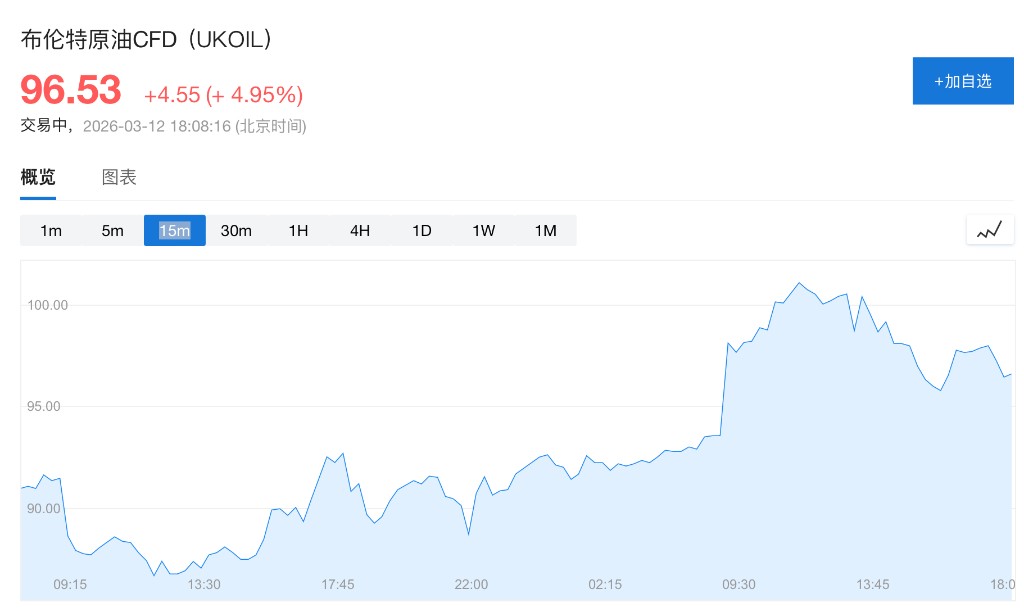
Hormuz Blockade: The Largest Supply Shock in History
Due to the situation in the Middle East, oil tankers have suspended passage through the Strait of Hormuz. According to data from the International Energy Agency (IEA), oil transit flows through the strait have plummeted by over 90%. Last year, an average of about 20 million barrels of crude oil and refined products were transported through this route daily.
The actual shipping disruptions have forced oil-producing countries in the Persian Gulf to collectively cut supply by about 10 million barrels per day. Although countries like Saudi Arabia and the UAE have the capacity to redirect some exports to alternative routes, the overall scale of supply loss remains unprecedented. The IEA also warned that the closure of the strait threatens approximately 4 million barrels per day of refining capacity in the region. Limited raw material supply will constrain the ability of other regions to fill the supply gap, with diesel and jet fuel facing particularly prominent shortage risks.
Demand and Surplus Expectations Narrowing Simultaneously
The supply shock is accelerating its transmission to the demand side. The IEA's latest report has lowered the global oil consumption growth forecast for 2026 by about 25% to 640,000 barrels per day, the lowest level since the introduction of this annual forecast in April last year. The downgrade is primarily due to rising oil prices, flight cancellations, and macroeconomic uncertainty.
On the supply side, some of the production losses in the Middle East have been offset by increased production from non-OPEC+ oil-producing countries, with OPEC+ members like Kazakhstan and Russia also increasing output. The IEA pointed out that these factors have narrowed the global oil surplus expectation by more than one-third, down to about 2.4 million barrels per day. Before the crisis erupted, driven by supply growth from the United States, Canada, Guyana, and Brazil, the agency had expected a record supply surplus this year.
Member Countries Release 400 Million Barrels of Emergency Reserves
To address the severe market fluctuations, Fatih Birol, Executive Director of the International Energy Agency (IEA), announced on Wednesday that its 32 member countries will jointly release 400 million barrels of emergency oil reserves, setting a historical record. However, key details such as the pace and duration of the release that the market is concerned about have not yet been disclosed.
U.S. Energy Secretary Chris Wright stated that the United States will take on the task of releasing 172 million barrels from its Strategic Petroleum Reserve, but the complete delivery is expected to take about 120 days
