


In the cold winter, the total number of existing home sales in the U.S. in January saw the largest decline in four years

In January, the annualized total number of existing home sales in the United States was 3.91 million units, lower than the expected 4.15 million units, and down from the previous value of 4.35 million units; existing home sales in January decreased by 8.4% month-on-month, compared to an expected decrease of 4.6%, and a previous increase of 5.1%. The median sale price of existing homes last month increased by 0.9% year-on-year, reaching USD 396,800
In January, U.S. existing home sales saw the largest decline in nearly four years, coinciding with historic low temperatures and a major winter storm. Existing home sales in the U.S. significantly fell in January compared to December, which had reached the highest level since February 2023.
According to data released by the National Association of Realtors (NAR) on Thursday, the total annualized number of existing home sales in the U.S. in January was 3.91 million units, below the expected 4.15 million units, and down from the previous value of 4.35 million units; existing home sales in January decreased by 8.4% month-on-month, marking the largest drop since February 2022, with expectations for a decline of 4.6%, and the previous value revised down from an increase of 5.1% to an increase of 4.4%.
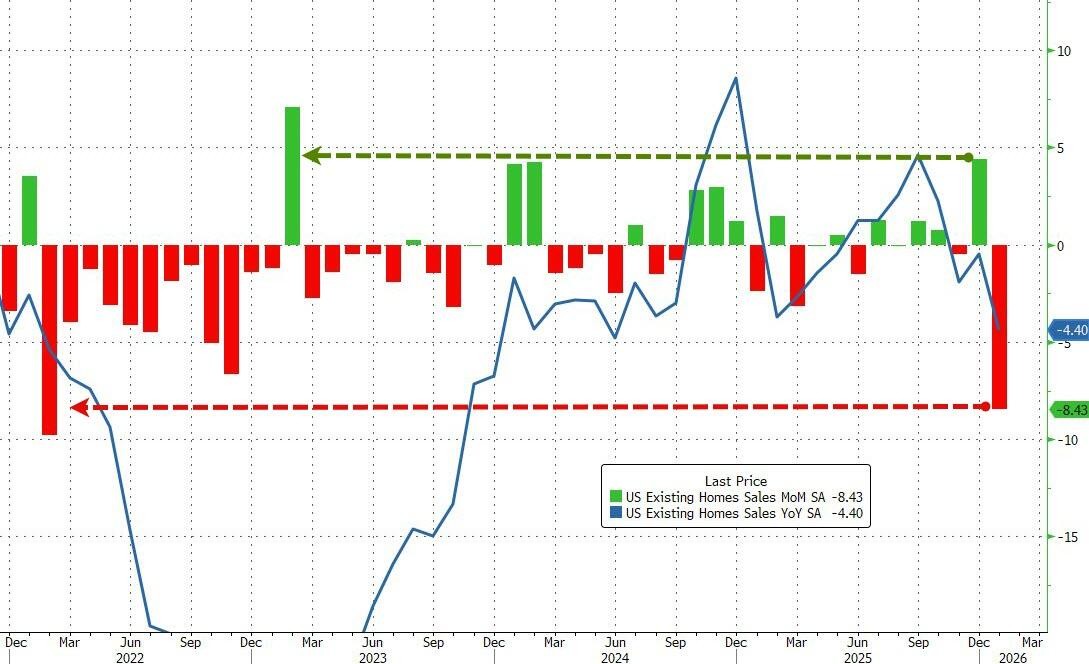
The widespread winter storm that swept across most of the U.S. in late January, bringing icy and snowy weather, likely delayed the closing of many home contracts. In the southern region, which was hit hardest and is the largest home sales area in the U.S., sales fell by 9%, translating to an annual rate of 1.81 million units. The transaction volume in other regions of the U.S. also saw a significant decline.
The NAR report indicated that the median home price for existing homes rose by 0.9% year-on-year in the previous month, reaching $396,800.
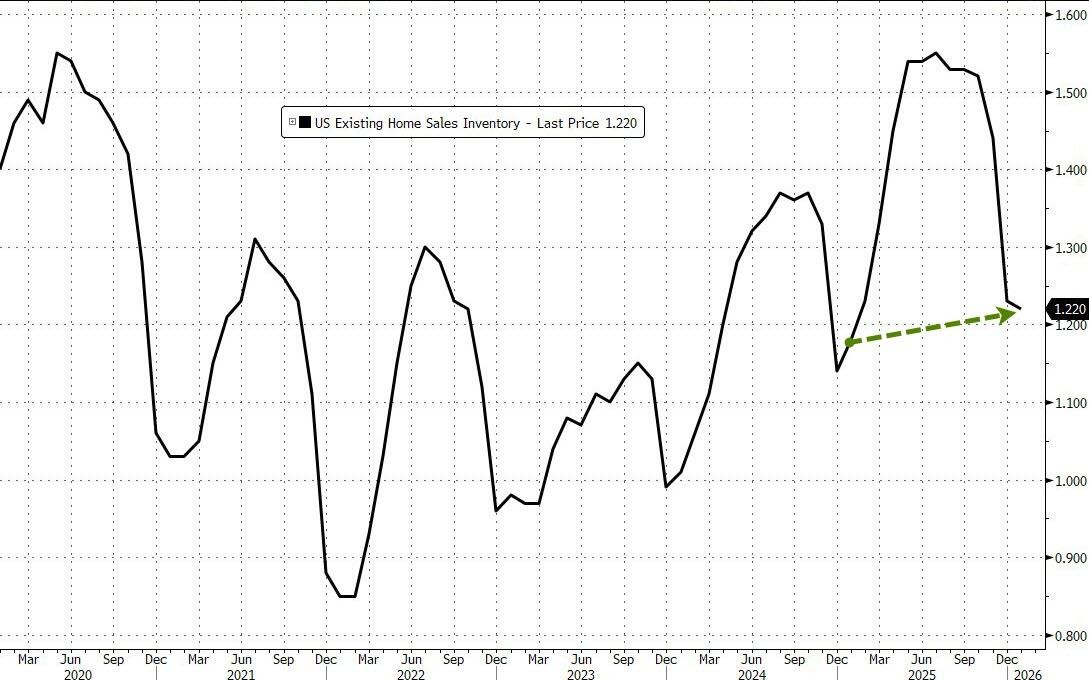
In January, the inventory of existing homes increased by 3.4% year-on-year, reaching 1.22 million units.
First-time homebuyers accounted for 31% of existing home buyers in January, up from 29% the previous month and higher than the same period last year.
NAR Chief Economist Lawrence Yun stated in a statement:
The temperatures in January were below normal, and precipitation was above normal, making it more difficult than usual to assess the underlying reasons for the decline in sales, and it is hard to determine whether this month's data is just an anomaly.
An increase in supply since 2025 has helped to curb rising home prices, but Yun mentioned in a conference call with reporters that the number of listings still needs to increase significantly to truly boost sales.
A new highlight in the U.S. real estate market is the signs of improvement in affordability. Recently, mortgage rates have fallen, and the pace of home price increases has slowed. The NAR's Housing Affordability Index rose to its highest level since 2022 last month, but it remains well below pre-pandemic levels. Analysts suggest that if a sustained period of affordability improvement is not experienced, the recovery of the real estate market may be delayed.
Market analysts expect home sales to rebound this year. According to a media survey conducted in December, the forecast for sales growth ranges from 1.7% to 14%, as the pace of home price increases has finally slowed, and borrowing costs have stabilized. Last month, mortgage rates fell to 6.16%, the lowest level in over a year.
U.S. President Trump has attempted to boost the real estate market through a series of measures. Amid severe electoral pressure on Republican lawmakers due to housing affordability issues, he has taken steps to prohibit institutional investors from purchasing single-family homes and instructed Fannie Mae and Freddie Mac to purchase $200 billion in mortgage-backed securities
