How to understand the normalization of central bank buying and selling of government bonds?

Guolian Minsheng Securities believes that the central bank's buying and selling of government bonds has shifted to normalization, aiming to open up new channels for the injection of base currency and to regulate long-term interest rates. Currently, the proportion of bonds held by our central bank is far lower than that of the US and Japan, indicating significant room for increase. At the same time, the decline in loan interest rates in the fourth quarter of 2025 is expected to narrow significantly, showing that the pressure on bank interest margins is easing, and the probability of reserve requirement ratio cuts and interest rate reductions in the short term is expected to decrease. The mid-term "asset shortage" may return
Guolian Minsheng Securities released a research report on February 11, 2026, interpreted by analysts Wang Xianshuang and Wen Xueyang, regarding the central bank's latest publication of the “2025 Q4 China Monetary Policy Implementation Report”. The report focuses on the normalization of the central bank's government bond trading operations, which is a key signal for understanding the evolution of China's monetary policy framework and the direction of the bond market.
The Triple Logic Behind Normalization
The report clearly states that "in the future, the People's Bank of China will normalize government bond trading operations, focusing on changes in long-term yields and flexibly managing the scale of operations." This marks a significant adjustment in the central bank's monetary injection channels.
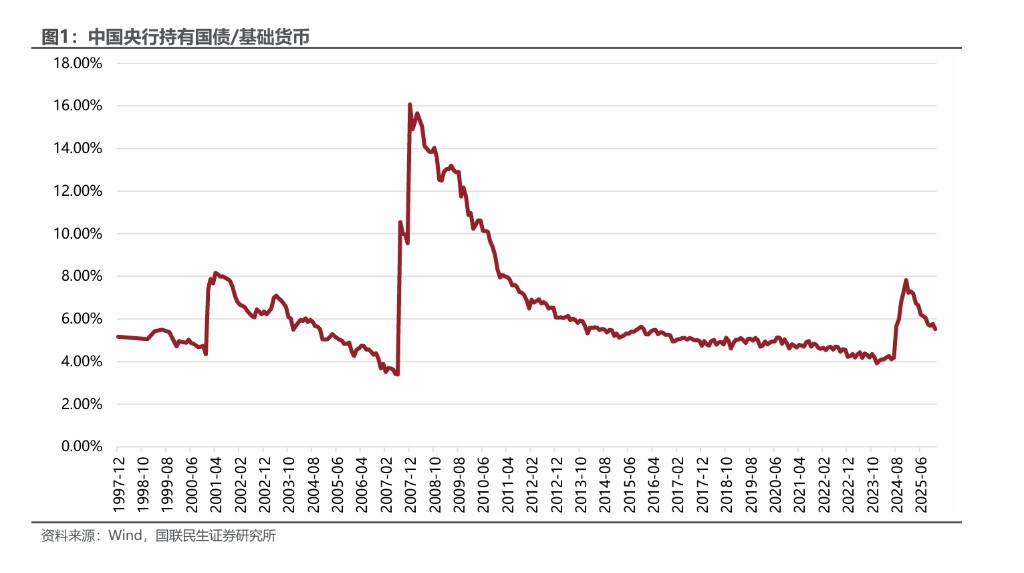
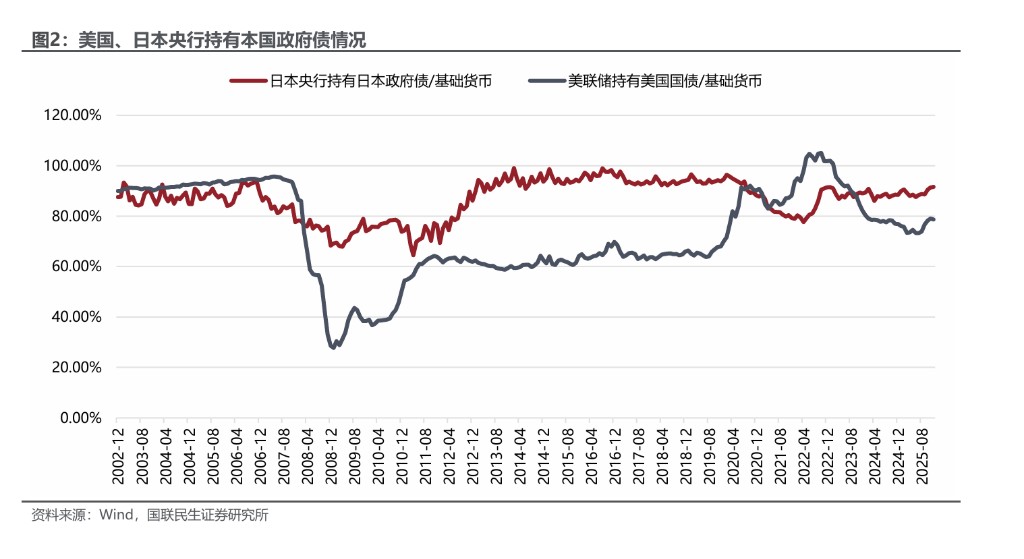
Guolian Minsheng interprets this shift from three dimensions: In the long term, an average annual injection of 3.2 trillion yuan of base currency is needed, but the statutory reserve ratio is already low, and foreign exchange holdings are growing limitedly, so the central bank needs to find new injection channels; In horizontal comparison, the U.S. and Japan's central banks hold government bonds accounting for 79% and 92% of their base currency, respectively, while China's is only 5.5%, indicating significant room for increase; In the short term, the central bank has cumulatively net purchased about 700 billion yuan of government bonds, with an average maturity of 500-600 billion yuan per month based on an average one-year term, requiring continuous rollover operations.
Signs of Easing Interest Margin Pressure
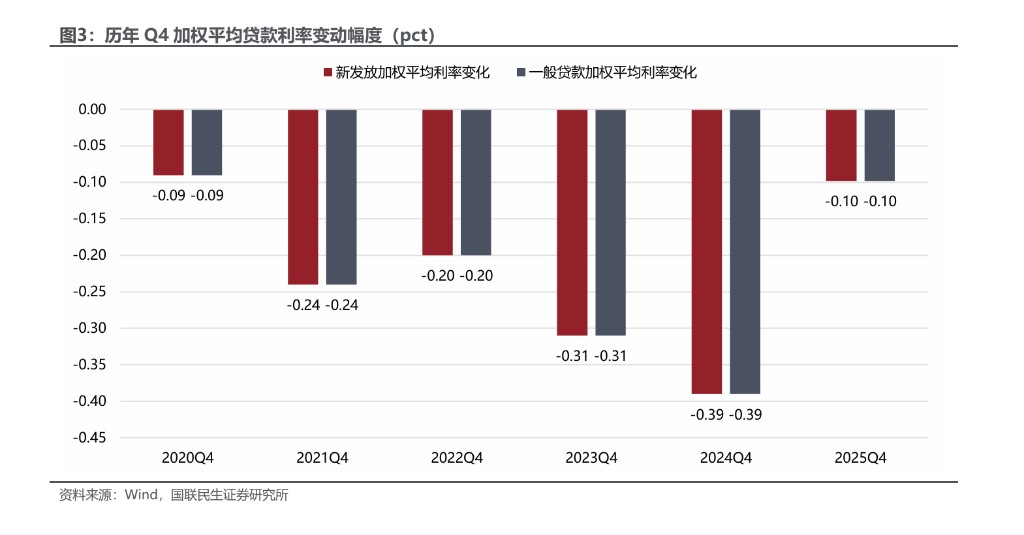
It is noteworthy that the downward momentum of loan interest rates in Q4 2025 has significantly slowed. The weighted average interest rate of newly issued loans decreased by only 10 basis points month-on-month, the smallest decline since 2021, far below the declines of 31 basis points and 39 basis points in Q4 2023 and Q4 2024, respectively. Guolian Minsheng believes that the downward pressure on new loan interest rates in the industry is gradually easing, and there is a possibility of stabilization or even rebound in Q1 2026, coupled with the maturity of high-interest deposits, which is expected to alleviate banks' interest margin pressure.
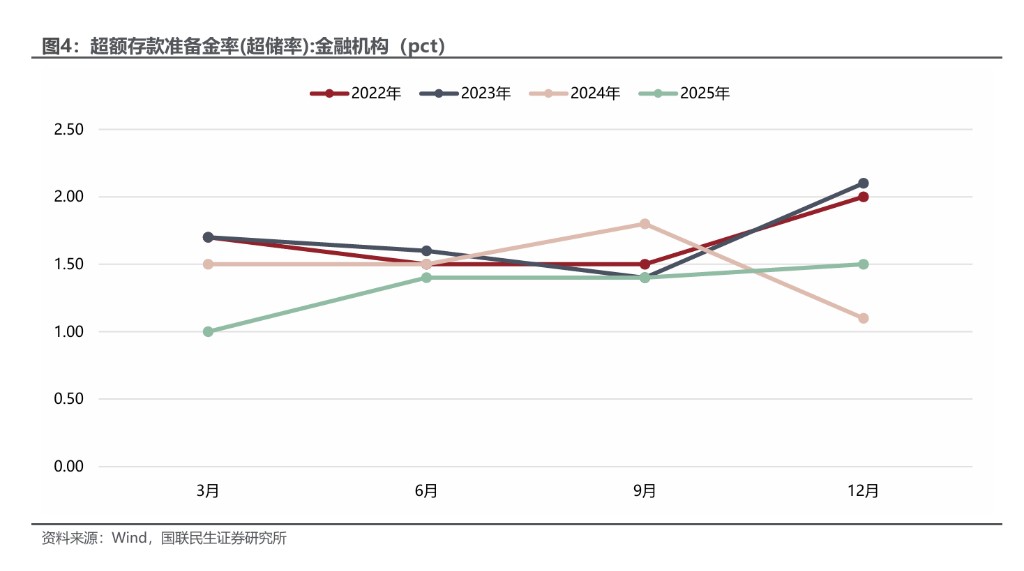
The report shows that the excess reserve ratio rose to 1.5% at the end of 2025, an increase of 0.4 percentage points year-on-year, explaining the phenomenon of a relatively loose funding environment at the beginning of the year. Looking ahead, considering the high activity level in the capital market, Guolian Minsheng expects a low probability of reserve requirement ratio cuts and interest rate reductions in the first quarter. In the medium term, the phenomenon of "asset scarcity" may return, and there is room for long-term bond yields to decline; regarding stock market liquidity, a neutral to conservative expectation will be maintained until M1 growth stabilizes, and attention can be paid to opportunities for excess returns in the banking sector.