


Beginning of the Year Inflation: The Resurgence of Green Shoots

At the beginning of the year, the January CPI fell year-on-year, but the core CPI and PPI strengthened month-on-month, indicating signs of recovery in consumption and the industrial sector. The core CPI rose by 0.3% month-on-month, reaching a nearly six-month high, while the PPI hit its highest point since October 2023. The misalignment effect of the Spring Festival caused the January CPI to drop to 0.2% year-on-year, but the increase in core CPI indicates an improvement in consumer demand. The rise in international commodity prices and the recovery of the technology sector also contributed to core inflation. Overall, the sustainability of the inflation rebound is expected to strengthen
In the early window of the year, where the base effect and seasonality intertwine, although the January CPI saw a year-on-year decline, the core CPI and PPI both strengthened month-on-month, showing initial signs of recovery in both the consumption and industrial sectors. Driven by effective consumption-boosting policies at the beginning of the year, the core CPI rose by 0.3% month-on-month, reaching a nearly six-month high; the PPI also hit its highest point since October 2023 due to factors such as "anti-involution" and the transmission of international commodity prices. Does the strong momentum displayed on a month-on-month basis indicate that the sustainability of inflation recovery is strengthening? Specifically:
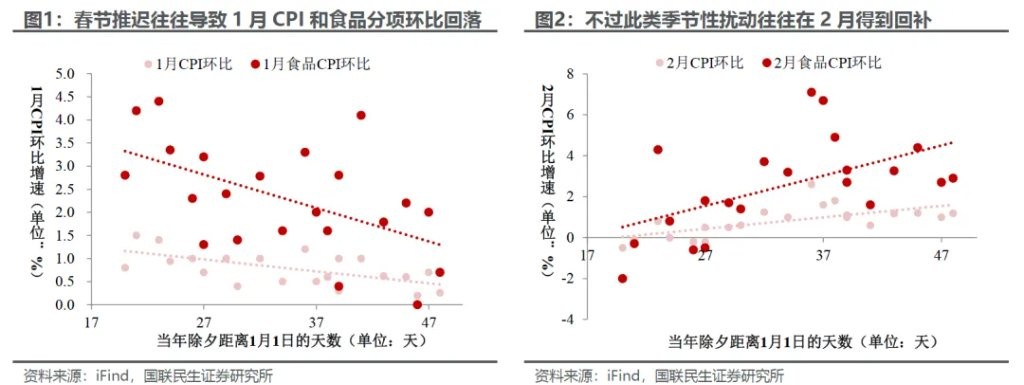
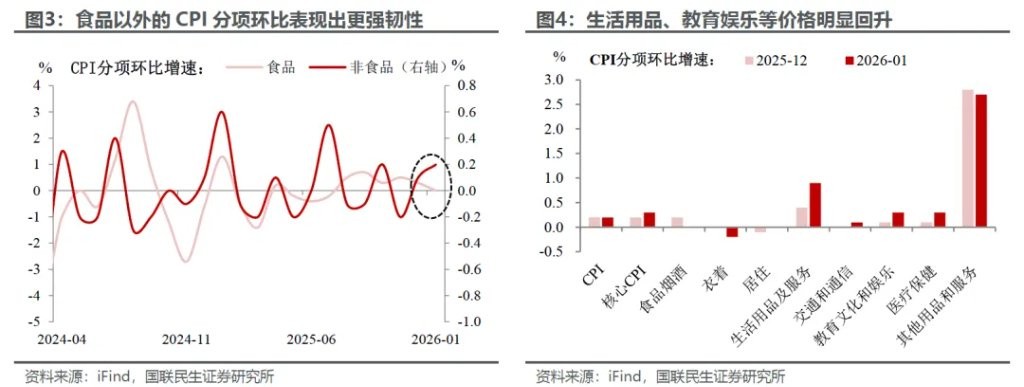
Due to the misalignment effect of the Spring Festival, the January CPI fell more than expected year-on-year. The month-on-month growth rate of the January CPI remained flat with the previous month at 0.2%, while the year-on-year growth rate dropped significantly to 0.2% (previous value 0.8%), mainly disturbed by the misalignment of the Spring Festival. Historical experience shows that a later Spring Festival typically drags down the month-on-month performance of food and overall CPI in January; this year's Spring Festival was nearly 20 days later than last year, further leading to weaker food price increases. However, this seasonal disturbance usually gets concentrated replenishment in February, so there is no need to overly worry about the year-on-year decline in CPI.
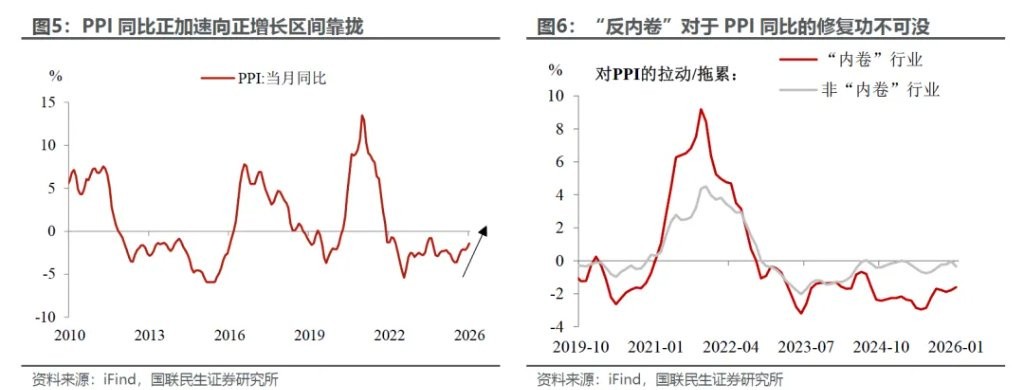
On the contrary, the core CPI has already shown signs of an "opening red" for inflation. The core CPI rose by 0.3% month-on-month in January, reaching a nearly six-month high, and its structural strengthening confirms that residents' consumption demand is gradually improving at the beginning of the year, providing important support for subsequent moderate inflation recovery. On one hand, the effects of consumption-boosting policies at the beginning of the year continue to show, with prices of household appliances, daily necessities, and other items continuing to rise, and commodity consumption steadily recovering; on the other hand, pre-holiday travel and entertainment service demands are gradually being released, driving significant increases in prices for tourism, film, and housekeeping services, with a stronger recovery momentum in service consumption. As February officially enters the peak consumption season of the Spring Festival, signs of price increases are expected to become more pronounced.
In addition, the rise in international commodity prices and the upturn in the technology sector also boost core inflation. In January, the rise in international gold prices transmitted to the domestic market, leading to continued increases in gold jewelry prices; at the same time, the recovery in the technology sector drove price increases for chips and memory devices, with data storage devices and computers rising by 8.0% and 2.6% month-on-month, respectively, both supporting the core CPI.
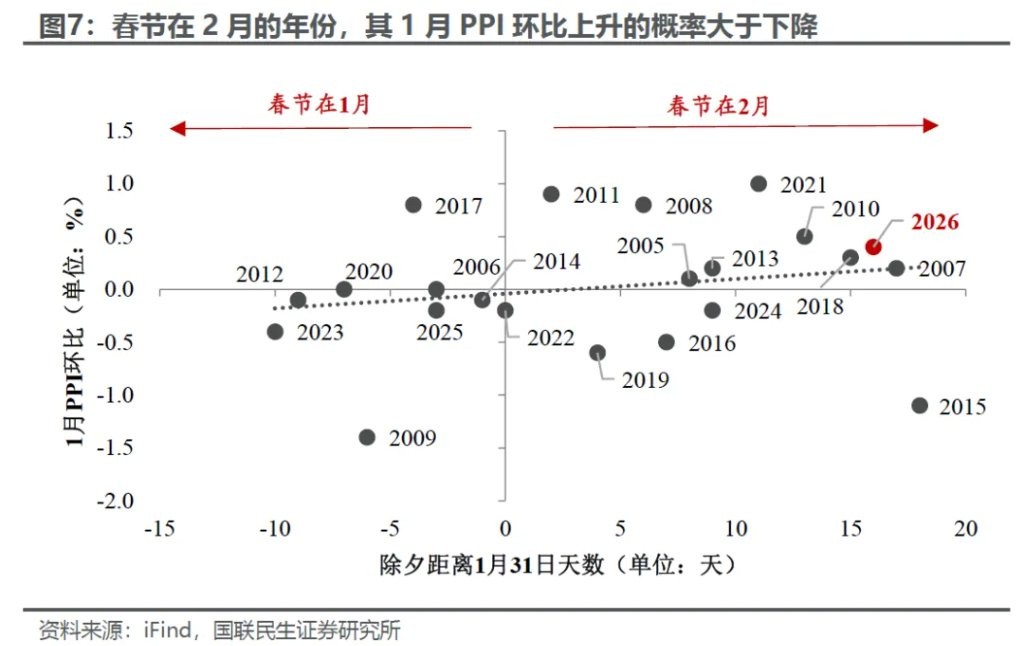
The green shoots of PPI recovery have long been sown in last year's "anti-involution." The January PPI data successfully achieved an "opening red," with the year-on-year decline narrowing to -1.4% (previous value -1.9%) and the month-on-month increase expanding to 0.4% (previous value 0.2%), both reaching their highest values since August 2024 and October 2023, respectively. The year-on-year PPI is accelerating towards positive growth territory, and the key driving force behind this is none other than "anti-involution"—since the Central Financial and Economic Committee meeting in July 2025, The PPI of related "involution" industries has been continuously recovering year-on-year.
In addition to the optimization of supply-side order, the January PPI is also influenced by the transmission of international commodity prices and the timing of the Spring Festival. Historical patterns show that in years where the Spring Festival falls in February, the probability of the January PPI rising month-on-month is greater than that of it falling. Besides the fact that January is essentially a complete production month, another reason is that companies tend to stock up and procure in bulk to prepare for the long holiday, which creates a short-term demand pulse. Some companies may also tentatively raise prices, thereby pushing up the PPI growth rate.
Risk Warning and Disclaimer
The market carries risks, and investments should be made cautiously. This article does not constitute personal investment advice and does not take into account the specific investment goals, financial conditions, or needs of individual users. Users should consider whether any opinions, views, or conclusions in this article align with their specific circumstances. Investing based on this is at one's own risk
