


The market focuses on the U.S. non-farm payrolls, the Asia-Pacific market continues to hit new highs, the U.S. dollar has fallen for four consecutive days, and gold has stabilized above the $5,000 mark

Weak U.S. data ignites rate cut expectations, MSCI Asia-Pacific Index rises 1% to a record high, South Korea's Seoul Composite Index expands its intraday gain to 1%, the U.S. dollar weakens across the board, and spot gold rises 0.4% to $5,044.53 per ounce. The market is closely watching key employment reports and inflation data, as investors quickly adjust their positions betting on a policy shift. The Asian market continues to outperform Europe and the U.S. this year, benefiting from AI dividends and resilience
Weak U.S. economic data exacerbates expectations for Federal Reserve rate cuts, pushing Asian stock markets to historic highs, while the dollar weakens against all G10 currencies as investors adjust positions ahead of key employment reports.
The MSCI Asia-Pacific Index rose 1% to a record high on Tuesday, further expanding its lead over European and American stock markets this year. U.S. Treasury futures continued to rise, with the 10-year yield falling to its lowest level in about a month. Gold, which typically benefits from rate cuts, rose 0.4%, with spot prices holding above $5,000.
U.S. retail sales data for December unexpectedly stagnated, indicating a weakening consumer support for the economy at year-end, reinforcing expectations that the Federal Reserve may cut rates later this year. The swap market has increased pricing for a third rate cut this year, with two cuts nearly fully priced in before the September meeting. The dollar spot index fell 0.2% for the fourth consecutive day.
Market focus has now shifted to the employment report due Wednesday and inflation data later this week for more signals on policy outlook. Economists expect 65,000 new jobs in January, which would be the best performance in four months, with the unemployment rate likely holding steady at 4.4%. The employment data will also include annual revisions, expected to show a downward adjustment in the number of jobs through March 2025.
- S&P 500 futures rose 0.3%.
- The Seoul Composite Index in South Korea expanded its intraday gains to 1%.
- The Australian S&P/ASX 200 Index closed up 1.7% at 9,014.80 points.
- Indonesia's benchmark stock index rose 1% to 8,211.28.
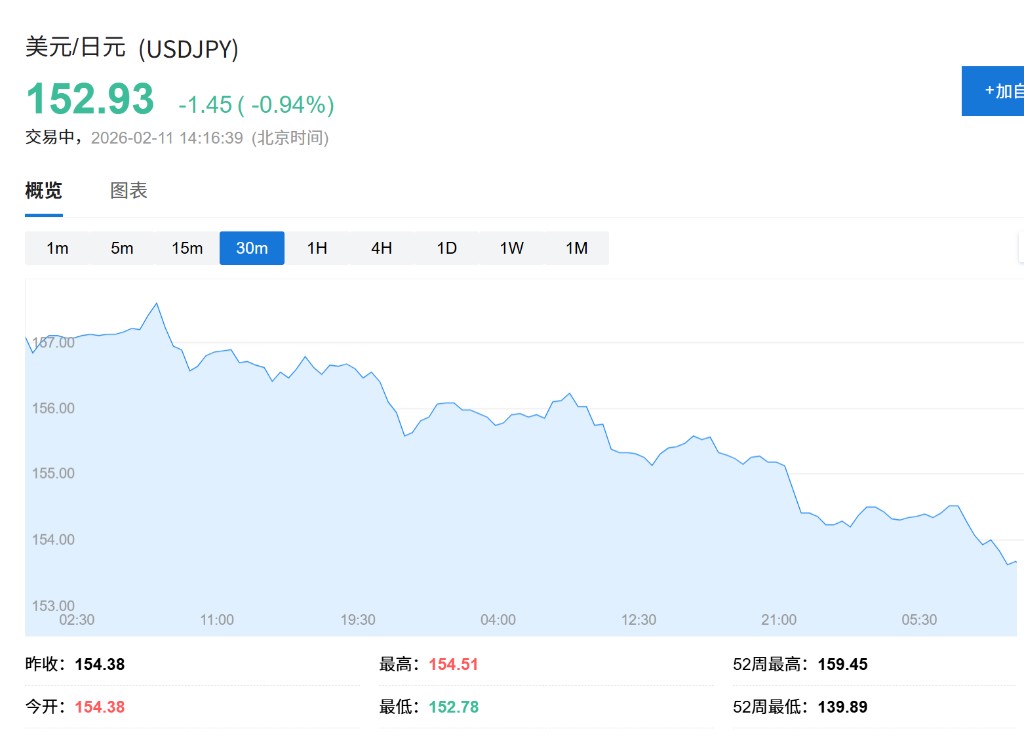
- The dollar fell below 153 against the yen, with an intraday decline of 1%, currently at 152.85.
- The euro rose 0.1% to $1.1908.
- The yield on Australian 10-year government bonds fell by 7 basis points to 4.76%.
- Bitcoin fell 1.6% to $67,531.27.
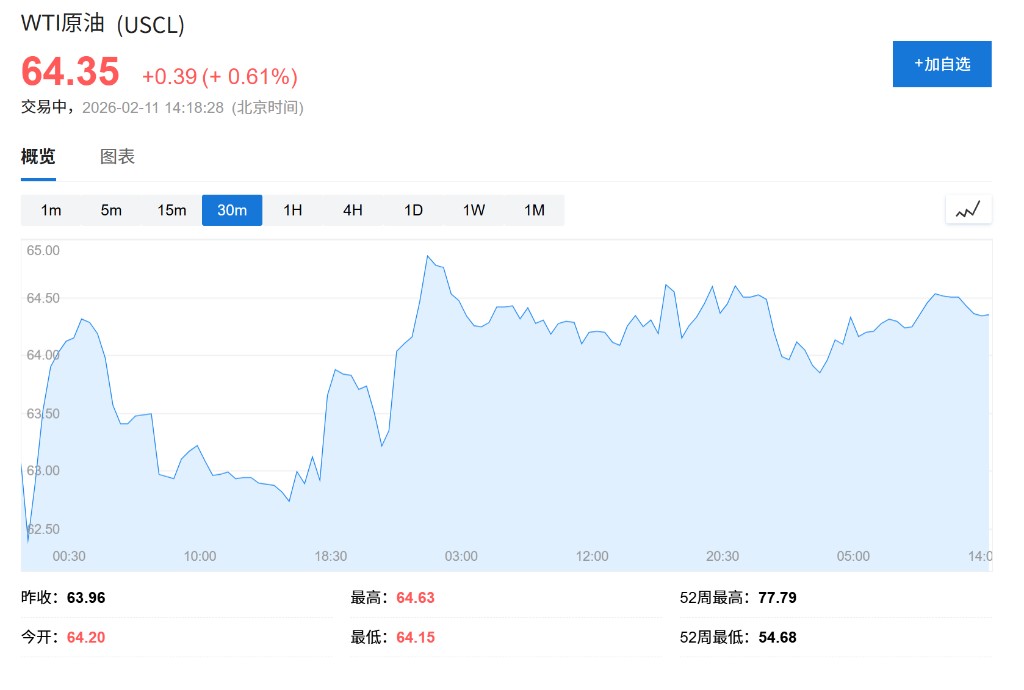
- Brent crude oil rose 0.8% to $69.36 per barrel, while West Texas Intermediate crude rose 0.9% to $64.52.
- Spot gold rose 0.4% to $5,044.53 per ounce.
Employment Data Becomes Key for the Market
"The employment report will be key," said Bret Kenwell of eToro. "Weak data could further shift market sentiment towards risk aversion as growth concerns intensify, but robust data could alleviate some worries."
Lorraine Tan, Director of Asian Equity Research at Morningstar, stated, "With recent economic data being mixed, the market's focus on tonight's U.S. employment report may be heightened. If the data is weak, it should raise expectations for a Federal Reserve rate cut."
Money market data shows that traders now slightly increased the odds of three rate cuts this year, which is an increase from a week ago, with Tuesday's weaker-than-expected retail sales data adding momentum to the dovish shift. The U.S. Department of Commerce reported that December retail sales unexpectedly stagnated, indicating reduced consumer support for the economy at year-end
Asian Markets Lead Global Gains
Asian markets are experiencing another explosive year, outperforming their counterparts in the United States and Europe. Most stock benchmark indices in the region have risen in 2026, with currencies showing resilience under external pressure and credit demand pushing spreads close to historical lows.
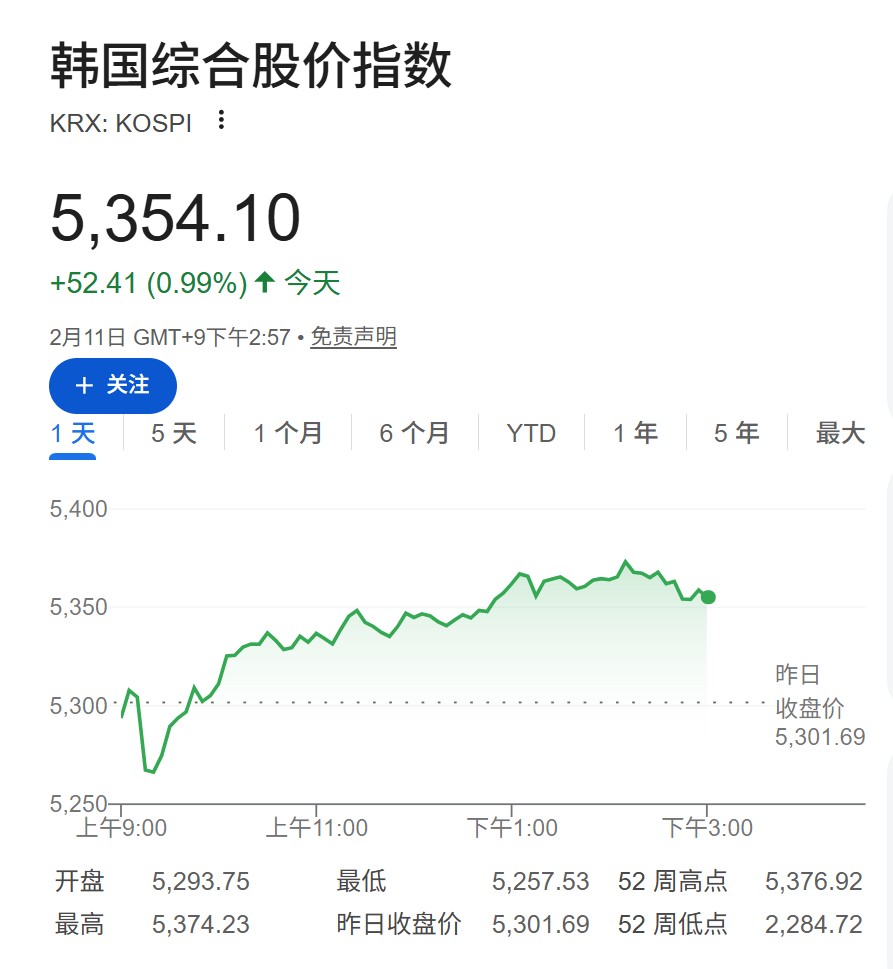
Although still in the early stages of the year and Asia has not completely avoided global volatility, there are various forces favoring the region. Artificial intelligence is one of the themes, as global investors grapple with billions of dollars in spending and the disruptions it brings.
On Tuesday, the S&P 500 index fell 0.3% due to weakness in several tech stocks, although the index remains close to the record high set last month. S&P 500 and Nasdaq 100 futures continue to rise, with momentum seemingly carrying over to Wall Street.
Dollar Under Pressure Across the Board
The dollar has fallen against all major currencies as investors increased bets on a Federal Reserve rate cut following new signs of weakness in the U.S. economy. David Forrester, a strategist at Crédit Agricole in Singapore, stated, "The relative interest rate story is coming back into play, and weak U.S. economic data is encouraging investors to price in a higher likelihood of further rate cuts by the Fed."
The Australian dollar led gains against the U.S. dollar after Reserve Bank of Australia Deputy Governor Andrew Hauser indicated that inflation remains "too high," paving the way for further rate hikes. The yen strengthened for the third consecutive day after Prime Minister Kishi Sanae won the election over the weekend.
Hedge funds are preparing for U.S. employment data by buying dollar-yen option structures, which will appreciate if the currency pair continues to decline. They are also buying Australian dollars in the spot market against the U.S. dollar. Calvin Yeoh, a hedge fund manager at Blue Edge Advisors, holds long positions in yen and stated, "Tonight's non-farm payroll data and CPI data are crucial for observing whether this interest rate divergence continues."
Gold Holds Above $5,000
Gold has risen moderately, consolidating gains above $5,000, supported by weak U.S. retail sales data that bolstered the case for a Federal Reserve rate cut. Spot gold rose 0.6% to $5,059.53 per ounce.
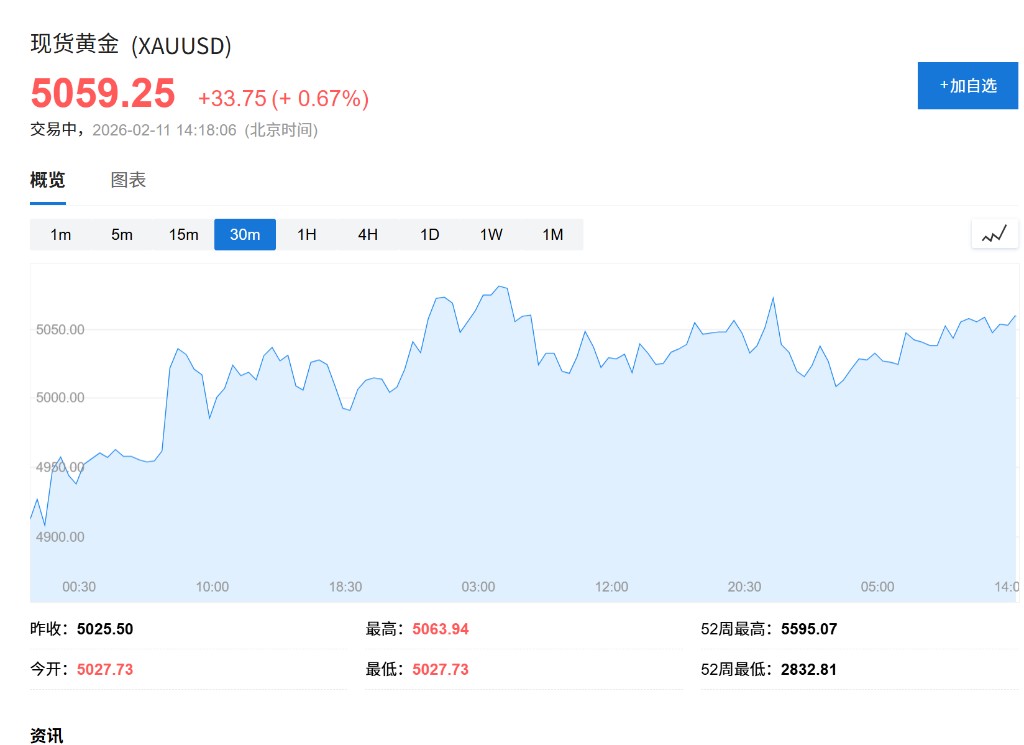
Manav Modi, an analyst at Motilal Oswal Financial Services in Mumbai, stated that declining yields have helped boost gold prices. Gold does not pay interest and typically rises when yields elsewhere become less attractive. The yield on the U.S. 10-year Treasury bond has fallen to its lowest level in nearly a month Gold surged to a historic high of over $5,595 per ounce in late January due to geopolitical turmoil, attacks on the independence of the Federal Reserve, and a shift of funds from traditional assets like currencies and sovereign bonds. However, speculative buying led to an overheating of the rally, causing gold to plummet about 13% within two trading days. It has since recovered about half of the decline and has been trading around $5,000 this week.
Many banks believe the rally will resume as the reasons supporting its rise still exist. BNP Paribas expects it to reach $6,000 by the end of the year, while Deutsche Bank and Goldman Sachs also have bullish forecasts. Silver rose 2% to $82.4272 per ounce, and both platinum and palladium increased by over 1.5%.
Other Market Dynamics
Oil prices rose as tensions in the Middle East surrounding Iran overshadowed the impact of a U.S. industry report showing a significant increase in inventories. Brent crude rose 0.8% to $69.36 per barrel, while West Texas Intermediate crude increased by 0.9% to $64.52. Reports indicate that the U.S. is considering seizing tankers carrying Iranian oil, and there are also reports that another aircraft carrier strike group may be deployed to the region if negotiations over Iran's nuclear program fail.
Regarding Bitcoin, despite so-called "whales" buying in after the price crash, the return of demand remains limited, raising doubts about whether this signals a true recovery. According to data from cryptocurrency analytics firm Glassnode, wallets holding more than 1,000 Bitcoins accumulated about 53,000 Bitcoins in a week, the highest since last November. On Wednesday morning, Bitcoin was priced at $67,443, down 1.7% from the previous night.
Glassnode's sales director Brett Singer stated, "This slows the downward trend, but the market needs more capital inflow."
