


0%! U.S. December retail sales unexpectedly stagnate, weak consumption at the end of the holiday season

U.S. retail sales in December unexpectedly showed zero growth month-on-month, significantly weaker than the expected increase of 0.4%, indicating weak and uneven holiday spending momentum. Out of 13 retail categories, 8 experienced declines, with spending from low-income groups particularly weak. Although high-income households are supported by asset appreciation, overall consumption is suppressed by high prices and weather factors
U.S. retail sales unexpectedly showed zero growth month-on-month in December, indicating that consumer support for the economy at the end of the year was weaker than expected. This data suggests that the strong performance at the beginning of the holiday shopping season may be short-lived and fragile, with households still facing high living costs.
On February 10, data released by the U.S. Department of Commerce showed that unadjusted retail sales in December were flat at 0%, significantly below the expected 0.4%, and also lower than the 0.6% increase in November. Core retail sales, excluding auto and gas station sales, fell 0.1% month-on-month.
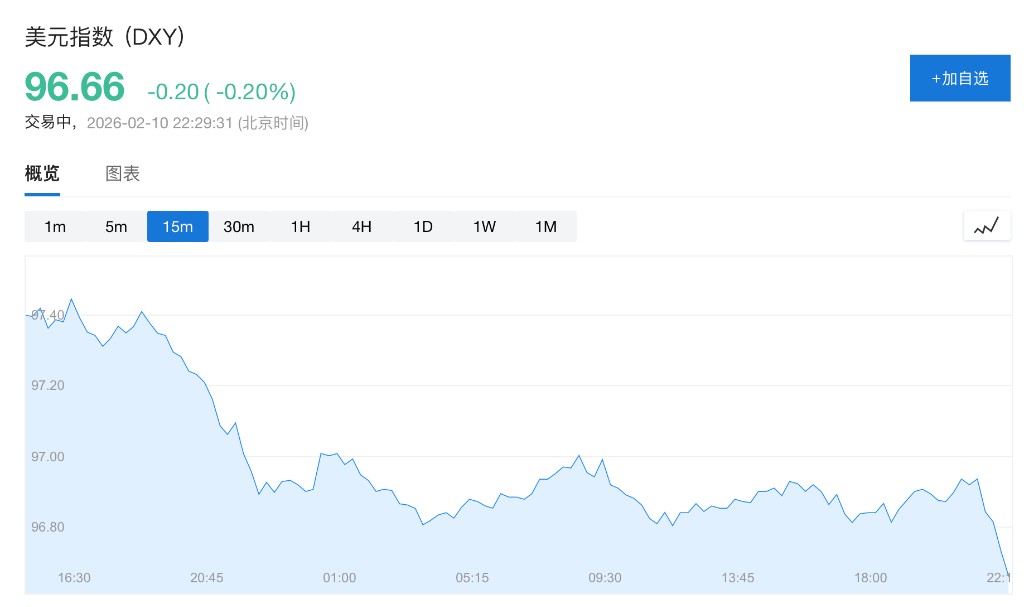
Following the data release, U.S. Treasury prices rose, and the dollar index briefly fell, turning negative during the day. The report intensified market concerns about consumer spending momentum, which is a major driver of U.S. economic growth.
For the Federal Reserve, the weak retail data may provide new considerations for future monetary policy paths. The money market now expects a higher likelihood of three interest rate cuts by the Fed in 2026 compared to a week ago, when the market anticipated two cuts.
Most Retail Categories Weak, Low-Income Spending Momentum Insufficient
Among 13 retail categories, 8 saw a decline in sales. Sales at clothing and furniture stores fell year-on-year, and auto dealer sales also recorded a decline. In contrast, spending at building material stores and sporting goods stores saw growth.
The structure of consumer momentum is also noteworthy. Although rising stock markets may support spending among high-income households, data shows that low-income groups, which primarily rely on wage growth, continue to show weak consumption performance. As the only service category in the retail report, spending at restaurants and bars saw a slight month-on-month decline of 0.1% after a significant increase in the previous month.
Early Year Consumption Fundamentals Face "Weather Disruption"
The severe cold weather in late January suppressed economic activity in most parts of the U.S., making it difficult for economists and policymakers to accurately assess the true fundamentals of household demand at the beginning of the year. Industry data shows that January auto sales had the slowest annualized growth rate in nearly three years, and air travel also experienced large-scale disruptions due to weather impacts.
Most economists expect that early-year tax refunds will support consumer spending. According to the latest retail sales data, the Atlanta Fed's GDPNow model indicates that household spending is expected to contribute more than 2 percentage points to fourth-quarter economic growth, slightly lower than the contribution in the previous quarter.
Consumption Stratification Intensifies
Recent corporate movements indicate that consumption trends are diverging among different income groups. Levi Strauss & Co. stated that despite implementing some price increases, they have not observed a contraction in consumer spending. PepsiCo noted that budget pressures on middle- and low-income consumers remain significant. Meanwhile, athletic apparel brand Lululemon observed that American consumers are shifting towards more cost-effective consumption choices.
Due to the significant discounts commonly seen during the holiday season, the unadjusted retail data may be somewhat affected. The currently released retail data mainly reflects goods consumption, which accounts for about one-third of total household spending in the U.S The inflation-adjusted overall expenditure data for goods and services in December will be officially released on February 20th local time
