


Lumentum's performance surged, establishing two major industry trends: CPO and OCS optical switches

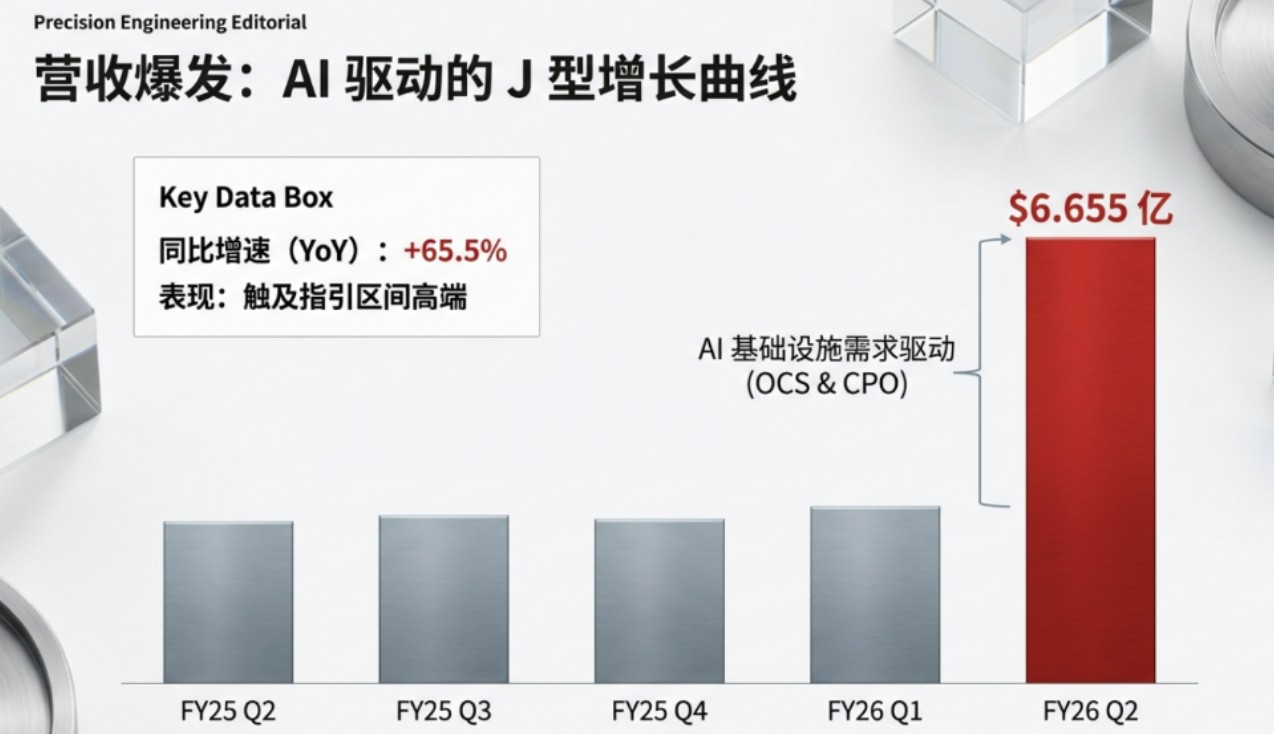
Lumentum's performance has significantly increased, establishing the importance of Optical Circuit Switches (OCS) and Co-Packaged Optics (CPO) in AI infrastructure. The company's revenue in the second quarter grew by over 65% year-on-year, and it expects an 85% growth in the next quarter. CEO Michael Hurlston pointed out that the OCS business has a backlog of over $400 million in orders, and the CPO sector has also secured hundreds of millions of dollars in new orders, demonstrating the company's strong momentum in meeting the bandwidth and energy efficiency demands of AI data centers
The trend of "optical advancement" is becoming increasingly clear, with industrial waves triggering new hotspots. Lumentum's performance further establishes the future prospects of this industry. This article provides an understanding of the industry's development progress and future blueprint.
For the domestic industrial chain, which segments can participate in the division of labor and benefit?
1. What happened? Lite's performance exploded
In our previous two VIP articles on optical chips, we mentioned that "optical advancement and copper retreat" has become an increasingly certain development trend for the entire AI industrial cluster. Lumentum (hereinafter referred to as Lite) validated the bright prospects of the industry with a strong earnings report and future guidance.
Thanks to the strong demand for Optical Circuit Switches (OCS) and Co-Packaged Optics (CPO), optical module giant Lumentum delivered a revenue and profit report that exceeded expectations, and provided a next-quarter guidance of up to 85% year-on-year growth, proving its key position in AI computing infrastructure to the market. 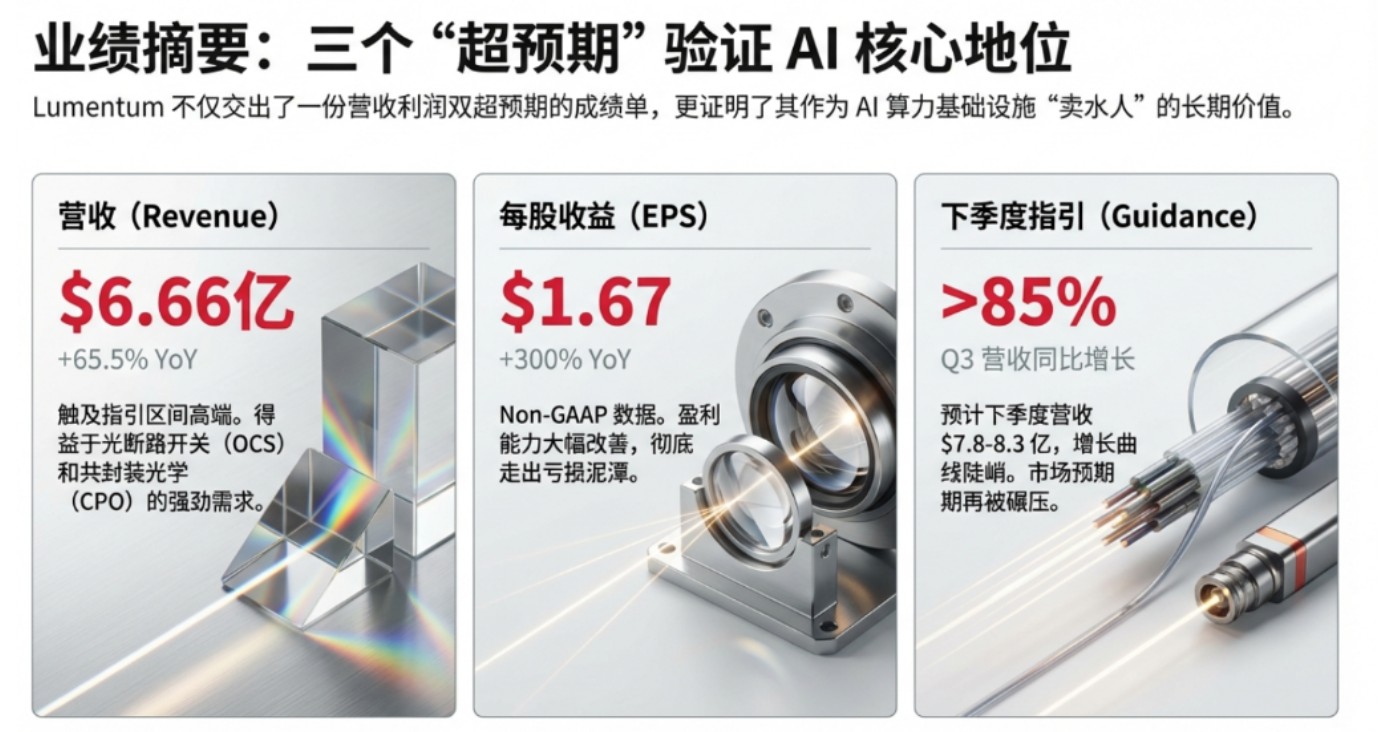 CEO Michael Hurlston emphasized: "Lumentum achieved an outstanding second-quarter performance, with revenue growth exceeding 65% year-on-year, and Non-GAAP operating margin expansion exceeding 1700 basis points. Revenue reached the high end of guidance, while profitability and earnings per share expansion far exceeded previous expectations, fully demonstrating the leverage effect of our business model." More notably, the company is experiencing strong momentum in the AI infrastructure sector. The OCS business is rapidly expanding to meet extraordinary customer demand, with a backlog of orders exceeding $400 million; in the CPO sector, the company has recently secured a multi-hundred-million-dollar incremental order, which will be delivered in the first half of 2027. The CEO emphasized that with the explosive growth in bandwidth and energy efficiency requirements from AI data centers, Lumentum is entering its strongest growth cycle in history.
  What is OCS?
OCS (Optical Circuit Switch) is a technology that enables direct switching of optical signals between fiber ports. The principle of OCS is to physically reconstruct the path of optical signals, thereby establishing dedicated optical paths between input/output ports. 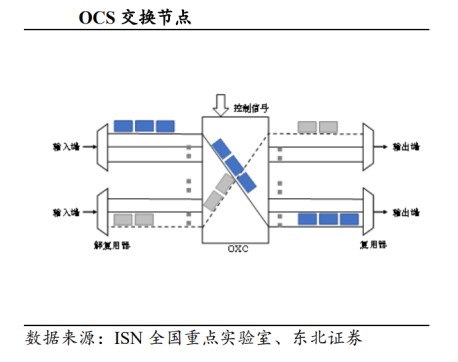 Compared to traditional AI architectures, packet-switched switches based on electrical signals (EPS) face serious power consumption and heat dissipation issues, as well as expensive wiring costs. According to Cisco's calculations, the total power consumption of data center switching systems has increased 22 times over the past decade. Google's introduction of OCS technology essentially allows for dynamic orchestration of computing resources across racks, combining computing power like building blocks, thus breaking through the resource waste bottleneck of static racks
In the Ironwood cluster, 48 OCS switches are connected to 9,216 TPU chips, creating a low-latency, high-bandwidth dynamic photonic network.
Compared to traditional AI architectures, packet-switched switches based on electrical signals (EPS) face serious power consumption and heat dissipation issues, as well as expensive wiring costs. According to Cisco's calculations, the total power consumption of data center switching systems has increased 22 times over the past decade. Google's introduction of OCS technology essentially allows for dynamic orchestration of computing resources across racks, combining computing power like building blocks, thus breaking through the resource waste bottleneck of static racks
In the Ironwood cluster, 48 OCS switches are connected to 9,216 TPU chips, creating a low-latency, high-bandwidth dynamic photonic network.
In summary, the rise of OCS has four main advantages:
① Rate independence: Today's data centers are heterogeneous, running multiple different rates and bandwidths simultaneously. OCS is completely rate-independent, allowing for flexible switching between different transmission rates and supporting faster scaling and expansion. This means that OCS can seamlessly adapt to interconnections between 800G and 1.6T, 3.2T optical modules, providing an "upgrade-free" architectural guarantee for the long-term evolution of data centers.
② High bandwidth capability: OCS optical switching does not rely on fixed rates, allowing full utilization of the fiber's capacity, thus achieving higher data throughput. This makes network resource utilization more efficient, meeting the growing bandwidth demands of modern data centers.
③ Power efficiency: OCS does not require optoelectronic conversion, significantly reducing power consumption. Data centers using OCS can achieve substantial energy savings, promoting environmental sustainability while lowering costs.
④ High scalability: The OCS architecture has inherent scalability, supporting more ports and higher aggregated throughput, suitable for the dynamic and continuously growing demands of modern data centers without frequent upgrades.
Therefore, for giants, adopting OCS technology in building data centers can significantly enhance overall network performance, operational efficiency, and sustainability, with notable advantages and lower operating costs.
II. Why is it important? A must-have for the next generation industry
Lite's strong growth demonstrates that AI computing power is sprinting towards the "all-optical" era, which will drive the reconstruction of industrial paths and investment paradigms. This marks a substantial financial report turning point for the global computing power center network transitioning from "electrical switching" to "optical switching (OCS)" and from "pluggable modules" to "co-packaged optics (CPO)." The backlog of $400 million in orders will establish 2026 as the year of large-scale commercial use of "all-optical switching."
① Verification of key materials: The dominance of 200G EML and CW light sources
The shipment volume of 100G/200G EML (electro-absorption modulated laser) has reached a historical high. 200G EML accounts for 10% of the revenue from optical chips, marking that 1.6T optical modules (composed of 8 200G channels) are entering the mass deployment stage. The deep binding of CW light sources with CPO: Lumentum has confirmed that its ultra-high power CW (continuous wave) light sources will ramp up in the second half of 2026. CPO has added hundreds of millions of dollars in orders, mainly serving top computing giants like NVIDIA with CPO architecture.
② The deeper meaning of order backlog
The OCS backlog exceeds $400 million, with cumulative orders for CPO around $400 million.
According to research, the unit price of a single 350mw CW light source is about USD. A 115.2T CPO switch requires 144 light sources. This indicates an order volume of nearly 100,000 CPO switches, showing that CPO is no longer a lab demo but has entered the procurement list of large-scale data centers With the evolution of single-port rates to 1.6T and 3.2T, traditional pluggable optical modules face challenges of poor signal integrity and excessive power consumption. CPO packages silicon photonic engines with switching chips (ASICs) to shorten electrical transmission paths. Since silicon photonic chips are not heat-resistant, CPO requires high-power external continuous wave (CW) light sources. The substantial order received by Lumentum is specifically aimed at this segment. Lumentum is currently the sole supplier of NVIDIA's CPO CW light sources. This demonstrates that in the field of ultra-high power lasers, the technical barriers are extremely high due to the need to address heat dissipation, reliability, and power stability.
The promotion of CPO will change the value distribution in the optical module industry: from "buying modules" to "buying chips + light sources": *switch manufacturers may directly procure light sources and silicon photonic components. CPO and silicon photonics are a natural pair, which will accelerate the expansion of Intel, Broadcom, and TSMC's influence in the optical interconnect field.
In addition to CPO, the OCS market also needs attention.
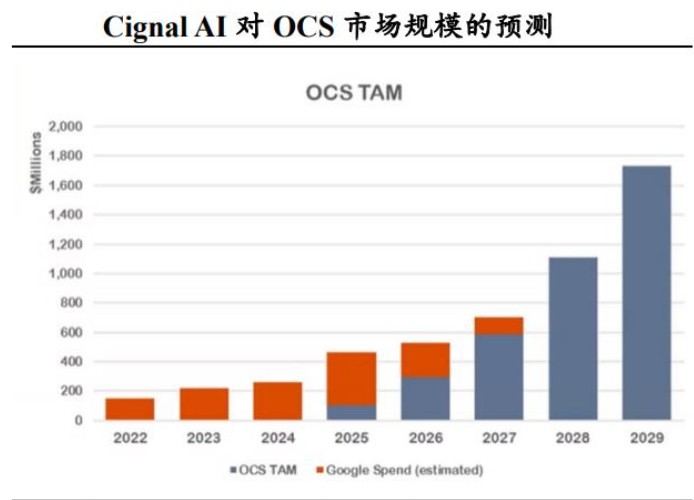
According to Cignal AI's estimates, the OCS market will be dominated by Google's MEMSOCS in 2025, with an overall market size of approximately $400 million; by 2029, the market size of OCS will exceed $1.6 billion, with a four-year CAGR of about 41%. Light Counting expects OCS shipments to exceed 50,000 units by 2029, with a CAGR of 15% for OCS shipments from 2025 to 2030, and more cloud vendors besides Google will drive market growth.
 2026 will be a key turning point for the AI computing power market. In the past, the market was primarily driven by model training demands, which required hardware to possess extremely high computational power and versatility to adapt to evolving algorithm architectures. However, as foundational models mature, the focus of computing power consumption is shifting towards model inference and services.
This transition places new demands on hardware: in large-scale commercial applications, the power and hardware depreciation costs for generating one million tokens become core business metrics. This means that in the inference domain, NVIDIA's advantage in general-purpose chips is diminishing, forcing NVIDIA to further accelerate optical interconnect technology to reduce power consumption costs.
III. What to Focus on Next? Industry Chain Winners
According to the BOM breakdown of OCS products, the core incremental segments include:
① MEMS micro-mirror chips: the highest value, achieving optical path switching by controlling the deflection of tiny mirror surfaces. Currently dominated by Lumentum, Coherent, and some specialized MEMS foundries.
② High-precision lens arrays: requiring extremely high coupling precision.
③ Optical Circulators and Isolators: The demand for traditional passive optical devices in OCS has surged. 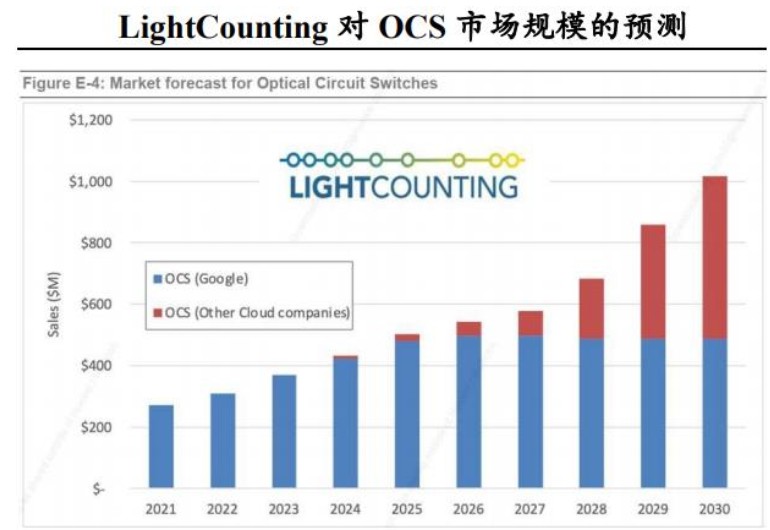
Optical Chips and Light Sources (High Value Area)
Lumentum (LITE.US): Sole supplier of CPO light sources, leading OCS system provider, core manufacturer of 200G EML. Value Point: Pricing power and certainty of orders brought by technological barriers.
Coherent (COHR.US): Also possesses high-end EML and OCS capabilities, is Lumentum's strongest competitor.
Yangtze Optical Fibre and Cable (601869.SH/06869.HK): Although its main business is optical fibers, it holds the largest market share in G.654.E long-distance optical fibers (DCI interconnection core) and OM4/OM5 multimode fibers for data center interconnections. Value Point: Industry cycle bottoming out and warming up, AI upgrades driving demand for high-end products.
Conclusion: Optical module companies have been viewed as "contract manufacturers," with gross margins typically between 20%-30%. However, Lumentum's gross margin of 42.5% and the technological barriers brought by 1.6T indicate that the industry is undergoing "semiconductorization." Companies with core optical chips (EML, CW light sources) will receive valuation premiums similar to chip stocks.
The optical interconnect technology revolution represented by OCS and CPO is an inevitable product of the current stage of AI computing infrastructure development, driven by fundamental physical laws, and represents an irreversible industrial upgrade.
Risk Warning and Disclaimer
The market has risks, and investments should be made cautiously. This article does not constitute personal investment advice and does not take into account the specific investment goals, financial conditions, or needs of individual users. Users should consider whether any opinions, views, or conclusions in this article align with their specific circumstances. Investment based on this is at one's own risk
