


In February, the University of Michigan's 1-year inflation expectations in the U.S. hit a 13-month low, and consumer confidence rose

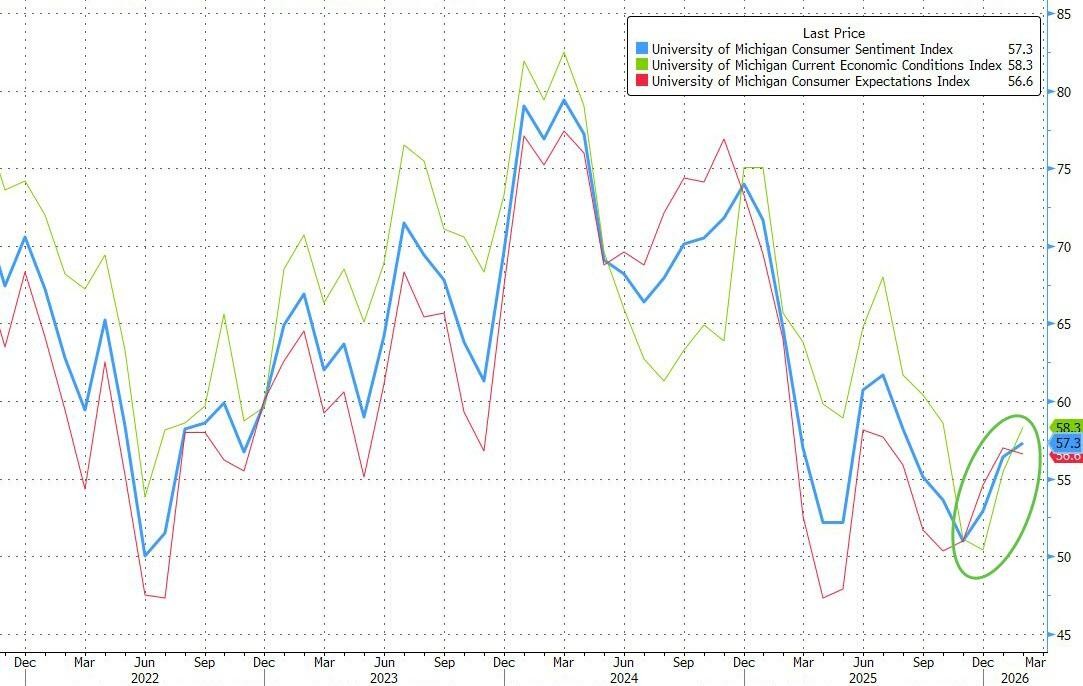
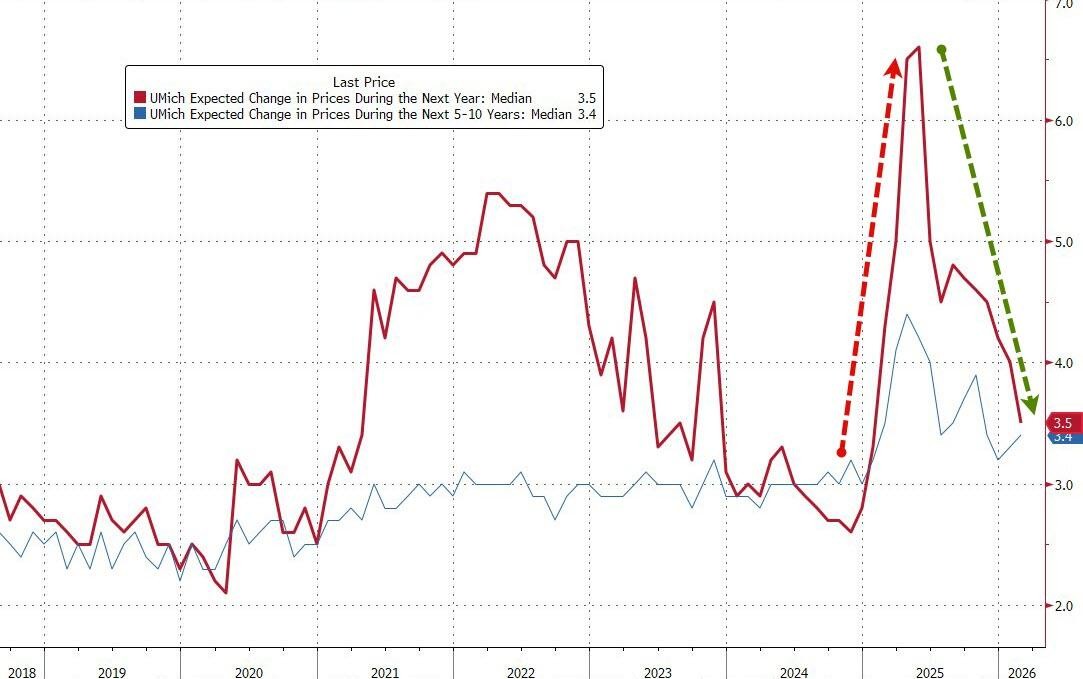
The preliminary value of the University of Michigan Consumer Confidence Index for February in the United States is 57.3, expected 55, and the previous value was 56.4. The preliminary value of 1-year inflation expectations is 3.5%, with expectations and the previous value at 4%; the preliminary value of 5-year inflation expectations is 3.4%, with expectations and the previous value at 3.3%. U.S. consumer confidence unexpectedly rose, reaching a six-month high, mainly driven by high-income groups benefiting from gains in the stock market
U.S. consumer confidence unexpectedly rose, reaching a six-month high, primarily driven by high-income groups benefiting from gains in the stock market.
On Friday, data released by the University of Michigan showed that the preliminary consumer confidence index for February was 57.3, compared to an expectation of 55 and a previous value of 56.4. The survey period covered January 20 to February 2.
In terms of sub-indices, the preliminary current conditions index for February was 58.3, a four-month high, with an expectation of 53.7 and a previous value of 55.4. However, the expectations index saw a decline, with a preliminary expectations index of 56.6, an expectation of 55.1, and a previous value of 57.
Regarding inflation expectations, which are of great market concern, consumers have a more optimistic view of the short-term inflation outlook. The preliminary one-year inflation expectation for February from the University of Michigan was 3.5%, the lowest level in a year, with an expectation of 4% and a previous value of 4%; the preliminary five-year inflation expectation was 3.4%, with an expectation of 3.3%, slightly up from the previous value of 3.3%.
The report from the University of Michigan noted that consumer confidence among stockholders significantly improved, while confidence among those without stocks remained low. During the survey period, the S&P 500 index approached historical highs, boosting consumers' evaluations of their current financial situation to a four-month high.
The report also stated that the conditions for purchasing durable goods improved to the best level since October of last year. The moderate improvement in personal current financial conditions and durable goods purchasing conditions offset a slight decline in long-term business conditions.
However, concerns about the job market and the impact of inflation on personal finances remain. Respondents believed that their probability of unemployment rose to the highest level since July 2020.
Data released this week showed that the U.S. labor market recovery is weak. Several government and private reports indicated that job vacancies fell to the lowest level since 2020 in December; last month, private sector employment increased by only 22,000, showing a lackluster performance; the number of layoffs announced by companies reached the highest level for any January since 2009.
Joanne Hsu, the director of the University of Michigan survey, stated in a statement: “These trends are consistent with the fact that asset prices have risen significantly, benefiting asset holders but not others. Overall consumption remains strong, reflecting that wealthier, more confident consumers contribute a disproportionate share of spending, while consumers with weaker confidence and less wealth may be more cautious in their spending.”
