


The imminent leadership change at the Federal Reserve: What is the impact on major asset classes?

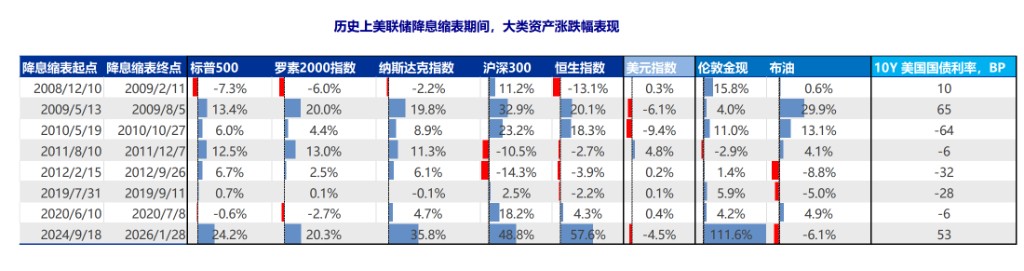
The Federal Reserve is about to change leadership, with Trump nominating Kevin Warsh as the new chairman. The market's initial reaction was panic, with the dollar rising and U.S. stocks falling. Analysts point out that Warsh is not a traditional hawk; his policy stance is "balance sheet reduction + interest rate cuts," aimed at curbing long-term inflation expectations. Investors should pay attention to the style shift in U.S. stocks and opportunities in precious metal volatility. Although Warsh hopes to reduce the balance sheet, in reality, the Federal Reserve faces political and fiscal pressures, and interest rate cuts may come before balance sheet reduction. Liquidity risks are increasing, and the market needs to respond cautiously
The market once again misread the Federal Reserve's actions with a knee-jerk reaction. On January 30, 2026, Trump officially nominated Kevin Warsh as the next chairman of the Federal Reserve. Wall Street's first reaction was panic: the dollar soared, U.S. stocks fell, and precious metals faced sell-offs. The reason is simple; the market labeled Warsh as "hawkish."
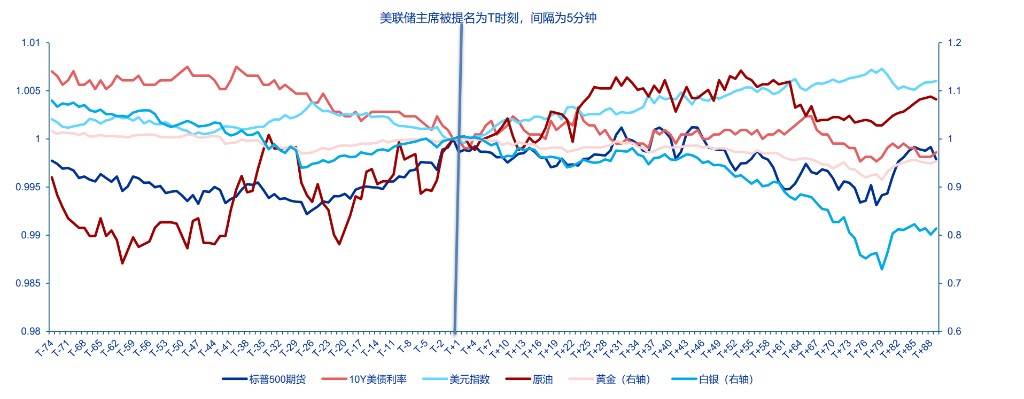
On February 4, Shenwan Hongyuan analyzed in a research report that the market is making the mistake of pricing too quickly. Warsh is not a traditional hawk; his core policy proposition is a hybrid of "balance sheet reduction + interest rate cuts"—to curb long-term inflation expectations by reducing the balance sheet, thereby opening up space for significant interest rate cuts. For investors, this means that the liquidity panic in the short term may be an overreaction. Under the political pressure of the 2026 midterm elections and the heavy burden of U.S. fiscal interest payments, interest rate cuts are likely to occur before balance sheet reduction. Investors should not be scared off by short-term fluctuations but should focus on the style switch in U.S. stocks (from large-cap to small-cap), entry opportunities after the volatility of precious metals returns, and the secondary inflation risks that may arise from geopolitical factors affecting oil prices.
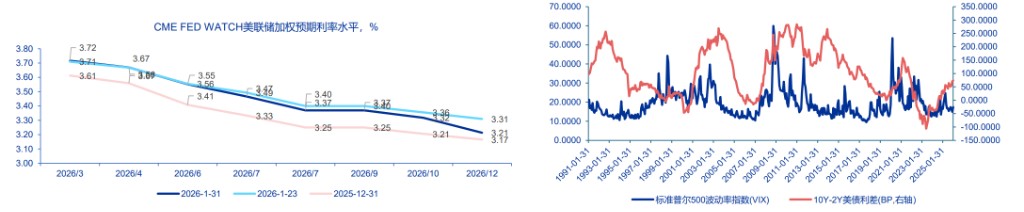
Misreading "Hawkish": Warsh's True Intent is to Pave the Way for Rate Cuts
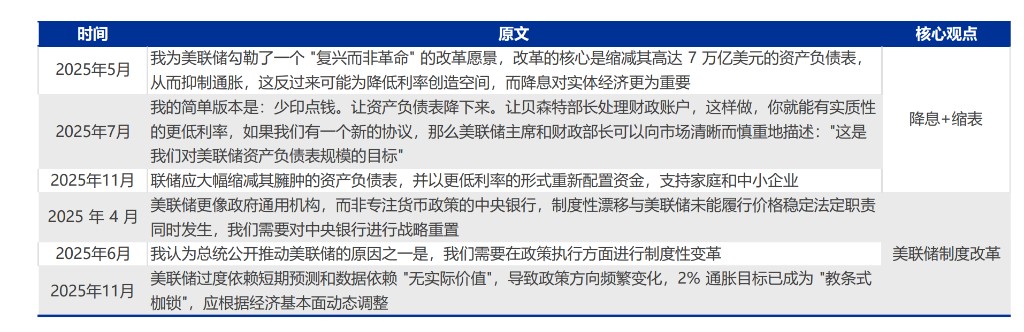
The research report points out that the market's first reaction to Warsh's nomination was tightening panic, but this overlooks the completeness of his policy propositions. Although Warsh emphasizes that the Federal Reserve must reduce its bloated $7 trillion balance sheet, this is not to stifle the economy.
On the contrary, Warsh believes that the current high interest rates do not take into account the productivity improvements brought by AI. His logical loop is: only by eliminating the "Federal Reserve put option" and long-term inflation expectations through balance sheet reduction can the Federal Reserve have the confidence to implement significant interest rate cuts. He even advocates for institutional reforms at the Federal Reserve to break free from the dogma of a 2% inflation target. Therefore, investors are facing a chairman who is trying to reshape monetary policy through supply-side logic (productivity transformation), rather than a simple rate killer.
Reality is Harsh: Political and Fiscal Pressures Force "Rate Cuts First, Balance Sheet Reduction Later"
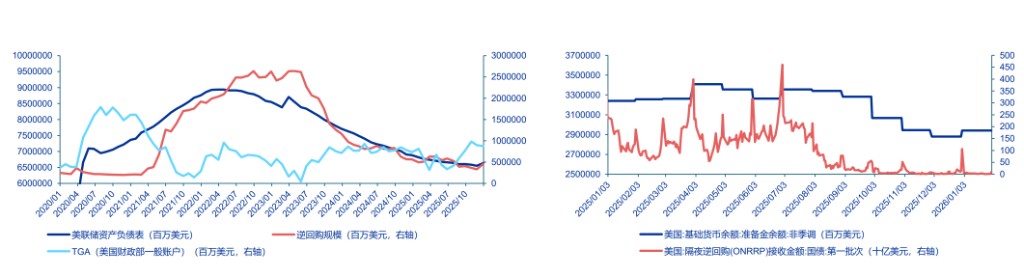
Shenwan Hongyuan believes that although Warsh wants to reduce the balance sheet, the reality shows that the Federal Reserve cannot be assertive in the short term.
- Liquidity Exhaustion Risk: The liquidity in the U.S. money market has reached a critical point. Reserve balances have significantly decreased, and the usage of overnight reverse repos (ONRRP) has basically returned to zero. If aggressive balance sheet reduction is recklessly implemented at this time, it will only trigger severe turmoil in the repo market
- The "tightening spell" of fiscal deficit: In 2024, interest expenses accounted for 18% of U.S. federal fiscal expenditures. If long-term interest rates spiral out of control, the U.S. Treasury will face catastrophic debt repayment pressure. The term premium on U.S. Treasury yields is difficult to manage, and if the Federal Reserve sells U.S. Treasuries, it will be like lifting a stone to drop on the Treasury's own foot.
- The political iron law of midterm elections: 2026 is a midterm election year, and Trump's approval ratings are low. Historically, it is highly probable that the ruling party will lose seats in midterm elections. To secure votes, the Trump administration urgently needs a loose monetary environment to support the economy and employment.
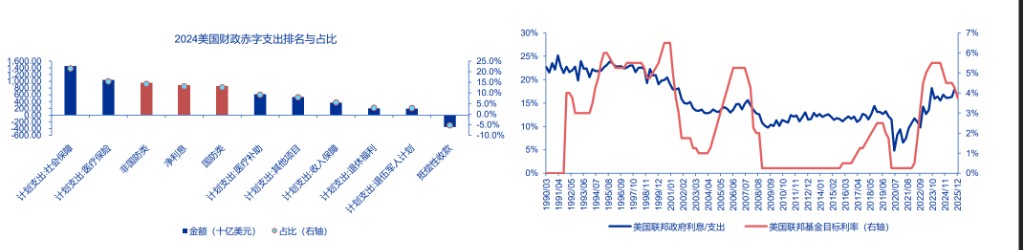
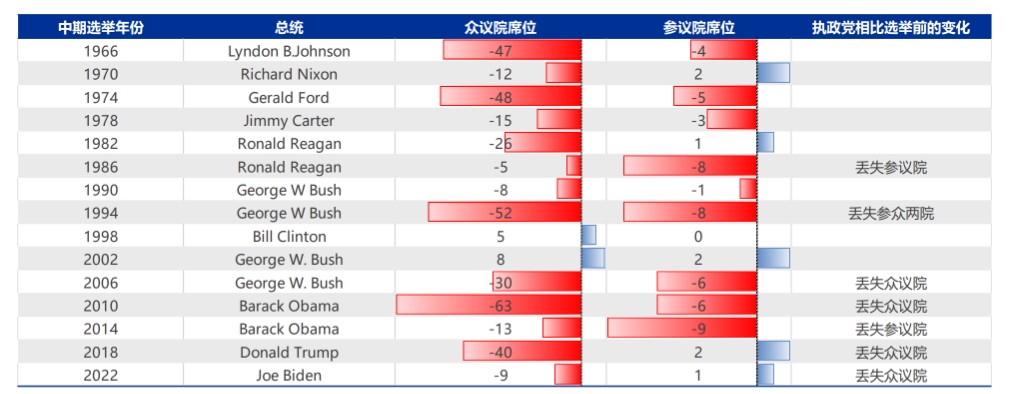
Therefore, the research report concludes: Before the midterm elections, the most realistic choice for the Federal Reserve can only be to cut interest rates, while balance sheet reduction will be a long-term process.
U.S. Stock Strategy: Fluctuations and Style Switching Under High Valuation
The core issue currently facing U.S. stocks is "expensive." The dynamic PE of the S&P 500 is as high as 22 times, at the 86th percentile historically. Although the expected earnings growth rate for 2025-2026 exceeds 15%, high valuations require strong performance validation.
The nomination of Walsh has increased market volatility in the short term but has also brought opportunities for style switching. If Walsh promotes a "small government + bank easing" model, small-cap stocks (such as Russell 2000), which have severely underperformed the market in recent years, will welcome valuation recovery. The valuation of Russell 2000 relative to S&P 500 is at a historical low (21.2 percentile), and with the correction of liquidity logic, small and mid-cap, manufacturing, and financial stocks may be more attractive than crowded large-cap growth stocks.
Precious Metals and Commodities: Long-term Logic Remains Unchanged, Waiting for Volatility to Return
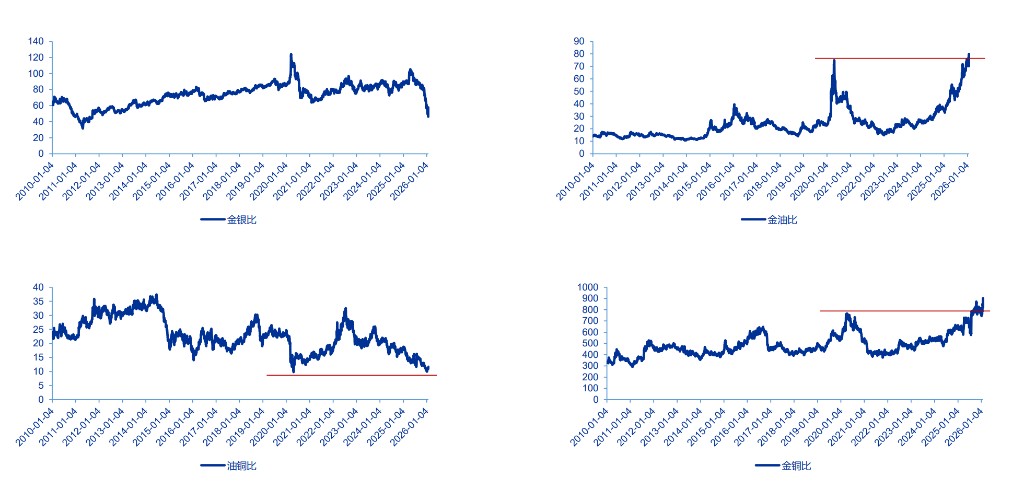
Due to the dual impact of signals from "U.S.-Iran talks" and Walsh's nomination, gold and silver have recently plummeted. However, this is more about speculative selling rather than a collapse of long-term logic. The global trend of "de-dollarization" and safe-haven demand remain the cornerstones of a long bull market for precious metals.
From a trading perspective, the implied volatility of Shanghai gold and silver is still at historically extreme high levels. The research report advises investors to remain patient, waiting for volatility to decline and the put/call open interest ratio to rebound before it is the best time for right-side positioning.
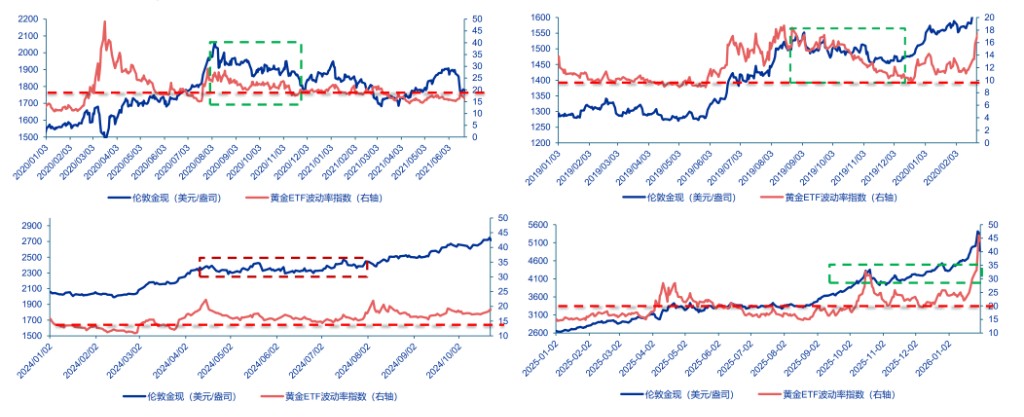
For crude oil, if anchored to gold prices, current oil prices are in an extremely undervalued area. Although Trump tends to suppress oil prices to control inflation, geopolitical factors remain a black swan. If oil prices break through $80 per barrel in the second half of 2026, the U.S. will face the risk of "re-inflation," at which point the macro asset allocation logic will undergo a significant change.
Risk Warning and Disclaimer
The market has risks, and investment requires caution. This article does not constitute personal investment advice and does not take into account the specific investment goals, financial conditions, or needs of individual users. Users should consider whether any opinions, views, or conclusions in this article are suitable for their specific circumstances. Investment based on this is at one's own risk.
