


The largest decline since April last year, the Nasdaq experiences "two consecutive drops": software "on fire," chips "suffering," technology "plummeting"

Concerns on Wall Street about the software industry's prospects have triggered a wave of sell-offs, with panic spreading from SaaS to chips and AI infrastructure, leading to a 9% drop in NVIDIA this week. Some market strategists question what NVIDIA has to do with SaaS. "People are taking profits on some profitable stocks to offset the heavy losses encountered in software stocks, which more reflects traders' position adjustments."
Concerns on Wall Street regarding the software industry are rapidly evolving into a sell-off that is affecting a broader range of technology sectors. As market panic spreads from the SaaS sector to semiconductors and AI infrastructure, the pressure on tech stocks has significantly intensified.
On Wednesday, the Nasdaq Composite Index not only fell again but also experienced its first consecutive two-day decline of 1% since April of last year. The core trigger of this turbulence lies in investors' shaken confidence in the software industry's prospects.
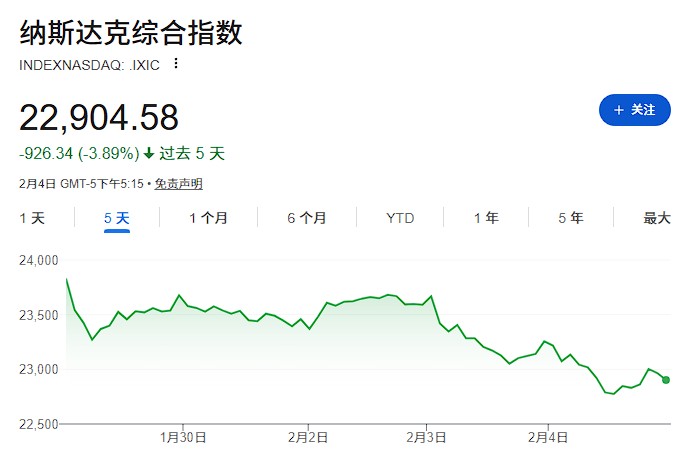
After startup Anthropic released a series of new tools capable of executing industry-specific functions such as legal contract reviews, the sell-off of SaaS stocks accelerated. The market is increasingly worried that the impact of artificial intelligence on existing software business models may far exceed expectations, while also casting doubt on whether tech giants can deliver on profit promises under high valuations.
However, Baird Private Wealth Management market strategist Michael Antonelli pointed out that this phenomenon reflects more of a repositioning by traders rather than a fundamental reassessment of the overall market outlook.
“What does NVIDIA have to do with SaaS? People are taking profits on some profitable stocks to cover their heavy losses in software stocks.”
It is noteworthy that while traders indicate the sell-off remains orderly and there are no signs of panic selling, high valuations make the market extremely sensitive to any negative signals, and currently, funds are rapidly rotating from tech stocks to traditional sectors.
High Valuations Intensify Market Reactions
Wednesday's market performance shows that the decline has extended beyond just the software sector. After releasing disappointing earnings, AMD's stock plummeted 17%, marking its worst single-day performance since 2017.
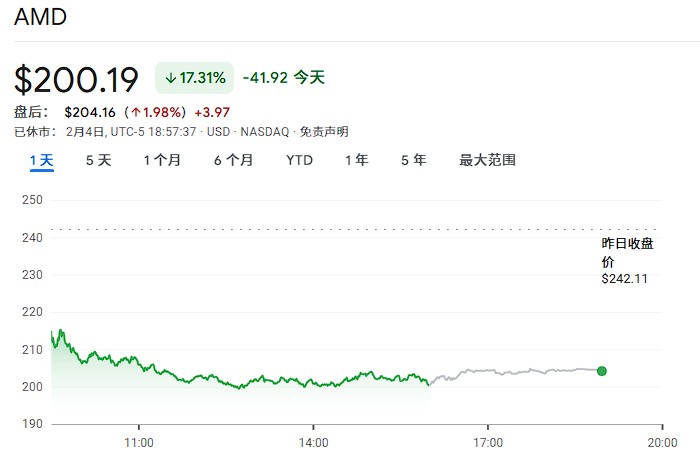
At the same time, Palantir fell 12%, and data storage company SanDisk dropped 16%. This wave of sell-off targeting SaaS stocks has also affected several AI giants, with Meta down 6.6% this week and NVIDIA down 8.9%.
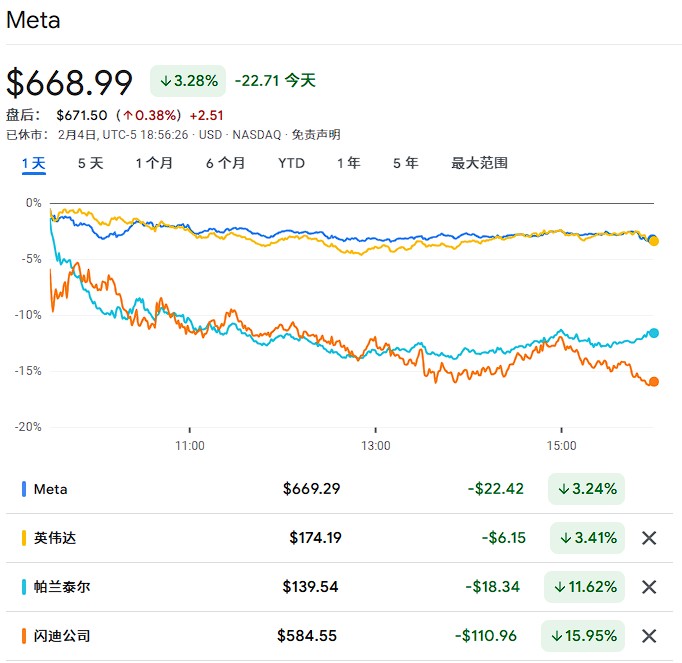
Cresset Capital Chief Investment Strategist Jack Ablin stated that given the current valuation levels, the market's reaction is bound to be very severe, “Expectations are extremely, extremely high right now.” Jonathan Corpina, Senior Managing Partner at Meridian Equity Partners, also pointed out that given the high valuations of tech stocks, the speed of sector rotation will be faster than in the past. "If you are trading in this market, you must be quick to enter and exit, as the pain can come quite rapidly."
This pain has even spread beyond the stock market. PitchBook LCD data shows that as of Tuesday, the average price of loans to software companies has fallen from 94.71 cents at the end of last year to 91.27 cents.
The additional yield (spread) required by investors holding software loans surged to 5.95 percentage points at the end of January. Furthermore, about $25 billion in software loans are at distressed levels (below 80% of face value), accounting for nearly one-third of all distressed loans.
The Clash of AI Impact and Overreaction
Market volatility reflects that investors are reassessing companies facing potential disruption risks from AI.
JPMorgan Chase analyst Toby Ogg stated that the software industry is currently in a state of "guilty until proven innocent." This concern stems from the rapid adoption of AI technology, although for many companies, the application of AI is still in its early stages, software companies are perceived to have the greatest risk exposure.
However, industry executives and some strategists believe that this sell-off may have been overdone. Jensen Huang, CEO of NVIDIA, warned at an event hosted by Cisco that the recent sell-off of software stocks has been overhyped.
"A large number of software companies' stock prices are under immense pressure simply because of some rhetoric that 'AI will replace them,' which is the most illogical thing in the world."
Baird's Antonelli shares a similar view, believing that companies will not easily abandon large enterprise-level software in favor of "code written by someone in a basement in Oakland." He added that the market often "shoots first and asks questions later" regarding expensive stocks.
Accelerated Capital Rotation: From Tech Giants to Traditional Sectors
Despite the heavy toll on tech stocks, this is not a broad market retreat but rather a clear characteristic of capital rotation. Investors have continued the trend of withdrawing funds from long-term winners like chip stocks and large tech giants, redirecting them into more traditional corners of the market.
On Wednesday, as funds flowed into companies more directly related to economic growth, 7 of the 11 sectors in the S&P 500 index closed higher. The energy, materials, and consumer staples sectors have all risen by at least 12% this year.
Notably, although the S&P 500 index fell by 0.5%, 92 stocks reached new 52-week highs during the session, marking the highest number of new highs in a single day since November 2024.
Tom Bruni, Head of Market and Retail Insights at the social platform Stocktwits, commented that this trading is already happening, and this week's news simply provided the market with a real reason to accelerate this trend.
