


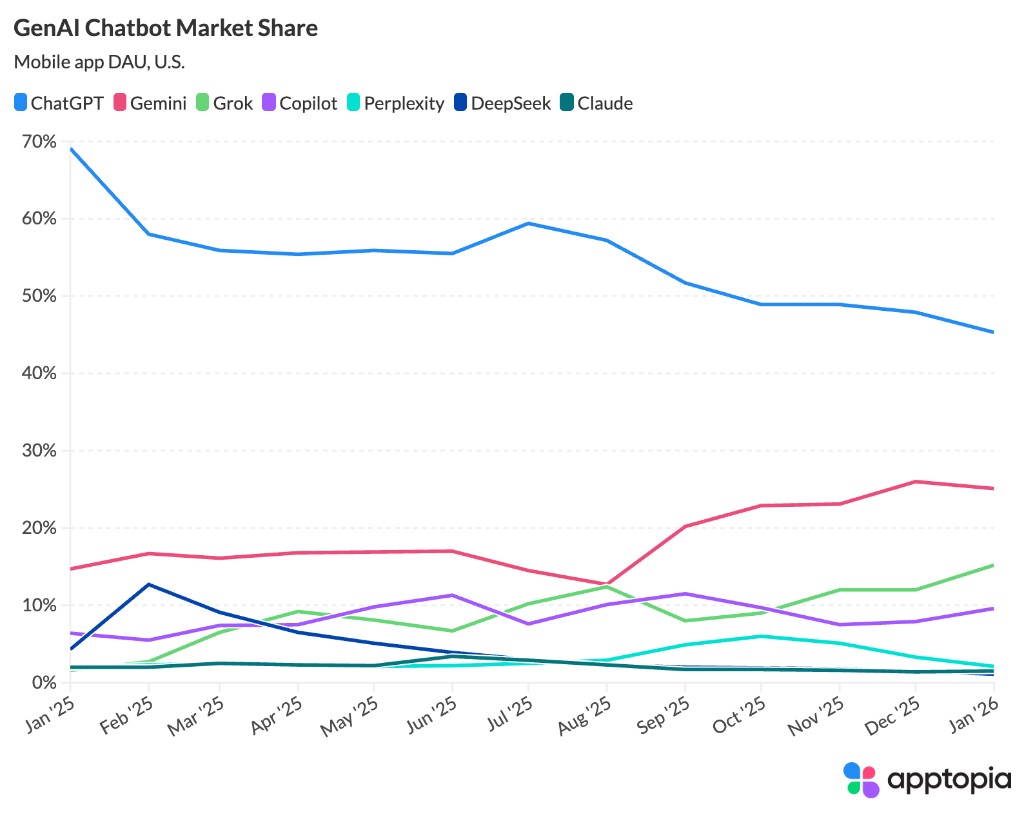
The U.S. AI chatbot war: ChatGPT's market share fell from 69.1% to 45.3%, Gemini rose from 14.7% to 25.1%, and Grok increased from 1.6% to 15.2%

Data shows that in the past year, although the absolute number of ChatGPT users still grew by 50%, Gemini's growth rate reached 647%. The market is showing three major trends: competition is shifting from a single dominant player to a multi-strong competition; 20% of users are using multiple applications; products like Claude are achieving differentiated competition through user stickiness, with daily usage time increasing from 10 minutes to over 30 minutes
OpenAI's dominance in the AI chatbot market is being eroded by competitors. Mobile application data shows that ChatGPT's market share among daily active users in the U.S. has significantly dropped from 69.1% to 45.3% over the past year, while Google's Gemini and Musk's Grok have experienced rapid growth, reshaping the market landscape.
On February 4th, data provided by mobile application data analysis and intelligence service company Apptopia to Big Technology indicated that between January 2025 and January 2026, Gemini's market share rose from 14.7% to 25.1%, while Grok surged from 1.6% to 15.2%. This change suggests that after a year of intense competition, the AI chatbot market has shifted from a single dominant player to a multi-strong competition.
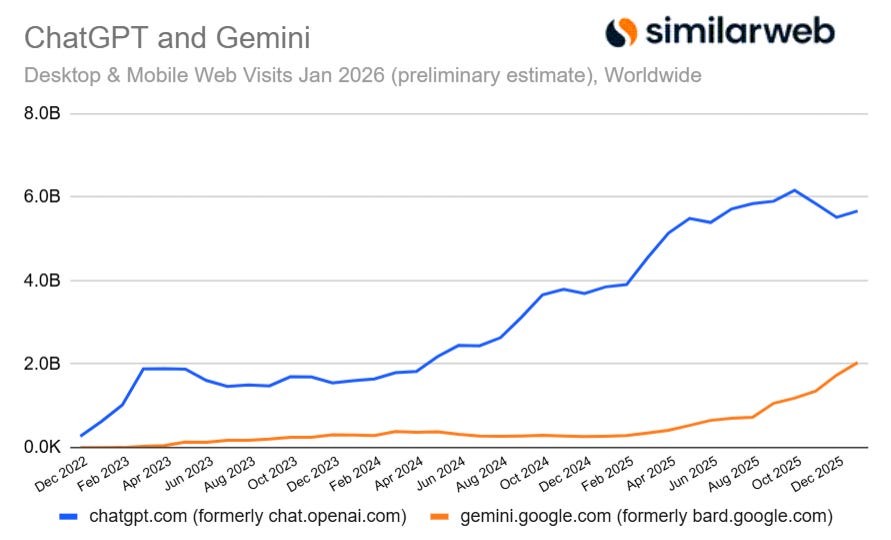
Despite the decline in market share, the absolute number of ChatGPT users continues to grow. Data from analytics company Similarweb shows that ChatGPT's traffic on desktop and mobile web increased from 3.8 billion visits to 5.7 billion visits, a growth of 50%. However, Gemini's growth is even more astonishing, with traffic soaring from 267.7 million visits to 2 billion visits, a growth of 647%.
At the same time, users are showing a trend of multi-platform usage, with 20% of users using more than two applications, and there are significant differences in usage duration—Claude users' average daily usage time has increased from 10 minutes to over 30 minutes, indicating that the market is moving towards differentiated competition.
ChatGPT Growth Slows, Competitors Accelerate Catch-Up
ChatGPT maintained strong growth for most of 2025, but experienced a decline in traffic in November and December, coinciding with a peak in growth for Gemini.
David Carr, news and research editor at Similarweb Insights, stated that ChatGPT's traffic peaked at over 6 billion visits in October before experiencing a decline. Preliminary data shows that ChatGPT's traffic has recovered somewhat in January 2026, but has not yet returned to peak levels.
Meanwhile, Gemini continues to maintain strong growth momentum. According to preliminary estimates for January, Gemini's traffic grew by 17% month-over-month. This growth trajectory indicates that Google is successfully leveraging its advantages in search and mobile ecosystems to direct users to its AI products.
Grok's rise is also noteworthy. This chatbot developed by Musk's xAI has increased its market share from 1.6% to 15.2% within a year, growing nearly tenfold, making it the third-largest player in the market
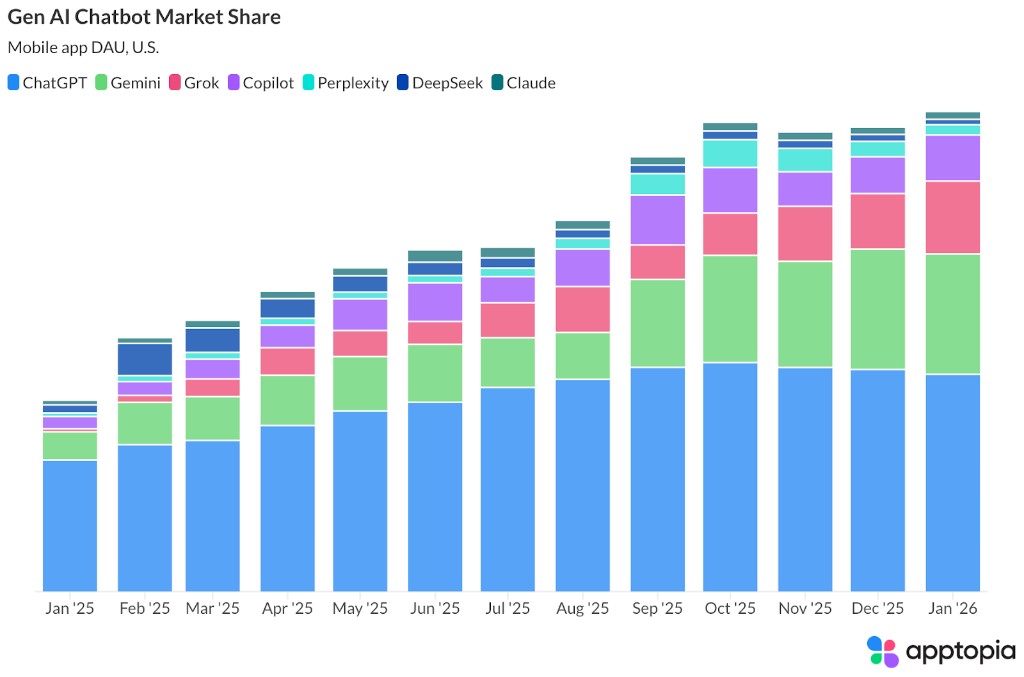
Market Growth Tends to Stabilize, Gap Between Early Adopters and General Users
After experiencing rapid growth for most of 2025, the chatbot market has begun to stabilize in recent months.
Adam Blacker, Public Relations Director at Apptopia, stated that the market is stabilizing. Although generative AI applications have not yet peaked, this represents an early turning point, and there may be a gap between early adopters and other users.
Data shows that most devices measured by Apptopia have never used a chatbot, indicating that there is still significant growth potential in the market. The enthusiasm of early adopters has driven the development of generative AI in the years following the release of ChatGPT, but achieving widespread adoption will still take time.
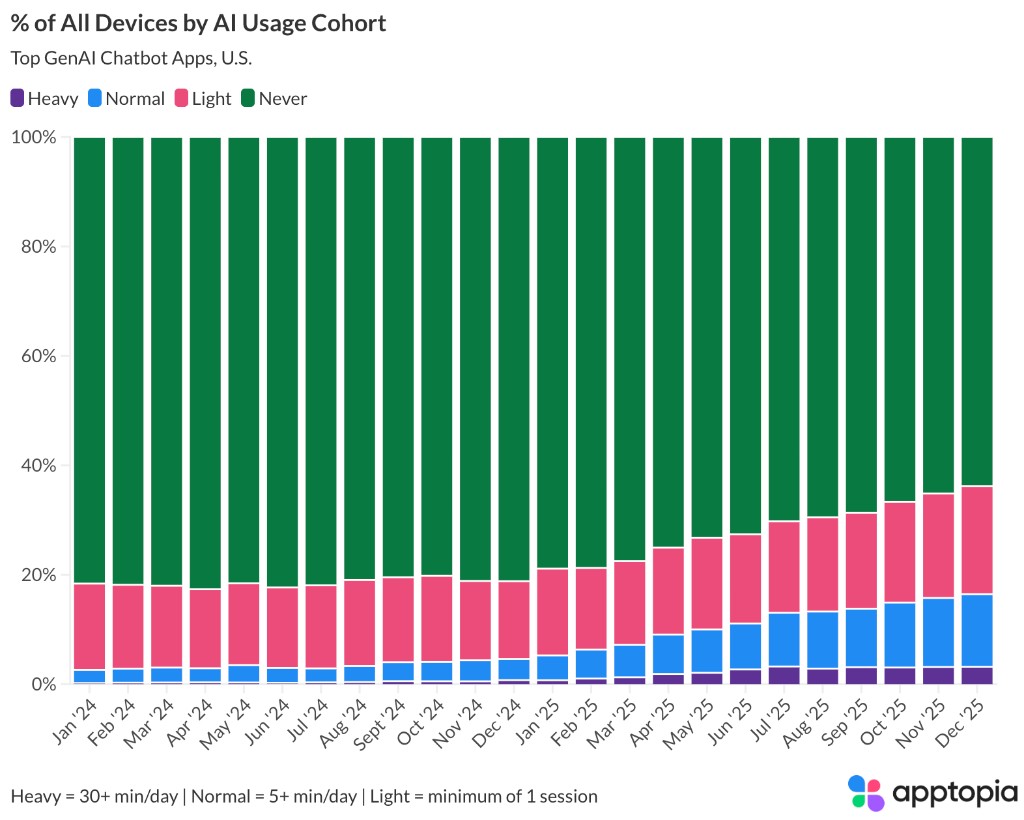
Analysis indicates that this market characteristic means the AI chatbot industry is still in its early development stage, and the competition for market share is far from over. Companies need to find effective paths to break through the early adopter circle and reach mainstream users.
Users Show Multi-Platform Usage Trends, Significant Differences in Usage Duration
The competition in the chatbot market is not a zero-sum game.
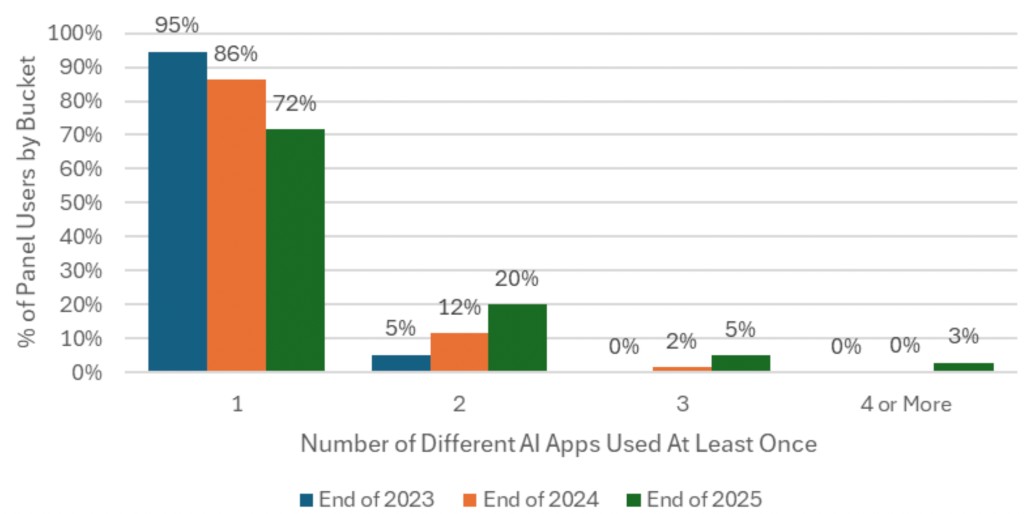
Data shows that by the end of 2025, 20% of chatbot users will use at least two applications, while this proportion was only 5% at the end of 2023. This indicates that users are choosing different AI tools based on varying needs, rather than being limited to a single platform.
The sheer number of users also cannot fully reflect the market landscape, as there are significant differences in the time users spend on different chatbots.
Although Anthropic's Claude has far fewer users than ChatGPT or Gemini, the time users spend on it has surged from an average of about 10 minutes per day in June 2025 to over 30 minutes currently.
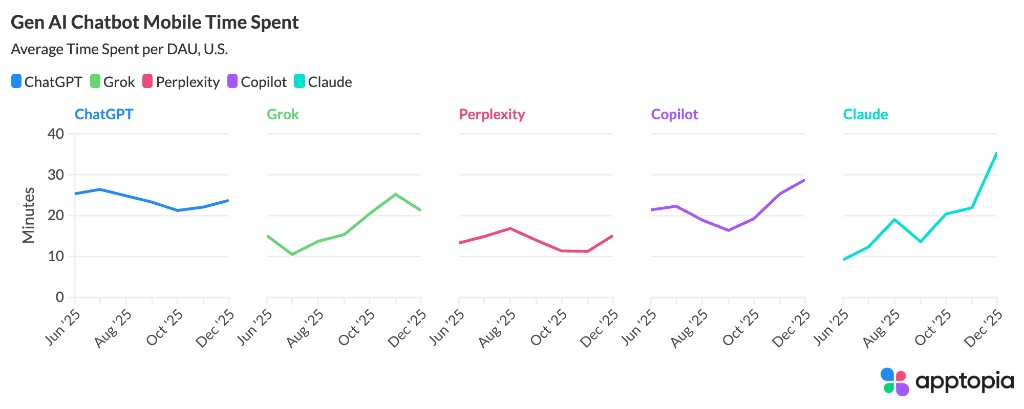
This trend shows that the AI chatbot market is moving towards differentiated competition. User stickiness and depth of use may better reflect the true value of products than mere market share, providing survival space for smaller competitors focused on specific scenarios
