


Long time no see! The 30-day volatility of gold has risen to 44%, surpassing Bitcoin, reaching the highest level since 2008

Since the birth of Bitcoin 17 years ago, gold's volatility has only exceeded that of Bitcoin on two occasions. As gold's 30-day volatility rises to 44%, surpassing Bitcoin's volatility of about 39%, gold's role as a stable store of value seems to be reversing
The gold market is experiencing the most severe price fluctuations since the 2008 financial crisis, with its volatility surpassing that of Bitcoin, which is known for its volatility, highlighting the intense turbulence faced by this traditional safe-haven asset after a rapid surge.
According to data compiled by Bloomberg, the 30-day volatility of gold has risen to over 44%, the highest level since the 2008 financial crisis. This figure exceeds Bitcoin's volatility of about 39%, which is often referred to as "digital gold."
This marks an unusual role reversal. Gold is typically viewed as a more stable store of value compared to cryptocurrencies, which are known for being susceptible to speculation. Since Bitcoin's inception 17 years ago, gold's volatility has only exceeded that of Bitcoin on two occasions, the most recent being last May when U.S. President Trump's tariff threats escalated trade tensions.
Safe-Haven Demand Drives Gold Prices to Record Highs
Economic uncertainty has driven precious metal prices to record highs that have shocked even seasoned market participants. Earlier this year, the already hot rally accelerated sharply as investors poured in due to renewed concerns over geopolitical risks, currency devaluation, and the independence of the Federal Reserve. A wave of buying from retail investors further inflated the market bubble.
Some traders indicated that the previous rally had gone too far, too fast, leading to a dramatic reversal. In just two trading days, spot gold plummeted by $1,000, nearing the $4,400 mark.
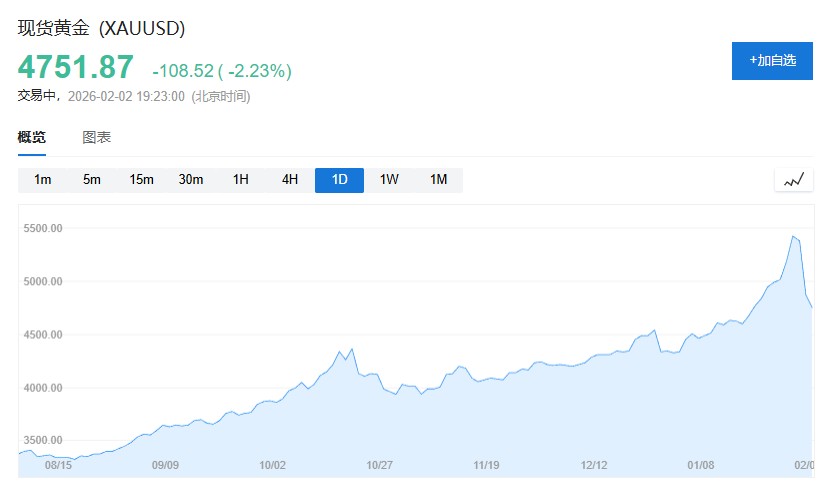
Bitcoin has failed to benefit from the same forces driving gold higher. The token fell to a 10-month low on Monday, continuing the sell-off from the weekend, with a cumulative decline of over 40% since its peak in October. Despite facing geopolitical pressures, a weakening dollar, and severe volatility in the metal markets, Bitcoin has not seen funds rotate from precious metals into it, making gold currently a more volatile investment target.
However, gold still maintains its status as a superior safe-haven asset. Over the past 12 months, gold has risen by about 66%, while Bitcoin has fallen by 21%
