


The VAT rate jumps by 3 percentage points! The three major telecom operators are under short-term pressure; can new productive forces break the deadlock in the long term?

On January 30, 2026, China announced an increase in the value-added tax rate for the telecommunications industry from 6% to 9%. This policy will impact the revenue and profits of China Mobile, CHINA TELECOM, and CHINA UNICOM, leading to a significant drop in stock prices. The expected impact on the profits of the three major operators ranges from 5% to 32%, with revenues projected to decline by approximately 2.75%. Due to intense market competition, operators will find it difficult to pass on the revenue reduction pressure to users, resulting in a direct negative impact on net profits in the short term
I. What Happened?
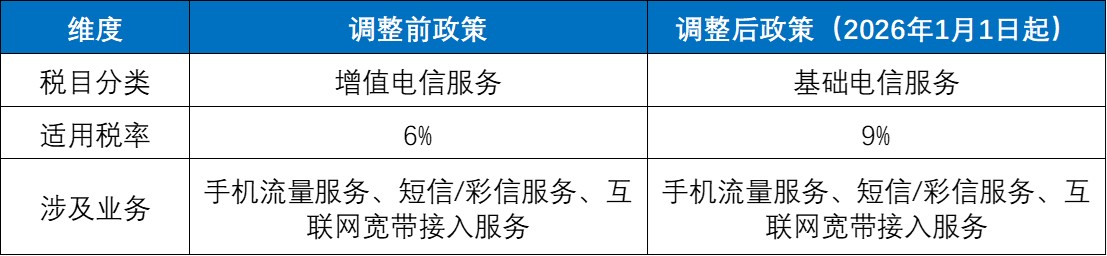
The announcement titled "Announcement on Specific Scope of Value-Added Tax Collection" (Ministry of Finance, State Administration of Taxation Announcement No. 9 of 2026) released on January 30, 2026, represents a significant fiscal and tax policy adjustment in the telecommunications industry in recent years. The core change is the increase of the value-added tax rate on core services such as mobile data, SMS/MMS, and broadband access from 6% to 9%.
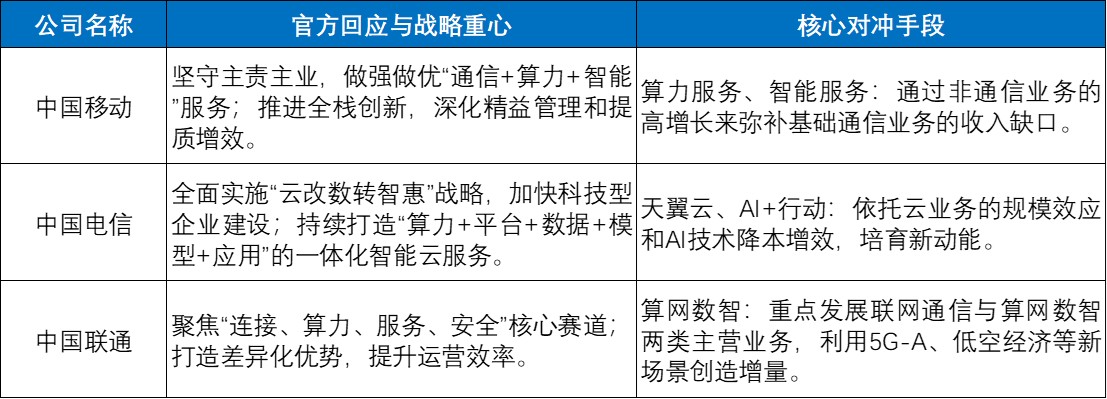
On February 1, China Mobile, China Telecom, and China Unicom, the three major operators, collectively issued announcements clearly acknowledging that this adjustment "will impact the company's revenue and profits."
As a result, the stock prices of the three major operators fell sharply today, reaching new lows since the start of this adjustment cycle. Since November 27, the A-shares of the three major operators have collectively dropped over 10%, while the Shanghai and Shenzhen 300 Index has seen a slight increase of 2% during the same period.
II. Why Is It Important? The Impact on the Profits of the Three Major Operators Ranges from 5% to 32%
1. Mechanism of the New Fiscal and Tax Policy Impact:
- Revenue Side (Negative Impact):
The packages offered by operators to C-end users are usually at "tax-inclusive prices." The increase in tax rate from 6% to 9% means that, with the terminal price unchanged, operators need to remit more tax to the government, leading to a direct decrease in the "tax-exclusive main business revenue" recorded in financial statements. Theoretical calculations estimate that the revenue decline for related businesses is approximately 2.75%.
For example, if a data package is priced at 100 yuan including tax, then under the old policy (6% tax rate), the recognized revenue = 100 / (1 + 6%) = 94.34 yuan, while under the new policy (9% tax rate), the recognized revenue = 100 / (1 + 9%) = 91.74 yuan, resulting in a decrease of 2.6 yuan per transaction, a decline of 2.75%.
- Profit Side (Negative Impact):
Considering the intense market competition, it is challenging to pass the revenue reduction pressure onto downstream users through ARPU enhancement. Therefore, due to the decline in the revenue base, and the rigid costs such as network operation and maintenance, depreciation, and amortization being difficult to reduce proportionally in the short term, along with the time required to streamline the input tax deduction chain, it is expected that this policy will directly erode net profits in the current period.
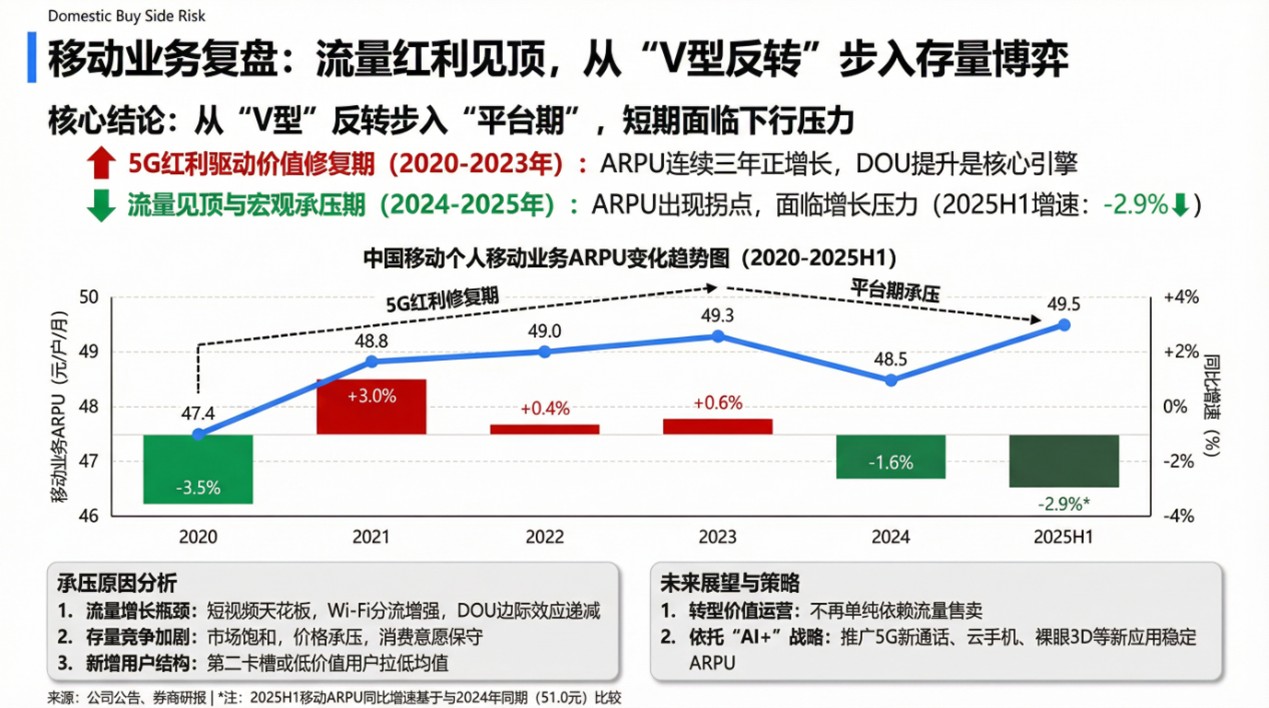
2. Varying Degrees of Impact on the Profits of the Three Major Operators
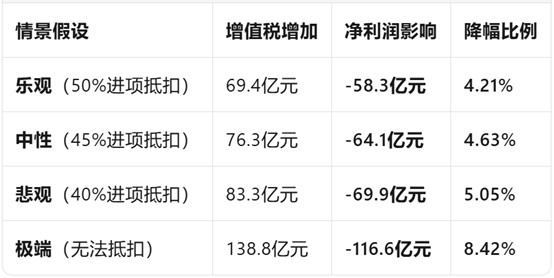
- Taking China Mobile's 2024 operating data as an example, we estimate the potential impact of the new policy In 2024, the main business revenue is expected to be 889.5 billion yuan, of which the specific businesses affected by the tax rate adjustment (accounting for 52.0% of main business revenue) include wireless internet business 333.7 billion yuan (37.5%), wired broadband business 102.5 billion yuan (11.5%), and short message and multimedia message business 26.4 billion yuan (3.0%). The value-added tax rate is raised from 6% to 9%, with the impact mechanism as follows:
- Increase in output tax: Affected revenue × 3%.
- Actual tax burden: Depends on the ability to deduct input tax (non-deductible items such as labor, depreciation, etc.).
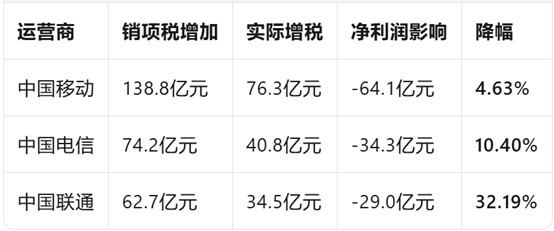
- Scenario assumption: Under a neutral scenario (45% input deduction) and without considering the possibility of passing on costs, this fiscal policy adjustment is expected to impact China Mobile's net profit in 2024 by 6.4 billion yuan, a decrease of 4.6%. In an extreme case (no deductions), this adjustment would negatively impact net profit by 11.7 billion yuan, a decline of 8.4%.
- The potential profit impact on China Unicom and China Telecom may be even greater:
According to the 2024 financial report, the affected revenues for China Unicom and China Telecom are 209 billion yuan and 247.5 billion yuan, respectively, accounting for 60.4% and 51.4% of service revenue.
Under the neutral assumption, China Unicom is expected to be affected the most (net profit may decrease by 2.9 billion yuan, a year-on-year decline of 32%), due to its lowest profit margin (5.3%) and the highest proportion of affected revenue (60.4%). China Telecom's impact will be between that of China Mobile and China Unicom (net profit may decrease by 3.4 billion yuan, a year-on-year decrease of 10%).
III. What’s next?
1. Short-term pain is inevitable:
As 2026 marks the first year of policy implementation, the revenue and profit growth rates of the three major operators will face high base pressure (6% tax rate applicable in 2025, 9% in 2026), and the market needs to digest a one-time financial negative.
2. The medium to long-term logic remains unchanged—high dividend background + new productive forces options
The three major telecom operators possess a high dividend background typical of utility-type assets and serve as growth options for new productive forces.
- High dividend background:
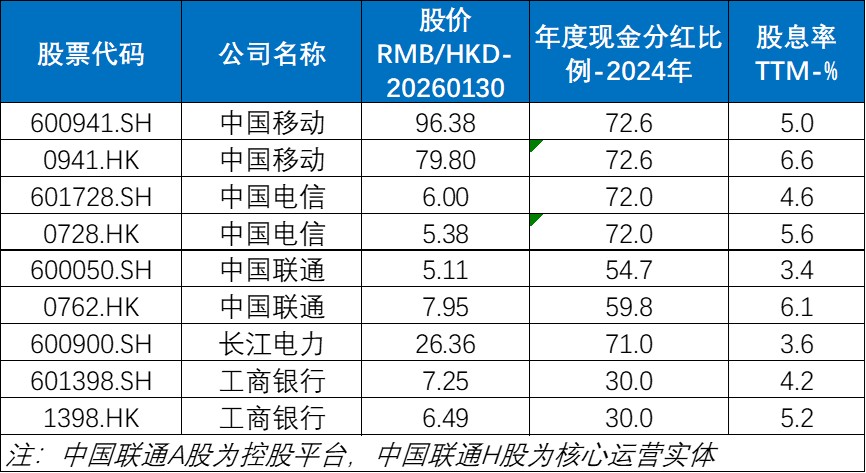
The three major operators are typical utility-type dividend asset targets. Considering their profitability, business models, operational barriers, and balance sheet quality, their reasonable dividend yield level should be between that of Yangtze Power and the four major state-owned banks.
After the announcement of the new fiscal policy, we believe that the asset pricing of the three major operators will rely on two aspects: on one hand, investors need to pay attention to the actual impact of the new policy on profitability (currently uncertain, awaiting market guidance from management when the 2025 annual report is released in March) On the other hand, China Mobile and China Telecom both have a cash dividend plan for three years (2024-2026), with the cash dividend ratio expected to rise to over 75% by 2026. The potential decrease in current profits in 2026 may be partially offset by the increase in the cash dividend ratio.
- Growth options for new productive forces:
① Cloud business: The cloud business of operators is no longer just simple server leasing, but an enabling platform for AI-native services. Its unique value lies in the dual attributes of being a "national team" and market-oriented operation, making operator clouds irreplaceable in terms of data security and autonomy, becoming the "new infrastructure" in the digital economy era.
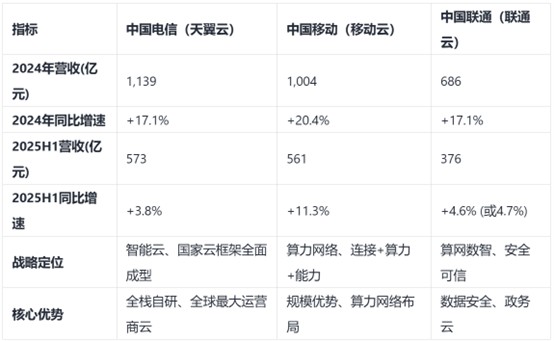
② Computing power network: The three major operators have unique comprehensive advantages in the field of computing power, relying on their fully covered and highly reliable cloud-network integrated infrastructure to build a national computing power network and a wide layout of intelligent computing and IDC. China Mobile features large-scale computing power and cloud intelligence integration, China Telecom focuses on intelligent computing layout and self-developed technology as its core competitiveness, and China Unicom leverages computing power intelligent networking and inclusive services as its advantages. All three are supported by stable cash flow to continuously upgrade computing power, providing full-chain computing power services and deeply empowering the digital transformation of various industries, becoming the core pillar of computing power supply in the development of new productive forces in China.
③ Data elements: Operators possess vast amounts of high-quality data resources, and the cloud business serves as the infrastructure for data storage, processing, and trading. Operators provide data cleaning, de-identification, and analysis services through cloud platforms, transforming data resources into tradable assets. Currently, a small portion of data assets has been incorporated into the balance sheet, leading to value reassessment.
Risk warning and disclaimer
The market has risks, and investment requires caution. This article does not constitute personal investment advice and does not take into account the specific investment goals, financial conditions, or needs of individual users. Users should consider whether any opinions, views, or conclusions in this article align with their specific circumstances. Investment based on this is at their own risk.
