


Yen target 150! Mizuho Asset Management giant: Japan's interest rate hike in April is inevitable, optimistic about Japanese bonds

Mizuho Financial's Asset Management One stated that the market has underestimated the Bank of Japan's determination to raise interest rates, predicting that the yen will break the 150 mark in April. Chief Investment Officer Muramatsu pointed out that U.S. Treasury Secretary Bessent's pressure may prompt the Bank of Japan to raise interest rates earlier, with market expectations for a rate hike rising from 40% at the end of last year to 69%. Additionally, the New York Fed's exchange rate check has surprised investors, indicating that coordination between the U.S. and Japan may increase the likelihood of the Bank of Japan raising interest rates
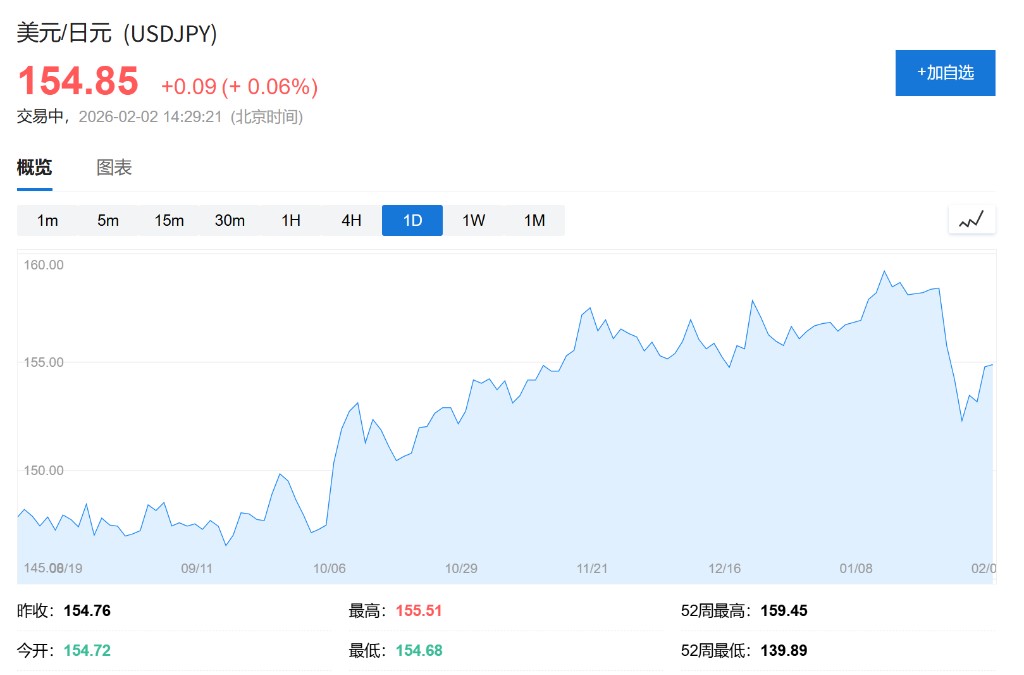
Mizuho Financial Group's asset management giant Asset Management One stated that the market has underestimated the Bank of Japan's determination to tighten policies, predicting that the yen will break through the 150 mark after the Bank of Japan raises interest rates in April.
The company's Chief Investment Officer Shigeki Muramatsu said in an interview that speculation about the difficulty of the Bank of Japan raising interest rates under the current government has fueled the yen's weakness, but the reality may be different. Recently, U.S. Treasury Secretary Bessent urged Japan to allow the Bank of Japan to raise interest rates further to combat inflation, a statement that surprised the market.
Muramatsu believes that the explicit pressure from the U.S. increases the likelihood of the Bank of Japan raising interest rates earlier. He stated, "When Bessent goes to such lengths, it's hard to imagine Japan won't bring him a little 'gift'."
Market pricing shows that the probability of the Bank of Japan raising interest rates before April is currently about 69%, significantly higher than the approximately 40% at the end of last year. Last week, the yen briefly rose to a three-month high of 152.10, leading to speculation that Japan might intervene to support the exchange rate.
U.S. Unexpected Pressure Changes Market Expectations
The news of the New York Fed conducting a currency check last month caught many investors off guard. As the agent of the U.S. Treasury, this action indicates that Washington seems to align with Japan's efforts to curb the yen's weakness, despite the U.S. long being reluctant to engage in currency intervention.
"I was quite surprised by this action. I didn't expect the Fed to join in," Muramatsu said. This apparent coordination increases the likelihood of the Bank of Japan raising interest rates sooner.
Market concerns about the Bank of Japan's policy stance stem from its slow pace of tightening monetary policy. Earlier this year, these concerns pushed the yen close to decades-low levels reached in 2024. However, last month, the currency suddenly reversed its trend, indicating a change in market sentiment.
The pricing in the currency market reflects a significant shift in market expectations. The probability of a rate hike before April jumped from about 40% at the end of last year to approximately 69% now, coinciding with the timing of the U.S. Treasury Secretary's public statement.
U.S. Treasury Secretary Bessent explicitly urged Japan to allow the Bank of Japan to raise interest rates further to combat inflation, providing external support for the Bank of Japan's policy space. Muramatsu believes that this pressure from the U.S. actually creates more favorable conditions for the Bank of Japan to raise interest rates.
Ultra-Long-Term Bonds Remain Attractive
Asset Management One is also optimistic about ultra-long-term Japanese government bonds, despite this market being at the epicenter of last month's bond market turmoil. Muramatsu stated that yields are high relative to Japan's growth prospects.
The yield on 30-year Japanese government bonds has stabilized around 3.64% after soaring last month. He pointed out that although Japan's trend growth rate is low, the yields on these bonds are higher than those of German government bonds of the same maturity Muramatsu stated that foreign investors seem to have sold 30-year bonds amid rising calls for tax cuts before the election. "However, there has been a lot of communication since then, and Takagi seems to have softened his stance," he said. Japanese Prime Minister Sanae Takaichi has announced a special election on February 8, after previously calling for tax cuts. He indicated that unless the scale of tax cuts exceeds the government's current commitment to a two-year food tax reduction, these bonds should remain stable.
Muramatsu warned that a stronger yen against the dollar, rising above 150, could put pressure on the Japanese stock market. However, he added that Asset Management One remains optimistic about the long-term prospects of the Japanese stock market, as households may increase their investments in risk assets.
This cautious view reflects the potential impact of yen appreciation on the profits of export-oriented companies. A stronger yen typically weakens the overseas earnings of Japanese exporters, thereby affecting corporate profits and stock price performance.
Risk Warning and Disclaimer
The market is risky, and investment should be cautious. This article does not constitute personal investment advice and does not take into account the specific investment goals, financial situation, or needs of individual users. Users should consider whether any opinions, views, or conclusions in this article are suitable for their specific circumstances. Investment based on this is at their own risk.
