


Overseas tourists surged by 40%! "China's inbound tourism" is booming, which may drive the RMB to continue strengthening

Data shows that by 2025, the number of overseas tourists in places like Beijing and Guangdong is expected to surge by about 40%, bringing in a record capital inflow of USD 38.2 billion in the first three quarters. Tourists will exchange foreign currency for RMB to spend, directly boosting the demand for RMB. Coupled with factors such as a weakening dollar and an expanding trade surplus, the RMB has risen to its highest level in over two years. Analysts believe that inbound tourism may become even more booming in the future, potentially leading to further strengthening of the RMB
The strong recovery of China's inbound tourism is bringing new upward pressure on the renminbi exchange rate.
On February 2, according to media reports, major tourist destinations such as Beijing, Jiangsu, and Guangdong saw a surge of about 40% in overseas visitors last year, resulting in double-digit growth in tourism-related capital inflows. With policy commitments to attract more tourists, this trend is expected to further strengthen the renminbi.
Inbound tourists directly increase the demand for renminbi by exchanging foreign currency to pay for hotel, dining, and shopping expenses. According to data from the State Administration of Foreign Exchange, inbound tourism brought a record capital inflow of $38.2 billion to China in the first three quarters of 2025.
Driven by multiple favorable factors such as a weaker dollar, record trade surpluses in China, and renewed attention to the domestic stock market, the renminbi has risen to its strongest level in over two years.
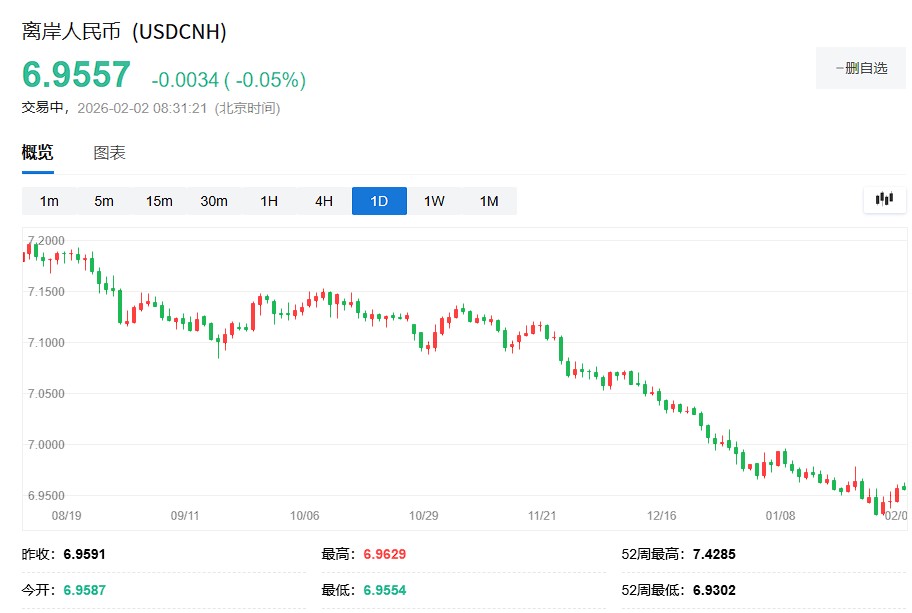
Market participants point out that inbound tourism may become even more booming in the future, which could lead to further strengthening of the renminbi. The People's Bank of China has taken action to slow the pace of appreciation. Since late November last year, the central bank has been setting the daily midpoint weaker than market expectations to manage market expectations and avoid excessive volatility.
Significant Revenue Increase in Major Tourist Cities
The boom in inbound tourism is particularly evident in major destinations.
Data shows that Beijing received foreign tourist consumption reaching a record 50.6 billion renminbi ($7.3 billion) in 2025, a year-on-year increase of 45%. Guangdong Province, adjacent to Hong Kong, received over 90 million visitors, with consumption exceeding 200 billion renminbi, a staggering increase of 54% compared to 2024.
These tourism expenditures are recorded as service trade in China's current account, directly translating into demand for renminbi. International visitors must exchange foreign currency for renminbi to consume within China, thereby creating buying pressure in the foreign exchange market.
Wang Wentao, China's Minister of Commerce, wrote in January this year that China should create a "shopping in China" brand and further optimize the outbound tax refund policy to promote consumption by inbound tourists. Over the past two years, China has included dozens of countries, including Australia, Japan, and South Korea, in its unilateral visa-free list.
Amidst multiple factors such as a broadly weaker dollar, record trade surpluses in China, and the domestic stock market attracting funds again, the renminbi has risen to its highest level in over two years, with capital inflows from inbound tourism further exacerbating this trend. Xia Le, Chief Asia Economist at BBVA Hong Kong, stated:
"Inbound tourism may become even more booming in the future, which could lead to further strengthening of the renminbi."
Xiaojia Zhi, an economist at Crédit Agricole, stated that inbound tourism will continue to grow, and the improvement in investor sentiment towards Chinese assets will also drive demand for business travel. He added:
"The People's Bank of China may continue to emphasize that any appreciation will be managed to avoid excessive expectations of renminbi appreciation and market volatility." Looking ahead, China's tourism industry has enormous growth potential. According to data from the World Travel and Tourism Council cited by hospitalitynet.org, China's tourism industry is expected to grow at an annual rate of 7% over the next decade, contributing $3.8 trillion to the gross domestic product by 2035, accounting for 14% of the total economy. The report states that by 2031, China is expected to surpass the United States to become the world's largest tourism market.
