


Hitting TACO! U.S. retail investors set a record for bottom-fishing in panic, with a net purchase of nearly $13 billion in a single week

Retail investors in the US stock market accurately implemented the "TACO" strategy this week, net buying $12.9 billion amid market panic, pushing the total rolling buy amount on the 21st to surpass the historical threshold of $45 billion for the first time. The allocation of funds shows a trend towards balance: shifting from a previous focus on ETFs to a dual emphasis on individual stocks and ETFs, with the technology sector and precious metals ETFs becoming key investment directions
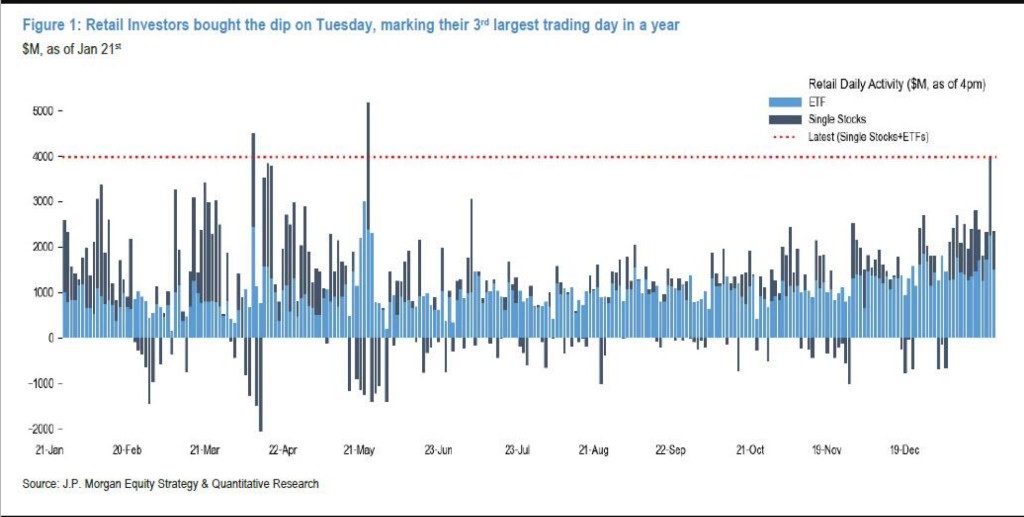
On Tuesday local time, as the market experienced panic selling due to turmoil in the Japanese bond market and geopolitical uncertainties, retail investors made significant purchases at lower prices, setting the third-largest single-day buying scale of the year, pushing the net buying by retail investors this week to an astonishing $12.9 billion, reaching a significant peak. This operation accurately hit the so-called "TACO" (Trump Actually Cares about Optics) strategy, which suggests that market fluctuations triggered by Trump's remarks will quickly reverse.
Looking back over a longer time period, according to data from JP Morgan, the total net buying by retail investors in the past 21 trading days has exceeded $45 billion for the first time, surpassing this historical threshold. Compared to last year's event-driven short-term bottom-fishing, this round of buying is more sustainable, indicating that retail sentiment has shifted from risk aversion to active allocation.
On Wednesday local time, Trump's speech in Davos boosted risk sentiment, and the market reversed as retail investors expected. Trump showed a clear shift in stance, not only abandoning previous tariff threats regarding Greenland but also ruling out the possibility of using force . According to Xinhua News Agency, U.S. President Trump stated on social media on the 21st that he has established a framework for future agreements regarding Greenland with NATO Secretary General Jens Stoltenberg, and therefore will not implement the tariffs originally scheduled to take effect on February 1 against eight European countries.
It is noteworthy that this year, the buying scale of retail investors in ETFs and individual stocks has been roughly equal, changing the previous ETF-dominated allocation structure, indicating that their investment strategy is becoming more diversified and proactive. The market rebound following Trump's related statements once again confirms retail investors' grasp of the rhythm between policy narratives and market sentiment.
Precious Metals Regain Favor
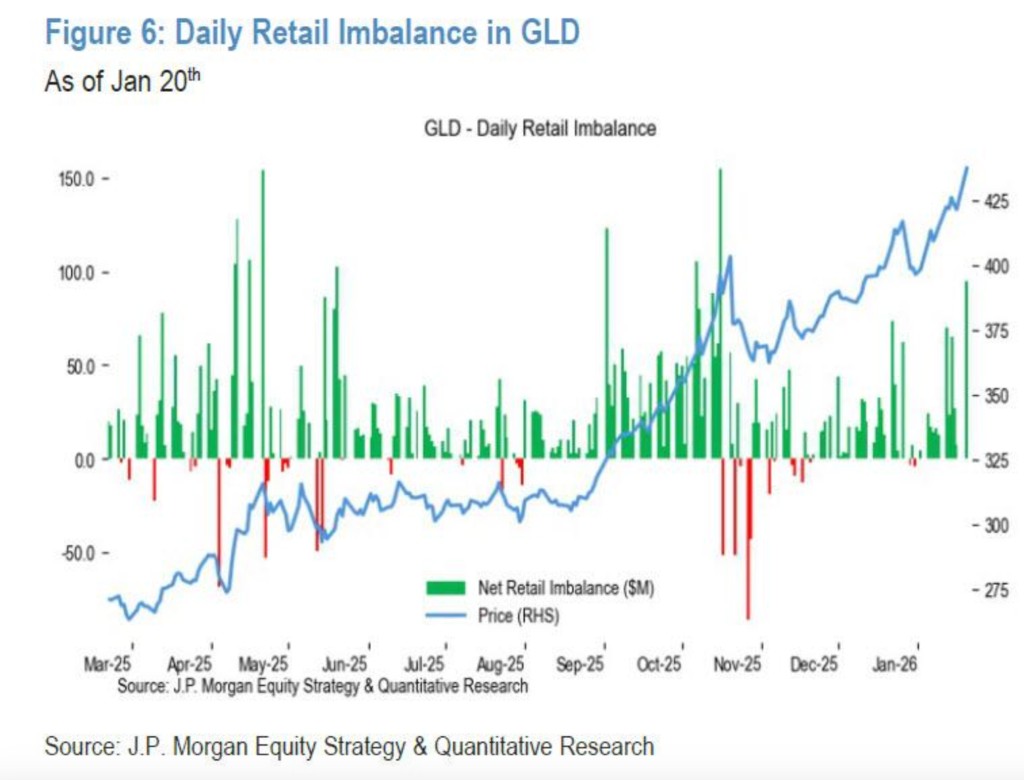
Previously, as Trump issued potential tariff threats regarding Greenland to Europe, market risk aversion increased, and precious metal ETFs became a hotspot for retail buying, jumping to second place among all categories. Meanwhile, international stock ETFs also saw a massive inflow of funds approaching historical percentile limits.
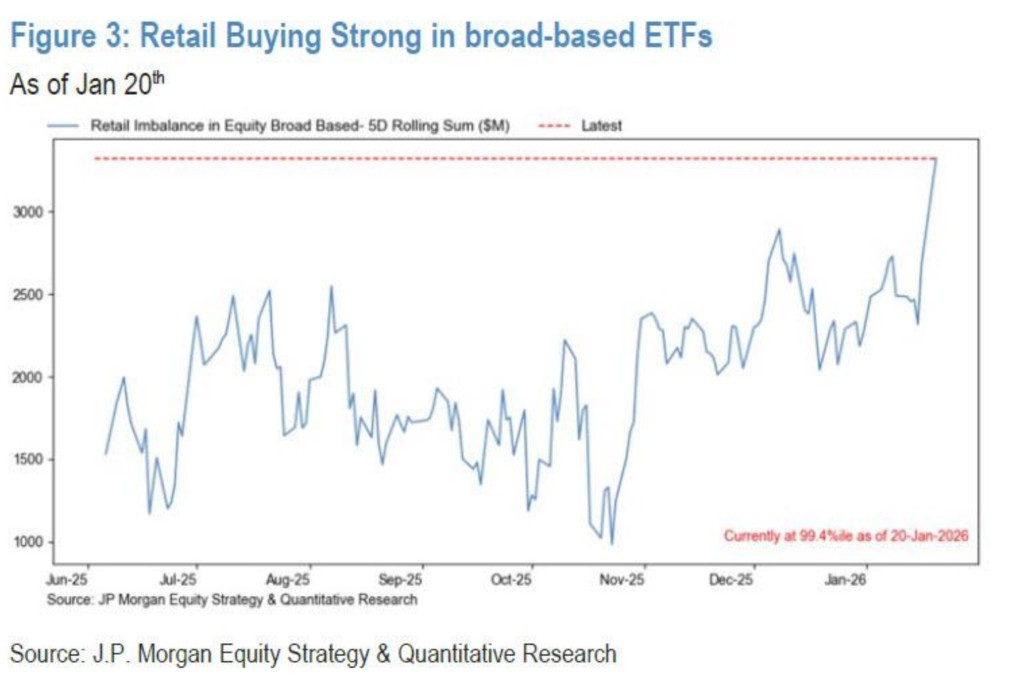
In overall ETF buying, broad-based stock ETFs contributed about 40% of the share, ranking first in weekly buying (at the 98th percentile), primarily driven by strong inflows into QQQ (with an inflow scale reaching 2.4 times the standard deviation), SPY, and VOO.
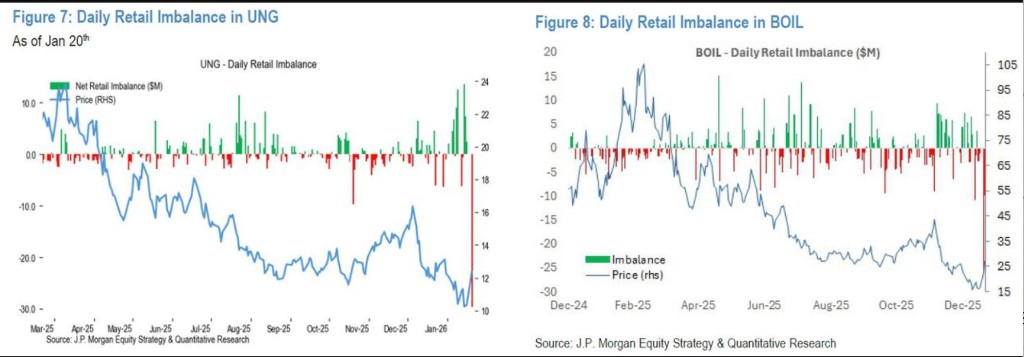
 On the other hand, influenced by the cold wave in the United States, natural gas futures surged by about 50% within two days, prompting retail investors to accelerate profit-taking from related ETFs such as BOIL and UNG. Unlike the safe-haven properties of precious metals, cryptocurrency ETFs exhibited "anti-gold" trading characteristics at the beginning of 2026, also experiencing capital outflows, with currency ETFs only at the 4th percentile of low activity yesterday.
Technology Stocks Dominate Individual Stock Purchases
In terms of individual stock purchases (at the 84th percentile), the technology sector remains the main flow of retail funds, followed closely by consumer discretionary and communication stocks. Although the "seven giants" continued to dominate retail trading in 2025, there has been a recent trend of funds spreading to a broader range of targets.
This week, Tesla and Amazon continued to rank among the top net purchases by retail investors, with Netflix, Micron, TSMC, and Intel also receiving significant attention. In contrast, Apple continued to see net selling, becoming one of the main sources for retail investors to reallocate funds.
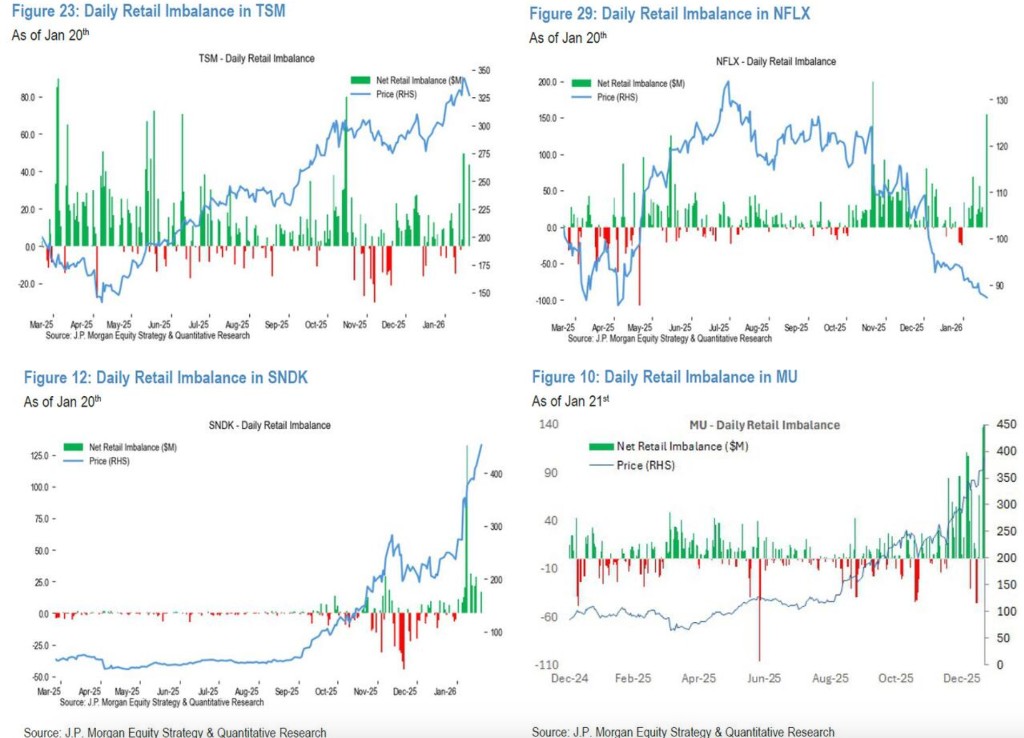
In the options market, retail participation remains high. The most actively traded contracts are mainly concentrated in individual stocks such as Tesla, NVIDIA, Meta, AMD, Google, Micron, Microsoft, and Apple, as well as precious metal ETFs like SLV and GLD.
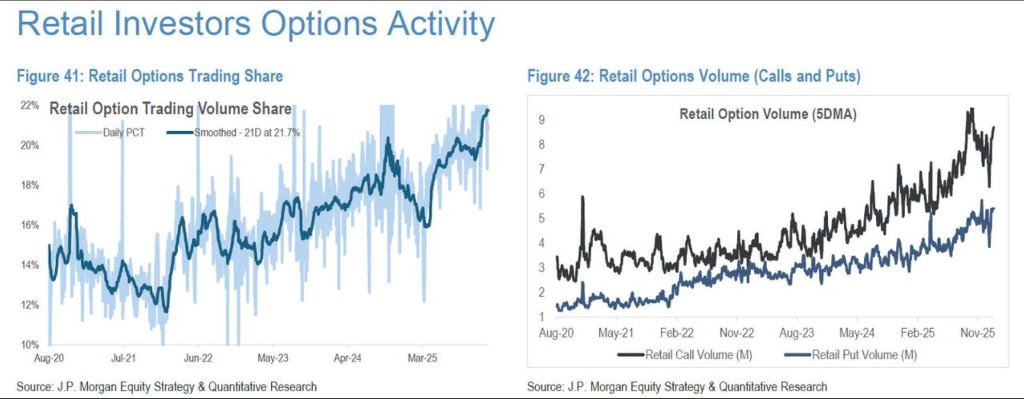
JP Morgan pointed out that retail investors' strategies for responding to market volatility have shifted from being ETF-focused last year to a balanced allocation between individual stocks and ETFs, reflecting a further maturation of their risk tolerance and investment strategies
