


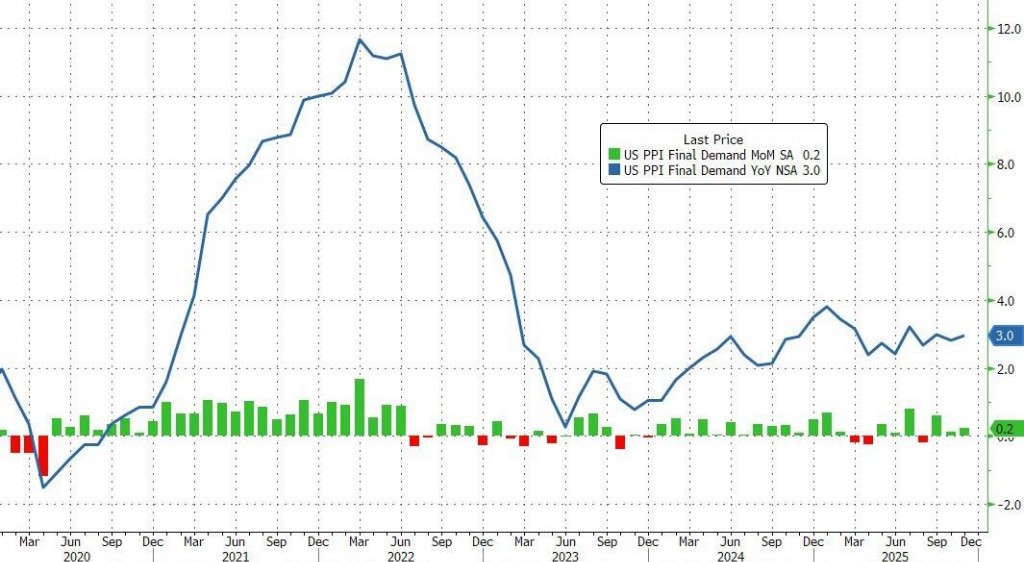
Driven by rising energy costs, the U.S. November PPI rose year-on-year to 3%, reaching a new high since July

More news, ongoing updates
The U.S. Producer Price Index (PPI) rose in November, reaching a new high since July, primarily driven by a surge in energy costs, while overall wholesale inflation pressures showed a slight rebound. However, the core data, excluding the volatile food and energy sectors, remained stable, indicating that underlying price growth remains moderate.
On the 14th, Wednesday, data released by the U.S. Bureau of Labor Statistics showed:
- U.S. November PPI year-on-year 3%, expected 2.7%
- U.S. November PPI month-on-month 0.2%, expected 0.2%.
- U.S. November core PPI year-on-year 3%, expected 2.7%.
- U.S. November core PPI month-on-month 0%, expected 0.2%.
Due to the federal government shutdown lasting 43 days, the U.S. Bureau of Labor Statistics delayed the release of this report. The data released not only includes wholesale price information for November but also discloses the producer price estimate data for October for the first time.
Energy Costs Drive PPI, Service Prices Stable
The main driver of this PPI increase comes from the energy sector. The final demand goods index rose 0.9% for the month, marking the largest monthly increase since February 2024. This increase was almost entirely driven by the energy sector.
Specifically, final demand energy prices surged 4.6%, with this single component's volatility explaining over 80% of the increase in commodity prices in November. This jump in data has led to a reassessment of upstream cost pressures in the market, especially against the backdrop of relatively subdued commodity inflation in previous months.
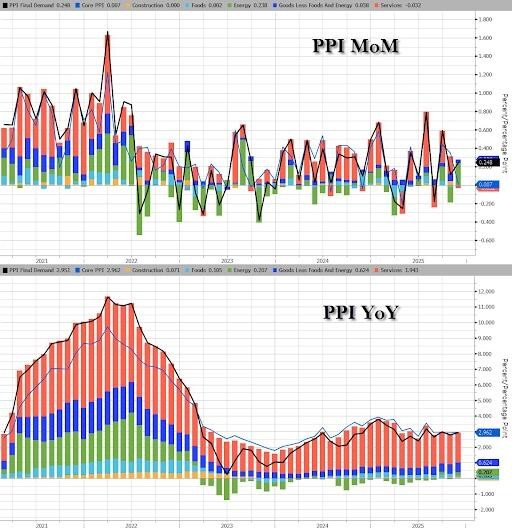
Meanwhile, service prices remained stable overall, providing a stabilizing factor for the inflation outlook. In specific service categories, portfolio management fees increased by 1.4%, becoming one of the factors driving up service costs.
However, prices in some service categories declined or only increased slightly. The cost of air passenger services fell by 2.6%, indicating a relief in inflation pressures in the transportation sector.
In the healthcare sector, costs for physician care and hospital inpatient care only rose slightly, although outpatient care in hospitals saw a significant increase.
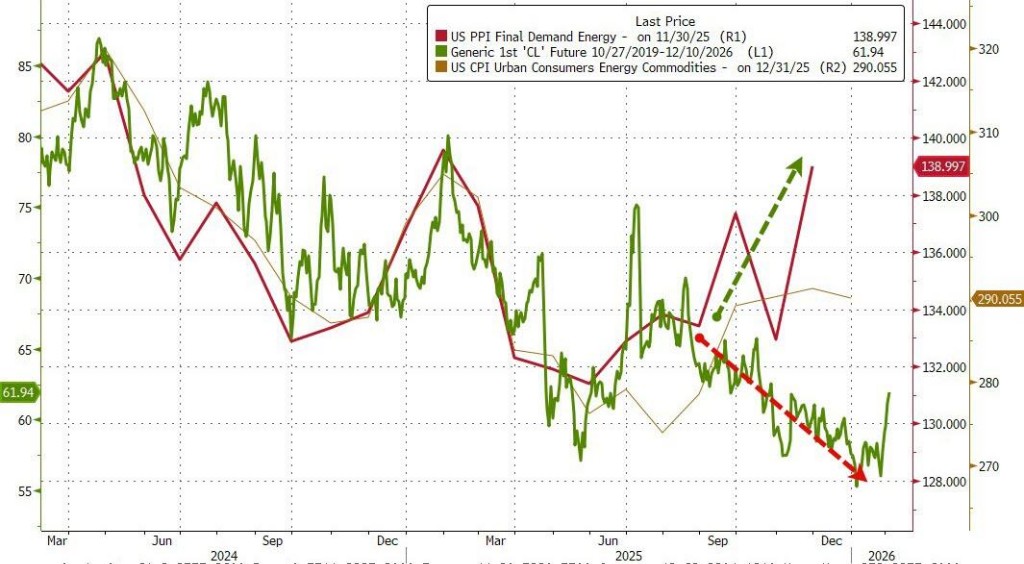
Despite official data showing a sharp rise in energy PPI, there is a notable divergence from the crude oil price trends observed in the market during the same period. During the PPI data collection period, oil prices were actually on a downward trend.
Consumer Resilience and Policy Outlook
At the same time as the inflation data was released, another government report showed that November retail sales growth exceeded expectations. This indicates that despite facing price pressures, American consumers are still demonstrating considerable resilience as they enter the holiday shopping season. The Consumer Price Index (CPI) report released on Tuesday showed that the growth of core consumer inflation in December was below expectations, further confirming the trend of cooling price growth.
The Bureau of Economic Analysis will release the PCE price data for November, along with income and spending data, on January 22. This data will provide key references for Federal Reserve officials. The Fed's decision-makers are scheduled to hold their first policy meeting for 2026 the following week.
The market generally expects that after three consecutive rate cuts, U.S. central bank officials will keep interest rates unchanged to wait for further progress on inflation and to assess developments in the labor market
