


Breakfast | The market awaits the release of the non-farm payroll report, and the Chicago Mercantile Exchange has raised the margin requirements for precious metal futures for the third time

The non-farm payroll report is about to be released, and popular U.S. stocks are mixed. Most chip stocks have retreated, with SanDisk down over 5%. Defense stocks have rebounded strongly, with Lockheed Martin up over 4%. Precious metals continue to adjust, with silver down over 3%. The Chicago Mercantile Exchange has taken action again, raising the margin requirements for precious metal futures for the third time
Market Overview
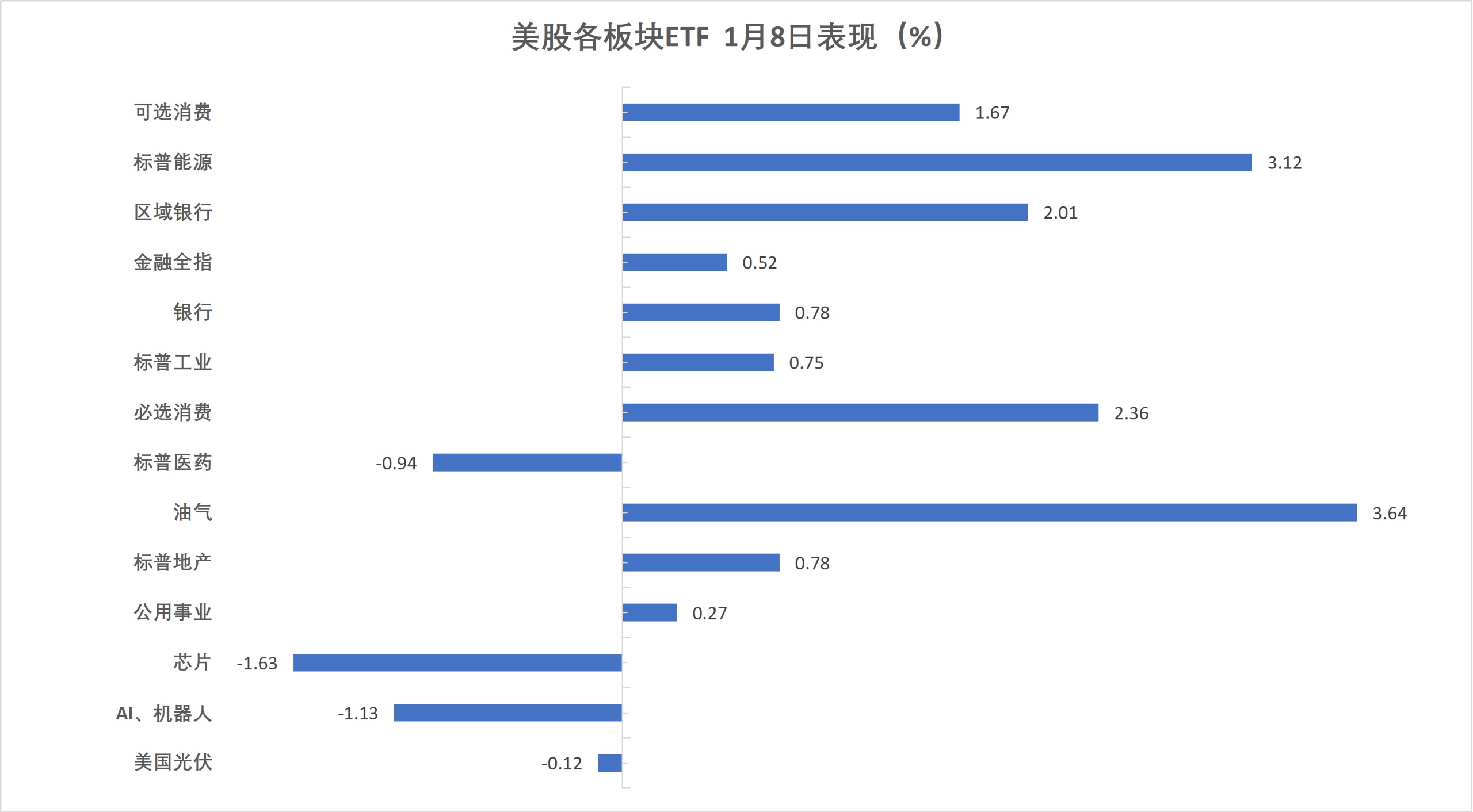
Before the release of the blockbuster employment report, chip stocks suppressed the rise of U.S. stocks, with the Nasdaq ending a three-day winning streak, while the S&P and Dow rebounded; chip stocks recorded two consecutive declines, NVIDIA fell over 2%, and storage chip giant SanDisk dropped over 5%; Apple experienced seven consecutive declines, while Google rose over 1%, reaching a historic high; Trump hinted at significantly increasing military spending, leading to a strong rebound in defense stocks, with Lockheed Martin rising over 4%, and three drone manufacturers including Kratos rising over 10%. The China concept index rose over 1%, reversing two consecutive declines, with Alibaba rising over 5%, while Baidu fell nearly 4%.
U.S. Treasury prices fell back, and after the U.S. unemployment data, Treasury yields rebounded further. Following the U.S. unemployment data, the dollar index accelerated its rise, approaching 99.0 during the session, reaching a four-week high; the offshore yuan approached 7.0 during the session, hitting a new low for the year, before rebounding over a hundred points; Bitcoin briefly fell below the $90,000 mark, dropping over 2% from its daily high.
U.S. crude oil inventories fell more than expected, leading to a big rebound in oil prices, reversing two consecutive declines, with prices rising over 4% at one point, and Brent crude reaching a two-week high. Precious metals saw a moderation in their decline, with silver and platinum dropping over 5% during the session, later narrowing their losses by 70%, while gold fell over 1% before turning positive. London nickel fell over 4%, and London copper dropped over 1%, continuing to fall away from record highs.
During the Asian session, the Shanghai Composite Index ended its "15-day winning streak," with commercial aerospace continuing to explode, the Hang Seng Index fell 1%, and the "first stock of large models" Zhipu AI rose 13% on its first day of listing, while metals fell across the board, with polysilicon hitting the daily limit down.
Key News
Trump: Hopes to visit Venezuela in the future, the U.S. will continue to "manage" Venezuela for years and exploit its oil reserves; the U.S. Senate passed a procedural vote on a resolution seeking to limit Trump's military actions against Venezuela.
Trump directed the purchase of $200 billion in U.S. mortgage-backed securities to lower home buying costs; the Director of the Housing Finance Agency stated that the goal is to have Fannie Mae and Freddie Mac execute the purchases, with a decision on the two agencies' listing expected in one to two months.
Trump: The U.S. must "own" the entire Greenland; media reports that U.S. officials held talks with Denmark on Thursday to try to cool down statements regarding the "takeover" of Greenland.
Bessent: The Federal Reserve should not delay interest rate cuts, and the U.S. will lift sanctions on some Venezuelan entities, expecting Trump to decide on the Federal Reserve Chair nominee in January; Trump indicated he already has a decision in mind regarding the nominee.
Federal Reserve Governor Milan: Expected to cut rates by about 150 basis points by 2026, with rates "significantly above neutral levels."
The U.S. labor market showed no significant pressure, with the number of initial unemployment claims last week slightly increasing to 208,000, lower than the expected 212,000; U.S. Treasury yields rebounded, and the dollar reached a four-week high.
1,000 companies "besieged" the White House: demanding the return of $100 billion in tariffs, with the Supreme Court expected to announce a ruling this Friday that could determine the outcome; Bessent stated that even an unfavorable ruling would not affect tariff revenues
Important Commodity Index rebalancing starts on Thursday, two major investment banks predict "silver will adjust within two weeks," Goldman Sachs says "the key is still London."
Domestic polysilicon hits the limit down, short-term demand is in the off-season, inventory is hard to clear, and policy games return to the supply-demand fundamentals.
Vanke officially announces: Yu Liang resigns due to retirement age.
MiniMax receives over 1800 times subscription from retail investors on the eve of its listing, with Baillie Gifford, GIC, and the Norwegian sovereign fund entering the market.
Sinopec and China National Aviation Fuel officially announce restructuring: refining and chemical integration + full coverage of terminal networks, creating a low-cost and high-resilience aviation fuel supply system.
Market Closing Report
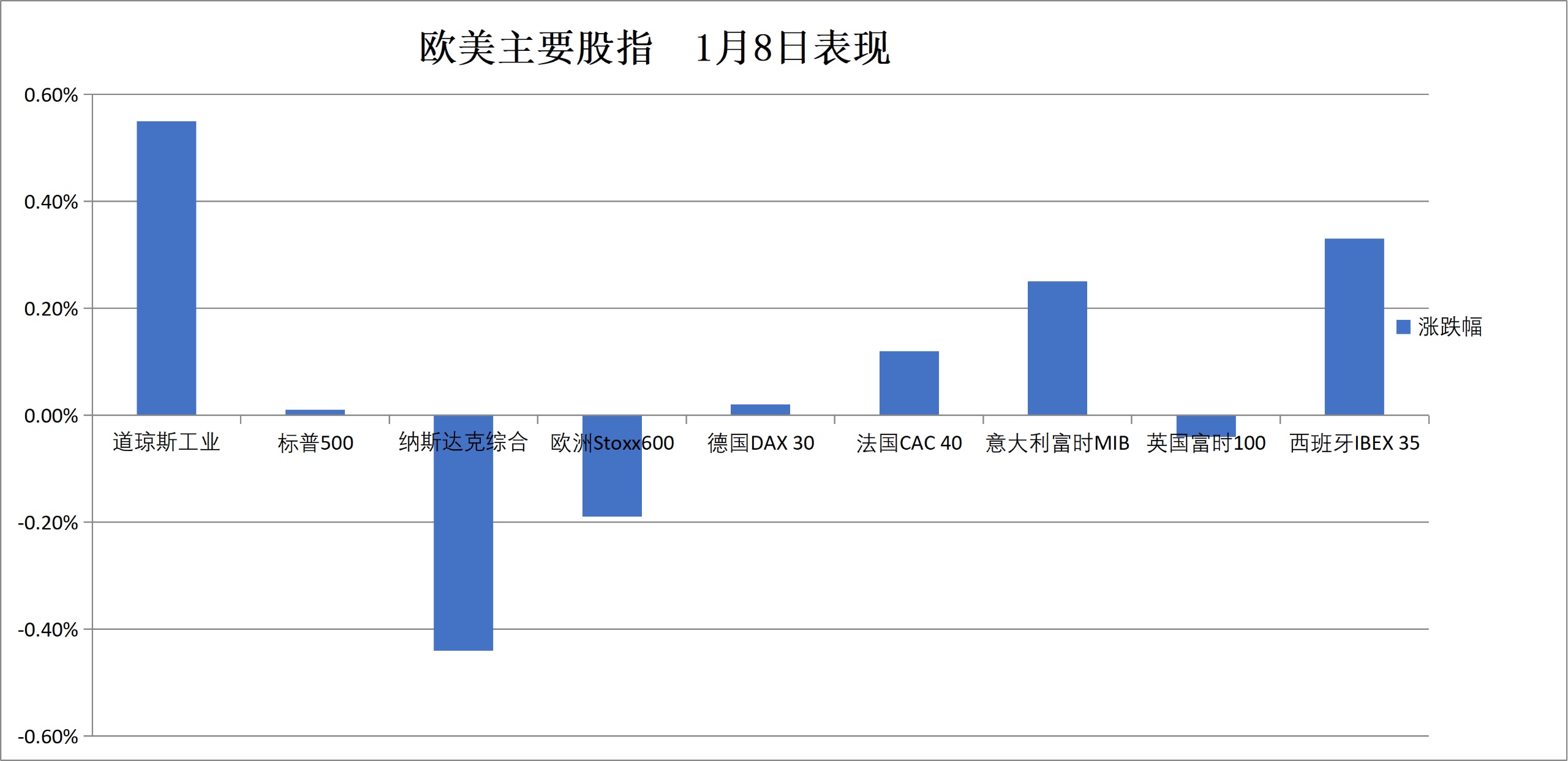
US and European Stock Markets: S&P 500 up 0.01%, closing at 6921.46 points; Dow Jones up 0.55%, closing at 49266.11 points; Nasdaq down 0.44%, closing at 23480.016 points. European STOXX 600 index down 0.19%, closing at 603.83 points.
A-shares: Shanghai Composite Index down 0.07%, closing at 4082.98 points. Shenzhen Component Index down 0.51%, closing at 13959.48 points. ChiNext Index down 0.82%, closing at 3302.31 points.
Bond Market: By the end of the bond market, the yield on the US ten-year benchmark Treasury bond was about 4.17%, up about 2 basis points during the day; the two-year US Treasury yield was about 3.49%, also up about 2 basis points during the day.
Commodities: WTI February crude oil futures closed up nearly 3.2%, at $57.76 per barrel; Brent March crude oil futures closed up about 3.4%, at $61.99 per barrel. COMEX February gold futures closed down 0.04%, at $4460.7 per ounce. COMEX March silver futures closed down 3.18%, at $75.144 per ounce. LME copper closed down about 1.4%, at $12720 per ton. LME nickel closed down about 4.1%, at $17155 per ton.
News Details
Global Highlights
Trump's record $1.5 trillion military spending to prepare for a "world war"? Defense stocks rebound, drone manufacturers surge by double digits. During Thursday's trading, Lockheed Martin rose over 9%, and drone company Kratos surged 20%. American media believe that Trump's increase in military spending indicates that the U.S. may be preparing for a "world war," and a budget of $1.5 trillion reflects "the characteristics of a country preparing for global or regional war." Although there is uncertainty regarding military spending, analysts generally believe that the direction of U.S. defense spending growth is clear.
Trump: Hopes to visit Venezuela in the future, the U.S. will continue to "manage" Venezuela for many years and exploit its oil reserves. When asked about the specific timeframe for the U.S. as the "political controller" of Venezuela, Trump responded that it "will last longer." He stated that the U.S. will rebuild Venezuela in a "very profitable way," acknowledging that revitalizing Venezuela's oil industry will take years, without providing a timeline for the U.S. to obtain up to 50 million barrels of Venezuelan crude oil.
- The U.S. Senate passed a procedural vote on Thursday to advance a resolution seeking to limit Trump's military actions against Venezuela. Trump stated that he would veto the resolution if Congress passed it. The Venezuelan Foreign Minister said that Venezuela reaffirms its commitment to deepening economic and trade agreements with China. Colombia stated that its president will meet with the visiting interim president of Venezuela.
Trump directs the purchase of $200 billion in U.S. mortgage bonds to lower home buying costs. Trump stated on social media on Thursday that he is "directing my representatives" to purchase $200 billion in mortgage bonds, as the two government-sponsored mortgage agencies—Fannie Mae and Freddie Mac—currently have ample funds, claiming that purchasing such bonds will lower mortgage rates and monthly payments. This is Trump's latest move to reduce housing costs ahead of the midterm elections in November.
- The Director of the Federal Housing Finance Agency (FHFA), Mark Calabria, later stated that Trump's goal is to have Fannie Mae and Freddie Mac execute these purchase plans. He also mentioned that Trump may decide on the listing of Fannie Mae and Freddie Mac in the next month or two.
Trump: The U.S. must "own" all of Greenland, not just exercise military and defense rights based on existing treaties. Trump stated that ownership itself has strategic value that cannot be obtained through leasing or treaties. Media reports indicate that senior representatives from Denmark and Greenland met with White House officials in Washington on Thursday to discuss recent developments. Reports suggest that U.S. officials attempted to downplay Trump's statements about "taking over" Greenland during the talks, sending a more restrained signal to Denmark and Greenland.
Bascent: The Federal Reserve should not delay interest rate cuts, the U.S. will lift sanctions on certain Venezuelan entities. U.S. Treasury Secretary Bascent stated that further interest rate cuts are "the only missing element for achieving stronger economic growth"; the U.S. Treasury will oversee the sale of Venezuelan assets and, according to the Secretary of State's instructions, return the proceeds to Venezuela. Bascent expects that Trump will decide on the Federal Reserve Chair nominee in January, stating that there are currently four candidates, of which only BlackRock executive Rieder has not yet been interviewed
- Besant also stated that even if the U.S. Supreme Court overturns the Trump tariffs, it will not affect tariff revenue, and he is confident that losses can be compensated through other legal authorizations for taxation.
- Trump stated regarding the Federal Reserve Chair nominee: I have already made a decision in my mind. Trump confirmed in an interview on Wednesday that he has finalized who will lead the Federal Reserve. However, he has not officially announced the nominee. When directly asked if Hassett is the nominee, Trump was ambiguous but not lacking in praise. He first said, "I don't want to say," and then stated that Hassett is "certainly one of my favorite people."
Federal Reserve Governor Mulan: Expected to cut interest rates by about 150 basis points in 2026, rates are "significantly above neutral levels". He believes that current monetary policy remains significantly restrictive, while the underlying inflation level is close to the Federal Reserve's target, providing room for further rate cuts.
The U.S. labor market shows no significant pressure, the number of initial jobless claims last week slightly increased to 208,000, lower than the expected 212,000. The number of initial claims in the U.S. remains at historically low levels. The number of continuing claims increased by 56,000 in the previous week, rising to 1.914 million, indicating that it is becoming more difficult for unemployed individuals to find new jobs, and the risk of long-term unemployment is accumulating.
1,000 companies "besiege" the White House: Demanding a refund of $100 billion in tariffs, the Supreme Court may decide this week. As the U.S. Supreme Court is about to make a final ruling on the Trump administration's tariff case, thousands of companies (from retail giant Costco to industrial leader Alcoa) have initiated lawsuits demanding the overturning of the policy and the return of taxes paid. This case not only concerns potential refunds of up to $133 billion but will also redefine the legal boundaries of presidential emergency powers, with results that could have far-reaching impacts on global supply chains and trade policies.
Precious metals continue to adjust, with silver falling over 3%; Important commodity index rebalancing starts Thursday, two major investment banks predict "silver will adjust within two weeks," Goldman Sachs says "the key is still London". The Bloomberg Commodity Index (BCOM) annual rebalancing will begin after the market closes on January 8 and continue until the 14th. TD Securities expects that $7.7 billion in silver sell orders will flood the market in the next two weeks, equivalent to 13% of the total open contracts in the COMEX silver market, which may trigger a significant price correction. Deutsche Bank analysis points out that, based on the scale of open contracts, silver will bear the largest rebalancing selling pressure, followed by aluminum and gold, with the largest rebalancing demand for WTI crude oil Goldman Sachs believes that as long as the inventory tightness in London is not alleviated, extreme price fluctuations will continue to exist.
CME takes action again, recently raising the margin for precious metal futures for the third time
On the 8th local time, the Chicago Mercantile Exchange (CME) issued a notice to raise the performance margin for precious metal varieties, marking the third such notice in the past month. The notice stated that on January 9th after the local market closes, it will comprehensively raise the performance margin for gold, silver, platinum, and palladium futures. Additionally, the margin for most natural gas contracts will be lowered. CME stated that the margin adjustments are based on a review of market volatility to ensure adequate collateral coverage.
Domestic polysilicon hits the limit down! Short-term demand is weak, inventory is hard to reduce, and policy games return to the fundamentals of supply and demand. On the 8th, the main contract for polysilicon futures fell by 9%, reaching a new low of 56,000 yuan/ton. The decline is attributed to capital exit, exacerbated supply-demand imbalance, and downward adjustments in global installation expectations. Although the industry faces dual pressures of high inventory and weak demand, constrained by an average fully loaded cost of 48,000 yuan/ton, Dongzheng Futures expects prices to fluctuate between 42,000 and 80,000 yuan for the year.
- Is the polysilicon storage plan changing? Recently, the Photovoltaic Industry Association and several leading polysilicon companies were interviewed by the State Administration for Market Regulation. The meeting's rectification opinions require that production capacity, capacity utilization, production and sales volume, and sales prices must not be agreed upon; market division, production allocation, and profit distribution must not be conducted in any form through capital contribution ratios; communication and coordination regarding current and future prices, costs, production and sales volumes, and other information are prohibited.
- All industry self-regulation promoted by the China Photovoltaic Association has been completely halted. The State Administration for Market Regulation determined that the Photovoltaic Association's actions of organizing production restrictions and unified pricing under the guise of "industry self-regulation" are suspected of monopolistic behavior and requires immediate comprehensive rectification. The anti-monopoly rectification opinions include prohibiting agreements on production capacity, capacity utilization, production and sales volume, and sales prices; prohibiting market division, production allocation, and profit distribution in any form through capital contribution ratios; and prohibiting communication and coordination regarding current and future prices, costs, production and sales volumes, and other information.
Vanke officially announces: Yu Liang resigns, due to retirement age! Vanke's Executive Vice President Yu Liang submitted a written resignation report to the board of directors due to retirement age, applying to resign from the positions of company director and executive vice president. After resigning, this professional manager who has worked at Vanke for 36 years and led the company for 17 years will no longer hold any position in the company.
MiniMax on the eve of its listing, retail investors subscribe over 1800 times, Baillie Gifford, GIC, and Norway Sovereign Fund enter the market This issuance allocated a total of 1.27 million shares to retail investors in Hong Kong, with a subscription multiple of 1837.17 times. A total of 24.1 million shares were allocated to international investors, with a subscription multiple of 36.76 times. Institutions oversubscribed by more than 70 times. Long-term investors represented by Baillie Gifford, GIC, and the Norwegian Central Bank became the main subscribers.
Sinopec and China Aviation Oil Officially Announce Restructuring: Integrated refining + full coverage of terminal networks, creating a low-cost and resilient aviation fuel supply system. The restructuring between Sinopec and China Aviation Oil represents a deep integration of the industrial chain. The core is to build an "integrated refining-airport" system, reducing costs and ensuring energy security by minimizing intermediate links, directly competing with international giants like Shell, and enhancing the competitiveness of traditional aviation fuel. At the same time, both parties will work together to tackle the decarbonization challenge in the aviation industry, integrating Sinopec's sustainable aviation fuel (SAF) research and production with China Aviation Oil's terminal refueling network to create a closed-loop SAF industry and seize the strategic high ground in green aviation.
Research Report Highlights
a16z Anderson's 2026 Outlook: Shortages Will Ultimately Lead to Surpluses, AI Chips Will Experience Capacity Explosion and Price Collapse. "If something is in short supply, history has shown that it will eventually be mass-produced until it becomes surplus—AI chips and computing power will be no exception," predicted a16z co-founder. He stated that AI represents a technological transformation grander than the internet and is still in its early stages. He pointed out that intelligent costs are collapsing at a speed exceeding Moore's Law, and the shortage of infrastructure will ultimately lead to overcapacity, benefiting the application layer.
Goldman Sachs CES Summary Meeting: Incremental Demand for AI Infrastructure Comes from "Embodied Intelligence" and "Agency". Goldman Sachs stated that the demand for AI infrastructure is shifting from pure computing power to new hardware that supports "physical AI" and complex reasoning. NVIDIA's new platform enhances memory capabilities, directly stimulating NAND demand, while the supply of storage chips remains tight; although inventory of analog chips has bottomed out, market demand recovery still appears weak.
Domestic Macro
The Standing Committee of the Political Bureau of the Central Committee of the Communist Party of China held a meeting, presided over by the General Secretary of the Central Committee. The meeting pointed out that the Party Central Committee listened to work reports from the Standing Committee of the National People's Congress, the State Council, the National Committee of the Chinese People's Political Consultative Conference, the Supreme People's Court, and the Supreme People's Procuratorate, as well as the work report from the Central Secretariat. This is an important measure to uphold and improve the Party's leadership system, implementing the centralized and unified leadership of the Party Central Committee in all areas and aspects of national governance. During the "14th Five-Year Plan" period, China's development environment faces profound and complex changes, and the work tasks are arduous and heavy. We must uphold, utilize, and develop the Party's leadership as the greatest advantage to provide a fundamental guarantee for the construction of Chinese-style modernization People's Daily: What signal is released by the central government's "naming" of the housing provident fund? For the first time in ten years, the Central Economic Work Conference specifically mentioned "provident fund reform." The tone set at the end of last year’s Central Economic Work Conference aimed to stabilize the decline and improve housing quality. Provident fund reform is an important move in this set of measures—allowing everyone to access and use this money smoothly, thereby enabling them to live in better houses.
Wei Shaojun from the China Semiconductor Industry Association talks about NVIDIA's H200 chip: unwavering confidence and determination in the path of localization. According to Global Times, NVIDIA CEO Jensen Huang revealed that the H200 chip may soon be delivered to China. In response, Wei Shaojun stated that interactions beneficial to industrial development are welcome, provided they comply with regulatory requirements. While moderately introducing advanced computing power may alleviate short-term demand, China's industry needs to continuously enhance its core competitiveness in competition to gain the initiative in the technological game.
Domestic Companies
"The first stock of domestic large models" Zhipu's first-day surge: Can model iteration × ecological flywheel drive growth? Dongxing Securities stated that as a Tsinghua University unicorn, Zhipu maintains technological leadership through continuous upgrades (iterations) of its self-developed GLM architecture; it attracts millions of developers with an open-source strategy and enhances user stickiness (flywheel) with AI toolchains, thereby reducing customer acquisition costs and driving exponential growth in API calls. This model aims to convert technological potential into cloud commercial monetization, supporting high growth expectations.
After becoming the first stock of large models, Zhipu's chairman speaks for the first time: Discussing 2513, "burning money and self-sustaining". Zhipu's stock code 2513 sounds like "AI my whole life." Chairman Liu Debing stated that AGI has currently reached the L3 stage, with Zhipu's compound growth rate expected to reach 130% from 2024 to 2025. The company insists on investing in pre-training, believing that MaaS is essentially "selling intelligence" rather than computing power, with low marginal costs. Despite facing huge R&D investments and losses, the demand for AI applications has exploded, with a 390% increase in bidding projects. Zhipu is committed to making AI a universal infrastructure through dual drives of localization and MaaS.
Zhipu goes public, Tang Jie’s internal letter calls for a comprehensive return to basic model research. Tang Jie, a professor in the Department of Computer Science at Tsinghua University, co-founder and chief scientist of Zhipu, announced in an internal letter the upcoming launch of GLM-5 and established a strategy to fully return to basic model research to respond to the impact of DeepSeek. The company will focus on three major technological directions in 2026: new architecture, general RL, and continuous learning, and will establish X-Lab to explore disruptive innovations. Tang Jie predicts that 2026 will be the explosive year for AI to replace various job types 48 billion, "Luckin operator" Li Hui bets, the last "domestic GPU four dragons" has gone public. Tian Shu Zhi Xin was listed on the Hong Kong Stock Exchange, opening up over 31% on the first day, with a market value of about HKD 48.4 billion and over 100 times subscription. As the last of the "domestic GPU four dragons" to go public, it was the earliest in mass production but received capital attention later. Its largest external shareholder, Dazheng Capital, which led the transformation of Luckin, holds over 20% of the shares and has deeply influenced the company's development through early involvement and two management changes.
AI redefines strong growth trajectory! Wall Street significantly raises TSMC's target price: revenue expected to grow by 30% in 2026. JP Morgan and Nomura Securities believe that TSMC's core growth logic is shifting from past cyclical drivers to a sustained high-growth trajectory defined by deep binding of AI demand, long-term capacity shortages, and technological monopolies. It is expected that revenue in USD will grow by about 30% in 2026, while tight capacity and strong pricing power will support its gross margin to remain stable above 60% in the long term.
Multiple car companies intensively reduce prices and promote sales. At the beginning of the new year, a wave of promotions has swept through the Chinese auto market, with Tesla, BMW, Xiaomi, and other car companies launching low-interest financing plans and purchase subsidies to offset the cost pressures brought by the adjustment of new energy vehicle purchase tax policies, aiming to stimulate early-year consumption and stabilize market growth.
Secretary-General of the Passenger Car Association, Cui Dongshu: The phenomenon of price reduction in the automotive industry has significantly weakened, and the operational pressure of the industry has improved. In 2025, the price war in China's passenger car market is expected to cool significantly, with the number of discounted models decreasing year-on-year, and market promotional activities becoming more rational. Supported by national policies such as trade-in programs, the industry's pricing system is stabilizing, leading to a rebound in automotive industry profit margins and improved market operational pressure.
93-year-old Hang Seng Bank "says goodbye" to Hong Kong stocks! HSBC's proposal for the bank's privatization was approved by the shareholders' meeting.
Yuanxin Satellite financing "exploded," with funding hard to come by?. It is reported that Shanghai Yuanxin, a satellite operating company known as the Chinese version of "Starlink," has started a new round of financing, with a scale of 5 billion to 6 billion, and a pre-investment valuation of over 40 billion RMB. By the end of the year, rumors about the difficulty of obtaining financing from Yuanxin have gradually increased. In fact, as of now, Yuanxin has not publicly disclosed information about the new round of financing Overseas Macro
Jeffrey Sachs "eloquently" at the United Nations: Human survival depends on how the Security Council responds to the Venezuelan situation. "The major countries of the world failed to uphold international law in the 1930s, ultimately leading to a new global war, and the United Nations was born out of this catastrophe," he stated, "We are now in the nuclear age and must not repeat the mistakes of the past—otherwise, humanity will face destruction."
Behind the Venezuelan situation: Trump's target oil price of "50 dollars". The Trump administration is advancing a long-term plan to dominate Venezuela's oil industry, believing that this move will drive oil prices down to $50 per barrel. Currently, the White House has confirmed the initiation of global sales of Venezuelan oil and is actively negotiating with major oil companies like Chevron to implement control and distribution of Venezuelan oil resources. As voter dissatisfaction with living costs intensifies and polling pressure increases ahead of the midterm elections, the urgency of this agenda has heightened.
"A single tweet can change foreign policy, who dares to invest in Venezuela?" American oil companies: No guarantees, no investment. Despite pressure from the Trump administration demanding that U.S. oil giants invest in Venezuela's energy sector, companies are generally adopting an extremely cautious attitude, requiring Washington to provide clear legal and financial guarantees to hedge against policy shifts and asset seizure risks. The industry is concerned about the continuity of policies across presidential terms, and in the current low oil price and high-risk environment, the lack of substantial guarantee mechanisms will severely hinder the actual investment of billions of dollars in capital.
Gold becomes the world's largest reserve asset, surpassing U.S. Treasury bonds for the first time in 30 years! This structural shift is not only due to concerns over geopolitical risks and the credibility of the U.S. dollar but also signifies a profound defensive adjustment in the global reserve system; although there are differing views on future gold prices, the strategic direction of central banks increasing their gold holdings as a non-political safe-haven core asset has become increasingly clear.
Introducing the "1/1000 ounce of gold" unit, "stablecoin leader" Tether promotes the circulation of "gold stablecoins". Tether announced the launch of the term Scudo, a new measurement unit for the "gold stablecoin" XAUT, where one Scudo equals one-thousandth of a troy ounce of gold. Based on current prices, one Scudo is valued at approximately $4.48. Company CEO Paolo Ardoino claims that Scudo lowers the entry barrier for transactions.
Eurozone unemployment rate declines for the first time in seven months, unexpectedly dropping to 6.3% in November The Eurozone labor market shows resilience, with the unemployment rate unexpectedly dropping to 6.3% in November, marking the first decline in seven months, indicating that the job market remains tight. Despite short-term data improvements, the number of unemployed individuals has increased compared to the same period last year, and there is a divergence in performance across different industries and core economies, suggesting that future employment recovery will still be uneven.
Overseas Companies
The AI search landscape changes: Gemini's traffic surged 24% month-on-month in December, while ChatGPT declined by 9%. Third-party data shows that in December, Gemini's average daily web visits reached 56 million, a staggering 567% year-on-year increase and a 24% month-on-month growth; ChatGPT saw a 49% year-on-year increase to 178 million visits, but a 9% month-on-month decline. Gemini's daily active users grew by 351% year-on-year to 62 million (up 17% month-on-month), while ChatGPT's daily active users increased by 262% year-on-year to 392 million (up 2% month-on-month).
Samsung's profits triple, expected Q4 profits of 20 trillion won and revenue of 93 trillion won, both hitting record highs, as AI triggers "out-of-control" price hikes in storage. The company released its Q4 earnings guidance: operating profit is expected to reach up to 20 trillion won, tripling year-on-year and surging 64% month-on-month, setting a historical record, while sales are also expected to soar to a historical high of 93 trillion won. With the strong push from the AI frenzy, Samsung is experiencing a simultaneous rise in both volume and price, possibly signaling to Wall Street the arrival of the strongest seller's market for memory chips. The company is expected to release its complete financial report later this month.
HBM4 mass production may be delayed until the end of Q1 due to NVIDIA's temporary specification increase. NVIDIA has postponed the HBM4 mass production schedule due to an increase in specifications for the Rubin platform and higher-than-expected demand for the Blackwell series, with mass production expected to start no earlier than the end of Q1 2026. Among the three major suppliers, Samsung is leading in verification progress by being the first to adopt the advanced 1nm process, but SK Hynix is expected to maintain a dominant position in supply in 2026 due to long-term contracts already signed.
JP Morgan's Micron research: New factory's early production can only meet half of the demand, context window storage becomes a new growth point for NAND. Micron's management stated that the company can currently only meet 50% to two-thirds of the mid-term demand from key customers, even with the new Idaho 1 wafer fab in Idaho set to begin production a quarter earlier in mid-2027. NVIDIA's new inference context window storage platform will open another channel for NAND bit demand growth, as the configuration rate for NVIDIA's Bluefield-4 based systems is expected to be very high
Today's News Preview
China's December CPI and PPI.
China's December financial data.
MiniMax Hong Kong IPO.
U.S. December non-farm payroll report.
U.S. January University of Michigan consumer sentiment and inflation expectations.
U.S. October new housing starts and building permits.
The U.S. Supreme Court may rule on tariff issues.
Minneapolis Fed President Neel Kashkari and Richmond Fed President Thomas Barkin will speak
